


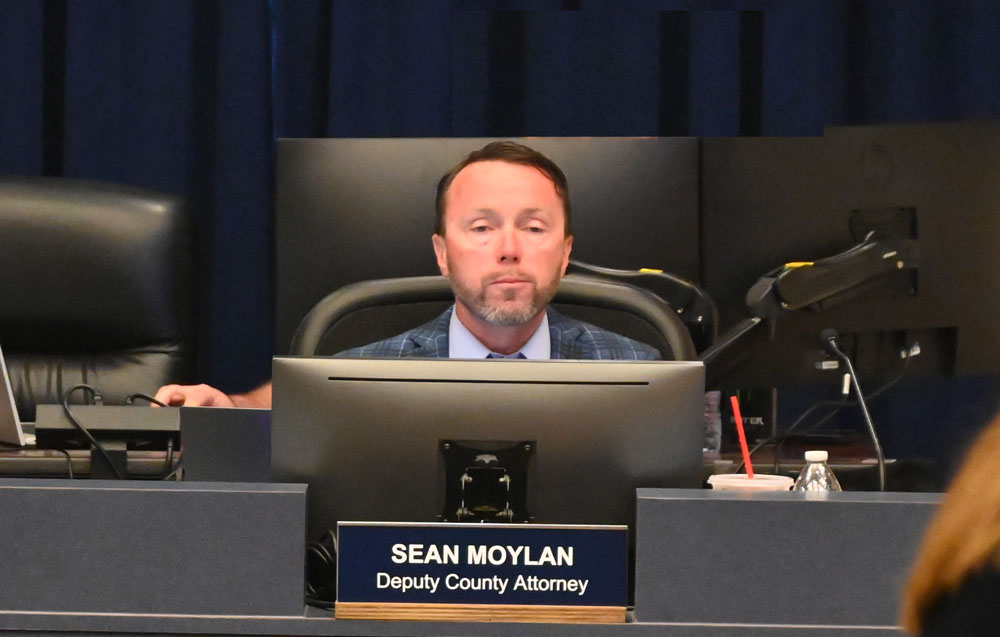
A day after the Flagler County Commission voted to settle the lawsuit former human resources manager Samantha Whitfield filed against the county in 2024, Whitfield is suing again, this time for defamation and other First Amendment claims based on how the deputy county attorney characterized the settlement at a commission meeting on Monday.
Whitfield’s Tallahassee-based attorney, Marie Mattox, signaled that the settlement may be set aside as her client pursues the new claim. It may have to be, since accepting the settlement includes waiving all future claims.
Whitfield’s October 2024 lawsuit charged that the county pushed her to resign after she brought to light what she considered to be rules violations and misconduct by one of her colleagues at the time. The claims included accusations that her colleague improperly accessed confidential personnel files and disseminated protected information. (Under Florida’s open records law, personnel files are public records, though there are exemptions for medical information and certain personally identifying details such as social security numbers.)
The county disputed the claims, showing that Whitfield had voluntarily resigned. Defended by its insurer’s attorney, the county had filed a motion for summary judgment against the lawsuit, which Circuit Judge Sandra Upchurch had not ruled on by the time the county announced the settlement.
On Monday, the commission voted 3-1 to approve a $20,000 settlement. Commissioners found the settlement distasteful, but said they wanted to be done with the case. Commissioner Andy Dance voted against the settlement.
Prefacing the proposal, Deputy County Attorney Sean Moylan told the commission in sharply explicit terms that “Every allegation in this lawsuit is completely frivolous, just balderdash. It is completely incorrect and wrong and false.” He said it was the county’s insurer who found the settlement preferable to further, costly litigation. (See: “Flagler Commissioners Approve $20,000 Settlement with Former HR Manager in Lawsuit Termed ‘Bogus’ and ‘Frivolous’.”)
Whitfield’s new lawsuit, filed on June 2, charges civil rights and whistleblower-rights violations, focusing especially on Moylan’s characterizations of the original lawsuit and the settlement. The four-count lawsuit includes a defamation count that claims Moylan’s characterizations of Whitfield’s lawsuit were themselves false and “defamatory because they impute dishonesty to [Whitfield] and portray her as having knowingly asserted false claims, tending to subject her to distrust and contempt in her community.”
The suit charges that the county engaged in a public condemnation of Whitfield to punish and discredit her for her right to file a whistleblower (or any) lawsuit against the government.
Moylan’s statements are defamatory, the suit claims, “because they impute conduct and characteristics incompatible with honesty and proper conduct of her affairs.” The county is likely to reply that opinionated statements at the commission meeting, which commissioners echoed, are themselves protected under the First Amendment, though even opinions about a private citizen may not be defaming. The suit claims that “Moylan made the statement knowing it was false or with reckless disregard for its truth, and with express malice and ill will toward [Whitfield] for having sued the County.”
Reached for comment on Wednesday, Moylan had not been aware of the filing–which had yet to appear on the clerk of court’s website; Moylan had not been served–and declined to comment, now that he is a named party in the lawsuit.
The settlement document commissioners received on Monday bore Whitfield’s signature. Whitfield had signed it on May 15.
“It looked like there was a disclaimer in there that this is it, she can’t come back,” Commissioner Greg Hansen said at Monday’s meeting, before adding: “This leaves a bad taste in my mouth.”
Hansen was right. The settlement document includes a general release immunizing the county from all claims by Whitfield. But the same document also includes a seven-day grace period when Whitfield is free to revoke the settlement. The seven days are dated from the time the document is fully executed–meaning last Monday, assuming that’s when the commission chair or the county attorney’s office signed it.
“She signed the document in good faith and we may have to move to set the agreement aside,” Mattox said of Whitfield in an email to FlaglerLive. “The events that occurred during the meeting on Monday had not yet occurred at the time she signed the agreement.”





Keep Flagler Beautiful says
Will there be a settlement on this one, too? Keep ’em coming, Whitfield. You’ve found an easy mark. So sorry your feelings have been hurt yet again, and thank you for your service and dedication to Flagler County and its taxpayers.
Sunny says
BS! This is what is the problem with the system. She deserves ZERO! I’m appalled these have even been entertained! SHAME ON HER!
Fat Kermit Frog says
Comment disallowed
Personal Trainer says
Someone sounds like a sad, miserable person. Take a deep breath.
Uh-oh! says
I called it! Mr. Moylan was way out of his lane-he’s not an employment law attorney and this case was handled by the insurance company attorney, not him. He’s allowed to make comment as an opinion, but he took it way too far. Then the commissioners hammered it in like a gossip session at High School. So unprofessional-it definitely appeared like they were trying to scare anyone else from ever filing a whistleblower claim.
Mr. Moylan admittedly says he received the initial complaint but didn’t read the litigation gathered after that, then continued to call the case “fake” and “frivolous” without all the facts. He should know better-but we know he doesn’t know better. What a clown show.
Then Mr. Dance’s ego pulls a consent item “just so I can vote no” and opens a “mock jury trial” for all the commissioners to discuss and comment about a case none of them read litigation on. An uninformed, one sided trial. While Andy has his chest out, that really worked out for the county, didn’t it? They all looked foolish.
When, or if, they read the deposition of Anita Stoker they are going to owe this lady a public apology. Get the facts commissioners, don’t speak on issues you aren’t completely knowledgeable about. Your ignorance is costing us money. This commission has NO credibility!
Ms. Rosenberg says
How do you know what’s in Stoker’s deposition unless you were on the video call? Gosh what were they talking about – stank dogs?
Sunny says
Whitfield also said she knew personal information on other employees HOW? Unless she read their personal files!
Unreal says
But she can defame her colleagues and accuse them of improperly accessing confidential files and disseminating protected information? All HR files can be accessed by ALL HR staff daily, there is nothing protected in personnel files except HIPAA documents, certain addresses and SSN’s. She’s pissed she didn’t get the half a million she was asking for and settled because the County was about to depose her live in boyfriend that got paid over 10 grand to speak at her leadership academy when she was the HR Manager, more than double what the other speakers were all paid. They should depose her ex husband too, you know the one she got charged and did a year probation for installing a tracking device in his car for two years he didn’t know about. She’s no victim folks. The County should take the original lawsuit, as well as this one, and take them both to trial. If she was humiliated Monday, wait til all the discovery on her comes to light, it ain’t pretty. Whitfield knows how to play the game, she was the County’s Risk Manager for years, but now she’s wasting OUR tax payer money and that should upset every resident of this county.
Real says
I’m sorry @unreal but this sounds like you are way too invested in her personal life-this is a bit creepy, buddy.
Kayla says
Yep, a bit creepy just like all the emails. Hahahaha!
Jay Tomm says
She certainly sounds disgruntled & looking to blame anyone but herself……
Sunny says
Crazy that the attorney had her she literally admitted she was the one going through personal files with the information she admitted she knew!
Why not just pay her off the bat since there was no intention of actually holding her accountable!
Darlene Shelley says
The utter unprofessionalism of Mr. Moylan and the county commission is unacceptable. Once again, actually laughing and joking about dead serious issues brought before them by Concerned Citizens. We need AnnaforFlagler.com and an empathetic ear for valid public concerns brought before the BOCC, especially the quality of life, safety, health, and welfare concerns described in thousands of public complaints by 1000 local residents that have had their property values, peaceful enjoyment of their homes, and their safety, health, and welfare taken and threatened without their consent, compensation, or ability to even have a voice in decisions affecting their communities, well being, and value of their homes. The safety, health, and welfare of our families matters, and are protected in the Constitution of the United States and codified in Florida Statutes, local comprehensive plan and building codes. PeaceforPalm.com DarleneforPalmCoast.com
just wait for it says
Dance should be next to have a suit filed against.
Finally fight back says
Get em Sam!!! I’m glad she’s fighting back. These people have to realize there are consequences to behaving like kids at meetings to try and put up a “display of skeptical”. So unprofessional. They should have got all the facts prior, approved it and kept moving on! Mr. Dance messed this one up.
Gina Weiss says
WOW Mr. Moylan, you sure don’t practice what you preach when you accused our great
late Jane Gentile Youd of accosting you at a meeting when she rightfully voiced her concern
about having more qualified candidates to interview for the county attorney position ,we are tickled
pink you did not get that position as you thought you were Hadeeds shoe in. This is your karma
for dissing people!
What’s next on the agenda ? says
Commissioner Andy Dance seems to enjoy hearing his favorite public speaker — himself — deliver lengthy speeches on matters that could often be summed up with a simple shrug.
Rather than putting this entire situation behind us, learning from it, and moving forward, Dance couldn’t resist another opportunity to take center stage and hear himself talk.
There’s an old saying: the smartest person in the room is often the quietest person in the room. That’s especially true when someone is speaking at length about a subject they don’t fully understand.
Jessica says
There isn’t a chance in hell she gets another pay day off this new lawsuit. And her lawyer knows that but she will keep taking her money because “she’s rich” and has “houses, bank accounts and investments”. If her lawyer was calling the shots (she isn’t) the lawsuit wouldn’t have been sent to the media before it was even filed with the Clerk. Impulse acting is never a good thing but some people can’t get out of their own way long enough to realize that.
Jessie says
I have to disagree, this case will trigger a larger pay out, I’m afraid.
You appear to be very invested.
Steven says
Larger than the $500,000 million she tried to get and failed miserably at because it was about to get liit?
celia says
Both county and city government at times elected or staff bosses often over arrogance, abuse of power and or most the time conflict of interest and bias enforcement of misconstrued interpretation of policies, unnecessarily generate employees toxic environments that then we taxpayers are forced to fund high legal cost like in this case. Also residents opposed advise by the county or city legal teams exacerbates the Whistle Blowers and SLAPP suits protections that are bluntly contested and ignored and just because “others people’s monies, ours” are to pay for the outcomes. In the past, county hired the most expensive state lawyer and former Florida Ethics Commission member against a constitutional county official elected by landslide by us “the people” twice! Two constitutional officials been treated in the same way since 1991 that I moved here and that is a real waste of our taxpayers monies. SLAPP suits galore also against residents taxpayers when dare bring a shady issue publicly and promoted by occasional inappropriate laughs or jokes behind the dais to the fact, during public meetings. When is all this type behavior going to stop? This has been going on for a long while and enough is enough. In 2016 Voters experienced this: https://votersopinion.com/2016/11/27/the-dirtiest-little-county-in-florida-starring-tallahassee-lawyer-mark-herron-part-2/. If we want positive change that will also bring our tax funds savings and better services while promoting communities safety, quality of life and preservation of our homes values, we need in city council Ray Stevens, Darlene Shelley and Jeani Duarte and in our County Commission our two Palmcoasters ; Ana Jones and Theresa Carli Pontieri! Lets keep in mind that is very important to have Palmcoasters in the County Commission as from every dollar of Ad Valorem collected 45 cents goes to the county and only 23 cents coming to Palm Coast the rest 29 cents goes to the schools. Then how could we ever have our streets repaved without sufficient funds? Just lets THINK… 2026 Ad Valorem Distribution: https://mail.aol.com/d/search/keyword=Ad%2520Valorem%2520pie&folders=2/messages/AN1P_53e3wm29ST9OTmvPmOT4Ls/AN1P_53e3wm29ST9OTmvPmOT4Ls:2?reason=invalid_cred
Joy Cook says
She’s not the first to be for us to resign and she won’t be the last. People believe that Florida is the right to work state it’s not the right to be forced to resign. There are certain grounds that need to be taken prior. This sounds like a hush money payment to me. She was also the risk manager for the sheriff and why wasn’t this handled through the courts they wanted to settle it. Is she really wanted to make any damage? She would’ve filed with the EEOC and taking this federal she was looking for a payout.. unlike what they did to my husband when the sheriff decided to force him to resign, over us fighting the developer against apartments and him being in a private public partnership with him . It shows what campaign contributions and donations to charities buy you these days. But unlike. Whitfield, we wouldn’t sue take taxpayers money or sign a confidentiality to keep us quiet. It’s not worth it. It’s worth so much more to us, for the public to know the truth about what they do here, and how they treat people, Who actually did their job and then I won’t be part of this whole good old boy game club. When I tell you, they’re all in on it they’re all in on it the city, the county, the developers, the sheriff all of them. They will try to take your freedom of speech away Like they did for Pierre, and to me and my husband, How many others I’m sure and the only way to fight them is by sharing the truth. And that’s where you win.
Sherry says
While I most certainly do not know the details of this case, running your mouth and defaming someone who is in the middle of such a case certainly seems stupidly unprofessional, especially for an attorney. This woman’s professional reputation is on the line. This will likely make it much more difficult for her to find another job. She has a case.
Tattoo Pecks says
She wrote and signed a resignation letter. Then she sued the county. I’m pretty sure that will hurt her professional career or in this case unprofessional career.
tourney says
It’s time for her to take her ball and go home, but some people just never stop until they learn the hard way, and they push and push until it all comes crumbling down around them.
Ball Life says
JJVA ha ha ha!!