




The Federalist served as a critical theoretical bridge for ratifying the Constitution. The essays by James Madison, Alexander Hamilton and John Jay advanced political science by redefining republics and creating institutions to channel human self-interest. They remain the most important commentary on American constitutional governance.
The Conversation
‘Rededicating’ US to God? Jefferson and Madison Would Not Approve.

Jefferson’s and Madison’s half-century of collaboration on behalf of religious freedom and equality is an important chapter in the nation’s founding history. Its legacy should be remembered and celebrated, not discarded.
Trump’s Assault on the Green Card

More than half a million people rely every year on the ability to apply from within the United States for a green card, the government-issued ID that allows an immigrant to legally live and work in the country long term. The federal government has now issued a draft change to current policy that denies immigrants the ability to apply for a green card while in the U.S. Instead, they would have to return to their home country to do it.
A Democracy or a Republic? Americans Are Asking the Wrong Question

The United States has functioned as a hybrid of democratic and republican ideals since its founding. James Madison distinguished between “pure” democracy and representative republics, yet he incorporated democratic elements to ensure actual representation. History reveals a continuous struggle between aristocratic elites and popular power. Americans should embrace both traditions to ensure the government remains accountable to the people rather than ruled by few.
Your Cellphone Location Data Is Now Protected by the Fourth Amendment

The Supreme Court ruled that whenever police obtain an individual’s cell location data, even from a third-party tech company, it constitutes a search under the Fourth Amendment of the U.S. Constitution. The Fourth Amendment protects people from unreasonable government searches and seizures, and it does so in part by requiring search warrants based on probable cause that describe the particular person or thing to be searched.
As Route 66 Turns 100, What Is It That We’re Actually Celebrating?

As Route 66 approaches its centennial, the history of the highway reveals a stark division between promotional myths and historical reality. Early civic marketing manufactured an idealized American image of freedom and romance. This legendary status excluded Black and Latino travelers who faced systemic discrimination on the road. The subsequent rise of midcentury interstate highways eventually caused the economic decline of the route.
Republicans and Democrats Agree on What Makes a Good Teacher

Americans across the political spectrum share a unified vision of excellent teaching. Surveys from 2020 to 2025 demonstrate that Republicans and Democrats prioritize strong teacher-student relationships over strict discipline or high-stakes competition. Perceptions shift negatively only when partisan labels are attached to specific educational ideas. These findings suggest that common ground exists for school reform if debates focus on practice rather than ideology.
The Supreme Court Favors Christians’ Liberties. Others, Not So Much.

The Supreme Court ruled in Landor v. Louisiana that federal law protecting prisoners’ religious rights does not permit lawsuits for money damages against individual prison officials. The six-to-three decision creates a barrier for inmates seeking accountability when their religious practices are violated. Justice Gorsuch argued the spending clause prevents private suits against officials. Dissenting, Justice Jackson warned this ruling leaves prisoners without necessary legal remedies.
Justices Rule You Can Hold a Pistol and a Gummy at the Same Time

The Supreme Court issued two landmark June 2026 decisions expanding Second Amendment protections, striking down a restrictive Hawaii concealed carry law and unanimously invalidating a federal law banning gun ownership for unlawful drug users. Historical traditions, the court ruled, relying on that newly favored standard, do not support disarming moderate pot consumers.
Strength Training Matters at Any Age

You will lose muscle during periods of immobilization, whether from illness, surgery or injury. The loss is inevitable. What’s not inevitable is whether you can afford that loss. If you’re already low on muscle mass, losing even a small amount can push you over the edge from independence to dependence. The same loss that barely affects someone with a larger amount of muscle can leave someone with less muscle unable to function independently.
No Donald, You Do Not Own Congress

President Donald Trump remarked that he forgot to consider congressional input regarding the new Iran deal, rhetoric that mirrors a broad pattern of expanding executive overreach. The U.S. Constitution establishes a system of separated powers where the legislature serves as a coequal branch. Disregarding this framework sidelines elected representatives, isolates the public from self-government and reduces a resilient constitutional republic to a top-down hierarchy.
Violent Crime Is at Its Lowest in More than a Century. The Money that Helped Reduce It Is Disappearing

The United States is experiencing one of the steepest declines in violent crime in modern history, including a murder rate at its lowest point in more than a century. Yet the Trump administration has yanked hundreds of millions of dollars from the programs that helped make those numbers possible.
How Fear and Loathing Pushes Americans to Vote for Scandalous Candidates

Democrats and Republicans are far away from each other on policy preferences, issue positions and culture. They are also distant in terms of where they live, whom they support, how they feel and even whom they love. Political science tells us that this polarized distance has increased feelings of personal animus between members of the two parties. Political psychology says the more different Americans are from each other, the easier it is for them to not just disagree with the other side but to dislike the other side to the point of viewing them as a threat.
Trump’s Iran Deal Let’s Israel Screw Lebanon Again

President Donald Trump is framing the deal as a win for the U.S. and the closing of the latest chapter in Washington’s Middle East entanglement. But Israeli Prime Minister Benjamin Netanyahu, whose country was reportedly shut out of the diplomatic process, may have other plans that would challenge Trump’s authority in the region.
Stop Celebrating Maradona’s ‘Hand of God’ Goal

The “Hand of God” downgrades the competency by which players distinguish themselves. Additionally, it is an unambiguous case of cheating. Maradona intentionally and surreptitiously violated a rule of the sport to obtain an advantage that he would not have obtained otherwise – it distorts the sport, spoils the result and disrespects the opposing team.
Clothless Emperor Trump’s Surrenders in the Iran Deal

The leaders of the United States and Iran have signed a 14-point memorandum of understanding to end the war between their countries, as well as Israel’s military assault on Hezbollah in Lebanon. From the US point of view, the deal leaves a lot to be desired. Washington is giving up a lot for very little in return. President Donald Trump’s claims of success make this feel like an “emperor has no clothes” moment.
Juneteenth’s Reminders

The Biden administration declared Juneteenth a federal holiday in 2021. Today, Juneteenth commemorates the end of slavery in the U.S. But the story for formerly enslaved people continued to unfold in complex ways well after Juneteenth, including when it came to their educational journeys. Juneteenth made clear that freedom was not just confined to someone’s physical enslavement, but mental enslavement as well, bound in the laws that barred enslaved people from receiving an education in Southern states.
Violent Spectacles from Nero to Trump

Public combat spectacles from ancient Rome to modern mixed martial arts serve as powerful rituals that trigger identity fusion among spectators. This psychological process merges individual identities into a collective cause, driving a willingness to endure hardship. Political movements and leaders capitalize on these moral dramas to foster deep trust, reinforce civilizational narratives, and build immense solidarity under conditions that defy material logic.
Trump Iran Deal Returns Conflict to Costly Prewar Conditions

The preliminary United States and Iran peace agreement signed in Switzerland resolves immediate maritime blockades to open oil shipping lanes. The underlying causes of the war remain unaddressed. Deferring nuclear enrichment limits, ballistic missile curbs, and regional proxy restrictions for two months preserves the unstable prewar status quo. Decimated diplomatic credibility and unyielding sovereignty positions indicate this agreement functions as a brief pause before subsequent conflict.
Was FIFA Wrong to Ban Haiti’s World Cup Jersey?

Ahead of its first match in the 2026 World Cup, the Haitian national soccer team was forced to make a last-minute change. FIFA, the sport’s global governing body, said the jersey design violated its rules, which ban political slogans or imagery. FIFA didn’t elaborate on which components of the jersey were problematic. But the issue almost certainly stemmed from the small image of a group of people holding the Haitian flag that appeared on the right hip of the jersey.
The Social Security Trust Fund on the Brink. Again.

A new financial report projects the Social Security trust fund will face depletion by 2032, when incoming revenue might cover only 78 percent of scheduled retirement benefits. Deeper structural challenges drive the crisis. Declining birth rates, lower net migration, and high national debt complicate potential solutions. Congress must secure a bipartisan compromise soon to protect workers and avoid a severe political emergency.
The Trouble with El Niño When Ocean Temperatures Are Already Near Record Highs

Global ocean temperatures are already near record highs, so El Niño-induced marine heat waves could push many sensitive fisheries to a breaking point. Warm water might not seem like a big deal, especially to surfers hoping to leave their wetsuits at home. But for many marine organisms that are highly adapted to specific water temperatures, marine heat waves can make living in the ocean feel like running a marathon.
A Statistical Look at Who Will Win at the World Cup

The result of each match in the World Cup can be simulated. We took into account the official tournament draw and all FIFA rules, including the possibility of overtime and penalty shootouts. We ran the simulation 100,000 times to determine the tournament’s most likely course. The results show that Spain is the favorite for the title with a winning probability of 14.5%, closely followed by England and France, each at 12.4%, and Germany at 11.2%.
Should You Feel Bad About Rooting Against the US in the World Cup?

The 2026 World Cup promises to be the planet’s most-watched sporting event. It’s also poised to generate its fair share of controversy. The Trump administration is historically unpopular, and its critics are already concerned about sportswashing: when governments use the spectacle of athletic competition to burnish their image and distract the public. It’s natural for fans who are critical of their country’s behavior sometimes feel ambivalent about rooting for their national sports teams.
Soccer or Football? Don’t Let Snobbery Be the Answer.

This disparagement of the word “soccer” is not only petty and tiresome – it is also incorrect. It ignores the roots of the sport and the development of the language of the game. Rather than making the word taboo, the football ecosystem should embrace it. “Soccer” was freely and proudly used in the British press and in public for nearly a century, until the 1980s. The British press continues to use “soccer” and “football” interchangeably to avoid repetitive writing.
Why Children’s Reading Scores Aren’t Rising
There is a crowded marketplace of reading textbooks and software for schools to purchase, and it is often difficult to determine which one is better than the others. As a result, schools may end up purchasing new, expensive materials that do little to improve reading skills.
5 Ways Data Centers Endanger Community and Country

The rapid expansion of data centers driven by artificial intelligence creates significant physical consequences for local communities as facilities strain electrical grids, deplete water resources and impose on neighbors persistent noise pollution and diminished air quality from backup generators. Rising demand also threatens to increase residential energy bills significantly. Sustainable planning and renewable energy adoption remain essential for mitigating these widespread public health risks.
Inflation and ICE Fears Threaten Miami’s Economic Benefits from World Cup

Miami, one of the venues for the World Cup, may be hit hard as recent tourism reports indicate there will be fewer hotel reservations than anticipated due to reduced international travel confidence and a growing uncertainty related to U.S. immigration policies, geopolitical instability, tariffs and inflation.
Marjane Satrapi’s Masterpiece, “Persepolis,” Transformed Our Understanding of Iran

The death of Iranian-French graphic novelist Marjane Satrapi highlights her enduring contribution to international literature through her masterpiece Persepolis. Her beautifully illustrated graphic memoir humanized the complex realities of the Iranian Revolution. Satrapi offered a universally accessible language for political displacement, successfully challenging Western stereotypes. Her work balanced structural critiques of authoritarian regimes with a sharp rejection of Western cultural hypocrisy.
How The 1994 World Cup Rescued Soccer

The defensive, cynical play of Italia ’90 pushed FIFA to implement major rule changes ahead of the 1994 World Cup. The introduction of the backpass rule and the three-point system incentivized attacking play. These historic adjustments permanently elevated the ethical and aesthetic standards of the sport. Fans should expect high-quality, entertaining matches when the tournament returns to North America.
Yet Another Botched Execution

Tennessee set out to execute Tony Carruthers on May 21, 2026, but he lived to tell about it. What happened to Carruthers is a reminder that things frequently go wrong in executions, even if in almost all cases the problem is resolved and the execution is completed. Indeed, in the past 80 years, only eight other men have had experiences like Carruthers’ and survived execution attempts.
The World Cup Is About Cultural Exchange. But in Trump’s America?

The most culturally diverse men’s football World Cup in history is taking place in the United States at a time when foreign nationals feel less and less welcome in the country. In 2026, the US has created an unwelcome situation for potential travellers. ICE raids on suspected migrant populations have dominated the news for months. This has an impact on numbers.
No Economic Gains for U.S. Workers Where Ice Ramped Up Enforcement

In the first year of Trump’s second term, unemployment rose, hiring slowed and wage growth stagnated. The construction sector was hit particularly hard. While areas with heavier ICE enforcement saw a drop in employment among immigrants, there was no increase in either employment or wages among U.S. citizens.
Federal Flood Insurance’s Two Moral Hazards

Perverse incentives create different cycles of vulnerability across income levels. The problem with federal disaster insurance today isn’t just about subsidizing wealthier coastal homeowners – it’s equally about leaving low-income households systematically underinsured without resources to either protect themselves or leave.
About Half of Young Americans Can’t Name a Single Holocaust Site

Recent surveys indicate nearly half of young Americans cannot identify a single Holocaust site, an ignorance that mirrors historical patterns in postwar West Germany. Significant knowledge gaps and antisemitic incidents previously forced German educational reforms. These reforms moved schools toward active learning and primary source analysis.
Unwinding with Screens Is a Contradiction

Aas interest in self-care continues to grow, Americans’ mental health is getting worse. Cut off television, email, Zooming, social media, streaming or texting. The benefits are almost immediate. You sleep better, have a longer attention span, and have a newfound sense of mental quiet. These effects reflected a well-established principle in neuroscience: When cognitive and emotional stimuli decrease, the brain’s regulatory systems can recover from overload and chronic stress.
Orwell’s AI ‘Novel‑Writing Machines’ Are Here

That a machine might use individual writings not only to learn about subject matter, but also to analyze and ultimately mimic authorial voice, points to a future that George Orwell envisioned with eerie prescience. In his 1949 dystopian novel “1984,” Orwell imagined “novel-writing machines” capable of mass-producing literature, employing programmed mechanical “kaleidoscopes” as substitutes for individual artistic process.
Inflation Is Spreading Throughout the US Economy

Fresh price data shows United States inflation is expanding beyond energy into housing, utilities, and recreation. This trend presents a severe challenge for newly sworn Fed Chair Kevin Warsh. Higher oil prices reduce consumer spending power and simultaneously accelerate underlying costs. Consequently, the central bank faces a divided economy where artificial intelligence investments support market optimism but everyday citizens encounter persistent, damaging price increases.
Pope Leo’s AI Warning

Pope Leo XIV has just declared artificial intelligence one of the defining moral challenges of our time, in his first encyclical: a formal letter intended to guide moral, social and theological thought. Titled Magnifica Humanitas (Magnificent Humanity), it argues technology must serve humanity, rather than concentrate power or weaken human dignity.
Bigoted Interpretation Of Crusader History Is Radicalizing Far Right Terrorists Against Muslims

The deadly May 2026 assault on the Islamic Center of San Diego highlights a dangerous global trend of far-right extremists weaponizing distorted European history. Assailants draw violent inspiration from the Crusades, Nazi iconography, and white nationalist myths to justify Islamophobic and antisemitic atrocities. But authentic Muslim and Arab history is in short supply in schools.
Trump Isn’t Just Lying. He’s Doing Something Worse.

Donald Trump is speaking falsely as a way of demeaning or taunting his detractors. By resolutely asserting unbelievable falsehoods, Trump is expressing contempt. He is deriding facts, truth and journalism and indirectly controlling the news cycle. For a political movement rooted in the idea that U.S. politics is a swamp in need of draining, Trump’s defiant style has been successful. But here’s the catch. It appears that Trump’s supporters are now beginning to feel that they, too, are on the receiving end of his contempt.
Politically Stressed Out? Blame Social Media.
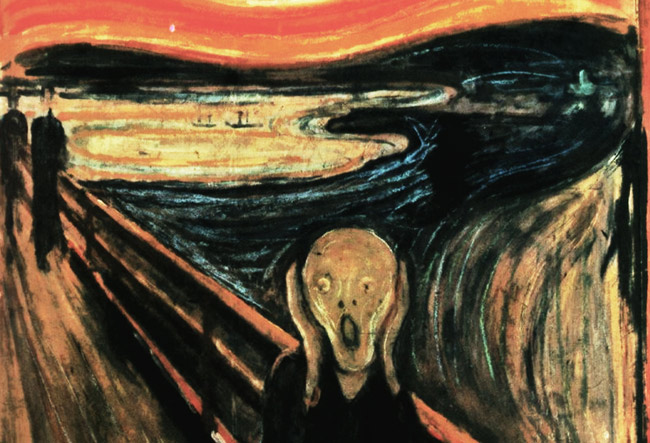
Research by political scientist Stephen Neely reveals that social media is a primary driver of chronic political stress in America. Surveys from 2024 show over 100 million adults experience significant stress reactions, including sleep loss and fractured relationships. Algorithmic platforms prioritize outrage and engagement, making active participants especially vulnerable. This generational shift in news consumption has left younger cohorts particularly susceptible to psychological exhaustion.
Global Warming and Swimming in the Seine

River bathing was widely practised over the last few centuries, and in the Seine, it has survived to the present day despite bans on swimming. The practice does not only include recreational or sporting dimensions – it is also climate-related, at a time when rising temperatures suggest that compliance with the Paris Agreement will be a difficult, if not impossible task.
Why Is Columbus Back at the White House?

Trump reinstalled a replica Christopher Columbus statue on White House grounds following an executive order aimed at restoring traditional–that is, white–American history. The original monument was toppled by protesters in 2020. Other Confederate memorials are also returning to prominent locations, reigniting debates over national identity and provoking a symbolic shift in the public landscape.
AI-Written Police Reports Raise Concerns

Police are getting a boost from artificial intelligence, with algorithms now able to draft police reports in minutes. The technology promises to make police reports more accurate and comprehensive, as well as save officers time. The catch is that instead of writing the first draft of your college English paper, this document can determine someone’s liberty in court. An error, omission or hallucination can risk the integrity of a prosecution or, worse, justify a false arrest. While police officers must sign off on the final version, the bulk of the text, structure and formatting is AI-generated.
Why You Need Good Friends to Truly Understand Yourself and Achieve a Good Life

Aristotle argued that living well requires both self-knowledge and virtuous friendships. Friends serve as mirrors, offering perspectives that personal reflection misses. Deep connections foster character development and moral virtue, so the quest for happiness is a social endeavor rather than a solitary pursuit within a vacuum.
Surviving Ebola

Compared to the widespread media coverage of the 2016 Ebola epidemic when it started, news reports on its aftermath were limited. As a result, very few people know that Ebola survivors have struggled to continue with their lives since the end of the epidemic. These survivors include widows, orphans who are now homeless, and thousands of people who are now blind or have permanent vision problems.
International Booker Prize 2026: Heartbreak, Brutality, Shapeshifting

This year’s International Booker Prize shortlist presents a diverse and intriguing array of books that all demonstrate the highly creative imagination and inventiveness of their authors. Across these novels, we meet the unreliable narrator of a meta-fiction, a failed modern witch, a family of Iranian émigrés, a filmmaker compromised by the Nazis, a brutal prison warden, and a gender-traversing figure who seeks to save their own skin by shapeshifting. Six literary experts guide you through the nominations.
Maga’s Great Un-Greatening

Some groups of Trump voters are having second thoughts. The most regretful are those with whom Trump made significant gains in 2024. They include political independents, African Americans, younger people and those with more education.
How A Rightwing Director Reopened The Venice Biennale to State Violence And War Politics

The 61st Venice Biennale has shifted from a spiritual artistic showcase into an ideological battlefield under new rightwing leadership. The reinstatement of controversial nations prompted the collective resignation of the official jury, widespread artist boycotts, and intense public demonstrations. Clashes between peaceful activists and riot police highlighted the tension. Art serves as a vehicle for state agendas and a tool for resistance.