• Skip to primary navigation
  • Skip to main content
  • Skip to primary sidebar
MENUMENU
MENUMENU
  • Home
  • About
    • Contact Us
    • FlaglerLive Board of Directors
    • Comment Policy
    • Mission Statement
    • Our Values
    • Privacy Policy
  • Live Calendar
  • Submit Obituary
  • Submit an Event
  • Support FlaglerLive
  • Advertise on FlaglerLive (386) 503-3808
  • Search Results

FlaglerLive

No Bull, no Fluff, No Smudges

MENUMENU
  • Flagler
    • Flagler County Commission
    • Beverly Beach
    • Flagler History
    • Mondex/Daytona North
    • The Hammock
    • Tourist Development Council
    • Marineland
  • Palm Coast
    • Palm Coast City Council
    • Palm Coast Crime
  • Bunnell
    • Bunnell City Commission
    • Bunnell Crime
  • Flagler Beach
    • Flagler Beach City Commission
    • Flagler Beach Crime
  • Cops/Courts
    • Circuit & County Court
    • Florida Supreme Court
    • Federal Courts
    • Flagler 911
    • Fire House
    • Flagler County Sheriff
    • Flagler Jail Bookings
    • Traffic Accidents
  • Rights & Liberties
    • First Amendment
    • Second Amendment
    • Third Amendment
    • Fourth Amendment
    • Fifth Amendment
    • Sixth Amendment
    • Seventh Amendment
    • Eighth Amendment
    • 14th Amendment
    • Sunshine Law
    • Religion & Beliefs
    • Privacy
    • Civil Rights
    • Human Rights
    • Immigration
    • Labor Rights
  • Schools
    • Adult Education
    • Belle Terre Elementary
    • Buddy Taylor Middle
    • Bunnell Elementary
    • Charter Schools
    • Daytona State College
    • Flagler County School Board
    • Flagler Palm Coast High School
    • Higher Education
    • Imagine School
    • Indian Trails Middle
    • Matanzas High School
    • Old Kings Elementary
    • Rymfire Elementary
    • Stetson University
    • Wadsworth Elementary
    • University of Florida/Florida State
  • Economy
    • Jobs & Unemployment
    • Business & Economy
    • Development & Sprawl
    • Leisure & Tourism
    • Local Business
    • Local Media
    • Real Estate & Development
    • Taxes
    • Sponsored Content
  • Commentary
    • The Conversation
    • Pierre Tristam
    • Diane Roberts
    • Guest Columns
    • Byblos
    • Editor's Blog
  • Culture
    • African American Cultural Society
    • Arts in Palm Coast & Flagler
    • Books
    • City Repertory Theatre
    • Flagler Auditorium
    • Flagler Playhouse
    • Special Events
  • Elections 2026
    • Amendments and Referendums
    • Presidential Election
    • Campaign Finance
    • City Elections
    • Congressional
    • Constitutionals
    • Courts
    • Governor
    • Polls
    • Voting Rights
  • Florida
    • Federal Politics
    • Florida History
    • Florida Legislature
    • Florida Legislature
    • Ron DeSantis
  • Health & Society
    • Flagler County Health Department
    • Ask the Doctor Column
    • Health Care
    • Health Care Business
    • Covid-19
    • Children and Families
    • Medicaid and Medicare
    • Mental Health
    • Poverty
    • Violence
  • All Else
    • Daily Briefing
    • Americana
    • Obituaries
    • News Briefs
    • Weather and Climate
    • Wildlife

Schools Finally Rethink One-To-One Student Laptop Fad

August 8, 2026 | FlaglerLive | Leave a Comment

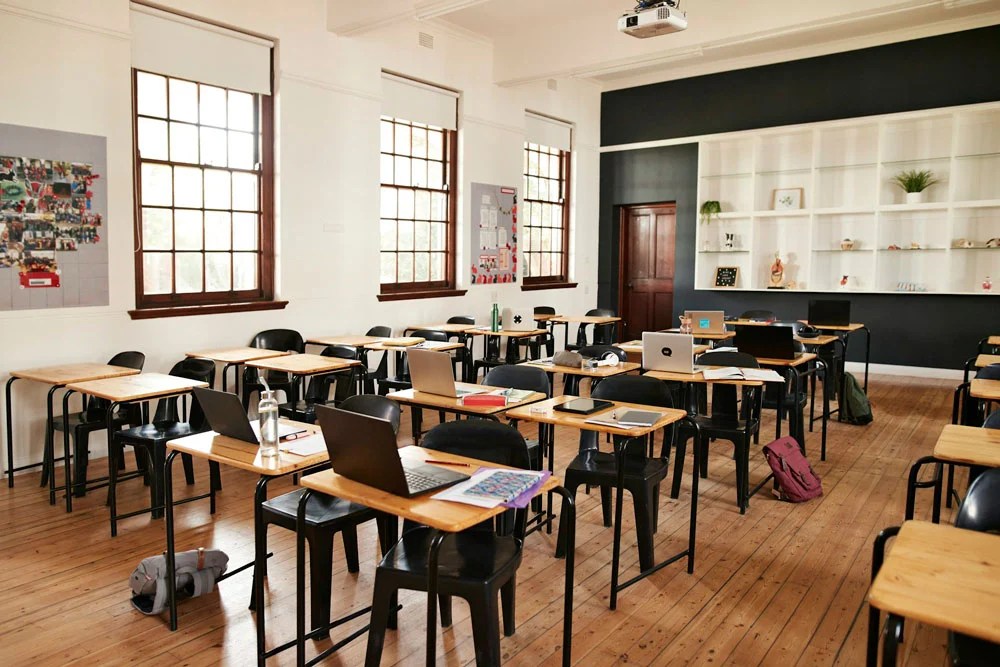
Simply reducing students’ screen time at school will not prepare them for a world increasingly shaped by data and AI. Klaus V
Simply reducing students’ screen time at school will not prepare them for a world increasingly shaped by data and AI. (Klaus Vedfelt/Digital Vision via Getty Images)

By Janice Mak

When the COVID-19 pandemic forced in-person classroom instruction to go virtual, students suddenly needed to have their own laptops or tablets in order to interact with teachers and complete assignments.

Most states used federal pandemic funding to address the digital divide. This refers to the gap between students and families who had their own tablets, computers and high-speed internet, and those who did not.

While most schools resumed in-person classes by 2021, many of them continued to rely heavily on online platforms and apps to help their students do their work.

Today, however, more and more schools are reconsidering how technology fits into teaching and learning, with many districts establishing clearer expectations about when technology should be used, for what purpose and at what ages.

So far, as of late July 2026, lawmakers in at least 17 states had introduced or debated legislation addressing classroom screen time or student use of digital devices. Six states had already enacted new laws, while others had considered or failed to pass similar measures.

Iowa, for example, passed a law that limited digital instruction for elementary students. Maine’s legislation did not put specific screen time limits in place but approved a study on the impact of classroom technology.

Instead of treating screens as the default tool for instruction, some schools are directing teachers to use laptops only when the technology adds clear instructional value.

Two girls wearing face masks sit in opposite directions and look at computer screens. One of the girls sits next to an adult, also wearing a mask.
Students use laptops at Carter Traditional Elementary School in Louisville, Ky., in January 2022.
Jon Cherry/Getty Images North America

Passive consumption or purposeful use?

The Los Angeles Unified School District is one example of a school district that is shifting away from technology in the classrooms.

In June 2026, Los Angeles approved a policy that eliminates in-school screen use for students in preschool through first grade. It also established screen time limits for older students.

Los Angeles is also moving away from sending school-issued devices home with every student. Instead, elementary students can use shared classroom devices, and families can then opt in for take-home devices in older grades.

The Marietta City Schools district in Georgia is another example. The district adopted a policy in July 2026 that calls for device screens to be “closed by default” and used only when they serve a clear instructional purpose.

At the state level, a July 2026 law in Utah prohibits 1-1 device-per-student ratios for students in kindergarten to third grade. There are some exceptions to this policy, such as when students are taking state standardized tests.

In other states, lawmakers are considering similar laws that would restrict screen time for young students or limit the use of school-issued devices during the school day.

How students use screens matters

What makes these developments notable is not any single policy but how quickly the conversation around education and technology has changed.

The American Academy of Pediatrics recommends looking beyond the number of minutes children spend on screens each day. Instead, parents and educators could consider the quality of digital experiences and what screen use may be displacing.

Technology can support learning when it is intentionally integrated into instruction, while excessive or passive screen use that displaces sleep, physical activity, play or face-to-face interactions may negatively affect children’s health and well-being.

This distinction between passive consumption and purposeful use is increasingly shaping school policy. Updated policies also reflect an emerging emphasis on age-appropriate screen use, student well-being and ensuring that technology can support, rather than replace, direct instruction and student collaboration.

While newer state and local screen-time policies vary, a common through line is that students’ ages matter when it comes to using technology.

For older students, technology may remain central to learning, particularly when students are using it to program, analyze data, model complex systems and critically evaluate information. Younger children, meanwhile, should have sufficient opportunities for play, conversation, writing, movement and hands-on, “unplugged” learning, without screens.

Teachers can still prepare students for a digital world

As a member of the National Academies consensus committee examining the future of data and computing education in K-12 schools, I have spent the past two years asking a simple question: What do today’s students need to know about the technologies that increasingly shape their lives?

Our March 2026 report shows that students need to learn more than how to use a laptop or an artificial intelligence chatbot. Our research found that they should also understand how data is collected and used, how AI and other computing systems work, how technology affects people and society, and how to use these tools to solve real problems.

The issue, according to our findings, is not whether students spend more or less time using technology. It is whether the time they spend with technology helps them build understanding, solve problems, think critically and make informed decisions.

A growing body of research arrives at the same conclusion we reached: Students learn the most when they actively use technology to investigate questions, analyze information and solve problems – not when they passively consume digital content.

My 2024 research also shows that technology was most valuable when students used it to investigate scientific questions, test ideas, create models, work with classmates and explain their reasoning.

The technology itself was not what improved learning. What mattered was how teachers used it to engage students in deeper thinking.

Two children wearing maroon shirts walk near a red brick wall and look down at iPads.
Students work on their iPads between classes at Martin Luther King Jr. Elementary School in Phoenix in May 2025.
Melina Mara/The Washington Post via Getty Images

The next critical question

For decades, there was a race to get classrooms hooked up to the latest educational technology.

Now, some schools are doing the opposite. This reversal may represent an overdue correction after years of assuming that more technology automatically equated to better learning.

But I think the next chapter should not be defined by counting minutes of screen time. Instead, policymakers, educators and technology developers should consider the more critical question of what kinds of digital experiences are actually worth students’ time.The Conversation

Janice Mak is a Clinical Assistant Professor of Computer Science Education and Educational Technology at Arizona State University.

The Conversation arose out of deep-seated concerns for the fading quality of our public discourse and recognition of the vital role that academic experts could play in the public arena. Information has always been essential to democracy. It’s a societal good, like clean water. But many now find it difficult to put their trust in the media and experts who have spent years researching a topic. Instead, they listen to those who have the loudest voices. Those uninformed views are amplified by social media networks that reward those who spark outrage instead of insight or thoughtful discussion. The Conversation seeks to be part of the solution to this problem, to raise up the voices of true experts and to make their knowledge available to everyone. The Conversation publishes nightly at 9 p.m. on FlaglerLive.
See the Full Conversation Archives
THE AUG. 18 PRIMARIES: THE LIVE INTERVIEWS AND VIDEOS
County Commission
Greg Feldman (Dis. 2) | Theresa Pontieri (Dist. 2) | Anna Jones (Dist. 4) | Drew Moss (Dist. 4) | Leann Pennington (Dist. 4)
School Board
Cathy Moon (Dist. 1) | Jill Woolbright (Dist. 1) | Will Furry (Dist. 2) | Rob Wood (Dist. 2) | Christy Chong (Dist 4) | Ron Long (Dist. 4) | Trevor Tucker (Dist. 4)
Palm Coast City Council
Tony Amaral Jr. (Dist. 2) | Jeani Duarte (Dist 2.) | Jimmy Hengy (Dist. 2) | Dylana Dee Galery (Dist. 4) | John Kvederis (Dist. 4) | Ramon Marrero (Dist. 4) | Darlene Shelley (Dist. 4)
Support FlaglerLive
The political climate—nationally and right here in Flagler County—is at war with fearless reporting. Your support is FlaglerLive's best armor. After 16 years, you know FlaglerLive won’t be intimidated. We dig. We don’t sanitize to pander or please. We report reality, no matter who it upsets. Even you. Imagine Flagler County without that kind of local coverage. Stand with us, and help us hold the line. There’s no paywall—but it’s not free. become a champion of enlightening journalism. Any amount helps. FlaglerLive is a 501(c)(3) non-profit news organization, and donations are tax deductible.
You may donate openly or anonymously.
We like Zeffy (no fees), but if you prefer to use PayPal, click here.
If you prefer the Ben Franklin way, we're at: P.O. Box 354263, Palm Coast, FL 32135.
 

Reader Interactions

Leave a Reply Cancel reply

Your email address will not be published. Required fields are marked *

This site uses Akismet to reduce spam. Learn how your comment data is processed.

  • grand living realty
  • VERANDA BAY FLAGLER BEACH GATED COMMUNITY
  • Conner Bosch law attorneys lawyers offices palm coast flagler county
  • politis matovina attorneys for justice personal injury law auto truck accidents

Primary Sidebar

  • grand living realty
  • VERANDA BAY FLAGLER BEACH GATED COMMUNITY
  • politis matovina attorneys for justice personal injury law auto truck accidents

Recent Comments

  • Voter on Eight Days of Early Voting Begin Saturday in Flagler County as 6,000 Have Already Cast Primary Ballots
  • Me on Regime Change: The Banality of Evil in Trump 2.0
  • Truth on Regime Change: The Banality of Evil in Trump 2.0
  • BMW on White Parents Who Tell Their Kids Race Doesn’t Matter Ignore Long Shadow of Racism
  • Atwp on White Parents Who Tell Their Kids Race Doesn’t Matter Ignore Long Shadow of Racism
  • Mark on Judge Rules Palm Coast’s Doubling of Impact Fees Illegal, a Devastating Blow to City’s Revenue and Victory for Builders
  • Gina Weiss on Palm Coast Council Tables Westward Expansion Development Plan, Demanding Economic and Other Guarantees
  • Judy on Regime Change: The Banality of Evil in Trump 2.0
  • Samuel L. Bronkowitz on The Daily Cartoon and Live Briefing: Friday, August 7, 2026
  • GetALife on Regime Change: The Banality of Evil in Trump 2.0
  • Ed P on The Daily Cartoon and Live Briefing: Friday, July 31, 2026
  • Gina Weiss on Trump Administrating Preparing to Gut Head Start, Poverty War’s Most Successful Program
  • Pogo on Regime Change: The Banality of Evil in Trump 2.0
  • Sherry on White Parents Who Tell Their Kids Race Doesn’t Matter Ignore Long Shadow of Racism
  • Pogo on White Parents Who Tell Their Kids Race Doesn’t Matter Ignore Long Shadow of Racism
  • Gina Weiss on Trump Administrating Preparing to Gut Head Start, Poverty War’s Most Successful Program

Log in