• Skip to primary navigation
  • Skip to main content
  • Skip to primary sidebar
MENUMENU
MENUMENU
  • Home
  • About
    • Contact Us
    • FlaglerLive Board of Directors
    • Comment Policy
    • Mission Statement
    • Our Values
    • Privacy Policy
  • Live Calendar
  • Submit Obituary
  • Submit an Event
  • Support FlaglerLive
  • Advertise on FlaglerLive (386) 503-3808
  • Search Results

FlaglerLive

No Bull, no Fluff, No Smudges

MENUMENU
  • Flagler
    • Flagler County Commission
    • Beverly Beach
    • Flagler History
    • Mondex/Daytona North
    • The Hammock
    • Tourist Development Council
    • Marineland
  • Palm Coast
    • Palm Coast City Council
    • Palm Coast Crime
  • Bunnell
    • Bunnell City Commission
    • Bunnell Crime
  • Flagler Beach
    • Flagler Beach City Commission
    • Flagler Beach Crime
  • Cops/Courts
    • Circuit & County Court
    • Florida Supreme Court
    • Federal Courts
    • Flagler 911
    • Fire House
    • Flagler County Sheriff
    • Flagler Jail Bookings
    • Traffic Accidents
  • Rights & Liberties
    • First Amendment
    • Second Amendment
    • Third Amendment
    • Fourth Amendment
    • Fifth Amendment
    • Sixth Amendment
    • Seventh Amendment
    • Eighth Amendment
    • 14th Amendment
    • Sunshine Law
    • Religion & Beliefs
    • Privacy
    • Civil Rights
    • Human Rights
    • Immigration
    • Labor Rights
  • Schools
    • Adult Education
    • Belle Terre Elementary
    • Buddy Taylor Middle
    • Bunnell Elementary
    • Charter Schools
    • Daytona State College
    • Flagler County School Board
    • Flagler Palm Coast High School
    • Higher Education
    • Imagine School
    • Indian Trails Middle
    • Matanzas High School
    • Old Kings Elementary
    • Rymfire Elementary
    • Stetson University
    • Wadsworth Elementary
    • University of Florida/Florida State
  • Economy
    • Jobs & Unemployment
    • Business & Economy
    • Development & Sprawl
    • Leisure & Tourism
    • Local Business
    • Local Media
    • Real Estate & Development
    • Taxes
    • Sponsored Content
  • Commentary
    • The Conversation
    • Pierre Tristam
    • Diane Roberts
    • Guest Columns
    • Byblos
    • Editor's Blog
  • Culture
    • African American Cultural Society
    • Arts in Palm Coast & Flagler
    • Books
    • City Repertory Theatre
    • Flagler Auditorium
    • Flagler Playhouse
    • Special Events
  • Elections 2026
    • Amendments and Referendums
    • Presidential Election
    • Campaign Finance
    • City Elections
    • Congressional
    • Constitutionals
    • Courts
    • Governor
    • Polls
    • Voting Rights
  • Florida
    • Federal Politics
    • Florida History
    • Florida Legislature
    • Florida Legislature
    • Ron DeSantis
  • Health & Society
    • Flagler County Health Department
    • Ask the Doctor Column
    • Health Care
    • Health Care Business
    • Covid-19
    • Children and Families
    • Medicaid and Medicare
    • Mental Health
    • Poverty
    • Violence
  • All Else
    • Daily Briefing
    • Americana
    • Obituaries
    • News Briefs
    • Weather and Climate
    • Wildlife

White Parents Who Tell Their Kids Race Doesn’t Matter Ignore Long Shadow of Racism

August 6, 2026 | FlaglerLive | Leave a Comment

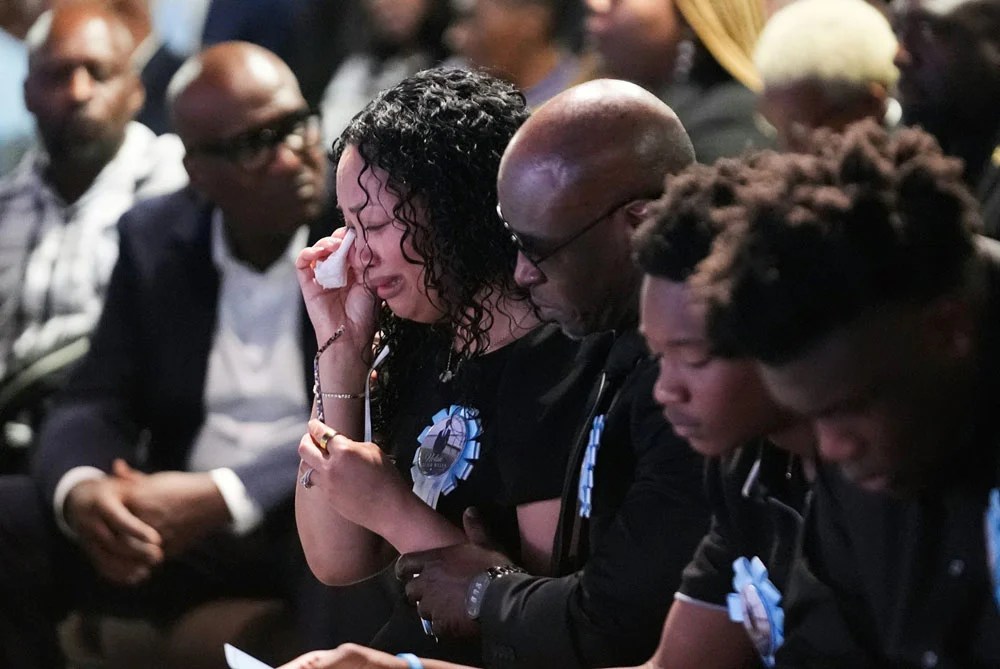
The family of Nolan Wells, during a July 20, 2026, service in Ocean Springs, Miss., for the 18-year-old found dead after taking a July 4 boat trip with friends.
The family of Nolan Wells, during a July 20, 2026, service in Ocean Springs, Miss., for the 18-year-old found dead after taking a July 4 boat trip with friends. (AP Photo/Gerald Herbert)

By James M. Thomas

“Look around.”

“Pay attention.”

“Be mindful of where you are and who you are with.”

“Check in. With us. With yourself.”

For parents of Black children, these four statements represent routine guidance they give, part of “the talk,” a well-worn ritual of racial socialization that shapes how Black children and adults learn what it means to live and get by in a white-dominated society.

The recent death of 18-year-old Nolan Wells has brought the importance of the talk to the forefront of public discussion. Wells, who was Black, was on a boat trip along the Mississippi Gulf Coast with a group of white friends when he disappeared on July 4. Wells’ mother reported him missing later that evening, and a park ranger found his body on July 6.

Mississippi’s history of racist violence casts a long shadow and has fueled intense online speculation about what happened to Wells. So far, investigations are ongoing and the nature and cause of Wells’ death remain undetermined.

Alongside this speculation are reminders to parents of Black children about the importance of the talk.

“There is a unique burden that comes with raising Black children,” wrote blogger Maui Bigelow. “We spend years preparing them for situations we pray they never encounter.”

Yet, for all the discussion now about the importance of “the talk” in Black families, the research I and others have done shows that there is no analagous discussion in white families about race. In fact, research finds that white parents have few, if any, direct conversations about race and racism with their children.

When white parents do talk with their children about race and racism, research finds those parents often minimize and ignore the role of racism in daily life, or discuss it in vague and superficial terms.

An eraser erases the word racism in the head.
When white parents tell their children that race does not matter, they are implying that racism does not exist.
Trifonenko/Getty Images Plus

Making sense of white racial status

I’m a sociologist of race and racism. For the past five years I’ve been studying white people to understand how they make sense of their white racial status. My research focuses on white people living in the U.S. South because that region, more than any other, is responsible for creating and sustaining Americans’ shared ideas about race and its significance, including what it means to be white.

My team of graduate student researchers and I have interviewed well over 100 white Southerners between 18 and 88 years old, the majority of whom live in Mississippi. With a median age of 42 years old, about a third of those we spoke with were raising children of their own. Another third had children who were grown and living on their own.

In our interviews we asked these white Southerners to tell us whether and how they talked about race with their children, including what it means to be white. We also asked everyone we spoke with whether and how their own parents talked with them about race and what it means to be white.

About 30% of those we spoke with said they never talked about race, either with their parents or with their own children. Gail, 56, said she “never wanted to make it a thing” for her six children. And 41-year-old Michael said that he and his wife don’t talk to their kids about race because his parents did not talk with him about it when he was a child. “Race is just a descriptor,” Michael told us.

Jayne, 63, also said she never talked about race with her parents or her own children. But as we talked more, it became apparent that Jayne’s parents did talk with her about race.

Jayne recalled her mother being “scared of Black men” because of a lynching that took place in her hometown when her mom was a child. “She heard stories about what this Black man had supposedly done,” Jayne told us. “It left her with that fear.” Jayne knows this story because her mother told it to her, putting the same fear in Jayne that was put into her.

Race-neutral language obscures reality

Jayne’s recollection of what her mother taught her was similar to the explicit racism received and taught by about 10% of those we spoke with.

Seventy-one-year-old Shirley didn’t remember her own parents talking with her about race. When it came to her own children, though, Shirley taught them “to always be polite and treat people well.” But when it comes to marriage and family, she told them to “stay with your own.”

Antonio, 87, raised three children. He taught them that “they don’t need to go anywhere or do anything with Black kids, just to stay with the whites.”

The largest share of those we spoke with – about 44% – recalled conversations with their parents or their own children where racism was minimized in favor of language that encouraged seeing people as “just people,” and not as members of racial groups.

Crowd at Arkansas State Capitol protesting integration, with signs reading 'Race mixing is Communism' and 'Stop the race mixing.'
The racism and resentments fueling resistance to school integration still linger in the South today.
Circa Images/GHI/Universal History Archive/Universal Images Group via Getty Images

Lyle, 68, taught his children that “we’re all God’s children, there’s nothing special about us.” Fifty-year-old Leanna teaches her children that everyone is created “equal in dignity” and that race doesn’t matter. And 45-year-old Ned tells his children, “We’re all humans. And just because I come from a different place, or have a different skin tone … we’re all different in some way. You’re unique.”

On the surface, this race-neutral language appears nonjudgmental and even ideal. Yet Americans live in a social world in which racism remains powerfully stitched to the daily fabric of their lives, structuring where people live, the schools they attend, the places they work and the people with whom they interact.

In this context, I and others argue that race-neutral language obscures the reality of racism and works directly against efforts to meaningfully address concrete racial inequalities.

Functionally speaking, race-neutral lessons have the same effect as the more explicit racism taught by a smaller share of white parents to their children.

When white parents tell their children that race does not matter, they are implying that racism does not exist. And so their children may fail to understand how their own life chances are shaped by the same racist forces that limit opportunities for others who are not white. Importantly, they may fail to understand the role they can play in challenging racism within their own lives.

The talk for white children

Would things have been different if Wells’ friends were well versed in Mississippi’s history of racial violence, including violent backlash toward integration? Or if they had considered the concerns many Black parents have of their children navigating all-white spaces? We don’t know the answer, or whether their parents did talk to them about this history.

To be clear, this is not to claim that Wells’ death was the result of racial violence, but rather to acknowledge that the minute Wells stepped onto a boat as the only Black person in his group of friends, the underlying racial context was established. Based on my research and the research of others, that context was also likely misunderstood or not understood at all by his white friends.

Having “the talk” with white children entails talking plainly with them about what it means to be white. This includes explaining to them why they grow up in mostly white neighborhoods, attend mostly white schools and have few nonwhite friends.

Having this kind of plain talk with white children can better equip those children to recognize white-dominated spaces, the challenges Black children face while navigating them, and what white children and adults can do to help.

James M. Thomas is Professor of Sociology at the University of Mississippi.

The Conversation arose out of deep-seated concerns for the fading quality of our public discourse and recognition of the vital role that academic experts could play in the public arena. Information has always been essential to democracy. It’s a societal good, like clean water. But many now find it difficult to put their trust in the media and experts who have spent years researching a topic. Instead, they listen to those who have the loudest voices. Those uninformed views are amplified by social media networks that reward those who spark outrage instead of insight or thoughtful discussion. The Conversation seeks to be part of the solution to this problem, to raise up the voices of true experts and to make their knowledge available to everyone. The Conversation publishes nightly at 9 p.m. on FlaglerLive.
See the Full Conversation Archives
THE AUG. 18 PRIMARIES: THE LIVE INTERVIEWS AND VIDEOS
County Commission
Greg Feldman (Dis. 2) | Theresa Pontieri (Dist. 2) | Anna Jones (Dist. 4) | Drew Moss (Dist. 4) | Leann Pennington (Dist. 4)
School Board
Cathy Moon (Dist. 1) | Jill Woolbright (Dist. 1) | Will Furry (Dist. 2) | Rob Wood (Dist. 2) | Christy Chong (Dist 4) | Ron Long (Dist. 4) | Trevor Tucker (Dist. 4)
Palm Coast City Council
Tony Amaral Jr. (Dist. 2) | Jeani Duarte (Dist 2.) | Jimmy Hengy (Dist. 2) | Dylana Dee Galery (Dist. 4) | John Kvederis (Dist. 4) | Ramon Marrero (Dist. 4) | Darlene Shelley (Dist. 4)
Support FlaglerLive
The political climate—nationally and right here in Flagler County—is at war with fearless reporting. Your support is FlaglerLive's best armor. After 16 years, you know FlaglerLive won’t be intimidated. We dig. We don’t sanitize to pander or please. We report reality, no matter who it upsets. Even you. Imagine Flagler County without that kind of local coverage. Stand with us, and help us hold the line. There’s no paywall—but it’s not free. become a champion of enlightening journalism. Any amount helps. FlaglerLive is a 501(c)(3) non-profit news organization, and donations are tax deductible.
You may donate openly or anonymously.
We like Zeffy (no fees), but if you prefer to use PayPal, click here.
If you prefer the Ben Franklin way, we're at: P.O. Box 354263, Palm Coast, FL 32135.
 

Reader Interactions

Leave a Reply Cancel reply

Your email address will not be published. Required fields are marked *

This site uses Akismet to reduce spam. Learn how your comment data is processed.

  • VERANDA BAY FLAGLER BEACH GATED COMMUNITY
  • politis matovina attorneys for justice personal injury law auto truck accidents
  • Conner Bosch law attorneys lawyers offices palm coast flagler county
  • grand living realty

Primary Sidebar

  • grand living realty
  • VERANDA BAY FLAGLER BEACH GATED COMMUNITY
  • politis matovina attorneys for justice personal injury law auto truck accidents

Recent Comments

  • Laurel on Byron and Erika Donalds’ Gospel of ‘School Choice’ Would Turbocharge Vouchers and Privatization
  • Laurel on The Daily Cartoon and Live Briefing: Monday, August 3, 2026
  • Laurel on Calling Homestead Amendment Ballot Measure Misleading Political Rhetoric, Judge Orders Rewrite
  • Laurel on Byron and Erika Donalds’ Gospel of ‘School Choice’ Would Turbocharge Vouchers and Privatization
  • Laurel on Byron and Erika Donalds’ Gospel of ‘School Choice’ Would Turbocharge Vouchers and Privatization
  • Fair Tax on Calling Homestead Amendment Ballot Measure Misleading Political Rhetoric, Judge Orders Rewrite
  • Joe D on Byron and Erika Donalds’ Gospel of ‘School Choice’ Would Turbocharge Vouchers and Privatization
  • JimboXYZ on Flagler Judge Repeatedly Refers to Two Black Men as ‘Thugs’ in Bond Hearing for One of Them
  • Mothersworry on Maintenance Worries and Holdouts Aside, County Approves $35 Million Renourishment for 5.5 Miles of Beach
  • Joe D on Maintenance Worries and Holdouts Aside, County Approves $35 Million Renourishment for 5.5 Miles of Beach
  • Ed P on Maintenance Worries and Holdouts Aside, County Approves $35 Million Renourishment for 5.5 Miles of Beach
  • Linda on Flagler Judge Repeatedly Refers to Two Black Men as ‘Thugs’ in Bond Hearing for One of Them
  • Gina Weiss on Flagler Airport Director Roy Sieger Cleared Again As Ethics Commission Tosses Resident’s Retribution Claims
  • PaulT on Trump’s ‘Narco‑Terrorism’ War in Latin America Targets Leftists More than Drug Lords
  • daniel walker sofchak on Byron and Erika Donalds’ Gospel of ‘School Choice’ Would Turbocharge Vouchers and Privatization
  • PaulT on Trump’s ‘Narco‑Terrorism’ War in Latin America Targets Leftists More than Drug Lords

Log in