



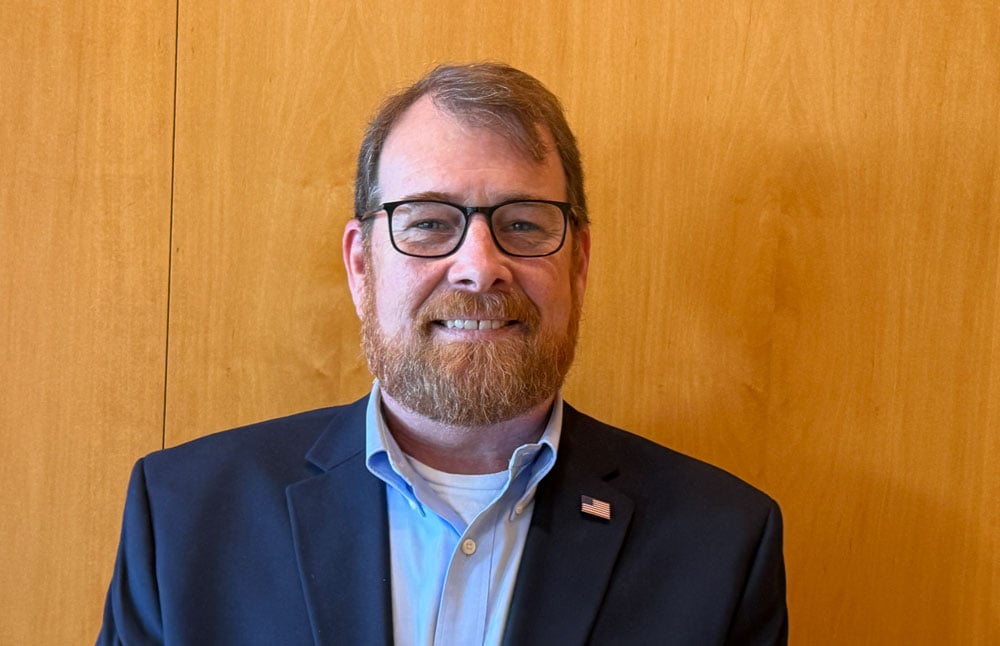
Ron Long is one of three candidates for Flagler County School Board, District 4. Trevor Tucker and incumbent Christy Chong are the others. Chong has declined to participate in the Live Interview.
It is a non-partisan race: all registered voters regardless of party affiliation or non-party status may vote in the Aug. 18 primary.
Three seats are up on the School Board in this election cycle. District 1 is an open seat, and has been an open seat since Derek Barrs, appointed to fill out the erm Sally Hunt did not complete, left for a job in the Trump administration last fall. Cathy Moon and Jill Woolbright are the District 1 candidates.
In District 2, Rob Wood is challenging first-term incumbent Will Furry, who had originally declared he was running for a congressional seat. He abandoned that effort after his campaign struggled, and announced he would run again for the School Board.
In District 4, if any of the three candidates–Chong, Long or Tucker–garners more than a 50 percent majority in the Aug. 18 primary, that candidate will be the winner. If none of the candidates clears the 50-percent threshold, the top two vote-getters will contest the seat in the Nov. 3 general election.
Furry, Chong and Woolbright have declined to answer the Live Interview’s questions. They alone, among the 19 candidates running in the three major local elections in the primary, have declined.
Flagler County School Board members serve four years. They’re paid $44,152 a year, an amount that will likely go up by a few thousand dollars by next year.
The Live Interview format changed this year. Since 2010, FlaglerLive had submitted identical questions to all candidates, enabling them to answer in writing. There typically were a round or two of follow-up questions, also in writing. Artificial intelligence has made that approach obsolete now that candidates can run the questions through AI and spit out prefab answers. To get around that, candidates were invited to a video interview. The video and the transcript are provided below.
The candidates were provided the same basic question within half an hour or less of the scheduled interview, but obviously not the follow-ups, which all differed. The questions to county commissioners are here.
Following the interview and before publication, the interview transcript went through two rounds of editing at this end, once by AI (yes, the irony is inescapable) for spell checks, copy editing and to smooth out verbal tics or repetitive words, and once by me for the same purpose. The candidates were then provided with the interview transcript and the video to review–not to make substantial changes, but to verify transcription accuracy, and, if they so chose, to add a postscript: if they felt they may have misspoken, or not clarified a point, or preferred to revise an answer, they were given that chance in the postscript, without changing the original text in the transcript. The postscript window is remaining open for subsequent additions, until the election.
The interviews can be quite long–not a surprise for a site pathologically incapable of brevity, but the county is awash in candidat quickies. We offer a little more depth, seeking to draw a profile rather than check off boxes: an election is not a speed date but a four-year commitment. The Live Interview’s aim is to elicit as much candor and transparency as possible, and to learn about the candidate beyond the basics in what amounts to extended conversations about the person, the character and temperament behind the candidate, the candidate’s seriousness, and the issues.
The rest is in the voters’ hands.
–Pierre Tristam

Flagler County Commission Greg Feldman (Dis. 2, R) Theresa Pontieri (Dist. 2, R) Anna Jones (Dist. 4, R) Drew Moss (Dist. 4, R) Leann Pennington (Dist. 4, R) Flagler County School Board Cathy Moon (Dist. 1) Jill Woolbright (Dist. 1) Will Furry (Dist. 2) Rob Wood (Dist. 2) Christy Chong (Dist 4) Ron Long (Dist. 4) Trevor Tucker (Dist. 4) Palm Coast City Council Tony Amaral Jr. (Dist. 2) Jeani Duarte (Dist 2.) Jimmy Hengy (Dist. 2) Dylana Dee Galery (Dist. 4) John Kvederis (Dist. 4) Ramon Marrero (Dist. 4) Darlene Shelley (Dist. 4) The candidates' interviews will be live-linked the day their interview publishes. |
The Interview Themes in Summary: Quick Links
- Basics
- Preparation and Character
- Vision
- Evaluating the current board
- The YMCA
- Arming school staff
- IB and Cambridge AICE
- Enrollment’s flatline, vouchers
- A rating vs. national standards
- DEI
- Funding loss from U.S. Department of Education
- Prayer in schools
- Rap sheet
- Postscript
The Video:
https://youtu.be/SC0thlNFfhw
FlaglerLive: Good morning, Mr. Long. Thank you very much for taking part in the interview.
Ron Long: Thanks for having me. I really appreciate you reaching out to the candidates and making sure that everybody has a chance to speak their platform and get it out to the community. We really appreciate this.
FlaglerLive: Well, thank you. Why don’t you start us off by telling us where you were born and when?
Ron Long: I was born in Duval County, Florida, at St. Vincent’s Hospital on March 27, 1971.
FlaglerLive: What brought you to Palm Coast, Flagler County?
Ron Long: Growing up in Duval County, I’ve always known about Flagler. I’ve always known about Palm Coast. As a young kid, we would ride by, headed south to Orlando, and we’d always see Garfield on the Great Big Water Tower. So, as a kid, you naturally thought, “Wow, that’s great! That’s where Garfield lives.” And then on top of that, there was a time back in the mid-to-late 1980s where ITT would offer you—it was very similar to other timeshares—if you come down and tour a few houses, they’d give you a free ticket to Wet ‘n Wild, which was a water park. And so my parents would do that every summer. So every year we got a free trip to Wet ‘n Wild out of Palm Coast. So after being in Jacksonville—I love Jacksonville, growing up there, it was the big city with a small-town feel, you know, the river city by the sea. Always loved Duval County, but once we got the football team, and then the Super Bowl, it just started to grow and grow and grow, and it got a little bit too much for what I wanted out of life anymore. So, a good friend of mine who lived in Flagler forever, he and I kept talking back and forth, and eventually he convinced me to move to Flagler, build a home down here in 2003, and I’ve loved being here in Flagler ever since.
FlaglerLive: Your political affiliation—it’s a nonpartisan race—but your political affiliation is—
Ron Long: I am a Republican. Always. I’m the secretary of the Flagler GOP.
FlaglerLive: And you’ve always been a Republican.
Ron Long: Oh yes, yes. Since, I think, the first one I voted for, I think it was Dole against Clinton. That’s right. Yeah, that was my first one.
FlaglerLive: And that was 1996.
Ron Long: Yes.
FlaglerLive: What made you decide to jump into the school board race?
Ron Long: Well, I’ve been in construction my whole life, and I’ve always had a desire for civics and government, and I’ve always enjoyed watching it. I’ve watched all the county commissioner meetings, school board meetings, and about three years ago, May of 2023, I had a workplace injury that retired me. Unfortunately, my ankle was too mangled for me to continue doing the manual labor of construction, so with that, I was laid up on the couch for a couple of months. And typical, I would always keep watching the school board meetings, the county commissioner meetings, and my wife finally said, “Instead of yelling at the TV, how about you get up and start going to these meetings?” So I started doing that. The county commissioner meetings, city council. Even though I’m not even in the city of Palm Coast, I would even attend the city council meetings for Palm Coast School Board. Eventually, I wound up getting appointed to the Flagler Planning and Development Advisory Board, which I’m now the vice chair of. And the more I started seeing things, the more concerned I got with the direction of the school board district. There just seems to be a need to focus on decorum. We need to get a cohesive board back in there because there are really important tasks that need to get done. These kids need our full attention, and we don’t need to be focused on just the decorum that is lacking right now in our school board. It’s very disheartening. It’s disappointing. It’s frustrating. It really irritates you sometimes. Yeah.
FlaglerLive: When you watched, what made you yell most?
Ron Long: What I would see in the workshops. There are a couple of school board members that are actively asking questions, the good questions, and they’re pushing back against policies they don’t see. But I see a couple of board members in there that are just rubber-stamping anything that comes down, and they always stand behind the old reliable, “Well, this is state policy. Well, you know, the state mandates this.” Well, that’s become a tired excuse. If it’s not benefiting us, you as a school board member, you’re supposed to go to Tallahassee and fight for stuff that benefits our county.
FlaglerLive: Let’s put names behind the board members you’re referring to.
Ron Long: Specifically speaking of Furry and Chong, they seem to fall lockstep with each other. No matter what one decides, the other one goes along with. I don’t see a lot of pushback. I don’t see—and you know, one of my biggest concerns right now, I’m retired, unfortunately, due to a work injury. I have the time to be able to do this job. I see the incumbent that’s in the seat that I want, she seems like she doesn’t have the time for this anymore. She missed legislative days. She just missed a workshop last week. This is an important seat. This seat has a lot to do with the direction that our children go, the growth, and the ability to prepare these kids for success after graduation. And it’s not a part-time job. It’s not a side hustle. If you’re going to do this, you need to be devoted to it. You need to be committed to it, and it needs to be a full-time job for you. I’m sure she’s a wonderful lady. I think she’s a nurse practitioner. She’s a great mom. I know people that know her kids are great kids, and she does well at that. But maybe right now is not the time for you to do something like this. Focus on your career. Focus on your kids, and let people who have the time to be able to do this job step in there and get it done.
FlaglerLive: You’re referring to Christy Chong. She is a full-time nurse.
Ron Long: And I’ve heard she’s a wonderful lady.
FlaglerLive: But what you’re saying would tend to exclude people who maintain their careers and keep working at very noble professions. Does that mean that only people who don’t have these full-time jobs can run?
Ron Long: No, I don’t mean it like that. What I mean is, we see people that get in these positions and they do have full-time jobs or they are business owners, but their career is structured as such that their job doesn’t require a full 40 hours or 60 hours a week. If you’ve got a job that requires 60 hours a week out of you, then that means you’re probably really putting in 70 hours a week. When do you have time to focus on the school board? That’s just one of my big concerns. I don’t think having a job should preclude you from doing this. I think if you don’t have the time, that should eliminate you from getting into this type of role.
FlaglerLive: Actually, all four individuals on the school board have full-time jobs. It’s not an exception in this case, and most of the people now in our governments do have full-time jobs. It’s a difference in how much work they’re putting in on the board as opposed to not; sometimes that does come across.
Ron Long: A good example is Lauren Ramirez. Yes, she owns a business, has a full-time job, but please tell me an event you don’t see her at. She is a bulldog. She is out there all the time. She’s at the schools helping with buses in the morning. She’s at every school board meeting, every workshop, all that, and she has a full-time job also. But again, like I said, I’m sure she’s got it structured in a way that she can manage both of them, and she can devote the adequate amount of time to both of them. If you have a career that is demanding all of your time, I don’t understand how you can commit to also the school board, which should be taking at least as much as necessary to make sure our kids succeed.
FlaglerLive: And Lauren has also almost as many kids as Bian McMillan I think, which is a job in itself. Go back to your career a little bit, if you could trace it from the time when you were a teenager to now, what you’ve done professionally?
Ron Long: Well, right out of high school, I tested really well in high school. I’m kind of intelligent, I’m not trying to brag, but I tested really well in high school. But I was not a school-oriented person. Didn’t like school. Didn’t want to go any longer. Right when we were having the SATs, I scored pretty well on them. So everyone said, “Well, Ron, you’re going to college,” and I went reluctantly. I said, “Okay, fine.” I spent about a year and a half in college, didn’t really accomplish a whole lot. I will say I had a wonderful time. I mean, college as a kid, it’s great, but I didn’t accomplish a lot. Once I got out of college, I got my real estate license, and very quickly I realized that property management is the best option when it comes to real estate. So I got involved in that, and then shortly after that, I realized the guy that’s really making the money and being able to really write his own job script and everything was the guy doing the maintenance. So I got involved in doing home maintenance, then that evolved into construction, and from there on, yeah, I’ve spent 30 years working construction sites. I’ve never been the guy riding around in the truck dropping off plans and materials. I’ve always been the guy on the job site, running the crews, reviewing the plans, checking the budget, hitting the deadlines, all that kind of stuff. And I thoroughly, thoroughly enjoyed it. I had opportunities to be a project manager. I didn’t want it. I didn’t want to be at a desk all day. I didn’t want to be driving around in a truck all day. I enjoy the hands-on of building and construction, so I stuck with what I was doing. And then, yeah, unfortunately, after a while, I guess Murphy came along and retired me out of it and threw a big roll shutter on my ankle. So I have a background in working with people. I have a background in problem-solving. That’s one of the biggest things I’ve learned in construction. You know, we’re kind of given the task and said, “Here, man, make it work. We don’t care how, but it better look good, it better meet code, and it better work.” So I’ve learned how to really solve problems on the fly, and I’ve learned how to work with others. Running a crew of construction workers—I don’t know if you’ve ever been around a crew of construction workers, they’re not the easiest guys to get along with, but in order to get the job done, I had to learn to work with these guys and help them get along with each other so we could get the task done.
FlaglerLive: If you would believe it, in the summer of 1987, I worked construction in [Durham], North Carolina. Until I shot myself with a nail gun, and I thought maybe I’m not cut out for that.
Ron Long: I had a couple of those, too. Yeah, those injuries didn’t put me out. I had a couple of those, but no, the ankle injury is the one that truly retired me.
See how the other District 4 candidates answered:

FlaglerLive: So tell us how, beyond the attendance of meetings through YouTube and also in person, which we’ve seen, beyond that, how have you prepared? Have you read the documents at the school board, the budgets?
Ron Long: Yeah, I’ve been diving deep into the budgets. That’s one of the big things that kind of, in my opinion, a lot of things have been settled by the state. Now, at the same time, I’m a big proponent of home rule, I’m not really keen on a lot of the control the state has taken, but there are a few things that I do believe they got right. So with that, that’s left us now on the board with dealing with the budget and what is being mandated by the state. You know, the unfunded mandates that they give out all the time. So my biggest thing is trying to figure out how we can best trim the budget to meet what we need. Another small example I’ll give, and it’s one I’ve kind of been beating this dead horse for a while: the white fleet that we have at the school. It’s a fleet of white vehicles. They’re either Explorers or Expeditions. I saw a bunch of them being parked over at the county courthouse, and they started to intrigue me. I wanted to know what this was about, so I reached out, and I was told that’s the white fleet. They are used by teachers and staff when they need to go from one school to another, or if they’ve got to go to another county for a meeting, what have you. That way, they aren’t using their vehicles, and we don’t have to do the mileage buyback, all that kind of stuff to compensate them. So I asked for an inventory list, and when I got this inventory list, it was twice what I was expecting. There was somewhere in the neighborhood of about 40 vehicles in this fleet. Then I asked the important question: “So here’s what I also would like to find out. I don’t need to know who, don’t need names, but I’d like to know what the vehicle was used for, where it went, how long, and stuff like that.” I was told we don’t have that. We don’t have a list like that. That floored me when I heard that. That absolutely floored me. That means—
FlaglerLive: Just to be clear, you’re saying that there is no log that keeps track of who is using what vehicle and to what purpose.
Ron Long: Nope. As of a week ago, and I can check my email now to see if I’ve gotten anything, but as of a week ago, I haven’t been sent back anything. Lauren Johnson sent me an email saying, “Ron, here is the list of the vehicles, and we’re working with Motor Pool to see if we can find some kind of log or something.”
FlaglerLive: Did you still ever hear back on that? Did you ask if those vehicles, like in Palm Coast, are GPS tracked?
Ron Long: Yeah, no, they’re not. They’re not. From what I was told, they’re not GPS tracked. I have a friend of mine that works for Massey, the pest control company, and she told me recently, she goes, “Ron, I’m kind of upset. They put cameras in all of our vehicles now, so between jobs, I can’t go find a shade tree and take a nap in my car.” And in my mind, I’m thinking, okay, if Massey put cameras in every one of their sales vehicles, but we don’t even have a way—we don’t even have a sign-out log. We have no—I was told recently that there’s some kind of QR code that is being used. I haven’t been told any details on it, and I don’t know how new that program is. I don’t know if possibly me making a stink about the white fleet is what has possibly triggered them to actually implement a log, but as of last week, I have been told nothing of where these vehicles go, what they’re used for, how long. Again, you know, somebody could check out one of those cars on Friday morning, head to the Keys, have a nice weekend, and come back and drop the car off, and all’s good.
FlaglerLive: Well, obviously, those abuses would be terrible. A couple of points, though.
Ron Long: I see things like that. I see things like that, and then you know I start diving deeper down the rabbit hole. And like I said, there are several, there are a few other things I’m investigating as well. There was one—I met with some of the union members for the school buses and for the paraprofessionals.
[FlaglerLive at this point inaccurately said there are no unions: the bus drivers and paraprofessionals may be part of FESPA, the Flagler Educational Support Personnel Association, which is a union. Faculty members are represented by the Flagler Education Association, the teachers union.]
Ron Long: We don’t have a unionized board, but they do have representation, so to say. But I was speaking with one of them, and one of the bus drivers told me, and this was like a couple of years ago, there was a pilot program, and about 15 or 20 buses got these LED screens that were installed down near the dashboard. They sat in there for about four months. The guy said they were never turned on. I was never told what they were used for. I found out it cost about $80,000 for that pilot program. After four months, they were removed and something else was put in, so that was 80 grand that we just kind of, hey, let’s see what it’s like to throw $80,000 at them. I mean, that’s raises for school bus drivers. That’s raises in teacher pay. That stuff. Well, and that’s what I’m talking about. The budget needs a line-by-line review.
FlaglerLive: I can appreciate the oversight that you want to bring to all this, but a couple of points. First, there is a degree of trust that we have to give our employees, and does it not make you, especially as a Republican, does it not make you uncomfortable when we have our own employees under the gun of video cameras, surveillance, even GPS? When I first learned about Palm Coast GPSing all its vehicles, it was not just to make sure that the vehicles, in case of a crash, can be tracked, but also to see where the employees are going. Does all that not make you a little uncomfortable about this sort of big brother approach by employers, when a measure of trust has to be part of the work? I mean, we certainly trust our teachers not to have cameras in there. Why are we not doing the same thing with our blue-collar workers? Are they somehow less worthy? They’re not, but yet we treat them differently. The second thing is, and to use a phrase that I learned from Charles Gambaro, the city councilman, this week, is what you’re talking about worth the squeeze? In other words, whether you were to go through all of that analysis, the end result might not be that much in the end for all the effort you’re putting in, and the little amount of money that might be saved, considering the service that what you’re describing provides, whether it’s the school buses, obviously there’s no question, or even the fleet that exists for a fair reason, which is to prevent employees from using up their own cars. Some of them are poorly paid enough as it is. So when you combine all that, are we really going to get to a better bottom line? Really, a significantly better bottom line.
Ron Long: Well, I’ll tell you, I ran numbers, and I’m just going off the top of my head. Well, first, to address your first question, when it comes to tracking, you know, lo-jacking everybody and stuff of that nature. When it comes down to it, yeah, this is part of the job. You don’t have to adhere to all this, you just simply by not working here. Again, being a conservative, you have the right to leave, but if you want this job and you want to do these kind of things, yes, we do need to track this. It’s not because of you and it’s not because of the other guy, but yes, a few bad apples have spoiled the bunch. And if you are on the up-and-up, and if you are legitimate with everything you do as your job, working for the school board, it shouldn’t bother you to have a tracker in the vehicle that you’re borrowing, or it shouldn’t bother you to have a log system to make sure that the vehicle is being used as it’s intended. Now, going to trimming the fat, and every little dollar. I am of the philosophy that every dollar matters. You’re right. Sometimes it may not seem worth the squeeze, but when you squeeze here, squeeze there, and squeeze in another place. I did research. I think it was somewhere in the neighborhood of, I think it’s 1.2 million would give every teacher a $5,000 a year raise, 1.2 million. I mean, we just talked about 80,000 that was used for a program in some kind of digital readout in buses that was never used. How much extra are we spending on maintaining a fleet of 40 vehicles when maybe 20 could get by? You know, we just recently purchased, what was it, two new passenger vans, two new Explorers, and also a large panel van, a big box truck. That was $635,000. Right? I know what you mean, that it’s like, oh, is the squeeze worth it? If you squeeze in enough places, then yeah, if I can come up with 1.2 million dollars, which in the broad scheme of our budget isn’t really that much, if I can come up with that, I could give every teacher probably a $5,000 raise. So was that worth the squeeze?
FlaglerLive: And interestingly, you are going into a system where, as a school board member, you have the least control over your budget than any of the local governments because all of those tax rates and most of the spending is set by Tallahassee, and it removes your ability to control so much of this, which leaves you that very small sliver of discretionary spending.
Ron Long: All we can mess with. Right. There again, that’s where I also lead to the fact that we need school board members that are in Tallahassee fighting for Flagler County. Just accepting every mandate as it comes down the pike, that’s not what we do. If it doesn’t fit for our kids, push back. You may not get anywhere, but push back. If you do enough pushback, then eventually the legislators will think a little bit more before they just start arbitrarily implementing new policy and new mandates.
FlaglerLive: I do have to say, at least since the departure of Colleen Conklin, who had a lot of experience with Tallahassee and was up there a great deal and had relationships with them, there has not been the sort of local voice of the school board making Flagler’s voice clear to Tallahassee. In other words, lobbying them as school board members, which you have full authority to do.
Ron Long: Exactly, that’s my biggest concern. It’s like they go up there for photo ops in the offices and shake hands and have a good lunch in Tallahassee, and then out they go. That’s not what that’s about. You’ve got to be advocating for Flagler students.
FlaglerLive: Would you blame all school board members for that? Do you put them all in the same boat in that regard?
Ron Long: I think there has started to become a culture of that in our school board to where it’s kind of like a go-along-to-get-along thing, and I think I’ve seen that happen. And I think if we have a few key people replace some key people on that board, then we can start righting the ship, and we can start getting everyone on board with the fact that we’ve got to push back against this policy. We have to fight for these resources. We have to claw back as much of the funding as we can.
FlaglerLive: To finish up the first part of what was supposed to be your background, what character flaw would you say you are bringing to the table? And please try to avoid couching qualities as character flaws, as almost every candidate does.
Ron Long: I would say one of my biggest, I can be a bulldog. I can really, and in such a way, and I know you may think, oh, well, he’s saying one of his qualities—no. Yes, I rub people the wrong way sometimes, and it’s something that I truly have to work on. It’s not an intentional thing I do. I just get very passionate about what I’m doing, and I tend to bulldoze or I can bulldog, however you want to put it. It’s something that my wife has been constantly helping me recognize because that’s how you fix it. You just recognize when you’re doing it. I think that would be my biggest flaw: the fact that if I see something that’s right and it needs to be done, I’m working on my ability to get along with others to help make it go in the right direction. I’ve learned that by working on the Planning and Development Board, the Advisory Board for Flagler County. I’ve really learned how to work with another group of guys, work on a dais, because everyone has their own authority within this, and we are all equal. No one is greater than the other. So that is something that’s really helped me learn how to lobby with my other board members, how to work with them to create a consensus as opposed to just dragging people along by the necktie and saying, “This is the best thing, so let’s just do it.” So I would say, yeah, my biggest flaw is the fact that I could be a little abrasive, but it comes from the right spot, and I am working on it.
FlaglerLive: When you’re going to be a chair of the planning board, or assuming you get elected to the school board, does that mean you’re going to shut down conversation, as we saw happen earlier this week? Does that mean you’re going to bulldoze over your colleagues? You’re going to say, “We’re going to stop this conversation here,” or “We’re going to move on.” Explain what being a bulldog means.
Ron Long: Definitely. First and foremost, it’s a workshop. This is a workshop. This is where we work through all of this. And if it’s going to take another hour to get it done, then that’s just what we do. And again, that leads back to my philosophy that you have so many people where this is their second job. This is just a side hustle for them. So, “I can’t spend six hours in a workshop because I’ve got to get to my job. I’ve got to get here and do that.” So no, that’s not acceptable. And again, in a workshop, I would never do what was recently done by the vice chair. It’s just, that’s unacceptable. We’re trying to work together. We’re trying to get along. Janie Ruddy, she asks all the questions. She is very adamant about being involved, wanting to drill right down to the detail of everything, and I appreciate that. And if that’s something that’s going to take an extra hour for her to get out and to get clear, so the entire board can hear it, can digest it, and can resonate on it, then that’s what has to be done. You don’t shut down the discussion. Now, at a school board meeting, that’s a little bit of a different scenario. There we are just going through policy. We are doing voting. It’s not set up like a workshop, and with that, there is a little bit more probably decorum that has to be directed and maintained. But by no means would I shut anyone down, not if there’s a legitimate comment that needs to be made. That’s not acceptable. This is, again, like I said, I’ve learned by working on the Planning and Development Board. You’ve got to learn to work with the other people because if not, nothing’s going to get done.
FlaglerLive: Who on current boards, elected boards, excluding the constitutional officers, would you consider a model of leadership? Who do you admire? Whether it’s a school board or other local government boards?
Ron Long: I really like Andy Dance. I’ve always liked Andy Dance. Gosh, he and I went to church together for decades. I’ve known Andy. I really like him. He’s a very level-headed guy. You can see he deliberates on everything. He thinks deeply into all of it to make sure he’s crossing his t’s, dotting his i’s. I really like that. I like Commissioner Hanson. I think he does a really good job. Lauren Ramirez is—I mean, I hate to sound this way, I hate to sound like a fanboy, but man, she’s a rock star. She’s doing amazing, and I’ve mentioned to her candidly so many times, “You know, as soon as I get on the board, I’m locking step with you. Drag me along with you. Teach me what you know.” She has just gone leaps and bounds above what is necessary for the board, which is obvious because you see some board members that are doing the minimum to get by, and here she is just taking on every task and then some. She’s already completed her chairman training. That’s just amazing stuff. Whereas you have the current chair, did she actually complete it? I’m not sure. There hasn’t really been—I don’t know, maybe she has. I don’t want to take that away from her. But of course, it’s something she wound up doing after she became the chair. Again, it seems like this is an afterthought for some of the people on the board. This is just a position to sit in to make a little extra money, maybe have some publicity in the county. “If I’m a real estate agent, maybe it’ll help me get another couple of sales because I’m on the school board.” That’s not the way this should be treated. I see so many doing it.
FlaglerLive: Reassure me about one thing you just mentioned: hitching your wagon to Lauren Ramirez. “Teach me everything you know in case you get elected.” But that raises the Sunshine Law question. How would you do that?
Ron Long: Okay, yeah. So within the realms of the Sunshine Law, what I mean is, you see her everywhere. She’s at every single school event there is, and that’s the type of stuff—yeah, I want to be right there with her at that. When she goes, she’s at every Florida School Boards Association meeting. She’s taken all the training. Yes, that’s what I’m talking about. “Lauren, what did you do next? Did you take this class? Fine, I’m going to take that class. Were you at this meeting? Fine, I’ll go to that meeting,” because she’s really giving a fine example of what leadership in the school board should look like.
FlaglerLive: Speaking of which, how would you react if you were told by your fellow board members or Ms. Moore, the superintendent, “Well, let’s have a pre-meeting meeting and let’s have a post-meeting debriefing”? How would you react to that?
Ron Long: No, that’s not acceptable. Can’t do it. It’s just a simple no, no, you can’t. Period. End of discussion. There’s no further talk about it. That’s it. We can’t do it.
See how the other District 4 candidates answered:
FlaglerLive: Beyond the essentials, as far as the slogans are concerned, you know, “Flagler Forward” and so on, what is your realistic vision of education for Flagler County?
Ron Long: Realistically, we have got to get a lot more into the trades. I grew up in Duval County, as I mentioned. We had skill centers when I grew up, and these were campuses—I think we had five of them in Duval County. This was a campus the size of FPC that was dedicated solely to dental hygienists, opticians, metal shop, auto shop, welding, plumbing—everything you could possibly do that you didn’t have to go to college for, you could go there and get a certificate. We need to expand. I know we have some technical schooling here in Flagler, and I’m grateful for it, but we need to expand that, and it’s one of those things. That’s what I wanted to do when I was in high school. I wanted to go to the skill center. I wanted to get involved in those hands-on trades. And just as indicative of the age, I remember my mom saying, “I’m not telling my friends that my son goes to the skill center because, oh, construction. Oh my gosh! You’re going to college. You have to go.” I still see a little bit of that mindset within the institution of learning. It’s weaned away, it’s nowhere near what it was back in the ’80s when I was in school, but I do see that it’s still there, and we need to expand on that. We need to open more options. Definitely, partnerships with local businesses, apprenticeships, things of that nature would greatly expand that. Because one of the big things I would love to see happen is kids being able to graduate high school and still live in their community, live in Flagler, have a job in Flagler, grow a career in Flagler. All three of my kids had to move away. I’ve got one in San Francisco, one in Orlando, one in Denver, so there was nothing here. I would have loved to have had my kids here. I have grandbabies coming soon, Pierre, but now I’m going to have to fly to San Francisco to see them. So I would love to have us with a school district that got kids prepared for either, yes, going to college and growing great there, or also developing into a workforce here in the county, because when we have that workforce, we will start to attract more businesses, and that will give the jobs to the kids so the kids can stay here. And it’s just that cyclical perpetuation that goes on, that once you grow it, it starts to grow on its own. And we’ve—again, the business aspect, that’s something for the county commission and for the city council for growing businesses, but the one thing we can do as a school board is we can start preparing students as a workforce for businesses that want to come to Flagler County. One of the big things we also hear is we don’t have a workforce.
FlaglerLive: Flagler Technical College does quite a bit of work, exactly what you’re describing. Are you saying they’re not doing enough?
Ron Long: Oh, they’re doing great work. Love what they’re doing, but yes, there’s always room for improvement. There’s always room to grow some of the other programs that are available.
FlaglerLive: Are there some trades, for instance, specifically, that you think are not getting the attention they ought to get?
Ron Long: Well, that’s what I was going to say. The skill center that I went to, they offered stuff like dental hygienists. They offered stuff like optometry or an optician. My dad was an optician. I thought it was really cool. The guy—it’s nothing special, it’s just the guy that adjusts your glasses and puts the lenses in and stuff. It’s not a doctor. But there are programs like that, and so many others. A nursing assistant, home health aides, and then also, of course, you’ve got your blue-collar trades: framing, masonry, electrical, plumbing. There’s so much, and then you can even go into hospitality, like hotel hospitality management, restaurant management. These are all things that kids can learn within a six-, eight-, or 10-month period and be out in the workforce and having a job, as opposed to spending four years in college to get out and get the same job. Because for me, I wouldn’t have lasted four years in college. I didn’t last four years in college. No, and there are so many kids out there like that.
FlaglerLive: Without disagreeing with everything that you’ve said, you would probably be supportive of the idea not to do duplication, and the district, aside from its flagship schools, which provide some of those approaches, the joint work with dual enrollment with DSC and other colleges actually opened those very doors that you’ve talked about, like optometrists and CNAs and so on. So why would Flagler Technical College multiply or duplicate those efforts when that’s already in place with dual enrollment and other systems or the flagships?
Ron Long: Dual enrollment offers some programs, but I don’t believe as many of them. And again, like I said, the technical school is doing great. They have great options available, we just need more options available. The dual enrollment programs, I think they’re great. When it comes down to it, I think I would lean more towards the IB program. I appreciate the Cambridge program, it’s really nice. The Cambridge program, the IB program is the one that specifically focuses on Florida—all of those courses that you take and the credits that you take are acceptable in the state of Florida, but I believe it’s the IB program that is acceptable nationwide, and that’s one of the kind of drawbacks I have with the other. Plus, the IB program is one of those that you have to sign up and get involved in, on the college course portion of it. The Cambridge program is a little bit more pick-and-choose as you feel like it. You know, if you want to come to this one, it’s a lot more hands-off. The IB program treats it like it’s college, and I think in these situations, if you’re going to go to college, you need to learn that it’s like college.
FlaglerLive: That was our question down below specifically about these two programs. So, what is your level of comfort with interacting with members of the community of all sorts? It doesn’t matter who they are, what backgrounds, what gender, and what personally chosen genders, whether it’s people you’re familiar with, whether it’s gays, transgender, Blacks, Arabs. How do you relate to people who are very different from you?
Ron Long: We’re all human. We all have the same—well, I won’t say the same struggles in life, but we’re all dealing with relatively the same stuff in life. You know, I’ve got to provide for my family. I have to take care of my kids. I have to get up and go to work every day. We’re all dealing with pretty much the same issues in life, and none of it really—when it comes to the ideological or just the different issues people are going through personally, again, we’re all human. It’s easy enough to relate on just that plane that we’re all human. You have your different desires, I have my different desires. You have your ideology, I have my ideology. But still, when it comes to it, we’re talking about kids, we’re talking about education, and as far as I’m concerned, reading, writing, and arithmetic. Let’s get to the basics. Make sure these kids are 100 percent prepared for success after graduation, whether it’s college, trade school, straight into the workforce, or even the military. I’ve dealt with so many walks of life. Yeah, I don’t see an issue dealing with any of them. We’re all human.
FlaglerLive: With the Carver Gym, which represents the South Bunnell community and is the only community center in that area. Now that conversations have arisen with the county commission about perhaps asking the school board to invest more money there in place of the county—the county owns the building, but the county might be wanting the school board to pick up more of the bill. You’re already paying for two full-timers and one part-timer, but they want you to do more, like, for instance, the $120,000 bill for maintenance. They see that as an increasing burden, and one of the alternatives, the worst-case scenario if the amendment passes and there are cutbacks, there might be a reduction or, I wouldn’t say closure—I don’t know if it would come to that, but it did in 2010. They did talk about closing the place. So, if the worst happened, how supportive would you be of picking up more of that burden for the Carver Center?
Ron Long: Well, first, the Carver Center is a pillar of that community. It can’t go away. The Carver Center has to remain. As far as the funding of it goes, I think we’ve got too many hands in the pot, too many cooks in the kitchen, so to say. I think there’s an ILA [inter-local agreement, or joint agreemen] with the sheriff’s office, with the county, with the school board, and the City of Bunnell. I think a lot of that needs to be—if the county is going to require the school board take a little bit more capital and take a little bit more responsibility into it, then that’s fine. Then turn over all your ownership to the school board or to the Carver Center, and let them have total control of it. If the county doesn’t want to invest in it, then fine, get out of the game completely.
FlaglerLive: Would you want to buy the Carver Center?
Ron Long: I wouldn’t say so much buy it. It seems to me, I get the feeling from the county that it’s almost a burden. “Gosh, we’ve got to deal with the Carver Center again. Oh my goodness!” If it is a burden, then fine, cut it loose. Give it over to the Carver Center, or give it over to the school board and let us start working on it there, because I know there are plenty of ways to be able to raise the money needed for the Carver Center. The problem is, right now we have so many cooks in the kitchen that we can’t get a decision made on anything. I know recently there was brought to the school board the issue of the parking lot and repaving of the area. The school board is totally on board with it. I believe the sheriff’s office was leaning towards it as well, but the county was against it. So then we’re stuck. “Oh well, we couldn’t get the county on board, so now we’re stuck.” And that’s why I say, county, if you don’t want to be involved in this anymore, then turn it over. Just get rid of it. Take your decision-making out of the process so we can get things done, and I think that would solve a lot of the problem.
See how the other District 4 candidates answered:
FlaglerLive: You’ve answered this to some extent, but how would you evaluate the current school board’s performance in the last couple of years?
Ron Long: Last couple of years, well, it was so horrible to lose Derek Barrs. I’m grateful that he was able to go on to bigger and better things—that’s wonderful for him—but we really lost a staple when we lost him. He was the glue that helped that board stay cohesive, stay on track, and did it respectfully. He did so honoring everyone’s wishes within the board. I’ve seen it come to such a lack of decorum. He was doing his best trying to hold everything together. We just have a board that seems so divided. You can almost see it right down the middle of that vacant seat. One side’s going one way, and the other side’s going the other way, and that is my biggest concern with the board, along with the rubber-stamping that I see come out, to where people are just, “Okay, well, that’s what the state said. That’s a state mandate. State sets the policy.” I’m so tired of hearing that excuse.
FlaglerLive: To what extent is it fair to blame this board for being so divided now that they have had that empty seat for so long, and they have that empty seat because of the governor’s indifference to filling it—we shouldn’t forget that. How fair is it then to criticize the current board members because of that lack, which is out of their control? And then, to what extent is it really a matter of professionalism and personalities that has also exacerbated the problem you’re describing?
Ron Long: Well, there’s where you nailed it. There’s where you nailed it right there. I do not hold the board responsible for him being plucked away and sent to D.C. I don’t hold the board responsible for that. What I hold the board responsible for is their lack of ability to learn to get along. That is on the board. That is on them. No one else can control whether or not they’re going to honor someone else’s time, that they’re going to respect someone else’s views, that they’re going to allow someone else to speak. That’s on them. That’s entirely on this board. And like I said, I’ve seen half of the board try their darndest to get things done, to ask pertinent questions, to dive deep into the facts, and I’ve seen another side of the board push back every step of the way. And yes, I blame that on the board.
FlaglerLive: The whole board.
Ron Long: Well, I blame it on the half of the board that’s pushing back and won’t let the other half at least speak their mind, especially during workshops, when that’s when it’s called a workshop for a reason. This is where we get together and we hash out all these details. So a couple—we have a board member who’s going to shut it down, and we’re not getting stuff done.
FlaglerLive: Let’s talk about a couple of specific, concrete examples of where they have failed, or where those flaws are in evidence, and a couple where they’ve excelled.
Ron Long: Where they have failed, the biggest and boldest one: the nine-hour school board meeting, I’ll call it. Everybody tries to tap-dance around it because I feel bad throwing it out there all the time, but my goodness! (See: “After 9 Hours, 103 Votes and Immeasurable Entitlement, Will Furry Grasps Vice Chair for School Board.”)
FlaglerLive: Explain specifically what you mean because a lot of viewers or readers might not know.
Ron Long: We had a nine-hour school board meeting that was devoted to deciding who was going to be vice chair. In my personal opinion, that’s Lauren Ramirez’s position. She has worked hard for it. We should be building up from within the board. Will Furry has been chair twice, why does he need to be vice chair? It went round and round. It was such a mess. You had, on one branch, they’re saying, “Well, the vice chair position is no big deal, so, Lauren, just step out, just withdraw your nomination.” And then, in the other branch, they’re saying, “Well, no, I need someone that’s been on the—in the position and has been a chair that can help me.” It’s just such a mess, the way that I see them placating and trying to pacify each other—just Will and Christy, the way that I see them trying to pacify each other and keep the control within the two of them, it’s unacceptable. So with that, yes, we spent nine hours going round and round, and eventually Will won out, and he is the vice chair because he just dug his feet in and wouldn’t let go. Again, that’s Lauren’s seat. She should have been vice chair. She was next in line with it, either her or Janie, either one of them. Personally, I prefer Lauren. I really think she’s such a workhorse, and she’s got so much knowledge. I really think she should have been next. And you know, when I’m on the board, yes, she has my vote as vice chair, if not chair. She’s done a wonderful job. So that’s one instance where I’ve seen that totally messed up. One that I think they’ve kind of done a decent enough job on is the Carver Center. I see them working really hard to try to get the Carver Center taken care of, and they’re working together as a board. Unfortunately, they don’t have enough say, with them being only one of three in that ILA that can have a say in what happens over there. So whereas they’re working together cohesively and they’re trying to make a big difference, it’s not really got the traction it needs because they’re only one of three when it comes to making decisions for the Carver Center.
FlaglerLive: Where would you have fallen on the vote to close the Belle Terre Swim and Racquet Club to the public?
Ron Long: I would have voted the same. I’m sorry, I know that answer is going to make some people mad. I would have voted the same. Now, I’ll give you some history on this. I had a membership to the racquet club. I have fond memories of my kids swimming in that pool. As my boys got older, we would go there to work out when my boys were doing football and all that, trying to get them into shape. So I have very fond memories of the Belle Terre Racquet Club, as well as the Frieda Zamba pool, same thing. I’ve lived here for 25 years, so I’ve been in those pools. I’ve enjoyed those pools. The problem being is we would wind up throwing good money after bad. Both of those pools are in such disrepair that it’s going to take millions to get them up to par. And then once that is done, they’re still not adequate to serve as a community pool. We still need a larger pool. So putting money into those two pools is not going to benefit the community as a whole. It may add a swimming pool for some of the residents in that area, in the P section or the R section, but outside of that, I don’t see it being a community plus for the entire community redoing those pools. So I think using that money would be wiser by helping, either working with the Y—we’re getting to that next—should have its own pool. Go ahead. Yeah.
FlaglerLive: Yeah, but we’re going to get to that and that very thing you just mentioned as far as who should have what pool and so on. But I wanted to finish your thought on the flaws and successes of the board, and the final thought there was, what quality are you bringing to the school board to improve those dynamics?
Ron Long: The ability to work with other people, just the ability to, again, like I said, we’re all human. We all have our own desires, our own leanings, and stuff like that. But at least we have the bare basics that we’re all human. Let’s all try to get along because we do have a common goal. I would hope we all have a common goal of making sure that these students are prepared after graduation. So we may disagree here or there. We’re not going to argue. We’re not going to fight. We’re going to talk about these things, and we will talk about them for as long as necessary to make sure that everyone is comfortable. In dealing with my ankle injury, a good example. Dealing with my ankle injury, I had a settlement that we had to work through and all that kind of stuff. And after going to mediation, I was talking with a friend of mine who’s a lawyer, and he said, “Hey, Ron, how did it go?” And I said, “Well, I wasn’t really happy with what I got.” And he goes, “Well, what did the other people say?” “Well, they weren’t really happy either.” And he goes, “Well, Ron, your mediator did a good job. If both parties walk away a little bit disappointed, then everybody wins in the end.” And I’m willing to go through that. I’m willing to not get everything I want when it comes to the board, as long as we’re all working together to get a cohesive plan that’s best for all the kids.
See how the other District 4 candidates answered:
FlaglerLive: So the YMCA and the swimming pools, that ties into our previous discussion. So the YMCA has asked the school board for $3 million. It has asked Palm Coast for $3 million. Palm Coast has provided that money or given that pledge over, I think it’s the current and the next year in their capital plan. The school board has not yet, and one of the plans is, at least one of the proposals that might be coming to the board in September is a memorandum of understanding that Lashakia Moore, the superintendent, has worked on with the city of Palm Coast and the YMCA that, as I understand it, would give the school district and the city ownership of the pool at the Y, but not the Y itself. The Y would still control the property and be in charge of maintenance and the rest of it, but the pool would be owned by the city and the school, giving them a lot of priority on how to use it—the students, the student-athletes, and so on, and city programs in exchange. Though the Y, I think, would request those $3 million for an investment into the pool part. I’m curious.
Ron Long: Well, we also will have continuing funding that will need to be pushed into that. I think there’s a short grace period, but then after a while, the school board will have to pay yearly to the YMCA for maintenance, for upkeep, and stuff of that nature.
FlaglerLive: Well, I’m not clear about that part of the memorandum, but yeah, I mean, the way that the YMCA has sold the idea has been that it would be a saving, a net saving for the city and the school board because they would not have to take care of Belle Terre Swim and Racquet Club, they would not have to take care of the aquatic center anymore, they would have this facility. So I’m curious about where you stand on this, and alternately, where you stand on the idea that some board members have talked about, which is building their own pool, possibly, I heard recently, at the old Corporate One location on Palm Coast Parkway. So, where are you on all that? (See: “School Board Cools On YMCA Pool Partnership While Considering Building Its Own, Despite Fiascoes.”)
Ron Long: It’s funny you mentioned the Corporate One property on Palm Coast Parkway, yeah, that’s kind of a—and it’s a thought that I had as well. Okay, so let’s start with the YMCA. I think it’s great. The community needs a pool. The YMCA is definitely welcomed here. I have concerns with entering an ILA with the City of Palm Coast in regards to that pool, as we just mentioned, you see the problems we’re having with the ILA with the Carver Center. And I know that they’re telling us now that, hey, great, the school board, you’ll have first priority and all that. I know of several people on the Palm Coast Council, including the mayor, they’re not the easiest to get along with, and they’re not the easiest to try to negotiate with. And I would not like to see the school board tied into getting permission from the city council and the mayor of Palm Coast on anything that has to happen there. So I’m not a big proponent of the school board getting involved with that program. Personally, I would like to look at the idea of that piece of property that’s up there. And you know, of course, the school district owns a bunch of property all over the county, smaller parcels that aren’t usable for anything that has to do with the school district. So, if we take those properties, assess them, the ones we can’t use, get them sold, turn that seven acres on Palm Coast Parkway into a dedicated school pool—not a community pool, a dedicated school pool. Now, of course, if the school decides they can use it for other events, maybe a community event, what have you, but it is truly the school’s pool. I believe that would be the best use of a dollar, because again, we’re going to have to pay maintenance on that YMCA. Don’t think that $3 million and that’s it, the school board is done, we will never pay another dime to the YMCA. That is a false pretense. We will have to pay maintenance on that. So, if we’re paying maintenance on something, why not pay maintenance on our own pool that is dedicated to the school, so we can have swim teams, we can do community, we can do those kind of things that are needed without having to ask the city’s permission for everything? And again, I know we said the school and the city would be half-and-half partners within this, but again, I’m seeing what happens with the Carver Center with that ILA, and we can’t get three parties to get along. I highly doubt that you’ll be able to get the school board and the Palm Coast City Council to jibe on everything that needs to be done. And so let’s just take that out of the equation. Let’s have the school build their own pool. Let’s have the community build their own pool, and everybody will be happy. Everybody gets a pool.
FlaglerLive: I’ve not really heard that the ILA or the interlocal agreement of the Carver Center has not worked out, or that they have not been getting along. It’s sometimes been that there have not been enough meetings or things to that effect, but not that they have not been getting along. And on the other hand, the city and the county have worked very well in combining a lot of their park resources with an interlocal agreement that also is set by the two policymakers, the two policy bodies. But beyond that, it’s really the parks and rec divisions of each government that work with each other pretty well, leaving out the policymakers who, at that point, are no longer involved. There’s not a matter of permission, there’s just a matter of coordination. And from everything I’ve heard, both at the Carver Center and at the parks’ joint operations, it’s worked pretty well. In other words, local governments do work well with each other.
Ron Long: Well, and at the same time, though, I hear when I hear Mayor Mike Norris talk stuff like, “Oh, we need to take over the airport. We need to take the airport.” I mean, so what’s going to stop Mike from deciding, hey, we need to take the YMCA? Well, yes, that’s something that—and it may not be Mayor Mike Norris, it may be some other mayor in the future. But again, let’s make it simple. Let’s make it easy. The City of Palm Coast, you have the YMCA. Welcome, you have at it. In the school board, we have a pool. Let’s make it simple.
The ILA with the Carver Center, yeah, the community has gotten along really well with the Carver Center. I’d say up until recently, it seems like over the past year, the Carver Center needs help, and they are really struggling to get the help that they need. And that’s where I say, that’s kind of what I mean by seeing that interlocal agreement not working well for the Carver Center. In this situation, I would just attribute that same situation to the school and the city with the YMCA. All of a sudden, the city decides that no, we want to do more of this, so you guys will have to wait longer. You can’t do your swim training for the swim team on Thursdays because now we’re using it for this. I just, again, let’s make it simple. The city has the YMCA. The school has their pool. Let’s all move on with our lives.
See how the other District 4 candidates answered:
FlaglerLive: Where do you stand on arming school personnel?
Ron Long: I am a staunch proponent of the school resource deputies. That is our first line of defense. The more I’ve been diving into the Guardian program, it sounds really interesting, it sounds helpful, but I had my questions on it, and I have too many questions for me to support the Guardian program 100 percent. It’s an interesting policy. Some of the problems that I have is, okay, so now we’re arming a teacher, or a staff member—it could be a custodian, it could be anybody.
FlaglerLive: Let’s lay out the question so that we eliminate one of the thorny issues, which is teachers. This board, if anything, this board, I think, might be more on the side of arming non-teachers, non-faculty. Although, when they considered it last, they considered like central office personnel among those who would be armed, which to me makes no sense because how is a central office employee going to be helpful for even Flagler Palm Coast High School, which is down the road? It doesn’t seem to make the sense of why you would want an armed presence on campus like the SRDs or the angels on campus. So let’s just say the plan was for non-faculty members on campus to be armed, and approach it that way, and then talk about it.
Ron Long: Well, so if we’re having that type of faculty on the school grounds armed, these are people with regular everyday positions at the school that they do, whether it be a custodian or whether it be someone in the office setting, administrative. So they have a job that they’re doing every day, and now—I’m a strong proponent of the Second Amendment. I have my concealed weapons license, and I carry with me a lot of the time, and I will tell you, there are a lot of times I forget it’s even there. So if we have a situation where we have faculty in a school around students, and they get so complacent that they forget it’s there, then how simple is it going to be for a kid to come up close to them to see the printing of it, to notice, oh, there’s a gun? It’s just leaving too many variables open. A school resource officer is there to do one thing: focus on safety. He’s not there to teach a class, he’s not there to empty trash cans, so his focus is fully on his armament, everything he has, and the job he’s there to do. I think adding weapons to faculty who already have other jobs to do, but we’re now asking them to help with the security of the school, I don’t think that’s going to be the best option. It just doesn’t seem like a good fit for me. In my opinion, like I’ve always said, this ballot is about the budget. Let’s trim the budget. If we can come up to—I think it was we could get two more school resource officers for, I think, almost a million a year. So we get two more resource officers for almost a million a year. So let’s trim the budget again. All those little things, like you said, is the squeeze worth it? But if we squeeze enough and we come up with $4 million, that’s raises for teachers and two more school resource officers.
FlaglerLive: I think a single officer runs in the range of $120,000 to $150,000, and the current budget they just either approved or are considering approving is—I haven’t yet seen the figures, but they’re on BoardDocs and it’s a little over a million dollars, which brings me to my other question. [The combined SRD and crossing guard budget for the coming year is $1.62 million. There will be 15 deputies in the schools, including a commander and a sergeant. The $1.62 million does not include the deputy Palm Coast pays for, and the deputy Imagine School pays for.]
Ron Long: That’s the same one I saw. I think it had two new resource officers.
FlaglerLive: It’s the floater. It’s one floater. I think it’s one floater, yes, that would be in addition to, I think, they have 13 or 14 somewhere in that range now. Half of the cost of the actual officers or deputies is paid by the county. The county is very supportive of that and has been and continues to be supportive. And from what we’re hearing from the current county commission is they’re not interested in diminishing that support. But with the amendment ahead, what if the county was to say at one point, when they’re really in dire straits, and they say, “We can’t pay this anymore, we can’t pay our share, we don’t have to pay our share”? As Greg Hansen said only two weeks ago, it’s not mandated to pay this, we’re doing it because we want to. So at this point, they say, “We can’t afford it. It’s going to be the school board’s responsibility entirely.” At that point, how would you react, and what would you do if you don’t have the money?
Ron Long: We’ve got to find grant money. We’ve got to. Here’s the situation: we need to start now by really line-iteming this budget. Find every dollar we can. Find every bit that’s worth the squeeze. That way, when these kind of things do pop up to where the county says we can’t fund half of the resource officers anymore, or even worse, as you mentioned earlier, you said the state controls the knob, the state sets how much our ad valorem taxes are for schools. Who’s to say, with them talking about getting rid of property taxes, just the standard ad valorem tax, who’s to say in three years they’re not going to go on the next kick of saying, hey, we’re going to start dialing down the school ad valorem taxes? In the past 10 years, that school ad valorem tax has gone from, I think it was like 8.7 something down to 3.65. So they’re already lowering it.
FlaglerLive: Yeah, it’s been lowered actually for the last 20 years. Every year.
Ron Long: Yeah, it’s always gone down repeatedly. Always gone down. So who’s to say they don’t finally dial that down to 1.2 percent? So with that, the school board needs to be proactive and start really combing through every dollar that’s in the budget. I know they look at the budget every year because it comes around, but do they really dive into the budget every year? I’ve been to those meetings, I’ve watched them, and I don’t think they do.
See how the other District 4 candidates answered:
FlaglerLive: You’ve touched on the IB, the International Baccalaureate, and the Cambridge programs. If you could just explain them again, what do they mean when we mention those programs? What role do they play in the two high schools’ grading profile, as far as you know? Okay, as far as for our—you mean for our district grade, like the A that we get and stuff like that? Yes, at the school level, that’s right, to determine the school-level grades.
Ron Long: I believe they affect our grading a slight degree, but I don’t think they affect our district grading like the A that we just received. I don’t think they affect it dramatically. But when it comes to the two programs, we have the IB program, which I like that one a little bit more. If we’re talking about kids that we’re preparing for college, that program runs like a college program. You are assigned your classes. You are told what you’ll take, basically, because you’ve got to do your humanities, you’ve got to do your Psych 101, you’ve got to do all those things, and you have to do them within a time setting and everything. So that program is truly preparing kids for college once they graduate. Not only that, all of those credits that they’ve earned are transferable throughout the entire nation, which is a good thing. That way, you don’t have to stay restricted to Florida. I like that program a little better because, again, we’re talking about preparing kids for college. The other program that we offer is the Cambridge program. It’s strictly for Florida.
[Note: The Cambridge AICE program is , like the IB, is an internationally available program.]
All of those, any credits you earn, will be automatically honored in the state of Florida; they may be transferable to some other states and may not, it all depends. But as well, the Cambridge program, you get to select what you want to take. You don’t have to worry about humanities or Psych 101 or none of those kinds of things. You can jump right into learning about ancient Russian history. You can really pick and choose the courses you want to take, but that’s not how college works. And if we’re preparing kids for college, let’s truly prepare them for college and let them know that, listen, when you go to college, this is what you have to do to get your AA, and then you go on to your bachelor’s, doctorate, master’s, however you want to go. But to give kids this false presence of, wow, college looks easy, I can just take this course or that course, it’s not adequately preparing kids for what it’s really like to be in college, and that’s why I lean more towards the IB program.
FlaglerLive: I’m not sure that this would ever be realistic, that the school district would be in a position to cut either academic programs or athletics, but if it came to that, what would you favor?
Ron Long: Oh, if we had to pick academics over athletics, I would have to pick academics. For us, it’s a school, first and foremost. And what you’ll see is athletics, a lot of times, if it comes down to it and we need funding for athletics, you’ll see a lot of times the community will come out to support football or baseball or what have you. So we can look to the community to help fund those things. But first and foremost, we’re talking school. The academics is what’s important.
FlaglerLive: Within those—within that world, are there any programs that you consider dispensable within the academics?
Ron Long: I can’t think of anything off the top of my head that we could push off to the side. I think all of it’s really important. I mean, as long as we’re talking reading, writing, and arithmetic, the curriculum that I’ve seen from the school, it all falls well within.
FlaglerLive: Arts, music.
Ron Long: Yeah, arts, music, all that stuff. All of that is very important. You know, I’ve got one of my kids where, if it wasn’t for the art program at Flagler schools, they might not have gone every day. They might not have decided to show up every day. But the arts program really pulled them in, and they were able to keep going to school and they desired to go to school every day. So yeah, all those programs are very, very important. But you’re right, athletics, I think that’s something that, if need be, we can look to the community for funding.
See how the other District 4 candidates answered:
FlaglerLive: We’re going to talk about the school population as opposed to the county’s population. Since 2007, the population of the county has continued to increase pretty dramatically. It has flattened out in the district just as dramatically. I mean, the graph is pretty impressive. In 2007, it stopped and it flatlined. It has remained within that band of 12,500 to 13,000, back down to 12,500 all of that time. And in the past year, it has lost, I think, a net 300 students because of the voucher program, which universal vouchers kicked in in 2023, not before. But up until then, for 17 years or so, the district had just stopped growing, even though the county continued to grow with families with children of school age. So first, what do you attribute that to, this flatlining, even before we talk about vouchers, and how would you address it now that vouchers are making it so much worse?
Ron Long: Yeah, our flatlining of the county’s population, I believe, is twofold. One, nationwide, we’ve seen a lowering in the birth rate. People just aren’t having kids like they used to, so that’s one factor that comes in. And Flagler County has always been a draw for retirees. It was originally—ITT designed this as a retirement community until it just blew up on its own. But we still are a main draw for retirees that move to our area, so I think that’s what’s really hindering us from seeing a large influx in our students that we have seen in our regular population. As far as the voucher system goes, the 300 students—and I dived into this—we didn’t actually lose 300 students. Some of those students were already in the homeschooling program, but now they actually started taking the voucher system. So within that 300 that we’re talking about that are now new voucher recipients in the county, I want to say there’s a percentage of them—
FlaglerLive: Just to be clear, Ron, there is, like, for instance, the last numbers that we had were close to 2,000 students who are in the voucher program in Flagler County, the majority of whom, you’re right, were already in private schools and opted to take vouchers. They were not your typical student who was in Flagler schools, then opted out, went to private school. They were already there. But what we’re talking about now is they—the way they describe it was a net loss. Unlike those, unlike the majority of those 2,000, there was a net loss where the district itself kind of really experienced a loss of students to vouchers, which they had not just—
Ron Long: Again, and it’s not just a loss of students, it’s a loss of those funds. Yes, of course. Really, what it boils down to is those funds that are leaving the school. So even if some of those kids were still already in homeschool, now we’re seeing the impact of the loss of the budget from them, to where they weren’t coming to public school but we were still getting the money for it. Now we’re truly seeing the impact because those students are taking the voucher system and taking the money home with them. I support the voucher system, I want to be clear on that. I truly support parent choice and them having the opportunity to take their kid to whatever type of curriculum they want. One of the big things I’ve heard from a lot of the homeschoolers—
FlaglerLive: Before you get there, you said you support the voucher system. How is it justifiable when it’s your tax dollars, my tax dollars, that are subsidizing private education?
Ron Long: Yeah, yeah. Well, here’s the thing: when it comes to subsidizing private education, I know that there are certain requirements that are needed by the private schools—certain requirements they have to meet when it comes to taking federal and—or, I’m sorry, state funding. I’m comfortable with those guidelines that are met. As far as using school tax dollars to fund a private school, I don’t see a harm in it because, again, it’s not just tax dollars, it’s all of our dollars, right? It’s all of our dollars, and if we want our dollars to work best for us, either, one, give me the option to have my choice with my tax dollars, or, two, make your schools better. And I think that’s where the crux lies in this. Competition breeds excellence, and if the school district wants these dollars back, they need to fight for them and push for them and offer the safety and the curriculum that’ll draw those people back to the public schools. As far as funding a private school or another ideology with public dollars, that spectrum can go both ways. So with that, like I said, I’m going to rely on the state’s ability to—I’m big on home rule, but there are a few things that I think the state has gotten right, and I’m going to rely on the state’s regulation when it comes to regulating those private schools, making sure they’re doing what’s necessary to qualify.
FlaglerLive: That’s just the point. There are no regulations. They do receive—they don’t have to follow the same testing standards, they don’t have to follow the same—they also, by the way, you mentioned, well, they have to follow federal standards. This is state money, so they don’t have to follow. Santa Maria del Mar School doesn’t have to offer Title I, Title IX, none of those things. And they also don’t have to provide the standardized testing system that requires them to stay on top of a certain quality in the state’s eyes. Same thing with transportation, with ESE or special education, they don’t have to provide any of those things. They’re on a completely different set of standards, much lower standards. It’s up to them if they want to offer them or not. In that sense, the school district is not competing on a level field with all those schools.
Ron Long: I agree there. I agree with you 100 percent there. But okay, so let’s go back to the fact that for the private schools, there are regulations that they have to follow. We can’t sit and say that there is nothing, that they’re just given the money and they get to have it and they don’t have to answer any questions at all. There are certain regulations they do have to abide by.
[Note: In fact, Florida explicitly states that it does not and will not regulate private schools. The Florida Department of Education states: “The Florida Department of Education does not have jurisdiction over private schools. Legislative intent not to regulate, control, approve, or accredit private educational institutions, churches, their ministries, religious instruction, freedoms, or rites, is explicit.” See also: “The Wild West of Unregulated Private Schools in Florida and Elsewhere That Collect Taxpayer Dollars.”]
Ron Long: But first and foremost, here’s the biggest example of that: they are performing. Again, it’s a choice. People aren’t going to choose to send their kid to a school that’s failing, so obviously, these private schools are doing something right. It goes back to capitalism—build a better mousetrap, and if people are going to buy that mousetrap, then obviously it’s doing something right. So now, here’s my take on all this, though. I agree with you with the fact that the school district has to jump through a whole bunch more hoops than the private school does. And I’ve spoken with the superintendent about this a couple of times, and I really like her take on it. I think she’s great. We must do everything we can to maintain her and keep her here. She’s doing a wonderful job. But what she also said on that, rather than increasing the regulations against some of these private schools, why don’t they lighten up some of the regulations on the school district? I haven’t had an opportunity to sit and talk with her on exactly what she means by loosening up some of those regulations, but I agree. In some cases, there’s so much red tape when you get into the bureaucracy of dealing with state and federal government and agencies—there’s so much bureaucracy and 12 layers of tape on top of everything—that I feel confident that there are regulations imposed on the school district that are absolutely not necessary. So let’s open up those things so that the school can compete on a level playing field. Again, I’m not saying increase the regulations on the private schools, I’m saying let’s put the public schools at a similar regulation so that they can compete openly and on a fair playing field.
FlaglerLive: I think some of those options are like mini-schools. In other words, within the school district, they would have a mini-school of very few students of different ages attending their own sort of separate school or alternate scheduling, which would allow a student to attend school maybe four days a week instead of five, or those sorts of approaches, which they so far have not been doing. They would like to do, and you would be supportive, I take it.
Ron Long: Open up the options. Open up the options available because obviously the private schools get to do all that. They get to give all the options available to make them competitive against the public school system. So let’s give the public school the option to be just as competitive against the private schools and homeschools.
FlaglerLive: Do you think that lack of options is primarily what’s causing some students to choose the other option and keeping the district from growing?
Ron Long: Well, the biggest thing I’ve heard lately, when I was gathering petition signatures, I met close to 2,000 people face-to-face, and I’ve been doing door-knocking also. So I’ve been face-to-face with a lot of people, and every homeschooled parent I meet, I always ask them why—why did you take your child out of the school? Some say curriculum, some say policy, what have you. The overwhelming biggest thing I hear is bullies and safety. And those are easy fixes. Those are easy fixes. I’ve gone through the budget, and I’ve seen within the behavioral analysis department of the school district, we have grown that administration huge. We have behavioral analysts, behavioral specialists, behavioral coordinators, behavioral managers. One of the positions makes $60,000 a year, another makes 100,000, one of them makes, I think, 80,000. So they’re making good money. So why are we still hearing that bullying is a huge problem in our schools? You know, a lot of this is one of those bureaucracy things. It tends to the bureaucracy.
FlaglerLive: I’m not sure that the job descriptions you’ve just provided have so much to do with bureaucracy as with Parkland. This is a result of the Parkland response to better prepare the schools to deal with issues to prevent something like a horrible mass shooting, for instance, and to identify students who might need extra help in ways that were not thought of before. And I can totally understand that.
Ron Long: But it comes to the question: how many of these do we need? The IT department, our IT department at the school, has just ballooned hugely. Again, 60,000, 80,000, and $100,000 a year. I thought AI was supposed to lighten some of this up. I thought AI was supposed to help with this. Seems like AI came into the picture, and now our IT department has grown dramatically.
FlaglerLive: Surely it hasn’t doubled. I mean, we know it hasn’t doubled. [Note: In 2014-15 the half-cent sales tax that funds technology generated $4.62 million. It generated $14.4 million in the fiscal year ending in July 2024. The 2015 budget for administrative technology services was $340,000. In 2025 the technology department’s personnel budget was $424,400.]
Ron Long: Okay, I’m sorry, it hasn’t doubled, but it’s grown dramatically, and the salaries keep growing in these positions. But teachers need better pay.
FlaglerLive: Are you aware of what pays for the IT department? Are you aware of what money pays for it?
Ron Long: That’s the capital that comes out of the capital fund, correct?
FlaglerLive: Well, there is the half-cent sales tax for technology that voters approved, and that enables the district to provide the one-to-one ratio of computers to each student, as well as to support a lot of the technology infrastructure, which includes all those salaries.
Ron Long: Yeah, I totally understand the one-to-one for a computer and stuff like that. But do we also need one IT department person for every student? No, but we’re going to get there eventually.
FlaglerLive: Obviously that’s an exaggeration.
Ron Long: I am exaggerating a little bit. But again, it goes to the fact that the bureaucracy is growing crazy. We’ve had a budget almost double in 10 years, and we’ve seen about 1,200 students come in.
FlaglerLive: The general fund budget today is about $167 million.
Ron Long: I know the general fund. I’m talking overall money spent. The money spent going out has almost doubled, from about $180 million to almost $350 million. Regardless of where it’s coming from, the money spent going out has almost doubled, and we’ve only seen 1,200 new kids coming in, thereabouts. So why are we—where is all the growth happening? Well, we have a larger IT department. Well, we have a larger behavioral analysis department. But here’s what I’ll tell you: we don’t have paraprofessionals, teachers’ aides, assigned to a teacher—they’re floaters. They float around, so a teacher doesn’t have the resources she needs in the classroom. But yeah, let’s have five more IT guys, and we’re spending money just because someone said that this is where it needs to be spent. We need to ask the questions and push back and say no. Teachers need an aide. I was blown away when I was meeting with the Florida Educational Support Staff Union—I’m messing it up a little bit there—but I was blown away when I heard that teachers don’t have a teacher’s aide. Now, when I went to school, teachers never had an aide. We had our teacher, and that was it. As my kids got into school, I noticed there were teachers’ aides, and they had aides that were with that teacher all year long. If anything, that aide could run the class if the teacher was gone. That doesn’t happen anymore. But again, our budget is growing, we’re hiring more people, but teachers need more pay, and teachers need more resources in the class. Where’s the money going? Maybe the white fleet. Maybe it’s going to more IT. Maybe it’s going to more behavioral analysts.
FlaglerLive: I mean, you’re mixing a lot of different pots because the behavioral analysts are not part of that infrastructure. The half-penny sales tax doesn’t pay for teachers or for analysts or for behavioral analysts.
Ron Long: And it’s not fungible—it’s not totally fungible—but if you tighten the belt in some areas, you can free up resources in other areas. Again, it takes somebody going through this budget line item by line item to find out what can happen. I feel like no one’s ever done that—well, no one on this board currently. There might be two board members that did, but I feel like you would have to actually—
FlaglerLive: You would have to redefine how to spend the half-penny sales tax money at the next election, and that’s not for another eight years or so, or six years, because until then, that money can only be targeted to what the voters were told it would go to, and it’s primarily, I think, safety and technology at this point. But it’s definitely technology, and they did change it a little bit at the last go-around to include maybe safety improvements and things to that effect, but not like teachers or paraprofessionals.
Ron Long: Then we can only hire staff with it.
FlaglerLive: Well, I mean, your technological budget is pretty heavy with other equipment and with keeping the infrastructure going and preventing it from having $750,000 be phished out of the system, although it didn’t in this case, remember with that instance that the money was lost.
Ron Long: Right.
FlaglerLive: Although I don’t know that I would blame the IT department for this because they have measures in place that are supposed to be followed, but anyway.
Ron Long: But still, we had three-quarters of a million dollars disappear. So, we’re paying all this money for all this wonderful tech and IT. Again, I’ve always been of the philosophy that if you typically leave it in government’s hands totally, it’s going to get messed up.
FlaglerLive: You’re joining the government that’s going to be exclusively in your hands, in which all of this is going to be. So you’re basically saying, “My hands are going to mess it up.”
Ron Long: Oh no, no, no. What I’m saying is, if you leave it to the bureaucracy, if you leave it to the powers that be, if you just follow along with anything that Tallahassee hands down—if you just read the book, it says this, that’s what we have to do. “Oh, the half-cent has to be for technology, so let’s hire 12 more people. Let’s buy more.” You’ve got to ask questions, you’ve got to push back. Even if it doesn’t get anywhere, at least ask the questions and push back. Don’t just arbitrarily say, “Well, they said so, so this is what we have to do.” Yeah, and be creative. Like I said, I’m certain, yes, the half-cent has to be used for tech and safety, but let’s dive in deep. Is there possibly something that we’re paying for out of the general fund that we could maybe get classified as safety, or is there maybe something we could get classified as a tech thing? We don’t know because no one dives in to see, and that’s where I’m going with this.
See how the other District 4 candidates answered:
A rating v. national standards
FlaglerLive: Let’s talk about the district’s A rating. Now that it’s A-rated, Janie Ruddy raised a very good point. She was very complimentary of the A, she celebrated it, she applauded it, she congratulated everybody involved. But she also said that we have to be focused on national standards, compared to which Flagler County is still, like Florida, near the bottom, way behind. How do we get there?
Ron Long: Like Janie, I’m very proud of the school district for getting the A. That’s wonderful, it’s wonderful. We saw four schools that had a jump in their grade level. I’m concerned with the way this grade is calculated. One of the things I was diving into, just real quick, not to get on too side of a subject: from what I understand, this is based on children at level three, which we have like 62 or 64 percent of our kids at level three. For example, for ELA, for language arts, level three means at grade level. We do understand that at grade level doesn’t truly mean you’re ready for the next grade. We all know that, right? If you are ready for the next grade and excelling, you would be considered proficient—that’s level four. So what we’re doing is we’re grading these scores and making sure we have kids at grade level. And the definition of at grade level means they may need assistance in the next grade level; proficiency means they’re ready for the next grade level. So why are we gearing everything to at grade level when that’s not what we want? We want these kids proficient for the next grade level. So that’s one of my big concerns with how this A was arrived at. How do we get kids on a better national level to start increasing? We’ve got to start looking at what schools are doing that works. I know that Janie and Lauren spend a lot of time at the Florida School Boards Association. I know they spend a lot of time with other board members talking to other communities, other counties, to dive in and see what’s working for others, and that’s really what we’re going to have to do. And I think not so much just in the state of Florida; we may need to look to other states that are truly advancing in this. A great example: the Mississippi Miracle happened a few years back when they went from a 30 percent reading comprehension all the way up to like the 70s—70 percent—and they did it by totally revamping how they taught reading. They went back to the core of it, reinvented the program because, for lack of a better term, it seems like one of those things that had been left to the bureaucracy to just keep improving upon the same program. “We’re going to add a little bit to this program, we’re going to add a little bit more here, we’re going to mutate it this way, we’re going to amalgamate it over here.” Finally, Mississippi said, “No, tear it down, and let’s start from the bottom and come back up again.” And maybe that’s what needs to be done in some of these cases. Mississippi, it was amazing what they did. It was like in two years’ time, they turned their reading comprehension right around, and kids are in their 70 percent level now. I think for reading comprehension in Mississippi, we can do something like that. We just have to be willing to push back against the powers that be, the status quo. That’s the way it’s done.
FlaglerLive: The powers that be are requiring those standards to be applied in your schools, and they lay out the way to follow the standards. In other words, you can’t, as a district, just say, “We’re not going to follow the Florida standards because we’re going to try something more creative and potentially better.” Even if you wanted to, you have to follow the state standards. So, what do you do?
Ron Long: Well, that’s my point on that. You have to follow the state standards. The entire state is not doing well. Who sets the state standard? The legislature. That’s where we go to the legislature and lobby against them, get together with other counties if we have to, and let them all know what you’re doing isn’t working. “I know you have the best of intentions, and I know you want this law to be great, but we need real results.” And that’s where the school boards—this is why I’m such a proponent of home rule. Tallahassee has no idea what little Johnny sitting at Belle Terre needs for his third-grade math class. We do. Tallahassee doesn’t. Alachua County knows what’s best for Alachua County. Orange County knows what’s best for them. Marion County, Brevard—let’s get these counties together because obviously the state legislature is not cutting the mustard. If it was, then we would at least have some school districts that were at a national level. But overall, Florida is ranking way below everybody. So yes, the powers that be need to be pushed back against. Just because they’re in control now doesn’t mean they’ll be in control forever. That’s what voting is all about.
See how the other District 4 candidates answered:
FlaglerLive: Speaking of home rule, the state has banned DEI initiatives. Where are you, and what do you think about diversity and equity, and how the district—or whether the district even has the power anymore to ensure that those principles are applied?
Ron Long: Yeah, the DEI programs that are being dismantled. I’ve never been a big proponent of the DEI programs. I’m all about merit-based. It doesn’t matter the color of your skin, your sexual orientation, what you do for a living, where you came from—it’s all merit-based. And again, we’re all human. If someone has difficulties getting to school, we offer transportation. We’ll level the playing field so that everyone has an equal starting point. But as far as providing equity to raise some up and lower some down, I’m not a big fan of that.
FlaglerLive: I’m not sure that there is a lowering down as part of that equation.
Ron Long: Well, I mean, nationally, you see all kinds of stuff, and not to get too deep into it, but you see where some minorities only have to score a certain amount while other minorities have to score a higher amount. When you look at the Asian population, there are colleges where—yeah, I don’t think any of that applies here.
FlaglerLive: I understand, but none of that applies here. I’ve never heard of grades where, in our living world, especially here or in Florida, where this has ever existed.
Ron Long: Then what would you call our DEI program? Then what was our DEI program doing?
FlaglerLive: A DEI program is diversity, equity, and inclusion, which—inclusion to me is to make sure that everybody feels included. It’s not any more complicated than that. The equity part means—well, Title I is an equity program. We are going to get to that. It means that if you are coming from a certain background where you didn’t have enough help when you were growing up, we’re going to give you that help, and we’re going to give you help that your fellow student, who’s actually a B student, doesn’t need. We’re not going to give that student the help, but we’re going to give you the extra help because it looks like you need it. That’s equity. I don’t see how that’s diminishing anybody else so much as improving the chances of the person who needs it. Equity is—
Ron Long: I don’t see something like that as so much as equity. I don’t see that as equity. I think that’s leveling the playing field in the degree that if you need a ride to school, we’ll get you there, or if you’re falling behind, we’ll give you a tutor. Those kinds of things are fine. I’m perfectly fine with that.
FlaglerLive: Those are equity programs.
Ron Long: About DEI, yeah, I’m perfectly fine with that type of stuff with helping a kid get to the level playing field. But when you talk about DEI nationally as a policy throughout the country, it hasn’t had the best of implementation from what I’ve seen.
FlaglerLive: That’s why I’m trying to leave it to be concrete with what we know here, rather than getting into the national conversation. We’re talking about it here, and with its application with the various titles of the federal government, which override state law and are still applying, you wouldn’t want those to go away, and they’re all equity programs.
Ron Long: Okay, yeah, you could call them equity programs. What I don’t want to wind up seeing, though, is where we’re giving preferential treatment.
FlaglerLive: But you are giving a poor kid who hasn’t had a chance preferential treatment. That’s the whole point. It’s preferential treatment for a kid who needs extra help.
Ron Long: If we’re giving a poor kid preference, so we’ll take it with a poor child. If he’s poor, he doesn’t have a way to get to school, so we have a busing system. Yeah. If he’s poor, does that mean his brain is underdeveloped or something? Or—
FlaglerLive: No, but he may not have had the support at home for whatever reason, because the parents are overworked and absent a lot of the time because they have to make ends meet.
Ron Long: So there are tutor programs to help bring that. Those are—well, again, and that tutor program is available to anyone regardless of their DEI standing. A computer program for kids who need help, whether a privileged minority or a poor child.
FlaglerLive: We’re just redefining things at this point because DEI has been turned into an ideological rail that does not fit the reality of what we’re doing in schools. The schools have been doing this for decades, where they are giving preferential treatment to certain students who need it most to lift them up in order for them to score at grade level. And in fact, the A that we scored now was because they lifted up the lowest quartile enough to make them improve. That was preferential treatment to students who needed it most.
Ron Long: Does this have to be a DEI program?
FlaglerLive: You don’t have to call it that if you want to, but it is DEI. It is inclusion, it is equity.
Ron Long: DEI program, it wasn’t just about poor people. You and I both know it wasn’t just about poor people.
FlaglerLive: I’m just simplifying.
Ron Long: About minorities. That’s truly what it was geared towards, is minorities, which was basically basing your ability to get help on the color of your skin. I don’t think that’s right.
FlaglerLive: It was including minorities among others, but it’s also minorities, it’s people of lesser means, it’s people who need the extra help.
Ron Long: We can offer that different help, but we don’t have to base it on your income status, the color of your skin, or your sexual orientation. We don’t have to base it on all that. We can just base it on the fact that you’re a kid that needs help, so we’ll give you a bus, we’ll give you a tutoring program. Doesn’t matter how much money you make, it doesn’t matter where you come from, any of that. You need help, your grades are identifying that you need help in these subjects, so let’s give you the help. It doesn’t have to be based on some DEI program. And furthermore, you know, the DEI program also spills into the hiring and firing of staff as well, so we’re applying that same type of DEI program to who we’re hiring for the schools, and that’s where it does wind up getting into a situation where you may have someone get the job who is a little less qualified because of their social status, and that, again—I want a merit-based system. When my kids were in school, I wanted the best teacher. I don’t care where they came from, what they looked like, nothing—I want the best teacher. If we’re hiring teachers based on their minority or social standing, is that truly the best teacher?
FlaglerLive: The only two instances in the last five years that I can recall where any of what you’ve described has happened was when a couple of Black faculty members sued the district because they felt like they were not advanced as whites were into principal or assistant principalships. They sued—one of them is actually a principal now, that may have been part of the settlement, and the other one was also offered a settlement. But there has never been an instance that we can document where anything that you’ve described, where somebody was lifted up into a position simply because they were Black or anything like that.
Ron Long: But you just mentioned two lawsuits.
FlaglerLive: Right, for the reverse, where it was the opposite. They sued because they felt that they had not been appointed to a position that they deserved. It was the opposite—it was the minorities who sued, saying, “Well, the whites were appointed ahead of us.”
Ron Long: So you’re saying you’ve never seen a minority sue for them getting a position based on DEI.
FlaglerLive:That has not happened in this district. And I’m only talking about the last 10 years or so, I’m not talking about the past, because this district has a dismal history of mistreating minorities—we can’t question that. It was one of the last districts to come out of the segregation era, and there is no question that there were injustices and misdeeds done to favor whites over everybody else.
Ron Long: America has a very horrid history, yes.
FlaglerLive: To get to the end of this question itself, you don’t seem to have any opposition to what the principles are behind each of these words. You don’t have a principled opposition behind diversity or equity or inclusion—you certainly don’t oppose inclusion or any of those things—but yet you have an opposition to the way they’ve been defined, as opposed to what they stand for.
Ron Long: Right, because it’s one of those things. Let’s put it this way: let’s tell everyone, hey, you’re going to get your promotion based on your merit, based on how hard you work, based on how good of a job you do, period. But when we start throwing DEI into the equation, that gives the feeling that, oh well, maybe somebody’s just getting it because of their socio-economic standing. Let me finish real quick, Pierre. It’s going to make some people feel some kind of way on both sides of the spectrum. Am I wrong? So let’s get rid of DEI and just make it merit-based. What’s wrong with merit-based? If you’re the best person for the job, you get the job. If you need help with your math or your algebra, again, this is merit-based. When I talk about that, I’m still saying merit-based because if a child needs help with math, their merit is falling behind, so we’re going to give them the help they need based on their merit, not based on where they came from, how much money their parents make. Because there you fall into so many problems, so many people having views about why it was done and how it was done, and “this they got this because of that, and they’re only there because of this.” Let’s just stop it. Everything is merit-based. You do a great job, we’ll get you there. You need help, we’ll get you there. But it has nothing to do with your socio-economic standards.
FlaglerLive: So the annual party that Bobby Bossardet, the FPC principal, hosts at Carver Gym for the South Bunnell community—you don’t think that that’s something worth celebrating?
Ron Long: Of course, of course. Why wouldn’t I?
FlaglerLive: Because it’s pretty much based on what you said it should not be based on. It’s on socio-economic background, it’s on minorities, it’s on lifting up a group in that area that needs to be shown special appreciation for doing well in school, and including some who don’t and who are shown how others who are doing well might encourage them to do better. That happens every year at the end of the school year at the Carver Center precisely to lift up a community. Why not?
Ron Long: Right, but again, hold on. That’s not a DEI program.
FlaglerLive: You might not want to call it that, but in reality, it is. It would not have existed without that sort of principle.
Ron Long: How is that a DEI program? The Carver Center having an event to honor the kids who worked hard and did well—how is that a DEI program?
FlaglerLive: Because we’re not doing that at the Indian Trails Sports Complex for the white kids up by Belle Terre Elementary.
Ron Long: Yeah, you’re right. You’re right. So again, that’s their community. If an area up at the Palm Coast Community Center wanted to have one for all the white people—all right, we’re getting into a little bit of an absurdity. But here’s my point on the Carver Center doing that: I appreciate that the Carver Center winds up acknowledging these kids that work so hard and have done well, and shows them as an example for what can be done. But I don’t see where the Carver Center having that event and recognizing the achievements of kids is a DEI program. That just to me seems like a celebration event, it’s not a DEI program. And those kids, if they were based on merit—I don’t know exactly how those kids got where they were at or how they did so well, each individual kid has their own story—but I would hazard a guess that there are probably several kids in that who had nothing to do with DEI. They worked hard, they gained their position on merit because they put in the work. So I don’t, again, I don’t understand where the Carver Center event is a DEI program. I don’t see the link between the two. I understand what you’re saying, that some of these kids got where they were at because of maybe DEI, but I still don’t see where the Carver Center’s event is a DEI program.
See how the other District 4 candidates answered:
Funding loss from U.S. Department of Education
FlaglerLive: The Federal Department of Education is on its way out, or at least they’re planning to close it. And the district here receives, from my calculations, about a million dollars of the $163 million general fund—a million dollars is from federal sources, which do support a lot of these Title I, so forth, type programs, equity programs. So this district had a rehearsal of what it would be like to be without that money earlier this year when the money was frozen for a short period—well, for a few weeks or a couple of months or whatever. They scrambled, they took care of it because they had reserves, they did, and they moved things around and it was seamless. So they did not go without the services that the money was providing. And then the spigot was open again and the money flowed. Now, assuming that the department is closed and the money goes away, how do you make that up?
Ron Long: Well, so here’s, I guess, here’s the question: people keep talking, “Well, if the Department of Education is closed, that money goes away.” Does the money go away? So if they close the Department of Education, all the money that’s being sent to the federal Department of Education, that just stops? What are they going to do with all that money now? The trillions of dollars over the past decades that have been spent, they’re just going to stop spending the money altogether? I think not. I think that money will now go straight to the state in order for the state to be able to use it, or maybe hopefully—I would love to see it come directly to the district, but I know that won’t happen, it’ll wind up going through the state. But I don’t think we can sit here and automatically assume that if the Department of Education goes away, all the money that comes from the Department of Education will go away as well.
FlaglerLive: Part of the idea is to downsize the government and the cost.
Ron Long: Well, yeah, yeah, of course, to downsize the government. Here’s the thing: you know how much bureaucracy is being paid for in the federal Department of Education, and if you wind up getting rid of that bureaucracy, how much more money could come to the states? Again, it seems like a simple concept to me. You know, when Jimmy Carter created the Department of Education, it sounded like a really good idea. Five decades.
FlaglerLive: Was it Jimmy Carter?
Ron Long: Jimmy Carter in ’79, I think. ’79.
FlaglerLive: That would be Nixon, I think it was—
Ron Long: It was after—I think it was Nixon. I was in grade school, I remember my dad talking about it whenever he did it. I was in grade school, maybe third or fourth grade.
FlaglerLive: One of your great Republican icons, Richard Nixon. [Note: Ron Long is correct: Jimmy Carter created the Department of Education in 1979. See Department of Education budgets, including Florida appropriations, going back to 1980 here.]
Ron Long: Richard Nixon, no, he didn’t create it. Jimmy Carter is the one who created the Department of Education, and we spent trillions of dollars on it. Has our education really gotten so much better over all that time? We’ve had a whole lot of policies implemented, and a whole lot of bureaucracy has grown. We’ve got a huge Department of Education in D.C. that houses thousands of individuals that get wonderful paychecks. Why? Again, send that money directly to the state. We don’t need a federal Department of Education, and like I said, we can’t assume that just because the Department of Education is going away, all that money will go away as well. In fact, I’ll bet you you probably see more money coming to each state now that we’re not paying millions of dollars in bureaucracy sitting in D.C.
FlaglerLive: Assuming that the state will distribute it fairly, because Flagler has often been at the receiving end.
Ron Long: That’s where it comes to lobbying at the state level. “Hey, they got rid of the Department of Education, I know that money is coming here. Give it up.”
See how the other District 4 candidates answered:
FlaglerLive: The current Supreme Court has really broadened the place of religion in public spaces. It’s very possible that the next step, in the next few years, might be a reconsideration of the 1962 Supreme Court decision banning prayer in public schools. If there were such a challenge during your four years, and you had a chance to write a brief to the court, what would your brief say?
Ron Long: Well, if they’re talking about allowing prayer in school—and we mean prayer, not Christian prayer, Buddhist prayer, Muslim prayer—we are simply saying prayer in school, I don’t see a problem with that. How do you define prayer in school? For as long as there are tests in school, there will be prayers.
FlaglerLive: No, no, I understand that individually. I think even today, there’s no question that anybody is allowed to pray. Teachers are allowed to pray, students are allowed to pray. Muslims can put down their carpet and face Mecca and pray—there are no prohibitions on that. They can gather around the flagpole, they do that, and all of that takes place. What I’m saying is that if there was school-sponsored prayer, like at the beginning of the day where right now there’s a moment of silence, but there would be a prayer that would be read out, or something to that effect, or before an event or before testing where the teacher would stand up and read a prayer—something along those lines—and they would reconsider the prohibition on that. That’s prohibited today, but they would reconsider that. What would you say in that respect?
Ron Long: No, I couldn’t endorse any specific prayer. I couldn’t get behind something like that to where on Mondays, Wednesdays, and Fridays we’ll have a Christian prayer, on Tuesdays we’ll have a Buddhist prayer, Thursdays we’ll have a Hindu prayer, and then every other Wednesday we’ll have a Muslim prayer. No, let’s not get into all of that. A moment of silence. Everyone bow your head for a moment of silence. Period. End of discussion. Like I said, for as long as there are tests, there will be prayer in school, but that is up to each child how they wish to pray and to what God they serve and so forth. So no, I couldn’t get behind a Christian prayer done every morning before school—I couldn’t get behind that. If you want that done at your school, again, there are private schools all over where you’re welcome to go, and they will do a Catholic prayer, a Christian prayer, a whatever prayer you want before school, but not in our public schools.
See how the other District 4 candidates answered:
FlaglerLive: The final question is about your legal background. If you’ve ever been charged with a felony, a misdemeanor anywhere in the universe, other than a speeding ticket and a civil action other than a divorce.
Ron Long: Well, as you know, you can indict a ham sandwich. So asking if anyone’s been arrested or charged with anything, I think that boils down to convictions. Have you ever been convicted of anything? But I do have a history—everybody’s got a past. I have paid my dues, I have no felony convictions against me, I have nothing that would prevent me from maintaining my concealed weapons license that I have carried for decades, or being within 100 feet of a school, if you know what I mean, and nothing that would prevent me from running for this office. The supervisor of elections has done her due diligence, I have done mine, and I am fully qualified to run for this office. I do have a past, but my past is made me who I am today.
FlaglerLive: But tell us about your charges.
Ron Long: Okay, oh gosh. Just, I’m going to broad-brush them. Jeez. I had a fake ID back when I was in my early 20s. I had a DUI back in my early 20s.
FlaglerLive: Where was the DUI?
Ron Long: This was in Duval County, it was all in Duval County. And that was my first and only misdemeanor charge.
FlaglerLive: Was it prosecuted? I mean, you were convicted of the DUI? That was not drugs?
Ron Long: I don’t think it was fully because I went to classes, I did probation, I did all kinds of stuff, so I don’t believe there’s a full conviction on my record for it. I have a felony arrest when I was between jobs in construction because, as you know, construction’s feast or famine, and there are times when you’re out of it, and especially what we’ve seen here in Flagler County with the flux of construction up and down. So for a while, I was on unemployment, and this was right when they had switched everything over to the new computer systems, and I accidentally clicked a button that got me an extra week of pay. I didn’t realize it because—well, what happened is I clicked, I just didn’t understand the verbiage, so I clicked yes, but I had already started my new job. We had moved to another house, and my mail wasn’t getting to me. Anyway, one day a police officer shows up and goes, “Hey, we have to take you in.” They didn’t put me in handcuffs or anything, they were really nice about it. I didn’t even go into a jail cell, they just said, “Listen, we’ve got to book you real quick, and then we’re going to send you back home.” With that, I went through a pretrial intervention. It was very vanilla, you know, I just did some community service and stuff because it was a clerical error. But that’s the gist of my criminal history, as some people are trying to frame it.
FlaglerLive: Has that become an issue? Has that been out there? Have they been using that?
Ron Long: The incumbent’s husband has taken it upon himself to try to bash me in every way he can. But again, it doesn’t stick because it’s all non-issues, it’s a nothing burger. Yeah, I’ve got a past, it’s nothing to prevent me from running.
FlaglerLive: I think that’s why it’s important for you to actually describe it to the extent that you are describing it here, because that’s the difference between seeing something on paper—oh, he was arrested for a felony charge—and leaving it at that, as opposed to hearing the explanation and the nature of the arrest and the disposition, which I think is very important, because then it brings context to the whole thing and we can move past it.
Ron Long: Yep.
FlaglerLive: So I appreciate that. So as far as civil issues, anything?
Ron Long: Civil issues, I had a bankruptcy, oh gosh, three decades ago. It was due to a medical situation. We didn’t wind up—because you can’t file bankruptcy on medical—but the medical situation threw all of this, this was with my ex-wife. Gosh, I think we were like 23 years old. She had a medical issue that threw our credit cards into disarray. So yeah, we did a bankruptcy on three credit cards because we just couldn’t get our heads above water after her medical issue.
FlaglerLive: There was a time when one of the major reasons for bankruptcies was medically related.
Ron Long: Yeah, and I want to say this was like maybe ’92, ’93, something like that. Yeah, decades ago.
FlaglerLive: And in your professional life, any associations where you’ve had disciplinary actions, demotions, anything like that?
Ron Long: No, no. My professional life—I’ve always been well-liked at all my jobs. I mean, you know, I’m not loved at all my jobs, but I get my work done. I’m respected, and yeah, because, you know, I push when need be, I ask the questions. I’m not one of those that just does it because someone said so—I’ll do it, but you need to help me understand why.
FlaglerLive: And at the Flagler Republican Party, you’ve never been the subject of a coup.
Ron Long: No, not yet. All right, not yet. No, no. I served as the secretary on the Flagler GOP, been there two years now. I enjoyed it, all is going well. We do have elections coming up in December, so we’ll see what happens. Who knows?
FlaglerLive: Very good. Well, Mr. Long, thank you very much for a very enjoyable conversation, no matter how far afield it got in some places, but I actually enjoyed it quite a bit, and I appreciate the time and the patience you took answering all the questions candidly and openly.
Ron Long: Without a doubt, Pierre. I really, like I said, I appreciate you getting out in the community and helping everybody get this information. It’s very important. You do a wonderful service for the community. Thank you.
FlaglerLive: Thank you, I appreciate it.
See how the other District 4 candidates answered:
See how the other District 4 candidates answered:




























Sparks says
Thank you, Ron Long the interview was great. Got to know you even better. You have my vote. The budget is so important… Keep running a good race.
Mike boron says
Ironically if you google his name you see other civil issues besides what he has mentioned.