



By Farah N. Jan
Shehbaz Sharif, the prime minister of Pakistan, which served as the key negotiator between the U.S. and Iran, announced on June 14, 2026, that the two sides had agreed on a deal to end the war. It will be officially signed on June 19 in Switzerland.
President Donald Trump announced it on Truth Social as a triumph, claiming that the Strait of Hormuz is open for everyone, the U.S. blockade has been lifted, and the oil is flowing again. What Trump did not mention was Iran’s nuclear program and what happens to its enriched uranium stockpile, one of the main reasons cited for starting the war.
The nuclear issue – along with core issues such as ballistic missiles and Iran’s proxies – has been deferred for 60 days.
This raises two important questions: What was the war actually for? And what did the U.S. achieve?
As an international and nuclear security expert, I believe the answer is nothing – and in the process the U.S. lost credibility as a negotiating partner.
Why the nuclear question is the hardest
The “rationalist theory of war,” as developed by political scientist James Fearon in 1995, identifies three problems that drive states to war when they would prefer to reach a deal: incomplete information about each other’s resolve; the inability to credibly promise a deal or commitment; and what international relations scholars call the indivisibility problem – when the thing in dispute cannot be split or shared, because it leaves no middle ground to settle on.
The war clarified the first reason. Each side saw what the other would actually do – how much force the U.S. was willing to use and what Iran could absorb while still staying in the fight.
What the war could not solve was the nuclear commitment problem. And this goes far back between the U.S. and Iran.
Iran adhered to the 2015 Joint Comprehensive Plan of Action, the landmark nuclear deal that restricted Tehran’s nuclear program. The International Atomic Energy Agency verified that Tehran kept uranium enrichment to 3.67% and its stockpile under 300 kilograms – a concentration used to fuel a power reactor but far too low for a weapons program.
But the U.S. walked away in 2018, and Trump later called it “the worst deal ever” over its sunset clauses and on its silence on Iran’s ballistic missiles.

AP Photo/Vahid Salemi
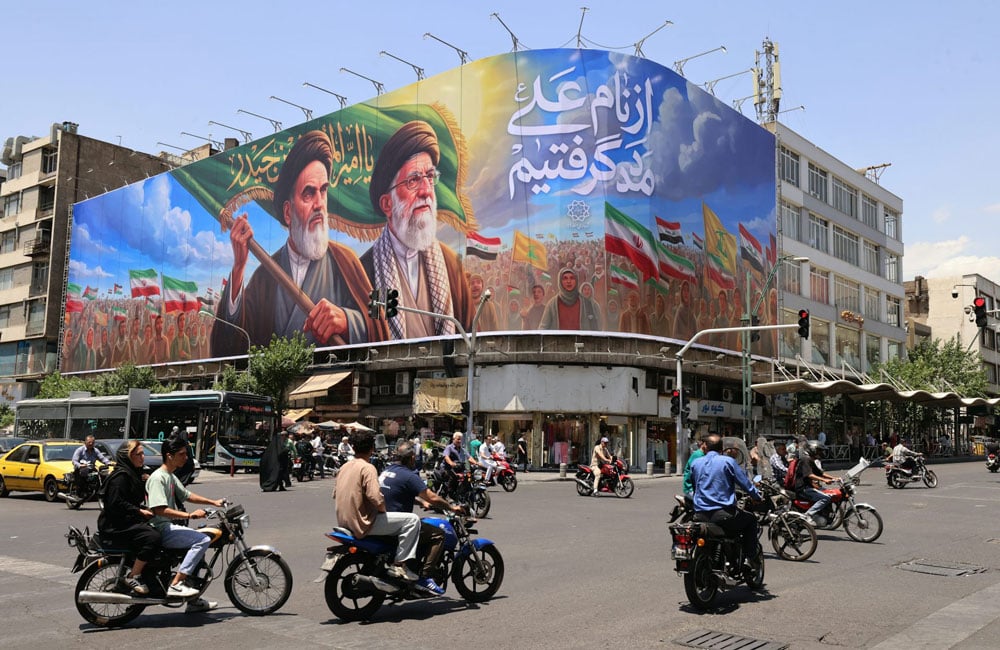
Iran returned to negotiations in 2025, and the U.S. and Israel bombed Iran while those talks were still taking place. Similarly, in February 2026 the negotiations were ongoing and a deal was within reach when Israel and the U.S. struck Iran – killing Supreme Leader Ali Khamenei and lead negotiator Ali Larijani.
The U.S. has demonstrated a record of reneging on its deals and breaking the negotiating process. Which is why Iran now insists on guarantees and demands sanctions relief before signing a deal, and not just good faith.
A state that previously kept its commitments and was still bombed has little reason to accept promises of relief in the future. For this reason, I believe the 60-day deferral is a window for Tehran to watch whether the U.S. and Israel will hold the ceasefire on all fronts, including Lebanon.
The third problem of indivisibility – when the thing or issue in dispute can’t be split or shared – is why the nuclear question is the hardest.
Most disputes can be split. Sanctions, for example, can be lifted by degrees. Even a nuclear program can be split, which the world saw in the Joint Comprehensive Plan of Action deal, with centrifuges counted, enrichment capped and a stockpile metered.
What cannot be split is the U.S. demand for zero uranium enrichment and Tehran calling uranium enrichment a sovereign right.
A deal, a war and a ceasefire
The 2015 nuclear deal also limited Iran’s centrifuges – the machines that do the enriching – and placed Iran’s nuclear program under the most intrusive inspections, all in exchange for sanctions relief.
The nuclear question was not part of the 2015 deal – it was the actual deal.
During the June 2025 negotiations with Iran, and again in February 2026, the U.S. position was about the nuclear program, but in the opposite direction from the Joint Comprehensive Plan of Action. It was not about limits but the total elimination of Iran’s nuclear program.
In both rounds of talks in 2025 and 2026, Washington’s envoy, Steve Witkoff, demanded zero enrichment and the dismantling of Natanz, Fordow and Isfahan – Iran’s three most important nuclear sites. Iran called enrichment a sovereign right and refused.
Both rounds of negotiations ended in bombings.

Fred Tanneau/AFP via Getty Images
The current deal to be signed on June 19 does not put a cap on Iran’s enrichment, nor does it discuss the elimination of its nuclear program. It ends the fighting, reopens the Strait of Hormuz and consigns enrichment, the stockpile, missiles and Iran’s regional proxies to 60-day negotiations.
In a recent New York Times interview, Trump said he was in no rush to remove the near-bomb-grade fuel still buried under the bombed sites. He claimed Iran would suspend enrichment for 15 or 20 years and enrich only for nonmilitary purposes.
In the Joint Comprehensive Plan of Action deal under President Barack Obama, the nuclear question was addressed where 97% of Iran’s stockpile was shipped out of the country and the cap was a verified fact.
Because it doesn’t address any of these issues, the Trump deal is a ceasefire agreement, not a nuclear agreement.
A costly return to the status quo
Going back to the bargaining theory, we know the war settled the information problem – it revealed what each side would endure.
The commitment problem remains. Neither side can yet make a promise the other believes, least of all an Iran whose negotiators were killed.
And I believe the indivisibility problem is now worse. The question of zero enrichment versus a sovereign right cannot be split. The current 60-day deferral is not a resolution. It is the same unsolved problem with a clock attached.
The one thing that could change is American restraint. If Washington holds Israel from striking Iran and Lebanon, it can slowly rebuild its credibility that was destroyed by the two wars. And that is a real challenge for the Trump administration.
Even as the deal was being finalized, Israel struck Beirut, the kind of action that can derail any talks.
In my view, the 60-day window should be read not as the path to a settlement but as the interval or pause before the next one fails.
I argued in April that this conflict would not end in a clean settlement but in a series of contested pauses. The deal to be signed on June 19 is the first of them.
Iran emerges with its enrichment knowledge intact, its stockpile buried and fresh reason to believe that only a nuclear weapon would have deterred the U.S.-Israel attack.
But Iran also knows that it stood its ground and was able to strike U.S. bases and allies in the region. It has discovered leverage it did not previously know it held. The Strait of Hormuz has proved a better deterrent than the nuclear bomb.
The strait is open, the oil is flowing, and the question the war was fought over sits exactly where it began. Thousands of lives were lost to arrive back to square one. Nobody has won, though both sides will say they did.

Farah N. Jan is Senior Lecturer in International Relations at the University of Pennsylvania.




























Pogo says
Context
https://www.google.com/search?q=revival+of+persian+empire
Ibid (Where do you see yourself 5 years — 10 years, from now…)
https://geopoliticalfutures.com/unconquerable-persian-legacy/
EC: File
Deborah Coffey says
AI Overview: History’s “worst” dictator is generally evaluated by total death toll, cruelty, and percentage of the population destroyed. The most widely cited figures are Mao Zedong (China), Adolf Hitler (Germany), Joseph Stalin (Soviet Union), and Pol Pot (Cambodia)
Time to add: Donald J. Trump (United States of America)
Pogo says
Putin and B al-Assad
https://www.google.com/search?q=Putin+and+Assad
…deserve more than a mere dishonorable mention; and don’t neglect the well deserved judgment by history of the monstrous dynasty rotting atop the millions of souls in North Korea.
https://www.google.com/search?q=death+toll+of+war+famine+murder+by+kim+jong+un+family
And this:
The total death toll of the 1980–1988 Iran-Iraq War is estimated between 500,000 and 1,000,000 people, making it one of the deadliest conventional conflicts of the 20th century.
https://www.google.com/search?q=death+toll+of+iran+iraq+war
And that
https://www.google.com/search?q=death+toll+of+isis
Trump is a monster, and may yet earn the GOAT he sees in his insane delusions — God help the world.
PaulT says
Why are you omitting Bibi Netanyahu from your lists of ‘Monsters in Power’?
In Gaza alone: As of June 2026, the overall death toll in Gaza has surpassed 73,000, with more than 173,000 individuals injured, health authorities note that women and children make up approximately half of all recorded fatalities. Intelligence Estimates: Investigations—including analyses of classified internal Israeli military databases—estimate that around 83% to 89% of the total Palestinian deaths were civilian.
If you add the deaths and injuries of civilians in Gaza to those in Lebanon, Iran, Syria and in the Occupied West Bank you’ll see that in the 21st Century Netanyahu rivals Putin’s recordrd of murdering his neighbors and is far ahead when it comes to the murder and maiming of civilians.
Sherry says
@ Deborah,
I would add Netanyahu to that list as well. . .
Donna Kahler says
Iran now knows what we can do and, more importantly, will do. We decimated their military, their leadership and their ambitions to hold the world’s oil hostage. That’s not exactly where we started with them. Far from it. I still don’t trust them any farther than I could throw them, but you need to give Trump credit.
The dude says
Decimated them like 38 times… people are saying decimation like never seen before even… we’re talking big, strapping, handsome men, with tears in their eyes…
Sherry says
@ donna. . . Did you even read this article?
* Iran “military decimated”, really? Surely even Fox reported that Iran blew up a US helicopter and killed/wounded many when they bombed an airport, just a few days ago. Iran’s military kept the strait of Hormuz closed for months, until trump caved.
* Iran’s “leadership decimated”, really? Surely even Fox acknowledges that Iran’s new leadership is even more a threat than before the WAR. Iran’s leadership is now more hardline, less restrained, and heavily militarized. Following the deaths of longtime Supreme Leader Ayatollah Ali Khamenei and other senior officials in recent conflicts, a new cadre—dominated by the Islamic Revolutionary Guard Corps (IRGC)—has taken power.
* Iran will allow the strait of Hormuz to be open, but NOW wants to profit: Iran is attempting to profit by charging maritime fees for transit through the Strait of Hormuz. Despite international opposition and legal challenges, Tehran is utilizing a newly drafted preliminary cease-fire agreement to impose “service fees” on commercial vessels and tankers traversing the vital energy corridor.
* Iran’s enriched uranium is still in place. . .
* Iran wants 300 “Billion” unfrozen from sanctions
So donna. . . exactly what is it that trump should receive credit for. . . a war that costed the US 1 BILLION dollars a day? Our own diminished stockpile of weapons? Much higher gas prices? Our military personnel killed and wounded? Difficulties with our European allies?
Did Fox NOT report that the agreement that President Obama negotiated . . . and trump ENDED. . . was much stronger than trump’s current agreement? Did Fox NOT report that the Iranians restarted their uranium enrichment program after trump ended the Obama agreement?
Consider the possibility that you are not getting the FULL, factual story from Fox entertainment. AP News or the BBC should help get you up to speed on the factual truth.
DaleL says
I give Trump “credit” for once again lying. If you recall, he ran on a platform of no wars. He repeatedly claimed the war was all but won, FOR OVER THREE MONTHS! Is the war really over? Why haven’t the details been released? It seems that a key sticking point is that Iran claims the deal requires Israel to withdraw from Lebanon. Israel has rejected that requirement.
Iran still holds much of the Persian Gulf oil hostage. We may have decimated their military, but in doing so we depleted our weapons stockpile. We spent over 29 billion dollars on the war and U.S. consumers spent an additional 40 billion on fuel. I guess that’s one way of promoting EVs!
You are correct that we are not back where we started from. We are worse off. Iran now claims it can call the shots as to what Israel can and cannot do. It’s another T.A.C.O. (Trump Always Chickens Out) He will lose interest. Iran will continue as before by funding Hezbollah and Hamas.
R.S. says
I believe you’re mistaken, Ms. Kahler: Trump started a misguided effort, accomplished nothing except to kill several innocents, and has you celebrating him for suspending his own ill-advised campaign. Obama’s deal was so much more reliable than Trump’s mess. You might look a bit more critical at Israel. That country has been packing heat ever since Mordechai Vanunu told us about it in 1986; Israel has not signed the non-proliferation treaty–unlike Iran, which did commit to non-proliferation. [Vanunu has an invitation to come to stay in Norway; but Israel has him still under house arrest.]
Sherry says
@ donna. . . This article will help with your education:
https://apnews.com/article/iran-war-us-pakistan-ceasefire-what-to-know-949710df39e3f1033cbb6beda3955814
Ray W. says
Andy McCarthy, a Fox News analyst, has taken to calling our president “Neville” Trump, purportedly for our president’s “appeasement” of Iranian mullahs by the terms of the as yet unreleased Memorandum of Understanding (MOU) that is to be signed this coming Friday.
Make of this what you will.
Me?
News outlets more and more claim to know the terms of the impending MOU. Maybe they do.
If he has seen the MOU, Andy McCarthy might be right to associate our president with the actions of Neville Chamberlain at Munich. Then again, he might be wrong.
I do find it concerning that a Fox News analyst interprets whatever information he has access to by use of such a term. Should FlaglerLive readers immediately give credulity to the commentary?
The most recent Windward daily Strait of Hormuz vessel traffic reporting has six ships entering the Persian Gulf on June 15th and another six leaving the Persian Gulf. Can it be argued that a pre-MOU vessel traffic baseline exists?
Judith G. Michaud says
This disastrous Felon has started a war for 2 reasons only; to distract from the Epstein files and to say he ended a war so he can claim he deserves the Nobel Prize! Americans that let themselves be conned by this criminal, not once but 3 times should hang their heads in shame along with the cowards who are allowing him to destroy our country!
Skibum says
This imbecilic, walking bone spur is a negotiator just as much as he is a war hero… NOT! He has made things so much worse for America as well as for European countries who are very dependent on the oil tankers that normally transit the Straight of Hormuz to deliver oil and petroleum products. The world order was turned upside down by Generalisimo Bone Spurs when he began his “excursion” into Iran that was doomed for failure just like we are starting to realize as the far gone conclusion to such idiocy.
Now the idiot in the WH has apparently bowed down to a bunch of radical militant terrorists who run Iran and agreed to give them 300 billion WITH A “B” dollars… just to return to having the straight open up again to shipping like it was BEFORE he attacked Iran???
I see a 3rd impeachment on the horizon! That is, if the curmudgeon with cankles and bone spurs and air between his ears doesn’t keel over before upcoming November elections.
PaulT says
The (not) Very Stable (and definitely not) Genius in the White House should have stuck to his real job as a TV show host who pretended to be a business guru, because his pretense to be a statesman is even more lame. In 2018 be withdrew the US from a treaty with Iran which controlled their nuclear program. Since then each time the US and Iran started to renegotiate (in 2025 and 2026) he scuppered the talks, first with a highly publicized airstrike which it turns out didn’t achieve it’s claimed objectives and latterly 3 months of war which it appears has achieved absolutely nothing. Except the obvious, that it is unwise for the US to mindlessly fall in with Bibi Netanyahu’s flawed political schemes though Trump is probably too pig headed to absorb that fact.
The BBC has summed up his so called war ending Great Iran Deal quite well:
“The memorandum of understanding clears the way for the nuclear negotiators to reconvene and for ships to transit the strait. That is exactly where they were 24 hours before the US and Israel went to war.”
full text here:
https://www.bbc.com/news/articles/cdr4x3vg347o
Proud Voter says
Just think if we had a President that instead of being so selfish cared as much about his countries people as he does himself. We wouldn’t have high prices he promised to lower, we would have great medical insurance as he promised to give us. We would have affordable living expenses and safe bridges and roads as he promised.
Guess what he lied to us. And the politicians that support him will do the same. Get out and vote and do your research before you do.
Pogo says
As usual, dupes (IMO), and sympathizers of Hamas, Hezbollah, and the IRGC have not a word about those murderers’ atrocities and crimes against humanity (not lastly, their own people): interjecting sanctimonious non sequiturs — and demands that I change my POV to theirs — literally — because they say so.
No.
I reiterate:
Context
https://www.google.com/search?q=revival+of+persian+empire
Ibid (Where do you see yourself 5 years — 10 years, from now…)
https://geopoliticalfutures.com/unconquerable-persian-legacy/
Additionally
Putin and B al-Assad
https://www.google.com/search?q=Putin+and+Assad
…deserve more than a mere dishonorable mention; and don’t neglect the well deserved judgment by history of the monstrous dynasty rotting atop the millions of souls in North Korea.
https://www.google.com/search?q=death+toll+of+war+famine+murder+by+kim+jong+un+family
And this:
The total death toll of the 1980–1988 Iran-Iraq War is estimated between 500,000 and 1,000,000 people, making it one of the deadliest conventional conflicts of the 20th century.
https://www.google.com/search?q=death+toll+of+iran+iraq+war
And that
https://www.google.com/search?q=death+toll+of+isis
Make what you will of this, as I give your comments their due attention too.
EC: File
Just saying says
Trump started a war without Congress approval, now he is making a deal to pay Iran 300 billion dollars and isn’t even telling Congress members all he is promising Iran. He isn’t even truthful to the Republican party.
Pete Hegseth keeps putting our service members in danger. Trump and Hegseth have made fools of us around the world at the expense of taxpayers.
Go to the polls in November and do your research before casting your votes.
Pogo says
Status quo?
As stated
https://www.google.com/search?q=iranian+economy+collapsing+06182026
If you would say that the US (where I was born, served in uniform, and have always dwelled) is right next to them (Iran) going in the same direction, I would sadly agree. The choice, for ALL mankind is clear: make peace, or make war.
Atwp says
As long as this country is lead by a nonthinking headless leader I’m very happy. I hope he will run and ruin the country, forever. I love his leadership because his leadership is bad leadership. Thank God for a headless president.
Ed P says
All the early pundits weighing in should spend a few moments reflecting upon their early analysis of the Venezuelan situation. Anything? Crickets?
It’s an absolute fact the left will spend the next 60 days trying to prove the uselessness of any attempt to reach any worthwhile arrangement.
The kinetic and economic damage to the Iranians is significant. Organically a realization will settle in and with the input of the neighboring counties, some amicable arrangement is possible.
Wishing, hoping, praying, railing for anything less…
Sherry says
Things are NOT so great now in Venezuela:
Venezuela is experiencing a complex political transition following the U.S. capture of Nicolás Maduro, but daily living conditions for most citizens remain dire and economically unchanged. While some political prisoners have been released and diplomatic relations have been restored, everyday purchasing power remains severely limited, inflation hovers near 600%, and many citizens are still waiting for tangible economic improvements.
Political Landscape and Transitions Leadership Shift: Acting President Delcy Rodríguez, formerly Maduro’s vice president, leads the country. A consensus of observers, including discussions on platforms like Reddit, notes that most of the ruling Chavismo power structures remain intact, leading many to view the transition as a continuation of previous governance.
Political Climate: Hundreds of political prisoners have been released, but many face lingering travel bans and restrictions. There is cautious optimism among the opposition, though widespread fear of expressing political dissent persists.
Economic Hardships Inflation & Currency: Venezuela continues to battle one of the highest annualized inflation rates in the world, estimated at roughly 600%. The local currency has continued to lose value against the U.S. dollar, heavily impacting citizen purchasing power.Wages vs. Cost of Living: Average incomes and salaries for professionals like teachers remain around a dollar a day. The basic monthly basket of goods costs significantly more than the average citizen earns, maintaining severe financial strain.