



By Mireille Rebeiz
The United States and Iran inked a long-awaited provisional ceasefire deal on June 17, 2026. After months of uncertainty, the people of the Gulf region can, potentially, breathe a sigh of relief, and global markets look set to be boosted by the reopening of the Strait of Hormuz.
What about those who have endured the war’s spillover in Lebanon? After all, the memorandum of understanding signed is not just a peace agreement between the U.S. and Iran alone. Rather, on Tehran’s insistence, the deal is intended to provide a cessation of hostilities on all fronts – including in Lebanon.
President Donald Trump is framing the deal as a win for the U.S. and the closing of the latest chapter in Washington’s Middle East entanglement. But Israeli Prime Minister Benjamin Netanyahu, whose country was reportedly shut out of the diplomatic process, may have other plans that would challenge Trump’s authority in the region.
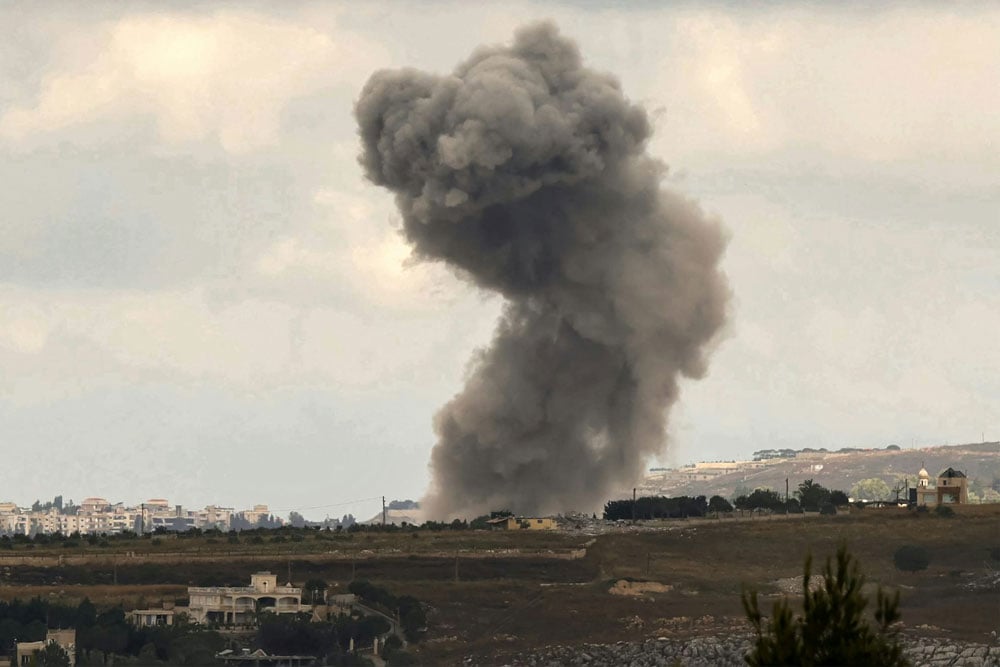
After news of the emerging deal broke on June 14, Netanyahu almost immediately announced that Israel will occupy Lebanon “indefinitely.” Israel then followed up with a fresh wave of airstrikes that killed four people in Lebanon.
A clearly displeased Trump publicly criticized those actions and even suggested that Syria could go in and dismantle Hezbollah, the Tehran-backed Lebanese group that has for nearly five decades fought Israel in southern Lebanon.
With Israel continuing to bomb Lebanon and remove Lebanese citizens from their lands – in defiance of Washington’s wishes – the fate of the U.S.-Iran deal in Lebanon remains obscure.
As a scholar of Middle East studies, I fear the agreement leaves more questions about the delicate situation in Lebanon than it solves. Moreover, any split in Israel-U.S. policy aims over Lebanon may have grave implications for Trump’s de-escalation attempts with Iran and also hamper hopes for a peace deal between Lebanon and Israel days before representatives of both countries plan to meet in Washington.
A defiant Israel
History shows that any U.S. failure to rein in Israeli military action north of its border can have disastrous consequences.
A similar scenario happened back in 1982 after Israel launched “Operation Peace for Galilee,” invading Lebanon and imposing a brutal siege on Beirut that killed over 17,000 Lebanese and Palestinian civilians and fighters.

AP Photo/Alex Brandon
In an angry phone call in August 1982, U.S President Ronald Reagan asked Israeli Prime Minister Menachem Begin to stop the heavy bombardments of Beirut. “Menachem, this is a holocaust,” Reagan recalled saying.
But Israel ignored the U.S. demands for a ceasefire. As a result, Reagan sent a an international peacekeeping force into Lebanon. Composed of French, Italian and American troops, this multinational force in Lebanon was tasked to act as a buffer zone between feuding parties and provide port security to Palestinian fighters leaving Lebanon.
Not only did Israel ignore Reagan’s attempts at de-escalation, it also defied the multinational force, harassed its troops and endangered their lives, according to U.S. military leaders.
Ironically, when Israel invaded Beirut in 1982 and threatened the American troops, it did so using weapons supplied by Washington as part of the two countries’ long-standing defense arrangement.
History repeats itself
A similar scenario is unfolding today.
Just like Reagan and Begin’s clash in 1982, Trump and Netanyahu are engaged in what looks like a deadlock. In a recent phone call about Lebanon, Trump was reportedly overheard yelling at Netanyahu, “You’re f–king crazy. You’d be in prison if not for me,” while pressing the Israeli government to scale back its operation in Lebanon.
Today, as in 1982, Israel continues to benefit from U.S. support and arms sales. Congress has even moved to integrate U.S. and Israeli militaries.
Also, just like 1982, the American president is considering sending foreign troops into Lebanon.
But despite the American military and political support, Israel continues to brush aside any U.S policy that aims to place limits on its regional power, effectively showing a glaring limitation of U.S. dominance over the region.

AP Photo/Hussein Malla
Lebanon as an afterthought
When the U.S. and Iran initially agreed to a two-week ceasefire in April 2026, there was confusion over whether Lebanon was included in that deal. While Iran asserted Lebanon’s inclusion, Israel denied it and continued to bomb the country.
Lebanon became part of the equation because of Hezbollah’s actions after the U.S.-Israeli attack on Iran in late February 2026. Similar to how the Tehran-backed group vowed solidarity with Hamas after Israel bombed Gaza in response to Palestinian militants’ attack on Israeli soil on Oct.7, 2023, Hezbollah struck Israel when Iran was hit.
It reignited the simmering Hezbollah-Israeli war. Today, Israel occupies south Lebanon and is threatening to annex it.
The U.S.-released text of the latest Iran peace plan explicitly includes Lebanon.
While that will introduce serious points of friction with Israeli designs on the country, the people in Lebanon, too, will have many questions and concerns.
I believe the deal will be seen as a welcome step but also a potential blow to Lebanon’s sovereignty. While the text aims to protect Lebanon’s “territorial integrity,” it does not reference Israel’s actual withdrawal from these lands, and it is unclear whether this issue will be discussed in future negotiations between Israel and Lebanon or between the U.S and Iran.
Furthermore, the new deal ignores Lebanon’s efforts to free itself from Iran’s influence in the country through its Hezbollah ally.
In an unprecedented move in May, Lebanon filed a formal complaint against Iran at the United Nations Security Council, directly accusing Tehran of violating the Vienna Convention on Diplomatic Relations for interfering in its sovereign decisions and dragging the country into war.
In spite of Hezbollah’s open threats against the Lebanese government, Lebanese representatives held the first of several planned direct negotiations with Israeli counterparts in Washington.

AP Photo/Harry Koundakjian
Lebanon, Syria and a rocky path forward
Indeed, the new U.S.-Iran deal can be interpreted as a step back for the strength of an already weak Lebanese state. Indirectly, the deal cements Iran’s control on the country’s politics and, by extension, Hezbollah.
Furthermore, and just like in 1982, the U.S. is proposing a foreign force to enter Lebanon and help end the violence. In fact, Trump has now twice mentioned the possibility of Syria playing a role in Lebanon to enter and execute “a surgical attack on Hezbollah.”
It is unclear whether the U.S. president is using these comments just as a way to pressure Israel over Lebanon or whether there is an actual plan that includes a Syrian role in the country’s future. But just the mention of Syrian intervention evokes that country’s longtime occupation of Lebanon.
In fact, at the end of the Lebanese civil war in 1991, Syria established what amounted to absolute political, military and economic hegemony over Lebanon, during which thousands of Lebanese disappeared.
The assassination of Lebanese Prime Minister Rafic Hariri in 2005 and the Cedar Revolution that followed forced the Syrian troops out of Lebanon.
The fact that the new leadership in Syria is Sunni adds another complication due to Lebanon’s delicate sect-based balance of power. If Damascus interferes in Lebanon, sectarian violence could follow, as the Syrian military presence would likely be interpreted as direct opposition to Hezbollah’s Shiite fighters.
This is particularly true since Ahmed al-Sharaa’s government was accused of violence against religious minorities in Syria, including the Alawites – a religious sect close to Shia Islam – and the Druze.
Whether Syria plays a decisive role in Lebanon going forward, there is little doubt that the future of the U.S.-Iran deal depends on both Iran and Israel’s actions. So far, Israel seems uninterested in following Trump’s leadership in the region and is gearing up to play a spoiler role.
For now, and absent new breakthroughs, Lebanon, with its sovereignty almost entirely eroded, seems destined to remain at the mercy of its larger neighbors in Iran, Israel and Syria – and the erratic involvement of the U.S. abroad.

Mireille Rebeiz is Director of Dickinson Program in New Zealand & Associate Professor of Politics at the University of Otago at Dickinson College.




























CPFL says
I used to be behind supporting Israel…pretty much my whole life. During my life I had friends that were veterans of the Israeli military. 2026 and I am saying enough of the support and backing of Israel, we do not need to get dragged into their mess any longer. No I am not pro Palestine…I am PRO – We need to mind our own business and interests.
Jake From State Farm says
The simple solution would be for the people of Lebanon and it’s military would kick out Hezbollah, Israel would not have to be involved. If they can’t do it on their own then maybe they should ask for some help.
Pierre Tristam says
That’s like kicking out the Proud Boys or other neo-Nazi groupies who adorn the paramilitary wing of the GOP: they’re Americans, just as Hezbollah is made up of Lebanese. Curious though: how come you did not mention the Israeli occupation of South Lebanon that is preventing a peace deal with Iran and intentionally provoking Hezbollah? Why not kick them out? Or do you consider Lebanese self-defense applicable only to Stand Your Ground white Americans and occupation an Israeli privilege? Dumb question. Of course you do.
Jake From State Farm says
I am sure if the proud boys or other neo Nazi group or radical liberals like Antifa were firing rockets at Canada, the US government, military and people of the US would not wait for Canada to do something about it and stop it them selves. Are you saying that the government, military and people of Lebanon are incompetent / capable or are they supporting Hezbollah and not taking care of controlling the “radicalized Lebanese” who are involved with Hezbollah? Please clarify.
As you know, Israel withdrew its forces to international recognized border of southern Lebanon and the United Nations confirmed the withdrawal in May of 2000? Are you saying the UN does not know what it talking about? Should we through the UN, that you seem to disagree with out of New York? Why did Israel go into this area in the first place?
You brought up Iran. Are you for or against Iran funding Hezbollah in Lebanon? Do you blame Iran for any of the deaths of innocent civilians in Lebanon? Is Hezbollah better or worse off since the US action in Iran?
Please address the questions above. I am curious to your perspective, particularly regards the UN’s indication that the with drawl was, and is completed?
FlaglerLive says
What has Israel withdrawing in 2000 (after an 18-year occupation) got to do with it? It reinvaded and has re-occupied. Right now it’s the occupier again, committing more war crimes by leveling villages under occupation. Of course Hezbollah bears blame. But by ratios, it’s about 20 to 1, with Israel bearing the 20 portion of the blame, because that’s about how many more civilians it is murdering than Hezbollah per Israeli loss. Most of Hezbollah’s victims are Israeli soldiers who–as occupiers–are legitimate military targets under the rules of war. Civilians are not.
JC says
Considering Hezbollah is a terrorist group, that sounds rich.
Pierre Tristam says
Not at all, considering that the IDF is not only also a terrorist organization, but it is much more lethal, thanks to US weaponry, and it is the occupier, which makes it not only the offensive instigator here, but also a legal military target, under international law. Hezbollah may be repulsive. But it’s on its own grounds.
Dennis C Rathsam says
SO WAS HITLER, SO WAS MADURO, THE IDF WILL SET THE LEBANESE FREE
Pierre Tristam says
Dennis appears not to realize that his “IDF will set the Lebanese free” rhymes with the “Work will set you free” claim at the entrance of Auschwitz. Obscene then. Obscene now.
celia says
We have terrorist in our beloved country too just look who shoots dead our innocent students in our schools! All countries have some terrorist groups but are not massively attacked and destroyed over it…yet! Lets stop killing each other for Gods sake! I was born in the middle of WWII witnessing my mom’s sadness over so many young lives lost and was a glorious relief when we defeated evil and was over! But at 83 I feel overwhelmed of the never ending conflicts : Korea, Vietnam, Desert Storm, etc. etc. that take our heroes lives, Also international conflicts like Ukraine, Lebanon, Gaza etc. makes me wonder that I will leave this world without Peace among us still witnessing innocent lives taken away. Lets remember what our beloved Republican President said after WWII was over: General Dwight D. Eisenhower frequently warned that war was a “deadly harvest” and stated: “I hate war as only a soldier who has lived it can, only as one who has seen its brutality, its futility, its stupidity.” He cautioned against perpetual conflict, arguing that every resource spent on an arms race is “a theft from those who hunger and are not fed.” https://eisenhowerfoundation.net/ikes-life/hard-war-bitter-bloody-war.
JC says
Hahahahahahahah. The comment above is super rich. Hezbollah is a known terrorist organization which even the own Lebanese government try to put them on time-out since March regarding their political arm (which they aren’t on its own ground). IDF is not considered a terrorist organization per international law, which if you think they are a bunch of terrorist then add the US Military to that list and all military groups at this point.
Last time I check, who launch the first rocket into Israel back in 2023? It was Hezbollah, which at the time was part of the Lebanese government.
The more you keep talking the more you are going to embarrass yourself. A very left-wing writer who don’t have a problem supporting a group of people who are ultra conservative, very Anti-LGBT, and anti western values that is not letting your home country progress is funny. I don’t want those people in America.
Lebanon issues can be resolved quicker if they get rid of Hezbollah once and for all. The deal is this, Hezbollah keep dragging Lebanon into shit they don’t want to do (which is sadly the history of Lebanon, too much outside interference). Quite a shame that Rafic Hariri got killed because that was someone who from most Lebanese perspective try to make the country better and not look in the past but for the future.
Pierre Tristam says
Calling out Israeli terrorism, occupation and war crimes does not equate to being a “supporter” of Hezbollah nor does it diminish Hezbollah’s regressive ideology, which I think I have mentioned ad nauseam, except in the eyes of those, like the weirdly Christ-initialed commenter, who desperately, impossibly wants to excuse Israel’s indefensible terrorism and occupation. As for who launched first: Hezbollah hung fire for a year, honoring the cease-fire, before Israel’s assaults this year that led to the occupation, triggered by the few rockets Hezbollah did launch once the Israeli-American idiocy against Iran began. But go on: Israeli propagandists breathe disinformation. I wouldn’t expect anything different here.
JC says
And I wouldn’t expect anything different here from you with your Palestinian/Hezbollah propaganda on your website from an Arab Christian. Goes both ways, and honestly while I can’t say I am the biggest fan of the IDF back in Lebanon once again, Lebanon biggest cancer is Hezbollah, and not even the IDF.
Skibum says
Jake, you are so full of simplistic, unrealistic ideas that must have bloomed spontaneously between your ears during your sleep. Doesn’t that cause you immense headaches? It sure does for me, knowing how much misinformation is included in your brainstorms. How do you know those you speak about are not permanent citizens of Lebanon? Crazy answer for you… you don’t!
And to morph into the discussion about our own corrupt idiot in the WH trying to deport, yes, DEPORT actual American citizens, you probably are okay with that as well, huh? Maybe you will be next if you happen to give the wrong sideways eye glance at one of his masked ICE commandos. How would you like that?
You really should change your handle you use while commenting. It really is making State Farm appear to be a racist maga insurrectionist approved organization, and I don’t believe they would appreciate such a reference.
psulY says
‘Jake from wherever’ Your proposed solution is indeed ‘simple’ in the ‘SimpleSimon’ (nursery rhyme) sense.
Hezbollah is a Shiite militia, it’s leaders are Lebanese Shia Muslims as are 30% of Lebanese. (if like Trump you don’t understand percentages, that’s nearly one third of the Lebanese population. If you ‘simply’ have no cluea about the split between Shia and Suni Muslims Wikipedia can help).Hesbollah is better armed and more powerful than the Lebanese army.
As for help for the Lebanese people what is your ‘simple’ suggestion.
Invasion by the US? Trump’s war against Iran’s Revolutionary Guard did nothing to help the Iranian people. Anyway Trump has declined to help, he’s suggested Syria intervene. (the last time that happened they stayed for 15 years and killed tens of thousands of civilians and ‘disappeared’ thousands (Check out Cedar Revolution on Wikipedia)
If you’re suggesting Lebanon asks Israel for help, Israel has already invaded Lebanon and in any case only helps itself (to other people’s territory and water resources) Israel is once again killing and maiming anyone who gets in the way or who they see as a nuisance.
You probably don’t believe that though a recent UN commission just report documents Israeli genocide and war crimes against children in Gaza.
BBC report below though no doubt you will ‘simply’ refuse to believe it.
https://www.bbc.com/news/articles/c0jy96w6pw2o
Ray W. says
According to RBC Ukraine, a number of Russian Telegram commenters are reporting that at least two Russian factories were struck earlier today in Voronezh. One factory manufactures missile components. The other makes semiconductors for use in military equipment. A pro-Russian government Telegram commenter described the possible deployment of Ukrainian-designed Storm Shadow missiles.
Make of this what you will.
Me?
For years western military aid to the Ukraine came with range restrictions on use. So the Ukrainians developed their own drones and rockets and cruise missiles.
Without restrictions, the Ukrainian military is now taking the battle deep into Russia. St. Petersburg has been repeatedly hit. Moscow has been repeatedly hit. One Russian government claim has it that 550 drones were destroyed in just one attack. There is at least one report today that Voronezh residents heard as many as 20 explosions in and above the city.
Ray W. says
After Iran rocketed a Qatari compressed natural gas export terminal in March, the country just attempted to restart the Ras Laffan facility. It exploded, leaving at least 13 dead and some 54 injured, according to ABC News.
Make of this what you will.
Me?
The costs of the war continue to mount. I don’t take initial claims too seriously, as the are just too many variables at issue. But if the U.S. coordinates the reconstruction fund for an Iran rebuild, as listed in the 14-point Memorandum of Understanding at $300 billion, we may be talking in the range of a trillion dollars or more in lost worldwide GDP, not counting externalities.
Ray W. says
Euronews is reporting that, according to the U.S.-based Institute for the Study of War (ISW), Iran’s Revolutionary Guard is posting on the nation’s Telegram channel its goals to be achieved via the Memorandum of Understanding: 1. the end of U.S. military activity; 2. the end of the U.S. blockade of Iranian ports; 3. consolidation of Iranian sovereignty over the Strait of Hormuz; 4. U.S. compensation for Iranian reconstruction; 5. all sanctions lifted; 6. access to all frozen Iranian funds; and, resolution of nuclear issues.
Make of this what you will.
Me?
There is a lot of lying going on. I don’t suppose anyone truly knows the truth about specifics of the U.S.-Iran negotiations, not even those involved in the negotiations.
Maybe Iran will receive $12 billion up front, from an alleged pot of $24 billion in frozen Iranian assets, as has been widely reported. Maybe not. Maybe Iran will agree to dilute its nuclear stockpile from up to 60% enrichment down to medical-grade enrichment of no more than 3.67%, as has been widely reported. Maybe not. But the 800-pound gorilla in the room is maritime movement through the Strait. Iran wants to impinge on free trade by placing a tariff on goods traveling through it, whether it be called insurance, toll, fee, or cost of administration. The Trump administration asserts that any tariff, regardless of name, is bad and cannot be permitted.
Oy, vey!
Ray W. says
According to the Kiev Independent, on the night of June 21st, Ukrainian drones dropped one span of a railroad bridge linking the Crimean Peninsula to the mainland. Last night, after Russian bridge repair equipment had been brought in, Ukrainian drones struck both the repair equipment and dropped more of the bridge’s spans.
According to the reporter, various overnight posts to Russia’s Telegram reflect comments about some 60 strikes across the Crimean Peninsula, including several new strikes on fossil fuel storage facilities and a power plant. Another oil tanker truck was hit, as was a radar site. Anti-air units were struck.
From satellite fire-detection centers, a Crimean port fuel storage complex was set ablaze as was a rail distribution center. A fire was reported at a West Crimean electrical substation.
Make of this what you will.
I will comment about this over and over.
A news outlet reports that a Ukrainian company set out to make a new type of lightweight and energy dense drone battery. The company developed a solid-state lithium-ion battery. The battery need only be charged once, as its purpose is to go into one-way attack drones. Suddenly, existing shorter-range Ukrainian attack drones, previously limited by heavier and less energy-dense liquid-state lithium-ion batteries, can travel much further, now up to 200 kilometers, a range that now puts most of the Crimean Peninsula under threat of drone attack.
Russia has been losing the one asset that President Putin says the nation cannot afford to lose, and that is its base of young male workers. As many as a million educated young Russian men fled Russia to avoid the war. Another million or more soldiers have been killed or seriously wounded. Russian news outlets now report that city street sweeps are forcibly impressing young Russian males to replace losses. Now, Russia may be effectively losing the Crimean base on which it built a supply chain to feed and fuel and arm and otherwise supply those soldiers who are fighting in southern Ukraine.
I do not claim to know how the tides of war will sweep. But I continue to argue that Winston Churchill was correct when he said that any war can be lost long before a nation’s leaders realize that it has been lost.
Ray W. says
This is different.
According to Yahoo Finance, Oman and Iran just released a joint statement in which it was announced that representatives from both nations met to discuss methods to oversee commercial vessel traffic through the Strait of Hormuz, citing to sovereign rights to exercise territorial control over the waterway, including the right to require ship owners to purchase transit insurance, pay tolls or fees, or simply seek permits to travel.
Make of this what you will.
Me?
Oman has long been viewed as a Gulf state American ally. But it has long fostered a “friend to all” foreign policy. What would an agreement with Iran to place the Strait of Hormuz under mutual oversight and control, with a fee-charging mechanism to pay for the costs of that oversight and control, do to that foreign policy stance? And what precedent would such a policy decision set for Turkey, Egypt, Singapore or China?