• Skip to primary navigation
  • Skip to main content
  • Skip to primary sidebar
MENUMENU
MENUMENU
  • Home
  • About
    • Contact Us
    • FlaglerLive Board of Directors
    • Comment Policy
    • Mission Statement
    • Our Values
    • Privacy Policy
  • Live Calendar
  • Submit Obituary
  • Submit an Event
  • Support FlaglerLive
  • Advertise on FlaglerLive (386) 503-3808
  • Search Results

FlaglerLive

No Bull, no Fluff, No Smudges

MENUMENU
  • Flagler
    • Flagler County Commission
    • Beverly Beach
    • Flagler History
    • Mondex/Daytona North
    • The Hammock
    • Tourist Development Council
    • Marineland
  • Palm Coast
    • Palm Coast City Council
    • Palm Coast Crime
  • Bunnell
    • Bunnell City Commission
    • Bunnell Crime
  • Flagler Beach
    • Flagler Beach City Commission
    • Flagler Beach Crime
  • Cops/Courts
    • Circuit & County Court
    • Florida Supreme Court
    • Federal Courts
    • Flagler 911
    • Fire House
    • Flagler County Sheriff
    • Flagler Jail Bookings
    • Traffic Accidents
  • Rights & Liberties
    • First Amendment
    • Second Amendment
    • Third Amendment
    • Fourth Amendment
    • Fifth Amendment
    • Sixth Amendment
    • Seventh Amendment
    • Eighth Amendment
    • 14th Amendment
    • Sunshine Law
    • Religion & Beliefs
    • Privacy
    • Civil Rights
    • Human Rights
    • Immigration
    • Labor Rights
  • Schools
    • Adult Education
    • Belle Terre Elementary
    • Buddy Taylor Middle
    • Bunnell Elementary
    • Charter Schools
    • Daytona State College
    • Flagler County School Board
    • Flagler Palm Coast High School
    • Higher Education
    • Imagine School
    • Indian Trails Middle
    • Matanzas High School
    • Old Kings Elementary
    • Rymfire Elementary
    • Stetson University
    • Wadsworth Elementary
    • University of Florida/Florida State
  • Economy
    • Jobs & Unemployment
    • Business & Economy
    • Development & Sprawl
    • Leisure & Tourism
    • Local Business
    • Local Media
    • Real Estate & Development
    • Taxes
    • Sponsored Content
  • Commentary
    • The Conversation
    • Pierre Tristam
    • Diane Roberts
    • Guest Columns
    • Byblos
    • Editor's Blog
  • Culture
    • African American Cultural Society
    • Arts in Palm Coast & Flagler
    • Books
    • City Repertory Theatre
    • Flagler Auditorium
    • Flagler Playhouse
    • Special Events
  • Elections 2026
    • Amendments and Referendums
    • Presidential Election
    • Campaign Finance
    • City Elections
    • Congressional
    • Constitutionals
    • Courts
    • Governor
    • Polls
    • Voting Rights
  • Florida
    • Federal Politics
    • Florida History
    • Florida Legislature
    • Florida Legislature
    • Ron DeSantis
  • Health & Society
    • Flagler County Health Department
    • Ask the Doctor Column
    • Health Care
    • Health Care Business
    • Covid-19
    • Children and Families
    • Medicaid and Medicare
    • Mental Health
    • Poverty
    • Violence
  • All Else
    • Daily Briefing
    • Americana
    • Obituaries
    • News Briefs
    • Weather and Climate
    • Wildlife

Europe’s Deforestation Law Could Change the Global Coffee Trade, and Cost

March 26, 2026 | FlaglerLive | 1 Comment

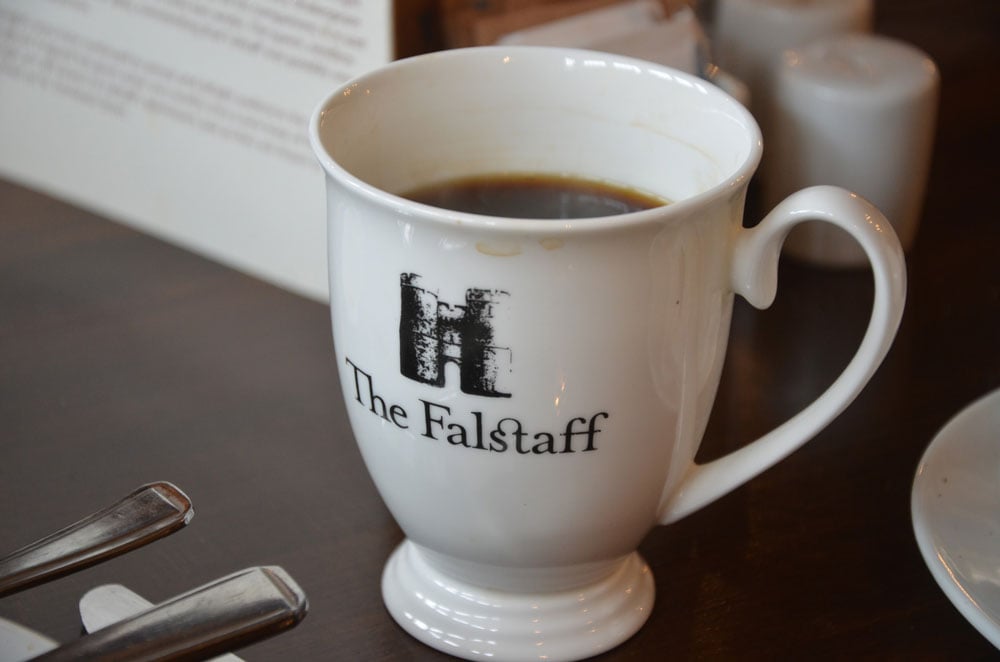
A cup of coffee in Canterbury. (© FlaglerLive)

By Paul Mwebaze

If your morning can’t begin without coffee, you’re in good company. The world drinks about 2 billion cups of coffee a day. However, a European Union law might soon affect your favorite coffee beans – and the farmers who grow them.

Starting in 2026, companies selling coffee on the European Union market will have to prove that their product is “deforestation-free.” That means every bag of beans, every jar of ground coffee and every espresso capsule must trace back to coffee plants on land that hasn’t been cleared of forest since Dec. 31, 2020.

The new rules, found in what’s known as the EU Deforestation Regulation, are part of a wider effort to ensure European consumption doesn’t drive global deforestation.

However, on the ground – from the coffee hills of Ethiopia to the plantations of Brazil – the rule change could transform how coffee is grown, traded and sold.

Why the EU is targeting deforestation

Deforestation is a major driver of biodiversity loss and accounts for about 10% of global greenhouse gas emissions. And coffee plantations, along with cocoa, soy and palm oil production, which are also covered by the new regulations, are known sources of forest loss in some countries.

Under the new EU Deforestation Regulation, companies will be required to trace their coffee to its exact origin – down to the farm plot where the beans were grown – and provide geolocation data and documentation of supply chain custody to EU authorities.

They will also have to show proof, often through satellite imagery, that any open land where coffee is grown was forest-free before the 2020 cutoff date.

The rules were initially set to go into effect in early 2025 but were pushed back after complaints from many countries. Governments and industry groups in Latin America, Africa and Southeast Asia warned of trade friction for small farms, and the World Trade Organization has received complaints about the regulations.

Most companies must now comply by Dec. 30, 2025. Small enterprises get until June 30, 2026.

Potential winners and losers

The coffee supply chain is complex. Beans are grown by millions of farmers, sold to collectors, then move through processors, exporters, importers and roasters before reaching grocery shelves. Adding the EU rules means more checkpoints, more paperwork and possibly new strategies for sourcing coffee beans.

Small farms in particular could be vulnerable to losing business when the new rules go into effect. They could lose contracts or market access if they can’t provide the plot-level GPS coordinates and nondeforestation documentation buyers will require. That could prompt buyers to shift toward larger estates or organized co-ops that can provide the documentation.

If a farm can’t provide precise plot coordinates or pay for mapping services, it could end up being excluded from the world’s largest coffee market.

Larger coffee growers already using systems that can trace beans back to specific farm plots could gain a competitive edge.

Map showing tropical forests mostly in Africa, South America, Southeast Asia and Indonesia, and boreal and temperate forests across Canada, Russia and parts of Europe.
Global forest area by type and distribution in 2020, according to a U.N. Food and Agriculture Organization assessment.
FAO

The new regulations also include stricter oversight for countries considered most likely to allow deforestation, which could slow trade from those regions. As a result, buyers may shift to regions with lower deforestation risk.

Even outside Europe, big buyers are likely to prioritize beans they can trace to nondeforested plots, potentially dropping small farms that can’t provide plot-level proof. That could reduce availability and raise the price of some coffee types and put farms out of business. In some cases, the EU regulations could reroute undocumented coffee beans into markets such as the U.S.

Helping small farms succeed

For small farms, succeeding under the new EU rules will depend on access to technical support and low-cost tools for tracing their crop’s origin. Some countries are developing national systems to track deforestation, and they are pushing the EU to invest more in helping them.

Those small farms that can comply with the rules, often through co-ops, could become attractive low-risk suppliers for large buyers seeking compliant crops.

The change could also boost demand for sustainability certifications, such as Rainforest Alliance, 4C Common Code or Fairtrade, which certify only products that don’t contribute to deforestation. But even certified farms will still need to provide precise location data.

Agroforestry’s potential

Arabica coffee, the most common variety sold globally, naturally evolved as an understory shrub, performing best in cooler tropical uplands with good drainage and often partial shade. That points to a way farmers can reduce deforestation risk while still growing coffee: agroforestry.

Two women examine beans on a coffee plant.
Farmers check on coffee beans at a small agroforestry operation in Kenya. The coffee bushes were planted among trees that provide shade.
World Agroforestry Centre/Joseph Gachoka via Flickr, CC BY-NC-SA

Agroforestry involves planting or conserving shade trees in and around coffee plots to maintain the tree canopy.

In agroforestry systems, shade trees can buffer heat and drought, often reducing evaporation from soil and moderating plants’ water stress. Several field studies show lower evaporative losses and complementary water use between coffee and shade trees. In some contexts, this can lower irrigation needs and reduce fertilizer demand. Practical tools such as World Coffee Research’s Shade Catalog help farmers choose the right tree species for their location and goals.

Agroforestry is common in Ethiopia, where Arabica originated, and in parts of Central America, thanks to long traditions of growing coffee in shade and specialty demand for the products.

Under the new EU rules, however, even these farms must prove that no forest was cleared after 2020.

Why this matters to coffee drinkers

For European coffee drinkers, the new EU rules promise more sustainable coffee. But they may also mean higher prices if compliance costs are passed down the supply chain to consumers.

For coffee lovers elsewhere, changes in global trade flows could shift where beans are sold and at what price. As EU buyers bid up beans that can be traced to nondeforested plots, more of those “fully verified” coffees will flow to Europe. U.S. roasters may then face higher prices or tighter supply for traceable lots, while unverified beans are discounted or simply avoided by brands that choose to follow EU standards.

Paul Mwebaze is Research Economist at the Institute for Sustainability, Energy and Environment at the University of Illinois at Urbana-Champaign.


The Conversation arose out of deep-seated concerns for the fading quality of our public discourse and recognition of the vital role that academic experts could play in the public arena. Information has always been essential to democracy. It’s a societal good, like clean water. But many now find it difficult to put their trust in the media and experts who have spent years researching a topic. Instead, they listen to those who have the loudest voices. Those uninformed views are amplified by social media networks that reward those who spark outrage instead of insight or thoughtful discussion. The Conversation seeks to be part of the solution to this problem, to raise up the voices of true experts and to make their knowledge available to everyone. The Conversation publishes nightly at 9 p.m. on FlaglerLive.
See the Full Conversation Archives
Support FlaglerLive
The political climate—nationally and right here in Flagler County—is at war with fearless reporting. Your support is FlaglerLive's best armor. After 16 years, you know FlaglerLive won’t be intimidated. We dig. We don’t sanitize to pander or please. We report reality, no matter who it upsets. Even you. Imagine Flagler County without that kind of local coverage. Stand with us, and help us hold the line. There’s no paywall—but it’s not free. become a champion of enlightening journalism. Any amount helps. FlaglerLive is a 501(c)(3) non-profit news organization, and donations are tax deductible.
You may donate openly or anonymously.
We like Zeffy (no fees), but if you prefer to use PayPal, click here.
If you prefer the Ben Franklin way, we're at: P.O. Box 354263, Palm Coast, FL 32135.
 

Reader Interactions

Comments

  1. Bo Peep says

    March 26, 2026 at 11:56 pm

    Exciting story

    Thanks

    1
    Reply

Leave a Reply Cancel reply

Your email address will not be published. Required fields are marked *

This site uses Akismet to reduce spam. Learn how your comment data is processed.

  • Conner Bosch law attorneys lawyers offices palm coast flagler county
  • grand living realty
  • politis matovina attorneys for justice personal injury law auto truck accidents

Primary Sidebar

  • grand living realty
  • politis matovina attorneys for justice personal injury law auto truck accidents

Recent Comments

  • Ray W. on Fuel Crisis Over? Not Even Close.
  • Pogo on DeSantis Claims There’ll Be a Special Session on Property Taxes. Just Don’t Ask Him When.
  • mike c on Neighbors Mobilize Against Development of 39 Houses on Previously Protected Matanzas Golf Course Tract
  • Skibum on Jury Finds Henriqson Guilty On All 11 Child Sex Abuse Counts; Judge Sentences Him to 9 Life Terms
  • Boyd on Severely Injured Puppy Found In Flagler County Park’s Ditch Shows Signs Of Illegal Dog Fighting
  • Skibum on Florida Rule Would Require Proof Of U.S. Citizenship for Admission to State Colleges
  • Deborah Coffey on The Key Causes of Financial Gaps Among Families in Flagler County
  • FlaglerLive on Severely Injured Puppy Found In Flagler County Park’s Ditch Shows Signs Of Illegal Dog Fighting
  • Skibum on School Board Cools On YMCA Pool Partnership While Considering Building Its Own, Despite Fiascoes
  • Keep Flagler Beautiful on Severely Injured Puppy Found In Flagler County Park’s Ditch Shows Signs Of Illegal Dog Fighting
  • Ray W. on Fuel Crisis Over? Not Even Close.
  • Pierre Tristam on Florida Rule Would Require Proof Of U.S. Citizenship for Admission to State Colleges
  • Deborah Coffey on Florida Supreme Court Elects John Couriel Chief Justice
  • Deborah Coffey on Florida Rule Would Require Proof Of U.S. Citizenship for Admission to State Colleges
  • Deborah Coffey on Florida Rule Would Require Proof Of U.S. Citizenship for Admission to State Colleges
  • Gina Weiss on Severely Injured Puppy Found In Flagler County Park’s Ditch Shows Signs Of Illegal Dog Fighting

Log in