



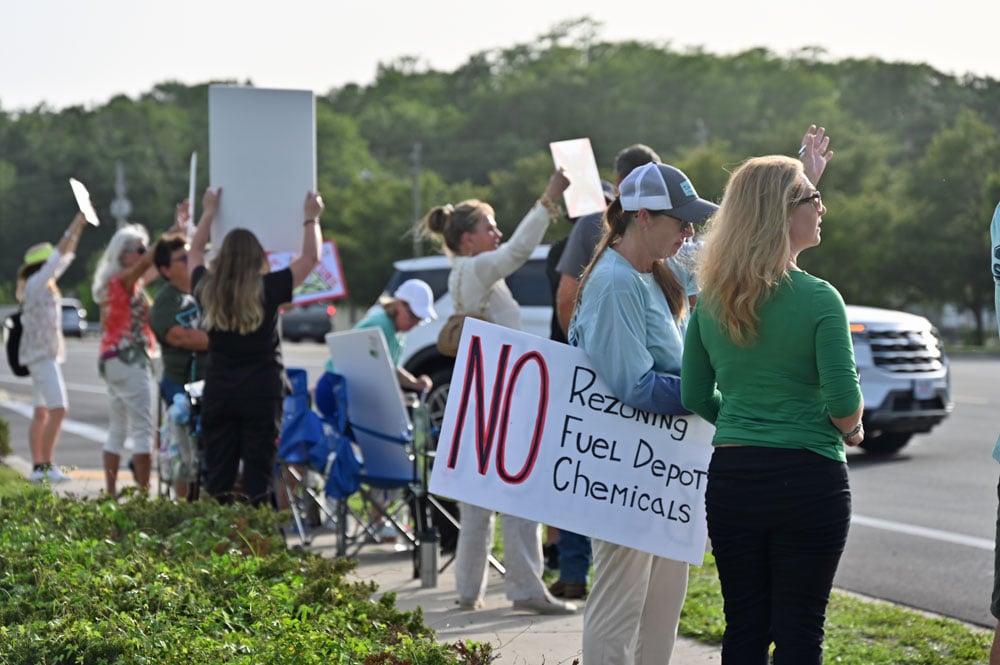
Circuit Judge Sandra Upchurch this morning dealt a nearly fatal blow to a Bunnell resident’s lawsuit challenging the Bunnell City Commission’s rezoning last December of 1,259 acres of agricultural land to heavy and light industrial.
The judge agreed with opposing counsel’s argument that the lawsuit was a “bare bones” document that served more as a placeholder for Herbert’s lawyer to file a more complete document after the 30-day deadline for such appeals had passed. She did not grant that extension.
“I don’t find that there’s been a good faith attempt to comply with the timeframes and to file some kind of substantive petition, I am not particularly sympathetic that there were intervening holidays,” Upchurch said as she ruled. “As judges and lawyers, we have to work at inconvenient times, and we have to sometimes put our vacations and holidays to the side to benefit our clients in our cases, and so that’s not a persuasive argument to me at all. I am denying the motion for leave to amend.”
Chelsea Herbert, a member of the city’s Planning Board since last July and a resident of an Old Haw Creek Road property in close proximity to the rezoned land, filed suit on Jan. 7 asking the court to quash the rezoning.
The filing was a so-called writ of certiorari, asking the court to review the City Commission’s record on the rezoning decision and issue a ruling on its legality. Under the rules, Herbert had 30 days to file a legal challenge from the day of the City Commission’s vote on Dec. 8. She filed with one day to spare, but only that “bare bones” document. The same day, she filed a motion asking the court for a 40-day extension so she would have time to file a more complete record.
That’s the “motion for leave” the judge denied today at the end of a 28-minute hearing.

Herbert was represented by Orlando land-use attorney Brent Spain, who argued in vain that “amendments are supposed to be liberally granted under the rule.”
Michael Piccolo, the attorney representing the land owners, argued vehemently against granting the extension, saying Spain had filed a “woefully deficient” and “a totally non-compliant petition that is subject to summary denial.”
Spain’s eight-page petition summarizes the brief history of the rezoning but devotes just eight lines to the claim of wrongdoing on the City Commission’s part, charging that “the approval constitutes impermissible conditional zoning and fails to comply with the City’s applicable land use regulations,” and it is “not supported by competent substantial evidence.”
The petition itself was not supported by competent and substantial evidence–which is why Herbert and Spain immediately filed the request for an extension so they could file the fuller record. That record would have included meeting transcripts and reams of documentation. The only appendix they had filed contained the ordinance controlling the rezoning.
Spain told the judge today that routine appeals have a 30-day deadline from the date of the decision. But this isn’t routine, considering the volume of records required for inclusion.
“The 30-day time frame spans the Christmas holiday and the New Year’s holiday,” Spain told the judge. “I don’t know about opposing counsel’s firm, but our firm was certainly closed for most of the latter part of December, and reopened after New Year’s, so time was limited.” He said Herbert and “the developer” were also in negotiations during the 30-day window in an attempt to amicably resolve the situation. But the “developer” rejected Herbert’s proposals two days before the deadline, leaving little time to prepare a fuller document.
“I can’t recall a situation where opposing counsel has objected to a request for leave to amend that was filed at the outset of the lawsuit,” Spain pleaded. “In fact, had they agreed to it, your honor, the parties would probably already be done with all their briefing in this case, and it would most likely be almost ready to be presented to you on the merits.”
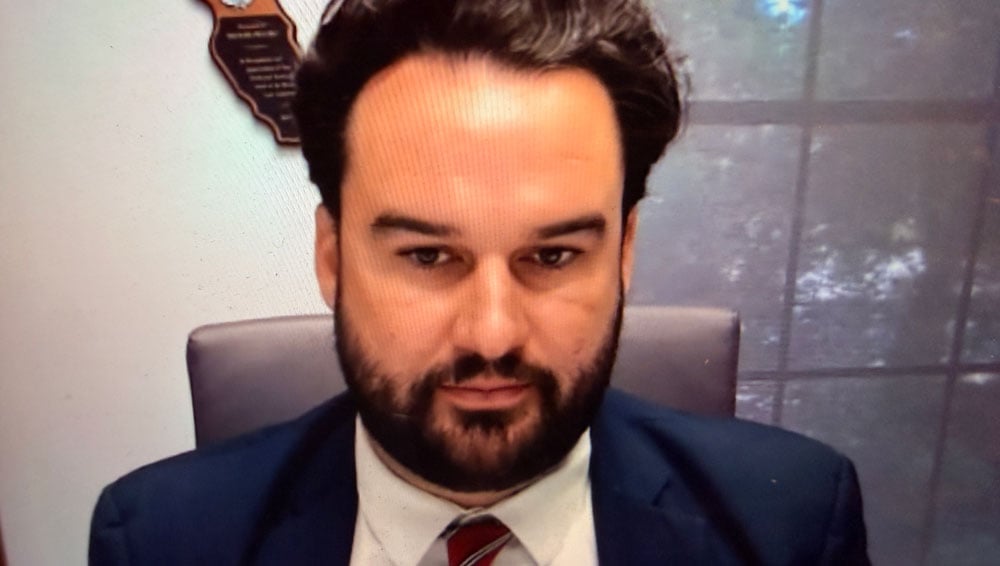
Piccolo systematically rejected the arguments, starting with the explicitness of the 30-day rule, noting that both Spain and Herbert were at the City Commission meeting on Dec. 8, when it voted 3-2 to grant the rezoning. They knew then, and should have known since, that the clock was ticking, Piccolo argued. He dismissed the complaints about the holidays and the ongoing negotiations as invalid.
“What they’re seeking is to literally refile an entirely new brief after the 30 day jurisdictional deadline has ran, and that’s not contemplated anywhere in the rules,” Piccolo told the judge.
To Spain, if the court were to go with Piccolo’s position, it would mean that no requests for extensions could ever be granted.
Upchurch said the kind of extension Spain was asking for has been a recent “trend” in civil litigation. It has not been tested yet. In other words, “there hasn’t been a case on how this approach is going to be treated by the appellate courts,” the judge said. “So without any real direction that I can see after having read all of those cases myself, and then listening to both of your opinions regarding how they are to be interpreted, I can only find that this seems to me to be a creative way to circumvent the appellate rules and the time frames that have been put in place for filing petitions for writ of certiorari.”
The case is not over. Spain asked the judge what the order does with respect to his petition.
“I was just ruling today on the motion for leave to amend. If there’s follow-up motions that need to be filed for clarification, then you all can do that,” the judge said.
Bunnell government was represented by City Attorney Paul Waters, who left it to Piccolo to make the arguments. This afternoon, City Manager Alvin Jackson, who had spoken with Waters said the case may well go forward, but “Our position is we did everything according to regulation.”
But Spain said negotiations between Herbert and the developer, represented by Piccolo’s firm, “met this week, and it’s very possible that this case may get settled.”




























JimboXYZ says
Shouldn’t come as a shock to anyone, overpopulation needs it’s infrastructure. The gridlock created needs a fuel depot to perpetuate the gridlock of sitting on I-95 and every road Flagler County. Might as well be walking => ebike, because a corporation will build new locations & then contraction for closures has always been the playbook.
The dude says
This is, of course, is all President Biden’s fault and has ABSOLUTELY NOTHING to do with your local and state voting habits of the last few decades…
I swear, if I ever saw a MAGA moron take even the tiniest modicum of responsibility for their actions I would probably just fall over dead. Looks like I have many many years left ahead of me…