




By Theresa Carli Pontieri
In Palm Coast and Flagler County, the housing squeeze is real. Retirees on fixed incomes, young workers, and service employees are being priced out by rapid growth, scarce rental inventory, and rising costs. Median home prices hover around $352,000, rents around $1,650, and many households can realistically afford only $700–$900 a month without falling behind. Yet instead of using a target approach unique to our community, local leaders are considering the usual menu of “fixes”: incentives, public land, expedited permits, density bonuses, and impact-fee waivers for “affordable” projects.
From a conservative, market-based perspective, that approach will not solve the problem; it will exacerbate it. Lasting affordability does not come from subsidies, mandates, or selective waivers. It comes from market-driven supply, secure property rights, lighter regulation, and an economy strong enough to raise wages. Government “help” too often distorts incentives, shifts costs onto others, and replaces durable solutions with dependency, inefficiency, and predictable unintended consequences.
Housing becomes more affordable when markets are allowed to work. Prices signal scarcity. Builders respond by producing more of what people actually need. But when government subsidizes favored projects while maintaining zoning barriers, permit delays, and costly mandates, it drives up costs for everyone. The result is not affordability, but artificial scarcity, higher prices, and a heavier burden on taxpayers.
We have seen this pattern before. The Low-Income Housing Tax Credit (LIHTC), the federal government’s flagship subsidy program, channels billions of dollars into housing while often producing units at costs far above comparable market-rate construction. Too much of the value is captured by developers and intermediaries rather than translated into broad affordability. The restrictions are temporary, the projects frequently cluster in lower-income areas, taxpayers pay more, and bureaucracy expands.
Flagler County and Palm Coast are in no position to paper over these realities by waiving impact fees or handing out density bonuses. Impact fees exist for a simple reason: growth should pay for growth. If government selectively waives those fees for “affordable” projects, the bill does not disappear—it lands on existing residents through higher taxes, special assessments, deferred maintenance, or overburdened public services. In a community already straining under growth, that is not compassion—it is cost-shifting. And when density bonuses are layered on top, the pressure on roads, drainage, and water systems only intensifies.
That burden falls on the very people local government should not be penalizing: longtime residents who worked, saved, bought homes, and planned responsibly for retirement. Forcing them to subsidize new development violates basic fairness. It punishes prudence and rewards political favoritism. In a free society, government should protect earned security—not erode it in the name of social engineering.
Instead of subsidizing select projects, Flagler County and Palm Coast should remove the barriers that make all housing more expensive. That means reducing red tape and reexamining costly requirements—parking mandates, buffer rules, and other regulations that add expense without adding value. If local leaders want more affordable housing, they should look at ways to make housing less expensive to build.
More importantly, local officials should focus on growing the economy rather than redistributing scarcity. Lower taxes, lighter regulation for commercial and industrial sectors, and a pro-business climate can attract industry, expand opportunity, and raise wages. Families are far better served by policies that help them earn more in a competitive economy than by government programs that merely reshuffle who bears the cost of a broken housing market.
If the city or county provides any direct assistance at all, it should be narrow, transparent, and temporary—aimed at truly specific needs, not open-ended commitments that outlast their justification. As a conservative, I believe people flourish through freedom, responsibility, secure property rights, and voluntary exchange—not through government allocation of wealth. So-called affordable housing initiatives too often crowd out private solutions, punish taxpayers who played by the rules, and leave communities with bigger bills and weaker infrastructure. The answer is not more intervention—it is less. We need a renewed commitment to the market principles that made broad prosperity possible in the first place. Let markets work, and housing will become more attainable through opportunity, not dependency.

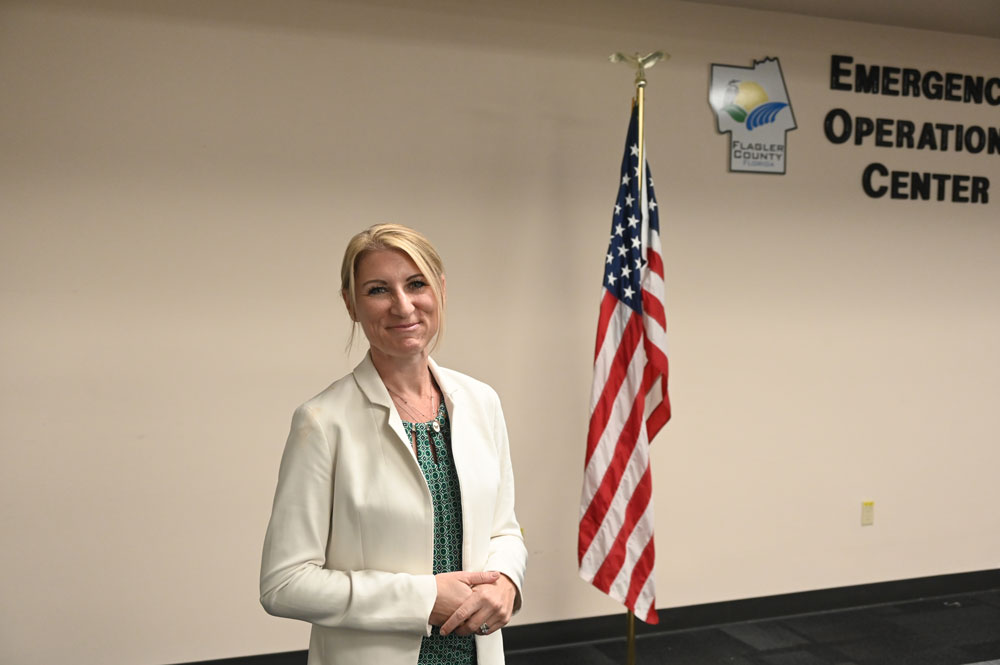
Theresa Carli Pontieri, an attorney, was elected to the the District 2 seat on the Palm Coast City Council in 2022 and is a candidate for the District 2 County Commission seat this year.


























Samuel L. Bronkowitz says
Average person: “Please, I just want a place to live and food to eat, I make $50k a year and have to use food banks and live in a house with 8 roommates because houses and food are so expensive”
Republicans: “You know what will fix that? More capitalism”
The dude says
No no no…
What will REALLY fix this is the tried and true solution of huge tax cuts for the top 10%…
It’s a time tested solution that has been implemented over to last 4 decades and it got us exactly where we are today.
Huge tax cuts for the top 10%… works everytime… clearly.
Sherry says
Love your “Sarcasm” The Dude!
Connie says
Right! What we really need is “cash for clunkers”! No, more “shovel ready” jobs!
Dems have zero domestic economic policy that doesn’t involve more government, more subsidies.
How many poor people have given you a job?
Better yet, leftists could take all the money that billionaires have and it would fund government for a few months.
Leftists are economically ignorant.
Laurel says
Connie: Then please explain why a Democrat, Bill Clinton balanced the budget while Republican Donald Trump is collapsing it with self adornment and skyrocketing the deficit?
By the way, recessions tend to be during Replication administrations and Democrats clean them up. Do some research.
Your comment is economically ignorant.
Laurel says
…tend to be during Republican…
R.S. says
As long as there are homeless people with a life expectancy of 47 years, the housing problem hasn’t been solved; and the country surely isn’t free. Ideologically driven claptrap such as this surely won’t solve problems; it’ll simply add to the already stifling complexity of living. A roof over one’s head and basic needs requirements solved is the ticket for any truly free society.
James says
Interesting conversation regarding Jacksonville housing crisis…
https://news.wjct.org/show/first-coast-connect/2026-05-06/on-thursdays-show-rental-housing-crisis
… also, the book …
https://www.amazon.com/Financialization-Human-Shelter-Housing-Sunbelt/dp/183708937X/ref=mp_s_a_1_1?dib=eyJ2IjoiMSJ9.E4DTz1FXz1It_m3xLF356QHiTVsw9_4SVmoFhRr4_CklvpO2yd6UN0FZ9xgvj0yDwVlrum8LiPoQQRXKviU8Wbw7r26-kr8ZsZxv76lkbyQ.Ff4HBQw_x_KaXFqaTP9Sa-cAL-yoNTLwOdZA_eAn0tY&dib_tag=se&keywords=The+Financialization+of+Human+Shelter%3A+The+Rental+Housing+Crisis+in+a+Sunbelt+City+by+David+Jaffe+and+Katie+Renzi.&nsdOptOutParam=true&qid=1778801404&sr=8-1
James says
In light of discussion cited in the above link, l’d just add that in my opinion it is not a matter of simply “supply and demand,” but of profiteering.
I’d also add that Palm Coast might not have a housing problem, Jacksonville (and perhaps Orlando) do, and we are dealing with the fallout from that housing crisis.
Rudy says
Wait, isn’t this the lady who tried and failed to do 2 separate moratoriums on all home building?
lol.
x Rudy
Ed Danko, former Vice-Mayor, PC says
Am I reading this in the Babylon Bee? This has to be a satire! “Tax & Spend Theresa” is now saying she’s for “lower taxes, lighter regulation for commercial and industrial sectors, and a pro-business climate?” Is this the same Pontieri who has pushed repeatedly for an increase in the county sales tax, who supported a 6% FPL Franchise Fee on our electric bills, who supported “Alfin Bonds” and voted, along with Alfin and Klufas, in a legal “shade meeting” to waste taxpayer dollars in court to keep “Alfin Bonds” on the ballot, while knowing damn well they would fail on election day? Is this the same “Flip-Flop Pontieri” who voted to increase your property taxes last year? Does she not realize that repeatedly screaming the word “Moratorium” on development only discourages investment from businesses, and does nothing to create a “Pro-Business Environment?” While “Two-Faced Theresa” lectures us on her opposition to “affordable housing” she conveniently forgets how she got caught taking $5000 for her campaign from ICI for supporting “affordable housing” in the E-Section. At the same time this hypocrite also lectures local officials on how to build “affordable housing” while dragging the City of Palm Coast into a lawsuit for violation state law on exceeding impact fees. Let’s not forget that she is pushing those “Alfin Bonds” once again on the 2026 Election Day Charter Amendment ballot. Guess it’s time to rebrand them “Pontieri Bonds!” Again, am I reading the “Babylon Bee?” No, just reading Theresa Carli Pontieri’s phony attempt to hide her past because it is an election year and she’s running for County Commissioner. FYI: Notice how she is now using her maiden name again? That’s because “Carli” starts with a “C” and using it will bump her up on top of the ballot above her opponent’s name. Another cheap political trick from a sleezy lawyer politician!
The dude says
Oh liddle Eddie…
That’s a nice bunch of sour grapes you got there.
How’s that “imminent” arrest of Mayor Holland coming? You claimed this in 2020, when will it be happening?
D. Wise says
There is a stronger conservative response to Palm Coast’s housing crisis than simply defaulting to “subsidies bad” and “markets good.”
The article correctly identifies part of the problem: regulatory barriers, rising costs, and supply constraints. But it stops short of acknowledging a harder reality. Palm Coast itself has spent decades heavily shaping, restricting, and curating what kind of housing the market is allowed to produce.
If we truly believe in markets, then we have to allow markets to respond to demand.
Right now, Palm Coast does not operate as a fully free housing market. It operates as a highly regulated suburban housing model centered overwhelmingly around detached single-family homes, large lots, minimum square footage requirements, automobile dependency, and mandatory two-car garages.
That is not simply “the market at work.” That is policy-shaped scarcity.
We cannot simultaneously argue that housing markets should function freely while also prohibiting the market from building smaller homes, duplexes, ADUs, cottage courts, workforce rentals, or modest missing-middle housing across large portions of the city.
Palm Coast’s current housing environment did not emerge naturally. It was engineered through land use policy over many years.
And the results are now visible:
• severe rental shortages,
• rising workforce displacement,
• constrained starter housing,
• escalating housing costs,
• and an increasingly narrow range of housing choices.
The city’s own housing needs assessments have identified these issues repeatedly. This is where the conservative argument becomes more nuanced than simply opposing subsidies.
Many of Palm Coast’s existing housing restrictions are themselves forms of government intervention in the market.
• Minimum square footage requirements are intervention.
• Mandatory garage requirements are intervention.
• Strict separation of housing types is intervention.
• Artificial limits on housing variety are intervention.
A genuinely market-oriented approach would ask a different question:
Why are we preventing the private market from building more diverse and naturally attainable forms of housing in the first place?
There are conservative-compatible reforms available that do not require massive public subsidy programs:
• reducing minimum home size requirements,
• allowing smaller lots,
• permitting ADUs by right,
• streamlining approvals,
• reducing procedural uncertainty,
• encouraging incremental infill,
• allowing limited duplexes or cottage-style housing in appropriate areas,
• and reducing unnecessary regulatory costs that add expense without adding meaningful value.
Those are fundamentally deregulatory approaches.
The article warns about dependency, infrastructure strain, hidden costs, and political favoritism. Those are legitimate concerns. Growth should not become an excuse for careless planning or backroom deals.
But the article is weakest in its own argument by treating all housing reform as though it were synonymous with subsidy-driven social engineering while overlooking how heavily regulated Palm Coast’s existing development pattern already is.
In many ways, Palm Coast reflects a postwar suburban model designed around retirees, larger homes, automobile dependence, and relatively homogeneous residential development. That model functioned differently when land was cheaper, insurance costs were lower, and Florida’s population pressures were far less intense.
Today, the consequences are becoming harder to ignore. Teachers, healthcare workers, retail employees, hospitality staff, city and county employees, young families, and many long-term residents increasingly struggle to remain in the community they serve. Businesses face growing difficulty recruiting workers locally. Commuting burdens increase. Infrastructure stretches outward. Economic strain compounds itself.
These are not merely “social policy” concerns. They are economic functionality concerns. A healthy market economy requires a functioning housing ladder.
And one of the most conservative concepts available is also one of the simplest: property owners should have reasonable flexibility in how they use their property.
That is why ADUs are becoming such an important discussion in conservative communities across the country. They are not simply about “density” but about:
• allowing aging parents to live near family,
• giving young adults a path to remain local,
• creating supplemental income for homeowners,
• supporting caregivers,
• and introducing small-scale, incremental housing growth without fundamentally transforming neighborhoods.
The arguments in favor or ADUs aligns far more closely with traditional conservative principles of private property rights, family support systems, local flexibility, and market adaptation than rigid one-size-fits-all housing patterns imposed through decades of zoning restrictions.
If we truly want markets to work, then we should allow them to adapt. And if we want housing to become more attainable–becaus we see the economic outcome when it isn’t–, we absolutely can begin by removing the artificial barriers that prevent the market from responding to the reality Palm Coast now faces.
The dude says
Palm Coast has put its marker down.
They only want the olds on fixed incomes here. No families. No commercial development besides fast food and medical.
Every action they take affirms this.
It is not sustainable.
JC says
Correction: Richer families and richer retirees/near-retirees. The families that live on my block have money/higher income to afford to live in Palm Coast and the newer retirees/near-retirees that I know have high income. We are talking about those who can afford a brand new build with a high end pool, those who can afford a house in Grand Haven and the Hammock, and have money for cars and travel. All of them also said that they are happy that Palm Coast is a heavy Republican area and they like the policies to keep the area/state Red since all of the newer arrivals came from Blue states and they had enough of the Democrat policies.
Different from the previously generation who moved to Florida: Working Class who were able to afford a cheap retirement in Florida. This is just about no longer the case now.
D. Wise says
This may feel workable in the short term, but it becomes problematic long term.
Retirees and high-income remote workers still depend on an entire ecosystem of workers to sustain daily life and local economic function. A community cannot realistically consist only of upper-income households disconnected from the labor needed to support them.
Who checks you in at the doctor’s office? Staffs the grocery store? Repairs your air conditioner or garage door? Who cuts lawns, inspects permits, serves in restaurants, works in schools, assists seniors, responds to emergencies, or maintains infrastructure?
For every household that relocates here without working locally, there is still demand created for additional workers who’ve not yet reached high incomes. Not yet, anyway.
As growth continues, we cannot indefinitely rely on surrounding areas like Bunnell or the Mondex to absorb the workforce housing burden necessary to support the city’s economy and services–because there are far more people moving to Palm Coast than those areas can support workforce-wise.
Being proactive does not require subsidies, massive density increases, or sweeping fee waivers. It does require flexibility, innovation, honesty, and concern to acknowledge that the current housing mix may not support future mover inners.
Deborah Coffey says
Okay, people. We’ve heard this BS before. Let the private sector run loose and everything in America will be just great. Right. Remember 1929? 2008? How about right now?
Here’s how the Low-Income Housing Tax Credit works.
https://www.urban.org/urban-wire/lihtc-provides-much-needed-affordable-housing-not-enough-address-todays-market-demands
D. Wise says
Pontieri does have a valid point with LIHTC. The tax credits expire and getting them is not easy for small developers and builders who are genuinely interested in trying to fill the affordability gap. You’ll find that mostly big-wig developers can go through all the hoops needed to secure a tax credit, and then, since getting a tax credit really only benefits for-profit enterprises, they must remain viable, and to do that, they often build in additional fees (application fees, parking spot fees, etc.) that turn affordable rents into higher revenue streams. We can see some of this locally.
Subsidy is not sustainable long-term, though it can help. And there are mechanisms (long term affordable, permanent affordability mechanisms like Community Land Trusts) that recycle initial subsidy forever to ensure homes are always affordable to first-time home buyers with workforce or middle-class level retirement income.
The goal should be to reduce the need for subsidy, but we have to be innovative locally to think through how that looks for our community.
Connie says
What’s YOUR alternative, everyone living on the government dime?
It’s always interesting how the left attack “Capitalism” without ever mentioning the alternative…government subsidies.
Never do leftists provide an economic plan that expands the tax base. Never do leftists provide a realistic and rational plan to grow the economy. The reason? People will make money and *gasp!* may become wealthy.
For leftists the answer is always the same, more government, more taxes, more subsidies.
Let’s take this to its very illogical extreme: let’s all just work for the government and live off each others taxes!
The left has no economic answers. It’s to be expected from a group who has problems defining “woman”.
Pontieri is always prepared. In fact, she’s been the only City Council member who has been totally prepared for every meeting. You may disagree with her, but you know she’s prepared and you know why she’s making her decisions.
I’ll take that every time over wish washy and over little RINOs who want to grand stand.
Just saying says
If this conservative principle of letting the markets work actually did work we wouldn’t have a housing affordability problem. Seems like letting the markets work benefits the rich and makes them richer.
The dude says
“trickle up” economics at it’s best is on full display in the country these days.
What are you gonna do about it?
We can continue to vote against our best interests and watch the money accelerate to the top, just to “stick it to the libs”, or we can find more sensible solutions somewhere around the middle that allows the rich to get richer but not so much at the expense of the middle class.
The world is on fire. MAGA tossed the match and brings gas cans. This is an unserious group who either doesn’t think they’ll be around to deal with the fallout, or feels they will be above it.
T says
Republicans hate poor Americans rent control non existent,wages suck,inflation is higher which maga dont wanna talk about anymore cause their told not to but it is real
Rudy says
Ms Austrian Theory also shut down an industrial project in an industrial zone…because it was too industrial.
https://flaglerlive.com/rezone-reject-hargrove/
Sad :(
Standing in the Middle of Palm Coast Parkway says
Let me start with a thank you to Vice-Mayor Pontieri for trying to put forward ideas that might help the citizens of Palm Coast and Flagler County. I don’t know if these ideas will benefit all citizens, but it seems that was her goal in stating them. It’s sad that when any ideas are put forward here in Flagler County, people in this forum and on social media very often try to label or discredit them as being the message of an opposing political party or just wrong. And then there are the pseudo-politicians who hide behind their twisted view of a political party and regularly weigh in with no real ideas of their own, but are eager to throw mud and try to discredit any ideas.
We live in a community where people buy homes near airports and then complain about planes. Where there are industrial areas zoned so tightly that one business and its multi-ton trucks are bad, and the business next door and its multi-ton trucks are permitted. And be careful where you park any vehicle that has signage. The largest ‘industries’ here (by employment) are healthcare and schools. Seemingly followed by storage facilities and entertainment. We have beaches and parks that many use, but no one wants to pay for. We might have an Internet-connected undersea cable landing facility and data centers, but only after numerous residents complain about the perceived dangers of those cables, data centers, and the Internet. The same residents who only know what they read on their social media or see on their Internet-connected televisions.
Vice-mayor Pontieri is right about one thing. We need to do something different. Would attracting new industries and businesses to Flagler County help? I think so. We don’t live in a commuter community. It’s a long commute to Jacksonville or Orlando. I believe we need to attract and build businesses here. Where people commute locally to well-paying jobs in different, thriving businesses. We need new ideas because what our elected leaders are doing now doesn’t seem to support that.
Deborah Coffey says
Calling us all stupid and ignorant will not win you a lot of points for your very conservative viewpoint…at which point you should check the Vice Mayor’s record on “well-paying job in different, thriving businesses.” And, if we don’t let our elected leaders know what we believe are the best fixes (you call it discrediting; we call it democracy), then there can’t BE any discussion, compromising, and best results.
Standing in the Middle of Palm Coast Parkway says
I never called anyone stupid or ignorant. I am a proud Conservative tho, thanks for that. I did try to call out that too many Flagler County residents complain and argue points about the Internet, cable landings, and data centers that have been proposed but not yet broken ground, using often unsubstantiated information they obtained from the same, evil Internet. I also tried to convey that I believe there needs to be employers creating jobs in Flagler, in businesses other than schools, hospitals, storage facilities, and gas stations (oh, and lawyers) to fill all the proposed housing (accessory or otherwise). In my humble opinion, too many of our elected leaders are pseudo-politicians, hugging a flag and repeating what they read out of someone else’s playbook. They are unable to work together and are not equipped to address any of the issues facing our communities.
R.S. says
Just curious: what makes up a PROUD conservative? What’s a conservative who’s not proud of it? What’s a person who simply solves problems for the benefit of humanity? A PROUD problem solver? I just get intrigued by these PROUD of whatever people. Does that mean that one has blinders on to any other visions? Does that mean that one has tunnel vision? Is it a matter of a mind’s being made up and not being confused by the facts? I don’t get it.
Gina Weiss says
R.S. if this person is what a PROUD CONSERVATIVE is I’m elated
not to be one. All this person did is rag on about citizens freedom
of speech, quality of life, safety and health issues, the protection of
our flora and fauna and a host of other concerns that citizens have
the right to voice.
D. Wise says
Thank you! It is important that she started this conversation and put herself out there on the brutal Flagler Live. :) We should honestly be excited that these conversations are happening at all. That alone is a monumental step forward.
I do have some points of consideration, though, not simply to dismantle what she is saying, but to hopefully broaden the conversation around what we are really working with in Palm Coast. We have a massive master-planned community that dominates much of Flagler County, and that creates a fairly unusual situation in Florida. The pressure is high for Palm Coast officials to figure out how to move forward thoughtfully.
They are right that local government cannot directly control land costs, interest rates, labor costs, or material costs. They are also right that subsidy carries taxpayer impact, should be weighed carefully, and cannot realistically be relied upon forever.
Where I hope the conversation continues is around the one major tool local government does directly control: regulation.
There are really two paths they could consider.
One approach is allowing minor regulatory flexibility specifically tied to affordable housing. Things like two-car garage requirements, minimum square footage, setbacks, or lot line standards could be adjusted in exchange for defined affordability requirements.
The other approach is broader deregulation within targeted zones or areas suitable for those changes in general. In that scenario, the flexibility would apply more broadly to builders overall. Yes, some of that could result in luxury cottages or smaller market-rate homes initially, but over time it also creates a more diverse housing stock that can become naturally more affordable as the market evolves.
Either way, I think the larger point is that Palm Coast does have some ability to influence long-term housing availability through thoughtful land development policy, even if it cannot directly lower the price of lumber or interest rates.
T says
MAGA morons are governing America and Republicans disgraceful un-American destroying America now
Laurel says
Ah, yes. It’s the “olds” and the Democrats at fault. Everyone in the Hammock is rich. It’s Biden’s and Harris’s fault. It’s Alfin’s fault. It’s still Obama’s fault.
Some of you are just, plain stuck.
No once, in the article, was there a mention of private investors buying up homes, apartments, condos, mobile home parks, retirement complexes, and now, even freakin’ containers used to build homes, and illegally price setting the costs of renting and buying. One in five apartment buildings, across the country, is owned by private investors.
Build more homes, build more apartments, and have more investors come in. Have more AirBnBs, more Vrbos, more “property rights”. That’s worked in the past, right? Maybe “conservatives” need to let go of the past, and keep a much closer eye on private investors.
Yes, private industry will fix everything, while making huge profits for themselves.
Hello?
Koyote says
Brought to you by the same folks that claimed : “Giving the Ultra-Rich more money through tax breaks and handouts will encourage them to spend more money on the hourly paid employees.”
Joey G says
So my take is everything was fine till this COVID crap hit. You could rent a place for less than 1000 you could buy a place for 200k.
You now see framers driving around in 80 k trucks some making 2-3k a week. Before COVID they were making a grand a week and having to work there ass off. That 6 cell pack of plants was 1.49 now it’s what 6-8 bucks. Look at the freaking water company we were paying 100 bucks maybe less a few years ago now if you pay 150 a month your doing great. Electric is the same way. This political BS back and forth goes nowhere. If that painter,carpenter,landscaper can charge you more money he will. Quite this billionaire bullshit. They built a business took risk and were rewarded. I have lost a bunch of money in the stock market but have also done very well. The government didn’t take the risk I did it was my money and I have to pay capital gains on my profits cause they are in my pocket. This could go on and on. Just my two cents worth. By the way I do not have any super education I started my life digging Clams on the great south bay. Also had a job working for sea ray boats in flagler 35 years ago making 6.50 an hour. I didn’t give 2 shits how much money other people made I was not looking for handouts. So now being retired and living just fine I worked my ass off for what I have and didn’t complain cause I would only have myself to blame. So people get a grip on yourselves put your head down and do what ya gotta do.
James says
Well, I must say. After reading some of the comments posted here I never realized how many billionaires make Palm Coast (or is it Flagler County?) their home…. that Jacksonville affordablility crisis must be worse than I thought.
Which doesn’t say much for the future direction of affairs here… if a relatively vibrant, wealthy city like Jacksonville (or Orlando, or Tampa, or… or… or…) cannot come to a solution with regard to housing affordablility, I doubt Palm Coast ever will.
Surely all this talk of “-ism’s” must mean we are getting closer to election Day here in gaslight-ville.
Just a last opinion on the matter… someone open a window.
James says
Pontieri is a double talking politician. She’s directly responsible for delaying housing projects, creating more regulations and increasing fees in everything that drive the cost of homes higher. Reading her comments about affordable housing is actually disgusting. 🤮 She voted so many times to increase fees, increase taxes and delayed so many projects in PC. So this is crazy disingenuous. Typical attorney.