



A planning consultant Palm Coast retained to prepare a clear-eyed and richly-detailed assessment of the city’s housing conditions today and in the future had sobering but unsurprising conclusions for the council Tuesday: Palm Coast has a housing problem. It’s not specific to Palm Coast. But local problems are pronounced, at least for a segment of the population stressed by housing costs, and they’re not without solutions.
Combined with the city’s impending expansion westward, the assessment would require a shift in how Palm Coast does housing, and to what extent existing residents would have to accommodate the less customary and more diverse approach.
But a majority of the council is not interested in going down that route, at least regarding many of the initiatives proposed in the assessment. The report and the discussion that followed exposed an irreconcilable gap between policy makers and a majority of residents used to the single-family lifestyle on one hand, and a substantial segment of working age, financially stressed renters and homeowners on the other.
“My overall, high level opinion of this topic is that government is not the answer,” Council member Theresa Pontieri said, favoring a supply and demand approach. Developers can’t be forced to build something if it’s not needed, she said. She struck down initiatives that would push for more apartments, as several thousand units are on the way, but favored giving direction to city staff to look for initiatives that help more affordable housing for “our aging community.” The council agreed, sharply narrowing the scope of the consultant’s findings.
There have been many examples of the now-always apparent divide between the City Council and the administration. Tuesday’s discussion on housing and planning was one of those more obvious examples. There is more willingness and nuance among the administration’s planners to take the consultant’s analysis to heart and explore it for feasible applications locally.
On the council, not so much.
The divide was also apparent between the council and the county-city Affordable Housing Advisory Committee.
“It’s atrocious, what I’m hearing from the dais today,” Sandra Shank, a member of the committee, told the council.
“Most of the workforce is at 50 to 80 percent of the median income,” Valerie Clymer, who chairs that committee and has been writing mortgages for 25 years, told the council. “Which means, according to HUD,” the federal Department of Housing and Urban Development, “they should not be paying more than $1,655 for their housing.” There are generally no such rents or mortgages available in the city. “Several years ago, I came here and told you about teachers living in their cars on the corner of U.S. 1 and 95… “So what are we doing to our education system if we don’t have people that are professional teachers that can afford to live here? What about our firefighters, our police officers, the people that come out and clear our drains so that everything goes. Are they making $66,500?” The figure marks the level below which housing costs become unaffordable. “From what I see, they’re not. We need to do something for our work force.”
The presence of several Affordable Housing Committee members, who have a direct interest in the subject and are particularly conversant in it, created a disproportionate impression of public opposition to the council. In fact, when members of the public address the council on development, a majority of those public voices generally come from single-family houses with strong matriculations in NIMBYism, they align with the council and more often sneer, not always elegantly, at discussions of affordable housing: Palm Coast, in the main, is not an affordable-housing-friendly city.
For all that sound and fury, the council adopted five of the nine “strategies” the consultant proposed as part of its 128-page report: initiatives 1, 2, 5, 7 and 8 that are summarized below (and in more detail in this document or at the foot of the article), with some of those initiatives already applied in policy.

If you’re relatively well off, you’re fine. But if your household income is less than $66,000, you’re hurting. Future housing plans won’t make it easier for you, at least not as designed, especially in the so-called western expansion.
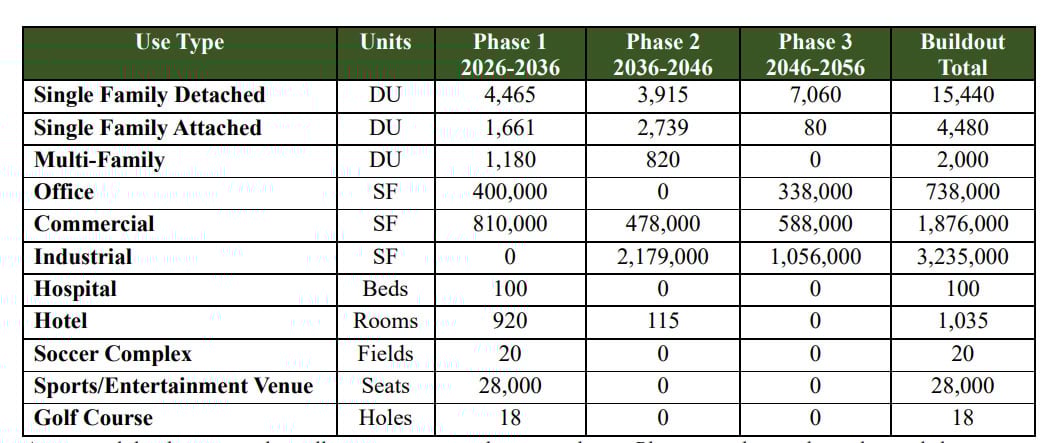
Raydient’s development west of U.S. 1 plans 22,000 houses by 2056, with 16,000 houses yet to be built east of U.S. 1. Only 6,000 of those are remaining ITT “infill” lots, the quarter-acre lots that characterize the original Palm Coast. Those 38,000 housing units will more than double the city’s population, adding 95,000 new people, assuming the next 30 years’ demographics make that possible (an increasingly tenuous possibility).
Dominated by single-family houses, the city has a gaping lack of housing diversity, from apartments to smaller houses or duplexes. It’s not getting better: Of the 38,000 housing units to be built, 84 percent will be single-family houses, and in the western expansion, 91 percent will be single-family.
If the city wants to be more welcoming and affordable to moderate-income residents and the working class, it’s going to have to diversify.
That means creating districts for compact, denser, smaller single-family developments (some of which is happening, to the discriminatory chagrin of more established residents, as in one of the the Palm Coast Park developments off of U.S. 1), town homes, duplexes, triplexes, expanded apartment opportunities. It means expedited permitting and pre-approved plans for certain housing types (an option that resonated with council members such as Charles Gambaro). It means updating zoning to reflect need, not custom, and to allow for more inclusionary zoning, such as expanding mixed-use zoning. It means expanded availability for senior housing.

Independent and assisted living facilities are not the sole answer, especially for moderate to low-income residents. “I’ve had my own family members have gone into independent living facilities, and it’s three or four times more expensive than the mortgage that they’re paying now because of everything that comes with it,” Gambaro said.
It even means supporting mobile homes and other alternative housing options, including so-called ADUs, or “accessory dwelling units,” which are smaller, independent residential houses that can be co-located on existing single-family lots, like granny units. (Palm Coast’s council members are generally not fans of ADUs.) And it means being welcoming to well-regulated short-term rentals (the city is already there).
Those are some of the conclusions from an open-eyed housing assessment by JBPro, the planning and engineering consultancy. Tara Howell, a senior planner with the firm, presented the assessment to the Palm Coast City Council Tuesday alongside city planners.
“The intent is not to alter its established neighborhoods, but instead to create additional flexibility in locations where infrastructure, roadway access and surrounding land uses can support a broader range of housing choices,” Howell said.
It can be done, Howell said, with a combination of strategic oversight, administrative innovations–such as a library of pre-approved plans for smaller housing units–and a range of financing options, from bonds to tax-increment financing (as in Town Center), and public private partnerships, among other avenues. (Howell’s segment on financing was among the vaguer parts of the presentation, relying more on jargon than concrete approaches realistic in the Palm Coast market and its political environment. But Howell knew that: “The implementation snapshot that’s included in your assessment is a high level snapshot, just to give you an idea of what these projects look like on a timeline,” she said, “from conception to ribbon cutting, if you will.”)
“For me,” Pontieri said, “the one unique problem that we have that is not shared by the entire state of Florida is that we have a low amount of rentals for our aging community. So to be very clear on where I stand on this, I would be in favor of looking for strategies and furthering strategies that are very specific to that issue.” And the reason that is my position is that I believe that government affordable housing initiatives often fail to meaningfully improve affordability due to the misdiagnosis of pinpointed problems.”
Nevertheless, Pontieri said, the city has enacted a short-term rental ordinance, there is some fast-tracking of housing initiatives, the city’s Land Development Code is being amended to enable other approaches, especially regarding smaller houses, and in fact several new developments have brought smaller lots and smaller houses. That will also be the case in the western expansion. Pontieri is also not opposed to easing regulations on in-law suites attached to existing homes–which the city’s existing Land Development Code already allows. Mayor Norris noted the 6,200 apartments on the way.
“So we’ve already done a lot of these things, and my concern is that we’re going to say we’re going to do more, we’re going to pile on and now all of a sudden, we’ve changed the entire vision in the setup of Palm Coast,” Pontieri said. That’s not what existing residents want.

Council member Ty Miller aligned with Pontieri, rejecting any initiative that would involve financial incentives for affordable housing, even though in certain specifics, he leaves open the door for faster permitting, ADUs and smaller lots, but not changing the character of ITT lots and the “certain look and feel to neighborhoods.” Howell, however, was not referring to changing ITT infill lots. The suggestions were focused on future, non-platted developments.
“It’s about compatibility in those infill lots, people are not looking, you know, to have two tiny homes next to their $500,000 home,” Mayor Mike Norris said. “I think we’re doing all we can. People don’t see those other units that are in the queue to come online, which is going to change everything. We’re looking at 2023 data. So things are improving. I think market conditions, prices are coming down somewhat, and more units are coming online. It’s just pushing those developers, especially at the multifamily units, to get those started to break ground on this.”
Council member Dave Sullivan spoke similarly in terms of letting market forces determine the landscape. “Basically, market forces will determine what our housing is going to look like in the future,” he said, essentially eliminating the substantial role that local governments play with zoning and other land use policies, which channel and regulate that market according to local needs and visions.
“You guys keep talking about the market and how there are houses that are coming online, and that is true,” Carla Amaral, vice chair of the Affordable Housing Committee, told the council. “But that doesn’t mean that they’re affordable. The cost of lumber and the cost of concrete doesn’t change for affordable housing. It is things that you guys do here that changes the price of a normal house to affordable.”
She provided several examples the council is doing. “But they’re not tied to affordability,” Amaral said. “They’re not tied to workforce housing, so you can use the tools that you are already using, but tie it to workforce housing. Tie it to affordability. You just paid for a report that told you it’s needed. It exists. It’s here in Palm Coast, and everybody up there has been elected to help everyone in this community.”
Shank, the Affordable Housing Committee member, told the council that each initiative that JBPro proposed has already been proposed by the Affordability Committee. She disagreed with Pontieri’s narrowing the focus to the elderly.
Development in Palm Coast peaked between 2000 and 2009. Now the city’s population is growing older. There are almost twice as many people 65 and older than there are children 17 and younger, and the older set represents a third of the city’s population.
“I think it is quite hypocritical that in the month when you give a proclamation for individuals with disabilities,” Shank said, “you parade them in front of the dais, you take pictures with them, and then to now completely eliminate them from a study that has validated housing needs for them.” (Shank is planning to build a 28-unit affordable housing apartment complex in Bunnell, but the project has been chronically delayed.)
Shank spoke with equal aversion to the council’s resistance to accessory dwelling units. “ I don’t know what the fear is,” she said. “We’re not talking about creating something that people are going to party in, but truly to help the elderly. As someone stated before, yes, there is affordability. So if an elderly person purchased their home 20 years ago compared to the market today, if they can remain in their home with the support of family who may be willing to move in that home, you are maintaining the affordability, and you could possibly be increasing the lifespan of that elderly person.” She said each council member counted lower-income, elderly and disabled voters in their tally.
Almost 90 percent of the housing stock in Palm Coast is single-family, with just 13 percent as duplexes or apartments. Household incomes have risen steadily, but not enough to prevent the city’s poorer population from finding affordable housing, making homeownership out of reach for moderate and lower-income residents.
Crucially, long-term owners tend to have manageable housing costs, while new home owners often face higher payments and more risk. For both younger, newer homeowners and renters, housing is devouring a disproportionate share of income, which normally–and including utilities–should be no more than 30 percent of household income. In essence, Palm Coast’s housing market favors the better off, with little diversity in housing choices.

JBPro is projecting affordability problems through 2050 for those who are below 80 percent of the area’s median income. In other words, today, Palm Coast’s median household income is $77,000. Problems begin for those whose households are earning $62,000 and less. But half of all renters and more than 20 percent of homeowners are “cost burdened.”
“Renters are experiencing significantly greater affordability pressure, with more than half of renter households considered either cost burdened or severely cost burdened,” Howell said. “Homeowners are generally more stable, with a much larger share remaining below that cost burden threshold.” Over 77 percent of homeowners are not hurting financially. But 22.6 percent are. “This reinforces that rental affordability is one of the most significant housing challenges currently affecting Palm Coast residents,” Howell said.
Palm Coast has not developed the majority of its land zoned for apartments even though most of it east of U.S. 1 is already ready with infrastructure. Despite that, most of the available land is still zoned for single-family houses. That doesn’t help with affordability. The western expansion is not improving matters: only 9 percent of the 22,000 housing units planned for the Raydient development are apartments.
“The goal is not to fundamentally change the character of Palm Coast, but to provide additional housing options that better align with the needs of both current and future residents,” Howell said.
Overall, said Gambaro, who sits on the county-city Affordable Housing Committee, “some things are already in motion for us, but I think there’s certainly other other items that we can consider. I know on this council there’s different opinions about ADUs and the state may preempt us on a lot of these things.”
Toward the end of the two-hour discussion, Pontieri bristled at a public comment characterizing the segment as a dog-and-pony show. “It’s not a dog and pony show,” she said. “These are things that, statutorily, I think we have to do in order to open ourselves up for certain funding for some of these initiatives. And I think that it is important that we have this discussion, even though it is a very hard discussion, because from a policy perspective, there are people that are on the opposite sides of the spectrum of this thing, and let me tell you why.”
Pontieri then recalled how when she was in her 20s and fresh out of law school, she was broke as a rookie attorney and lived in an 800-square-foot furnished condo without a television. She then bought a house that she had to “gut,” since that’s all she could afford. “Sometimes you do what you have to do in order to work towards a bigger goal,” she said. “The things that we are doing right now, the things that we are talking about, are difficult to talk about, because we don’t live in a utopia. We don’t have the ability to put the cost of affordable housing on the backs of taxpayers who have worked for the things that they likely have now.”
Legislatively and from a policy perspective, she said, it’s another story. She favors those approaches, starting with the elderly. If there’s more to do for other communities, she said, she’d be willing–but still, no ADUs. The JBPro report, however, mostly focuses on policy initiatives rather than subsidies at taxpayers’ expense.



























Pogo says
Flagler County is a living example of everything that has gone the wrong way in Florida for the past 75 years. Its population voted in favor of every step.
Anon says
Well if you want to blame anybody walt Disney started it historically speaking with the building of Disney world Florida otherwise would probably be more sparsely populated
Pogo says
You might want to include, ad astra per aspera. too.
https://www.google.com/search?q=ad+astra+per+aspera
A library wing would be needed to house the intertwining of Florida and the human race’s history — just in my lifetime. Compare the “Disney ruined everything meme” to these:
The real wealth and power — in, and of Florida
https://www.google.com/search?q=forestry+farming+mining+ranching+fl+history
War
https://www.google.com/search?q=cold+war+impact+fl+history
God’s waiting room
https://www.google.com/search?q=retirement+to+fl+in+fl+history
Lest you forget:
https://www.google.com/search?q=organized+crime+florida+history+1492+to+present
It's bad here says
Any change of Palm Coast “character” couldn’t be anything but an improvement over the characteristics that exist today !!
Deborah Coffey says
Thank you and, we need to tell this horrible Council that we don’t want to have anything like THEIR uppity, selfish character!
TR says
I just love when someone from the opposite party that is in office do nothing but sit behind their keyboards and complain about everything they don’t like that the council is doing. Here’s a suggestion. If you don’t like what the council is doing and want to make a change. Then get up away from your keyboard and run for a council’s seat if you think you can do the job better. Which apparently the people complaining seem to think they can. Someone complaining from behind a keyboard about what the council is doing can’t change anything and most likely doesn’t realize that it’s a government position and their are so much red tape that it isn’t that easy to get things done. The other thing that the complainers complain about is that they don’t thing the members of the council are qualified to be on the council and always cry VOTE them out. So again I suggest if someone will yell that, then run for a seat being you think you’re better qualified to be on the council. Good luck with all the yelling, but that will not solve the problems. IMO.
Richard Fay says
This statement is disingenuous: “My overall, high level opinion of this topic is that government is not the answer,” Councilor Pontieri is aware that the development across the State and in Palm Coast is rooted in government action. The issue of what is valued and who is valued and supported though that government action is at issue with government policy and decisions taken by representative bodies at the local regional and state level.
BIG Neighbor says
Great point, here we go using the word government like it’s the enemy. I thought the best historical uses of government was to charter new trends, set the new standards, then let privatization improve and sustain? At least, that was the theory. Problem there was that assumed a fair and free market economy, not a bunch of oligarchs dominating sectors like pirates masked as privateers. If government is counter to the answer, then why didn’t the Comprehensive land usage plan anticipate and address this? What was that money for?
Who cares? says
The article alludes to the fact that demographics are going to make this planned build out to 2056 untenable, making affordable future housing a moot point. Borrowing huge sums of money to build out infrastructure at the public’s expense for the profits of rayonier will have disastrous consequences. By all means, continue to argue for supply and demand setting current prices, but you will inevitably be faced with shifting parameters as time goes on.
Laurel says
“”It’s about compatibility in those infill lots, people are not looking, you know, to have two tiny homes next to their $500,000 home,” Mayor Mike Norris said. “I think we’re doing all we can.””
I know this is about PC, but honestly, this county has no problem allowing a multimillion dollar house overtowering trailers. It’s who you know, and how much money you have.
The real problem is investors. Wall Street companies buying up homes, apartments, condos, and now, retirement communities and jacking up the prices. People can no longer afford their homes and lose money in the process. Throw into the mix, vacation rentals.
Mike Cocchiola says
Character! Did somebody say character? Let’s not get silly here.
We’ve got hundreds of homeless people living in the woods and panhandlers on our streets.
We’ve got chickens in backyards. We’ve got multiple work vans and gigantic trailers in driveways. In addition, we’ve got multiple large cars and pickup trucks parked in driveways—sometimes on front lawns —because they can’t fit in garages. We’ve got AirB&Bs all over town with up to eight or nine cars, trucks, work vans and motorcycles strewn about driveways and swales for weeks at a time. We’ve got banks, pharmacies, Dollar Generals, and fast-food outlets on every corner of major throughways, with more being built every year. We’ve got a major traffic problem that gets worse by the month.
So, my question is: what fine city character are we trying to protect? Why would affordable housing worsen what we’ve already got?
Build affordable housing. Give our working poor a chance.
Taxpayer says
Well said Mike and I totally agree. The City Officials have done their best to destroy PC and affordable housing is nothing compared to what they have done.
Traffic is the worst and tired of seeing fast food restaurant going in on every corner in PC. Is this the best the City Officials can do? Oh, lets not forget them letting developers throwing up houses on ever spare piece of land that is left.
Deborah Coffey says
BRAVO!
TR says
You are exaggerating a lot here.
JC says
Not shocked, I know so many people who moved here from the North who all hated affordable communities where they are from. They all consider affordable communities to be full of Poor/Black/Democrat voters and they don’t want them nearby to bring down housing values and the crime it brings into the area. Look, Palm Coast is near the ocean and soon land that’s near the ocean will cost $$$ with the way things are turning into. Pontieri isn’t wrong when she said that the government is not the answer here, the demand will be favorited for single family homes since people have the money to afford them and they want to have near ocean access. This is also the same city where some businesses prefer to hire older employees where they “take it by the bootstraps” since younger people can’t work for crap. The end.
Deborah Coffey says
Not character to be admired and protected, then, is it?
JimboXYZ says
Plenty of diversity in this neighborhood. Appears many are opting to rent a duplex or some other garaged home vs the traditional stacking of bodies in apartments ? What it the occupancy of rental homes vs rental apartment complexes. Some of the lower prices ? Gotta be people renting a room. What are the subsidized counts for occupancy by type & location ? The data here is worthless to really rill down and determine what is real & isn’t for blanket statements. Even if diversity isn’t as represented as the story purports, that would have t be qualified with income levels. What’s the difference between a poor white vs poor black or brown ? Skin color aside, poor is poor ? What we also don’t see are the overutilizations of property floor plans by race. Inflation continues, when it’s not rent & housing it’s everything else. This was Biden’s contribution 2021-present. It is what it is. There are no solutions Federal, State & Local. This subject of affordable housing loses any traction when the inflation can’t be reversed. Harris said it herself to Trump in 2024, “We aren’t going back !” By the same token stagflation was the only hope to curb the Bidenomics of inflation.
Tired of it says
Is there anything you are not going to blame on Pres.Biden? What is trump doing to improve anything? Inflation rising, food and gas prices rising, no healthcare plan, no balanced budget, national debt out of control, a billion dollar a day, unwinable war, tariffs one day, no tariffs the next. Cutting back on every single program to help poor Americans while giving huge tax cuts to the wealthy. Ballrooms, arches, gold statues, alienating all our allies, falling asleep at meetings and you are still but, but , but Biden? How much of that ballroom money could be used to help poor Americans?
Edith Campins says
Vice President JD Vance admitted Wednesday that the Trump administration has a “lot of work to do” on the economy, a day after President Donald Trump drew fire for saying he was not motivated by “Americans’ financial situation” to make a deal to end the war with Iran.
Trump told an audience at a White House Easter lunch on Wednesday, as seen in a video posted on and then removed from the White House’s website. “We can’t take care of day care.””It’s not possible for us to take care of day care, Medicaid, Medicare, all these individual things,
Trump Denies Knowing Lincoln Memorial Reflecting Pool Contractor, Says ‘Interior’ Handled $13.1 Million No-Bid Deal
Lorie Robinson says
This is definitely Trump’s economy.
if only says
I came to comment on the cover photo, which is pretty cool:
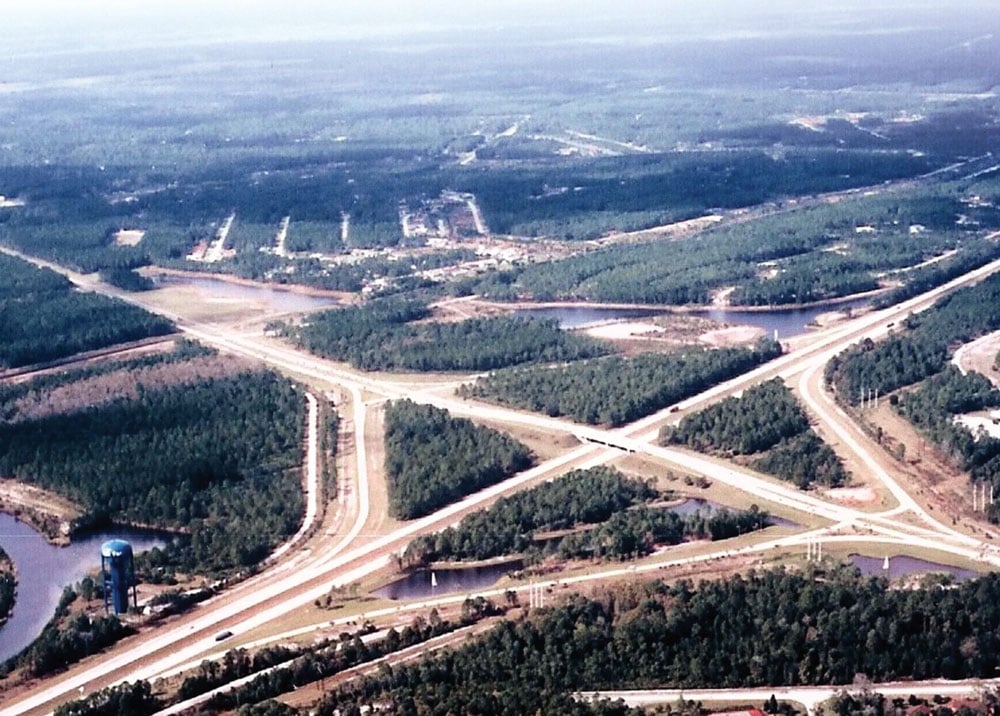
1970.. Kansas City wins Super Bowl IV, gas cost an average of 0.36 a gallon, American Bandstand introduces a band named the Jackson 5… and elsewhere… five cars and three trucks drive by exit 389 on I-95 (each probably driving a reckless 45 mph). Now that’s a rush hour I can get used to.
Shelley Kleinfelder says
That interchange was not here in 1970…maybe 1980 or 81…but we moved to the ‘west side’ in July 1980 and the interchange work had not started.
TR says
Then how did you get to the west side? I moved here in ’89 and the only thing on the west side of the 95 overpass was the new (now old) post office which just opened a few months before I got here. Oh and the roads were also in but some roads had weds growing through the cracks that were 2 to 3 feet tall in some areas. My brother and I drove around the west side and I don’t remember seeing one house. Oh and btw, palm coast pkwy was one lane going in both directions from the toll bridge to US-1.
David Cook says
All that “new” housing on Old kings & town center are RENTALS! Exactly for the low income people that can’t afford a house.
Most of the new builds in PC are now becoming rental houses. 3 on my street came up in a year & each is a rental. 1 next door to me changes renters every year. If I want this I would have stayed in ft lauderdale. At least the beach was WAY nicer!
CPFL says
That means creating districts for compact, denser, smaller single-family developments (some of which is happening, to the discriminatory chagrin of more established residents, as in one of the the Palm Coast Park developments off of U.S. 1), town homes, duplexes, triplexes, expanded apartment opportunities.”
I would not disagree to more affordable housing that would help out with all ages of people that are economically challenged with some of the home prices in the area. I do disagree with building masses of apartments. Create more affordable homes minus the apartments for people to buy…not investment companies and landlords. There is pride in ownership for most that buy a home, whether it be a house, condo, townhome, duplex, or triplex. For many this would be the first step to moving up, in the future I am sure a good chunk of them will move up to something bigger and better as their lives change.
My street has been well established for a very long time with probably 2000 sqft plus homes. The few scattered lots that have recently been built on have homes 1200-1500 sqft. Honestly it does not matter to me, they may be smaller but they a good looking homes by quality builders. Does hit at my homes value…temporarily it will but not a long drawn out time.
I work with a lot of younger people and I tell them it is bad that they will have such a hard time getting a home unless they are married or going in with someone else on the deal. These are young people with professional jobs, building careers. The way I see it is unless they are able to put a good portion of their pay into savings they will not be able to buy a home til late 30s to 40s.
MachoGuaco says
Same story. Different town. Natives get run out, because transplants have all the money. We end up moving further and further from the coast. Meanwhile we do all the labor that keeps the community running. While the community we work for and support (because it’s our ACTUAL HOMETOWN) rejects any idea of us being able to live there. There is no culture or community in Palm Coast anymore, it all got priced out in 2004-5. It’s sad, really sad, when the town you were born in. The county your family has lived in for over 100 years. When it prices you out, not by market but by policy.
more_apartments_more_traffick says
If you think Palm Coast has a traffick problem then you should be happy this decision was made.
There is no perfect town, no perfect state, and most certainly no perfect council member.
Palm Coast is a great place to live and I guarantee that even the least most informed council member is orders of magnitude more aware of the actual issues than 95% of the brainiacs who leave comments on articles like these. Myself included.