• Skip to primary navigation
  • Skip to main content
  • Skip to primary sidebar
MENUMENU
MENUMENU
  • Home
  • About
    • Contact Us
    • FlaglerLive Board of Directors
    • Comment Policy
    • Mission Statement
    • Our Values
    • Privacy Policy
  • Live Calendar
  • Submit Obituary
  • Submit an Event
  • Support FlaglerLive
  • Advertise on FlaglerLive (386) 503-3808
  • Search Results

FlaglerLive

No Bull, no Fluff, No Smudges

MENUMENU
  • Flagler
    • Flagler County Commission
    • Beverly Beach
    • Flagler History
    • Mondex/Daytona North
    • The Hammock
    • Tourist Development Council
    • Marineland
  • Palm Coast
    • Palm Coast City Council
    • Palm Coast Crime
  • Bunnell
    • Bunnell City Commission
    • Bunnell Crime
  • Flagler Beach
    • Flagler Beach City Commission
    • Flagler Beach Crime
  • Cops/Courts
    • Circuit & County Court
    • Florida Supreme Court
    • Federal Courts
    • Flagler 911
    • Fire House
    • Flagler County Sheriff
    • Flagler Jail Bookings
    • Traffic Accidents
  • Rights & Liberties
    • First Amendment
    • Second Amendment
    • Third Amendment
    • Fourth Amendment
    • Fifth Amendment
    • Sixth Amendment
    • Seventh Amendment
    • Eighth Amendment
    • 14th Amendment
    • Sunshine Law
    • Religion & Beliefs
    • Privacy
    • Civil Rights
    • Human Rights
    • Immigration
    • Labor Rights
  • Schools
    • Adult Education
    • Belle Terre Elementary
    • Buddy Taylor Middle
    • Bunnell Elementary
    • Charter Schools
    • Daytona State College
    • Flagler County School Board
    • Flagler Palm Coast High School
    • Higher Education
    • Imagine School
    • Indian Trails Middle
    • Matanzas High School
    • Old Kings Elementary
    • Rymfire Elementary
    • Stetson University
    • Wadsworth Elementary
    • University of Florida/Florida State
  • Economy
    • Jobs & Unemployment
    • Business & Economy
    • Development & Sprawl
    • Leisure & Tourism
    • Local Business
    • Local Media
    • Real Estate & Development
    • Taxes
    • Sponsored Content
  • Commentary
    • The Conversation
    • Pierre Tristam
    • Diane Roberts
    • Guest Columns
    • Byblos
    • Editor's Blog
  • Culture
    • African American Cultural Society
    • Arts in Palm Coast & Flagler
    • Books
    • City Repertory Theatre
    • Flagler Auditorium
    • Flagler Playhouse
    • Special Events
  • Elections 2026
    • Amendments and Referendums
    • Presidential Election
    • Campaign Finance
    • City Elections
    • Congressional
    • Constitutionals
    • Courts
    • Governor
    • Polls
    • Voting Rights
  • Florida
    • Federal Politics
    • Florida History
    • Florida Legislature
    • Florida Legislature
    • Ron DeSantis
  • Health & Society
    • Flagler County Health Department
    • Ask the Doctor Column
    • Health Care
    • Health Care Business
    • Covid-19
    • Children and Families
    • Medicaid and Medicare
    • Mental Health
    • Poverty
    • Violence
  • All Else
    • Daily Briefing
    • Americana
    • Obituaries
    • News Briefs
    • Weather and Climate
    • Wildlife

Surviving Ebola

May 19, 2026 | FlaglerLive | Leave a Comment

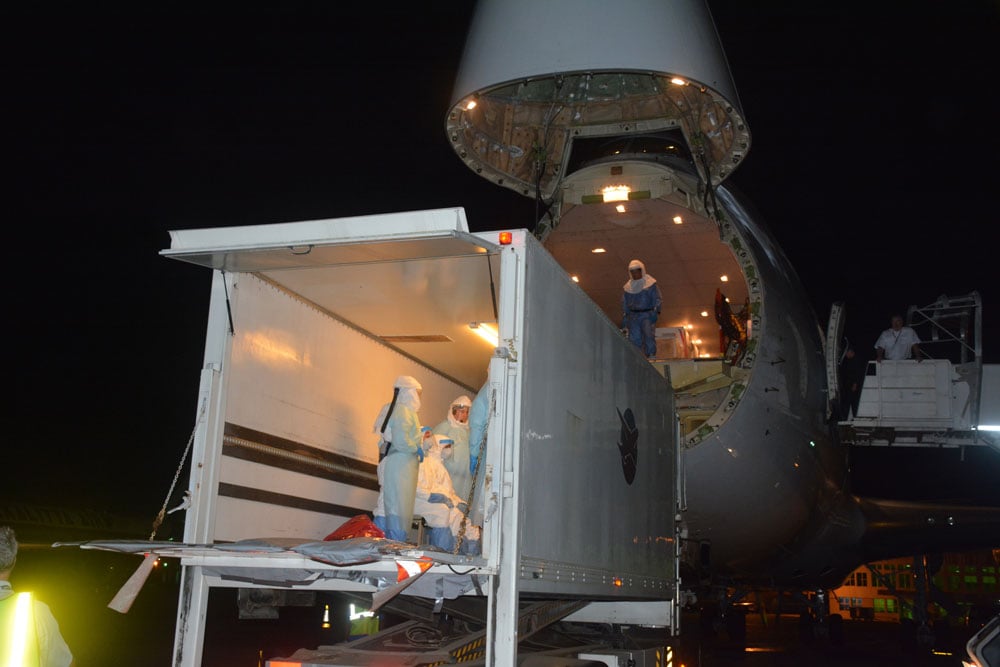
Operation Tranquil Shift loading a containerized biocontainment system outfitted aircraft on April 17, 2017 in Freetown, Sierra Leone
Operation Tranquil Shift loading a containerized biocontainment system outfitted aircraft on April 17, 2017 in Freetown, Sierra Leone. (Wikimedia Commons)

By Kevin J.A. Thomas

During the Ebola epidemic of 2014 to 2016, Musu, a resident of Monrovia, Liberia contracted the Ebola virus along with her husband, five sons and daughter.

A few weeks later, six members of her family died. Musu and her youngest son survived. Since then, their lives have not been the same. Her husband was the family’s sole breadwinner. Now a widow and a single parent, Musu struggles to make ends meet. As she put it, “There is no one here to help besides God. No boyfriend. No father. I am the father, the mother, the uncle, and the brother. At the place we are renting, we can’t even find food to eat.”

Musu is one of the many survivors who recovered from the world’s largest Ebola epidemic. The epidemic started as a localised disease outbreak in the village of Meliandou in Guinea but spread to neighbouring Liberia and Sierra Leone.

Over the course of three years, the disease infected 28,600 people. Approximately 11,000 of them died while 17,000 survived.

On 9 June 2016, the World Health Organization announced the official end of the Ebola epidemic in Liberia.

Compared to the widespread media coverage of the epidemic when it started, news reports on its aftermath have been limited. As a result, very few people know that Ebola survivors have struggled to continue with their lives since the end of the epidemic.

These survivors include widows like Musu, orphans who are now homeless, and thousands of people who are now blind or have permanent vision problems.

I am a social demographer who studies health and population trends. My recent book Life After Epidemics: Ebola Survivors and the Social Dimensions of Recovery documents many of these experiences. Based on interviews with 250 Ebola survivors in Liberia and Sierra Leone, I set about trying to understand why many survivors live in worse conditions than before the epidemic, and what’s preventing them from returning to their normal lives.

Understanding these issues is a first step towards developing solutions to the problems currently faced by Ebola survivors. Learning about their experiences can prevent these problems from occurring among survivors of future epidemics.

Medical versus social responses to epidemics

The process of determining what went wrong begins by understanding the contrast between two types of responses to epidemics.

The first is the medical response, which emphasises the use of clinical medicine to save lives and care for infected patients.

The second is the social response, which addresses issues such as the provision of sustainable livelihoods, supporting orphans, and integrating survivors into their communities.

Policy makers placed a greater priority on short-term medical responses to the consequences of the Ebola epidemic than on long-term social responses.

The main objective of my research is to examine how Ebola survivors have been affected by that emphasis. I used information from interviews and other sources to assess how their health, sources of livelihood, and family lives have changed since the end of the epidemic.

The research provides evidence on the ways in which the limited investment in social responses continues to negatively affect the lives of survivors.

For example, there are no programmes that provide them with comprehensive access to healthcare, even though many of them are either blind, suffer from musculoskeletal conditions, have neurological conditions, or live with other long-term side effects of the virus.

It also describes the experiences of farmers in poor health, who can no longer till their land, and hunters who can no longer see. They are among the many survivors who were previously self-employed but have lost their sources of livelihood.

With the limited investment in social responses, the stigma of Ebola continues to thrive in local communities. As a result, the social interactions of Ebola survivors are often plagued by the fears of people who believe they are still infected. These fears caused business owners to lose clients and contributed to the end of marriages.

Many survivors no longer receive invitations to attend social events such as weddings and child naming ceremonies. In some cases, their children have also lost playmates after neighbours banned their children from playing with the children of Ebola survivors.

Humanitarian organisations played a major role in containing the spread of the disease during the epidemic. Some of their policies had unintended consequences, however, that have added to the problems of patients who survived. For example, the practice of burning the belongings of infected patients to prevent further transmission of the virus has increased economic hardship among many survivors.

The burning process led to financial losses among survivors who kept their savings under their mattresses, lost farming tools, and had to pay for equipment borrowed from neighbours that was also destroyed.

Some of the messages employed in public health campaigns used to contain the spread of the virus during the epidemic have also had unintended consequences. These campaigns warned the public to avoid touching infected people as a way of stopping transmission of the disease, because there was no cure for Ebola. Since the end of the epidemic, many people in local communities have continued to avoid touching survivors. They question how survivors can claim to be Ebola-free when the public was told that the disease had no cure.

Why Ebola survivors feel abandoned

Hearing the stories of the survivors made it clear that many of them felt abandoned. The visits from community leaders have stopped. The specialised care they received from hospitals has been discontinued. Many of the promises of political leaders who claimed they would provide resources to support their recovery remain unfulfilled. Some of the resources provided by donors were lost to fraud.

Meanwhile, Ebola survivors continue to be affected by the irreversible losses they experienced a decade ago. These experiences and the lack of attention to their social circumstances still define their lives.

Policy makers will need to give equal attention to medical and social issues when responding to future epidemics. This will require sustained investments to improve the lives of survivors long after we celebrate the end of epidemics.

Kevin J.A. Thomas is Distinguished Professor of Sociology at Rice University.


The Conversation arose out of deep-seated concerns for the fading quality of our public discourse and recognition of the vital role that academic experts could play in the public arena. Information has always been essential to democracy. It’s a societal good, like clean water. But many now find it difficult to put their trust in the media and experts who have spent years researching a topic. Instead, they listen to those who have the loudest voices. Those uninformed views are amplified by social media networks that reward those who spark outrage instead of insight or thoughtful discussion. The Conversation seeks to be part of the solution to this problem, to raise up the voices of true experts and to make their knowledge available to everyone. The Conversation publishes nightly at 9 p.m. on FlaglerLive.
See the Full Conversation Archives
Support FlaglerLive
The political climate—nationally and right here in Flagler County—is at war with fearless reporting. Your support is FlaglerLive's best armor. After 16 years, you know FlaglerLive won’t be intimidated. We dig. We don’t sanitize to pander or please. We report reality, no matter who it upsets. Even you. Imagine Flagler County without that kind of local coverage. Stand with us, and help us hold the line. There’s no paywall—but it’s not free. become a champion of enlightening journalism. Any amount helps. FlaglerLive is a 501(c)(3) non-profit news organization, and donations are tax deductible.
You may donate openly or anonymously.
We like Zeffy (no fees), but if you prefer to use PayPal, click here.
If you prefer the Ben Franklin way, we're at: P.O. Box 354263, Palm Coast, FL 32135.
 

Reader Interactions

Leave a Reply Cancel reply

Your email address will not be published. Required fields are marked *

This site uses Akismet to reduce spam. Learn how your comment data is processed.

  • Conner Bosch law attorneys lawyers offices palm coast flagler county
  • grand living realty
  • politis matovina attorneys for justice personal injury law auto truck accidents

Primary Sidebar

  • grand living realty
  • politis matovina attorneys for justice personal injury law auto truck accidents

Recent Comments

  • Edith Campins on FlaglerLive Editor Calls Libel Lawsuit by Former Commissioner Joe Mullins a SLAPP Suit
  • James on The Daily Cartoon and Live Briefing: Friday, May 15, 2026
  • Pierre Tristam on Flagler Beach Will Seek Bids for Paid Parking System as It Parallels Past Decades of Idle Talk
  • Living in Tennessee on Art Dycke, Co-Author of Palm Coast Charter and Dedicated City Historian, Dies at 92
  • Koyote on Governor Ron DeSantis Renews Push To Slash Florida Property Taxes Despite Republican Opposition
  • CPFL on FlaglerLive Editor Calls Libel Lawsuit by Former Commissioner Joe Mullins a SLAPP Suit
  • Callmeishmael on Governor Ron DeSantis Renews Push To Slash Florida Property Taxes Despite Republican Opposition
  • Callmeishmael on FlaglerLive Editor Calls Libel Lawsuit by Former Commissioner Joe Mullins a SLAPP Suit
  • Incredible Flagler on Strict No Development Policy Continues For Flagler Estates As County Rejects Special Taxing District
  • Beach Walker on Flagler Beach Will Seek Bids for Paid Parking System as It Parallels Past Decades of Idle Talk
  • Beach Walker on Flagler Beach Will Seek Bids for Paid Parking System as It Parallels Past Decades of Idle Talk
  • Atwp on GOP Gerrymandering Is Burying the South’s Black Voters
  • Richard Wielder on Flagler Beach Will Seek Bids for Paid Parking System as It Parallels Past Decades of Idle Talk
  • Deborah Coffey on GOP Gerrymandering Is Burying the South’s Black Voters
  • Gina Weiss on FlaglerLive Editor Calls Libel Lawsuit by Former Commissioner Joe Mullins a SLAPP Suit
  • Deborah Coffey on GOP Gerrymandering Is Burying the South’s Black Voters

Log in

Support FlaglerLive’s Legal Fund
Joe Mullins filed a suit against FlaglerLive and me personally, its editor. Make no mistake, this is a lawsuit against your right to know. We’re fighting it. We’re going to win. We need your help. Please contribute to FlaglerLive’s legal fund.–Pierre Tristam