



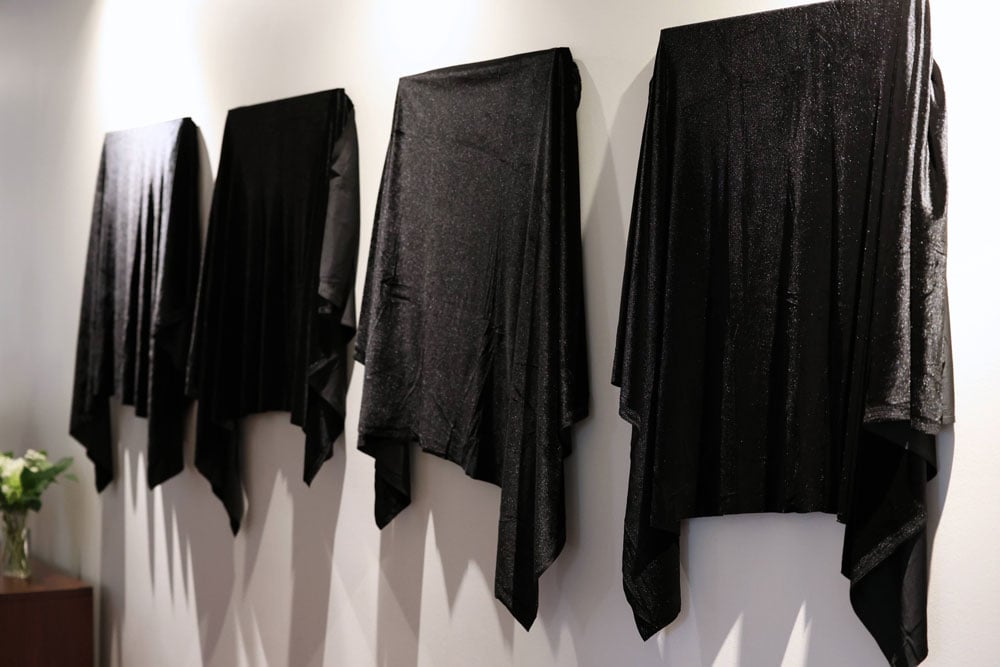
State Attorney R.J. Larizza would see the portraits of judges in courtrooms and think: why not us? Why not state attorneys? He talked it over with his staff. He couldn’t very well adorn courtroom walls with prosecutors’ likenesses. It would be prejudicial, the defense would object and the judges of the Seventh Judicial Circuit would sustain the objection in chorus. The circuit includes Flagler, Volusia, St. Johns and Putnam counties.
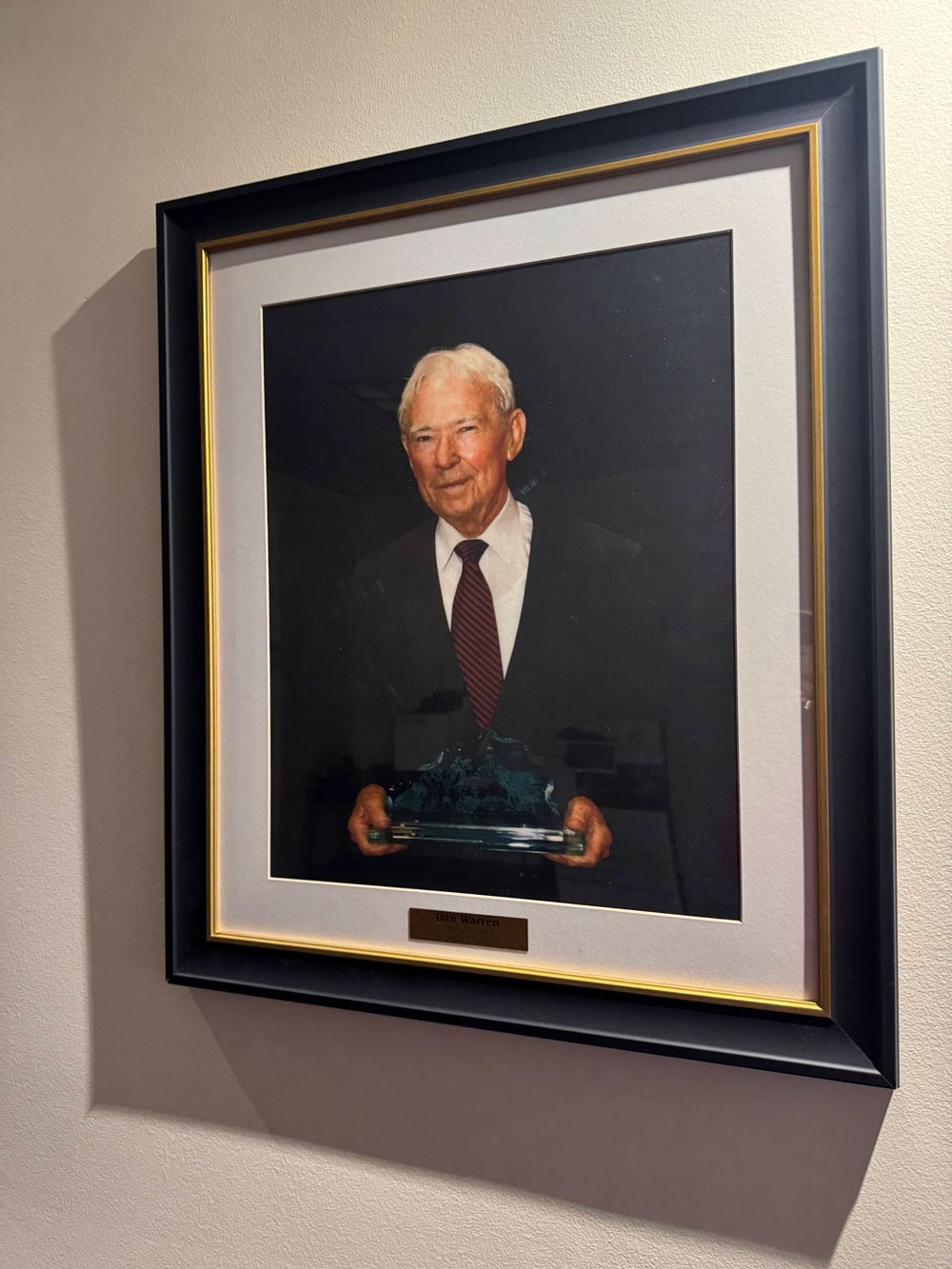
So last Friday Larizza unveiled the portrait gallery at the State Attorney’s headquarters on the third floor of the S. James Foxman Justice Center in Daytona Beach. There they were–large, color photographic portraits of Dan Warren (1962-1968), Stephen Boyles (1969-1988), John Tanner (1989-1992, 1997-2008), and Steve Alexander (1993-1996). Alexander and Tanner were there in person for the occasion. The late Warren and Boyles were represented by family members.
“I felt like I wanted to do something special for Mr. Warren, for Mr. Boyles, for Mr. Alexander and for Mr. Tanner,” Larizza said just before the black shrouds were removed from ebony frames trimmed in gold.
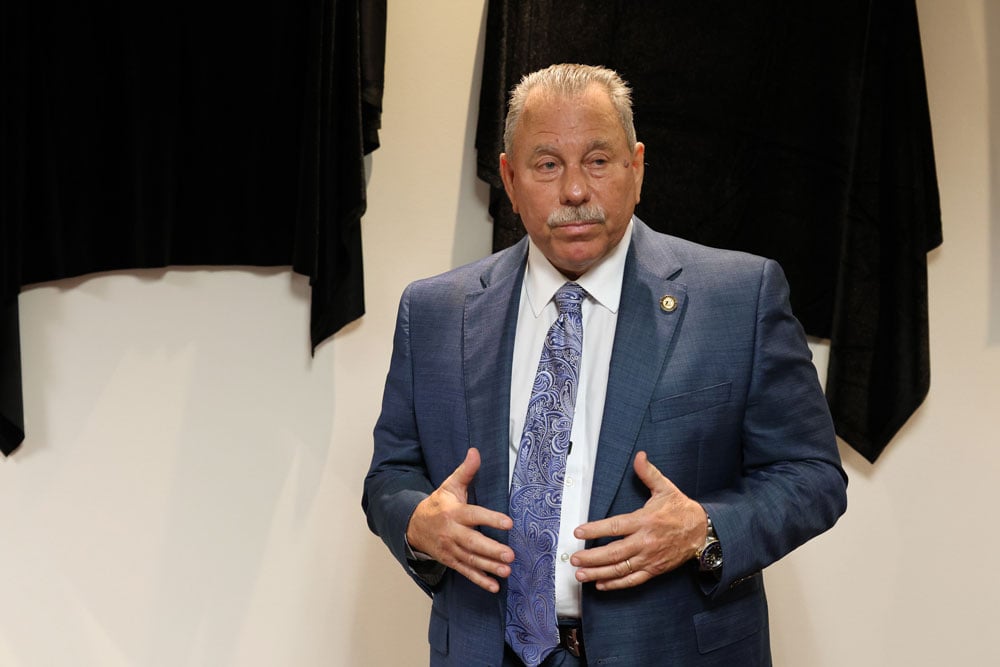
Who would have thought that the occasion would come close to re-litigating Warren’s 1963 indictment of Tanner for manslaughter as Tanner, in a brief speech that underscored his lifelong proximity to if not affinity for headlines, spoke of his innocence.
Larizza, who defeated Tanner in 2008 (after once telling him that he’d never run against him, Tanner said) had no idea the portrait unveiling would revisit that much history. But you can’t put that many high-powered lawyers in the same room, even in their likeness, and not expect a little sound and fury. Larizza had started with a round of compliments and a little bit of chest-thumping.
“I got to tell y’all that I don’t know of any job that’s more demanding,” Larizza said as an infant–possibly a future public defender, who knew better than Larizza’s claim, started crying. “I can’t think of a job that’s more demanding and more taxing on people. But you can’t appreciate it unless and until you are in those shoes and you’re actually doing it. Because this job, it’s not about taking care of your folks. It’s about taking care of the community. It’s about working with all them judges. It’s about supervising–I think we got 70 lawyers now. And I tell you one thing: that is a challenge in and of itself.”
He spoke of his pride in being part of a “fraternity of state attorneys” (the circuit has yet to have its first woman or nonbinary state attorney) before giving a brief history of the office, with Warren appointed to the job by Gov. Farris Bryant in 1964. Warren defeated the KKK’s stranglehold on St. Augustine and was a force alongside Martin Luther King Jr. behind civil rights victories that changed the history of the region. (King was jailed in St. Augustine, and Warren had once prosecuted him for trespassing in a whites-only restaurant.) Warren wrote a history of the period in If It Takes All Summer, the 2008 book he published three years before his death.
“I had the privilege to meet him when I first got elected. He gave me a signed copy of his book,” Larizza said. “ I have Dan’s book, and I have a copy of the booking sheet for Martin Luther King in my office. I keep it there to show people and to remind folks it wasn’t that long ago when our country was where people, like people of color, weren’t allowed to vote, and there were lynchings and a lot of other things that happened that we need never forget.”
He invited Ray Warren, Dan’s son and a former prosecutor and public defender, to speak.
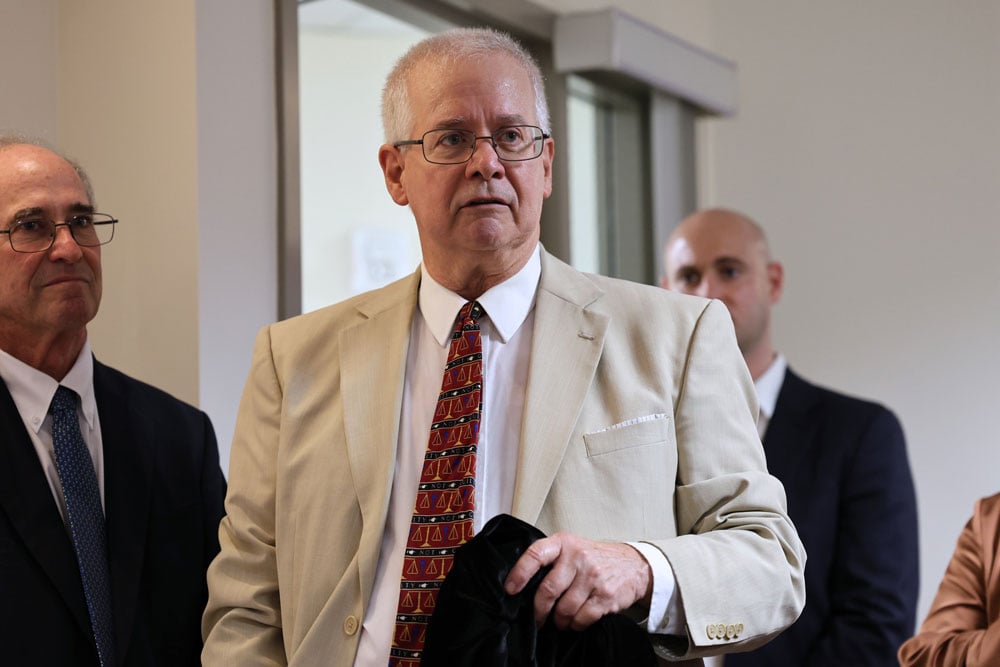
“It was a different era. They literally had bailiffs go out to grocery stores and barber shops and pull people in to be jurors,” Warren said in an interview. That was back when trials were far more frequent than plea bargains. “I had 38 trials myself in the first eight months of me being a prosecutor. It was just different. I have, all told, over 200 trials under my belt, but my father had nearly 800.”
Why the rarity of trials? “Judges did not punish defendants for going to trial. Nowadays they do because they know if they punish them enough, other defendants won’t go to trial,” Warren said. To encourage the others, as Voltaire refers to a beheading in Candide (itself a reference to the actual court martial and execution of a British admiral as an example to others.)
“It is terrible. But we live in a fearful world,” Warren, a scholar by nature and a part-time polemicist, said. History aside, he cherishes his father’s portrait now hanging at the State Attorney’s office. “It meant a lot to our family. Meant a lot to me personally. You know, my father was the elected state attorney during a tumultuous time,” he said.
Dan Warren is the only Florida State Attorney to ever get an obituary in The Economist, along that of Fred Shuttlesworth, the civil rights leader who died within days of Warren. “My father was recognized around the country for what happened in St Augustine,” Warren said, including being given 45 minutes of national airtime at the 1972 Democratic National Convention to give the “state of the judiciary speech,” according to Warren’s mother.
“This is just appropriate that my father’s portrait be displayed in the Office of the State Attorney,” Warren said, echoing Tanner’s words: “I considered it an honor. The other state attorneys that were in it, they all did a good job, admirable job. There was nothing lacking in their administrations of the office and their ethics.”

Tanner was speaking of rivals, all, if not, in Warren’s case, enemies, at least at one point. “I had campaigned against each one of them,” Tanner said, “lost to two of them, I think maybe even three, and then turned around and beat them again. So for someone that didn’t want to be into politics I was in it up to my ears.”
He said he’d once resented Warren for the indictment “for quite a few years,” but got over it after a judge told him that it was clouding his judgment. He said getting indicted “helped mold that very deep awareness of how powerful and how potentially dangerous the State Attorney’s Office can be.”
He told the story. He was in college. He put in about 10 lifeguard summer seasons, with 20 to 30 rescues a day on stormy days. “Our training was rough. It was tough,” he said, comparing it to his special forces training. “And one of the guys drowned during the training.”
It was 1963. Tanner was a 25-year-old member of the Volusia County Lifesaving Corps. The recruit was John E. Beers, 28, and the father of three. Tanner, John Masters and Roger Orrell were accused of taking part in hazing young recruits (the incident is listed at a site that has documented hazing deaths in the United States going back to 1838).
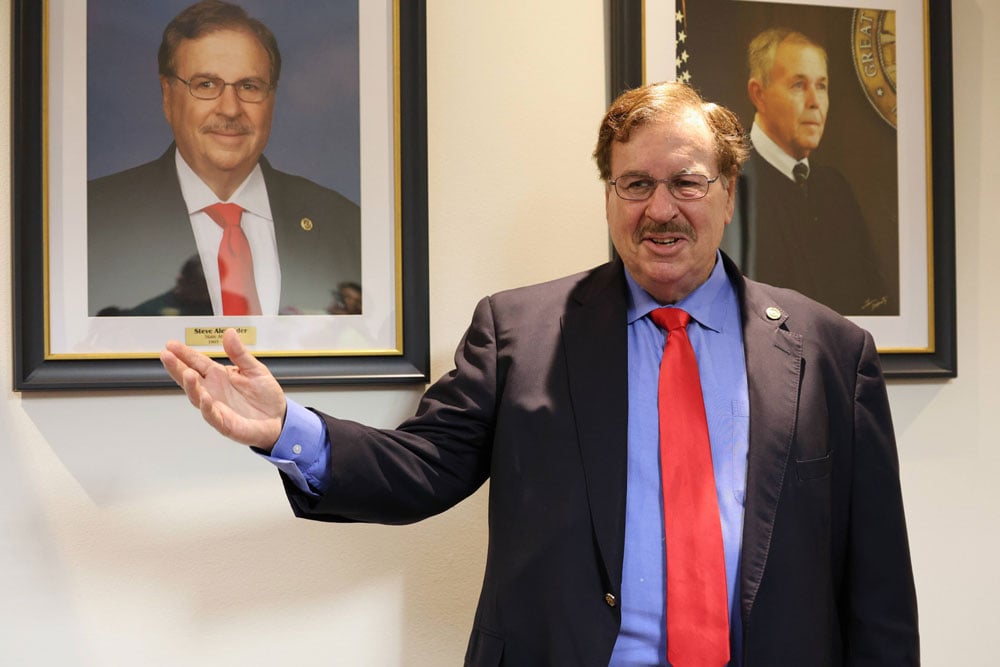
“It was called hazing by the press. We didn’t consider it hazing at all,” Tanner said. “We considered it a damn rough final phase of training, and one of the guys aspirated the water, got it in his lungs, and we couldn’t get it out of him, and we had him on a surfboard, bringing him in, and he died. It was a horrendous situation. He was a friend of ours. We were working with him. He’s a new lifeguard. He was an adult male. He was in his 20s.”
He described the method: “Three or four lifeguards would surround you in deep water and splash water on you and dunk you under. And you would have to fight your way free, come to the surface, put one of them in a carry hold, as if you’re rescuing them, because when you went into the ocean with someone who’s drowning–and sometimes we have three or four at a time–they will climb all over you if they can. And you have to learn how to handle them, not panic when they hold you under.”
On Oct. 29, 1963, a grand jury indicted all three lifeguards on a manslaughter charge. Months later, a judge dismissed the charges. “He realized there was no ‘negligence’ there, that it was indeed a very unfortunate incident,” Tanner said. “But it was part of a legitimate training regimen that we did. It was a tradition within lifeguards, before I ever became one, that had been part of their training for years.”
In his speech at the portrait gallery event he wanted to emphasize that “even innocent people get charged.” It’s not unusual, but it’s not rare, he said.
“The state attorney’s job is not just to convict people, but it’s to see that justice is done,” Tanner said. “I used to tell my youngest state attorneys, one of the best things you can do is dismiss a case, because if you’re not convinced, and I tell them, if you’re not convinced this person is guilty, don’t file charges, don’t say, well, let’s see what a jury’s going to do. That’s not justice.”




























Leave a Reply