


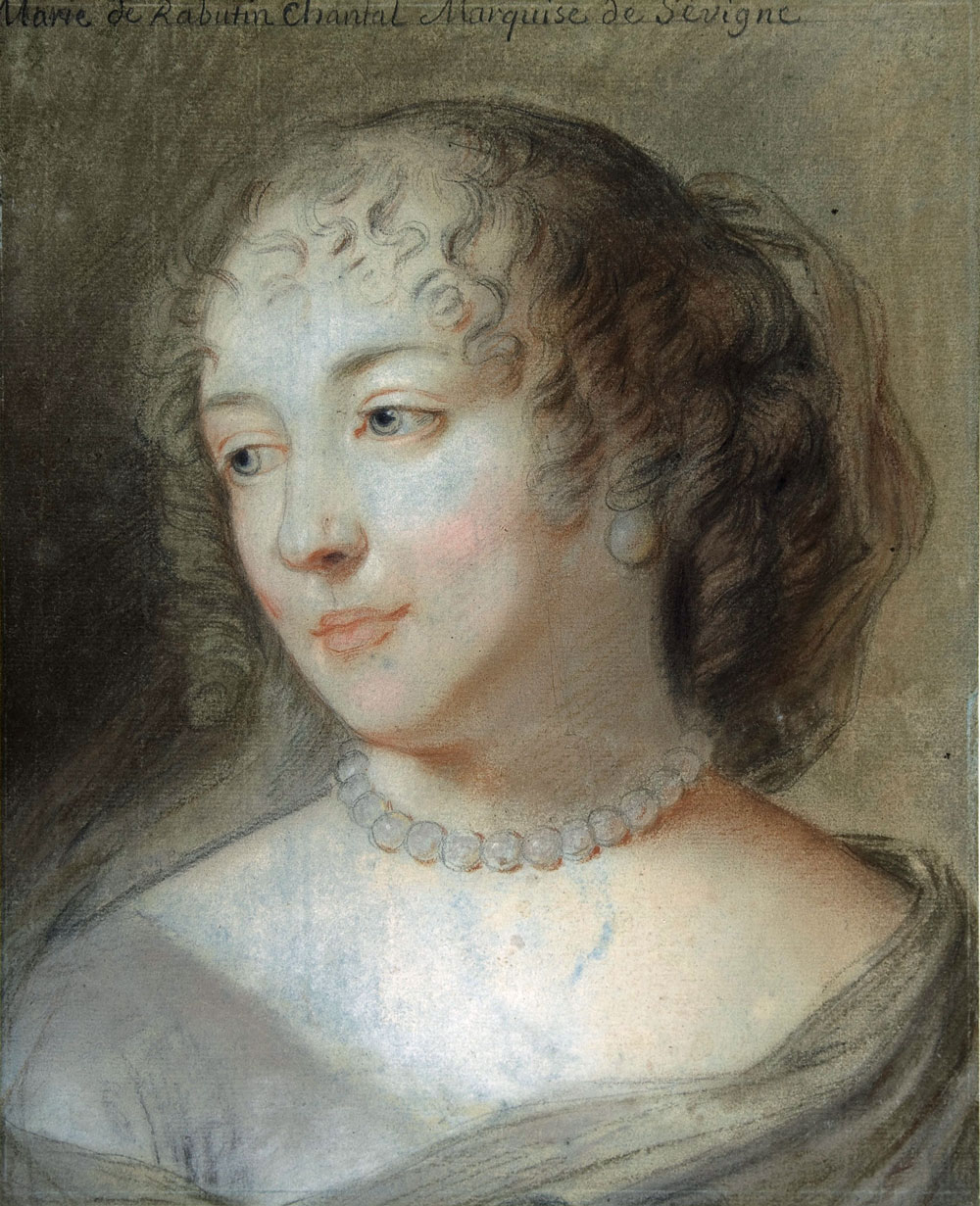
Dear Mme de Sévigné,
Next Thursday marks your 400th birthday anniversary. The Carnavalet Museum in Paris will host an exhibit starting in April. Drôme County in the south of France, where most of your 700 letters that immortalized maternal tenderness followed your daughter to the Château de Grignan, is hosting 30 events throughout the year. I was hoping to find a Florida university or two or maybe the Alliance Française de Jacksonville marking the anniversary with a seminar or an exhibit (“Mme de Sévigné: The First Influencer”).

Rien. Not even an Instagram shoutout. The most we’ll have to celebrate the greatest letter writer in history since Cicero and before Voltaire and Flaubert is the odd screening of a not-so-celebrated 2024 movie about you, and loving leers at your portrait at the Metropolitan Museum next time we get a chance to make it to Mamdaniland. Aside from reading your letters with a pleasure that at times feels illicit (a Penguin paperback presents a handsome abridged selection in English available for $13 on Kindle) and the newly issued, superb but not yet translated biography that won France’s Pulitzer, that leaves me with lighting up 400 candles to you right here.
But why care about a letter-writer from a dethroned language in an age when even email and text are dying? So much of our byte-sized communication is in reverse progeria, infantilizing toward images, emojis, stickers, and abbreviated squeals when artificial intelligence isn’t ghost-writing what complete sentences we must still occasionally fabricate. What days you spent writing a single letter we have reduced to prefab kissy-kissy puckers spitting hearts and mass-produced pat phrases for more somber occasions. When you were young and courageously supporting the Fronde rebels during the civil war against Mazarin, I don’t think your correspondents would’ve much appreciated or understood your entire communications reduced to a line like pensées et prières (thoughts and prayers).
You’d shit your mantua–pardon my French–if you saw what’s happening to language, intimate language especially, you who invented it, you whose love letters to your daughter (can we call that radiance of unconditional affection anything else?) were prose poems, advice columns, psychological studies, gossip sheets, reported journalism and witness to a century all in one.
Why care? Because reading you today feels as if you wrote last week, and by that strange magic of deceptive transference readers have every right to play on themselves, it feels as though each one of us is your letters’ recipient. We turn each page as if opening the envelope for the first time. It feels that fresh. When we read you describe that house fire in Paris your descriptions and empathy are as vivid as Ernie Pyle’s dispatches from the trenches of World War II.
When we read you mourn for a friend or despair at your daughter’s lovelessness for Marie-Blanche, your first granddaughter, our heart bleeds, then breaks as we read of her mother’s refusal to take her in, or of Marie-Blanche’s exile to a convent for life. Mme de Grignan, as history came to know your melancholy daughter, had a vicious jealousy streak and happily fled to the south of France to get out of your shadow, but why the preemptive jealousy of her own daughter? That was one of your great regrets, not advocating for Marie-Blanche more forcefully. But your convictions were always stronger in writing than in person.
You never intended these letters to be public. You loved to write–it sometimes controlled your days–and you loved to read to make you write better (I envy your household’s read-out-loud sessions that could last five hours: your era’s binge-watching). But you wrote without the self-consciousness of authorship that spoils so much. You’d have been appalled that even that fraction of letters that have survived are now in our hands. You’d also have been pleased.
We can hear your voice, feel a warmth undimmed by centuries as you show us how to live, love, fear, how to argue, disagree and hold a grudge with grace, how to be witty without wounding, how to be opinionated without arrogance–you who, as who else would dare, once called out the “arrogance” of Mont Saint-Michel–and how to age.
“Is there anything better than her reflections on death in the letter of March 16, 1672? The turn of phrases is unmatched,”[1] André Gide, your compatriot three centuries removed, wrote. This passage from a letter to your daughter that what he was referring to is worth reproducing in full:
You ask me, my dear child, if I still love life. I confess that I find in it stinging sorrows. But I am even more disgusted by death; I find myself so wretched at having to end all this because of it, that if I could go backward, I would ask for nothing better. I find myself in a commitment that embarrasses me; I am embarked in life without my consent. I must leave it; that overwhelms me. And how shall I leave? By what way? By which door? When will it be? In what state of mind? Shall I suffer a thousand and a thousand pains, which will make me die in despair? Shall I have a a stroke? Shall I die of an accident? How shall I be with God? What shall I have to present to Him? Will fear, or necessity, bring about my return to Him? Shall I have no sentiment other than that of terror? What can I hope for? Am I worthy of paradise? Am I worthy of hell? What an alternative! What a dilemma! Nothing is so foolish as to leave one’s salvation in uncertainty, but nothing is so natural, and the silly life I lead is the easiest thing in the world to understand. I lose myself in these thoughts, and I find death so terrible that I hate life more because it leads me there than because of the thorns I encounter along the way. You will tell me that I want to live forever. Not at all; but if I had been asked my advice, I would have liked to die in the arms of my nurse; that would have spared me many troubles and would have given me heaven quite surely and quite easily. But let us speak of something else.”[2]
I am embarked in life without my consent. Dare we call you the first existentialist? How familiar those lines in a town like Palm Coast where assisted living facilities duel with churches for the grace of zoning. You were just 46 when you wrote that letter, a quarter of a century still ahead of you, but you’d lost your father when you were just 17 months old and your mother not much later in a time when death was as indiscriminate as drizzle.
Your letters to your daughter obsess over her menstrual cycle, but that’s because you panicked at the thought of her pregnancy, so often a death sentence, and privately took her husband’s adulteries as a health benefit: they’d keep her from getting pregnant again (she bore him half a dozen children). Isn’t this fear of pregnancy why, despite your beauty, your charms, your family name, your land holdings, your promiscuous networking connections at court and the inexhaustible well of suitors you could have drunk from, you chose not to remarry, not even to take a lover that we know of, much as the more perverse among us imagine you and Mme de Lafayette in an episode of the L Word?
You were accused by your coarser contemporaries of frigidity, at least those blind to the passion of your letters. You just wanted your freedom. You wanted to be in charge of your own life. “Put yourself in charge of all things; it is what can save you,” you’d written your daughter. You had enough of libertines and cheats.
Your husband was a hotheaded rake, marrying you days after he was wounded in a duel and leaving you a widow at 24 after his narcissism led to another duel, which he lost. Your children were 6 and 3, his debts beyond counting. You’d resented it when Ninon de Lenclos, the woman you called a “she-devil” and the most famous high-class courtesan of the century, had taken your husband among her lovers, then years later took your son Charles, both times for her self-imposed limit of three months per liaison.
She outlived you by almost a decade, long enough to meet the 10-year-old Volaire and be so impressed with his brilliance even then that she left him quite a sum in her will so he could build his first library. Ungrateful, he took his revenge on her for you when years later he described Ninon as “a decrepit creature with only yellow skin tending to black on her bones”[3] He wasn’t one to talk. But he was your most influential advocate in the following century, calling you “the foremost person of her century for epistolary style, and especially for recounting trifles with grace,” though he did not forgive you your poor judgment of Racine.
You were often misinterpreted. Still are. Feminists have claimed you, wrongly, as have conservatives and liberals. You were on the right–if losing–side during the Fronde rebellions, risking exile had you been found out. You were on the right side during the show trial of your friend, and possibly one of your rare lovers, Nicolas Fouquet, the king’s finance minister accused of embezzlement, a trial you covered day to day in your letters better than most modern-day court reporters.
But you were on the wrong side when you applauded Louis XIV’s revocation of the Edict of Nantes, displaying a bigotry toward Protestants I did not expect: “Nothing is as magnificent as everything it contains,” you wrote your cousin of the king’s order, “and no king has ever done, or will ever do, anything more memorable.”[4] You read too much Pascal and not enough Montaigne.
Louis XIV transformed French culture from a backwater to the dynamo among whose rotors you played such an electrifying part. Yet you weren’t blind to Louis’ ruin of France as he fueled his glory with the misery of 20 million Frenchmen. He ruined your own treasury as you indebted yourself so your son could buy himself commissions in the king’s army, to Louis’ indifference. You quacked night and day in fear of hearing of your son’s death at the front. You could be savvy in the face of the king’s ruthless taxation schemes, you pitied the peasantry as his goons terrorized it, and you escaped Paris in the 1690s for Grignan, where to your veiled eyes there was “no misery, no famine, no disease, no poverty.” But you not once criticized the king, not even in the supreme privacy of your letters.
You weren’t guiltless. France’s few noble families like yours extracted luxuries from the sweat of peasants as you thrilled to Versailles’ two-hour fireworks shows and devoured feasts that could feed all of Normandy. You lived in a closed circle, a clique with its own trappings and self-delusions that at times makes these letters feel a bit claustrophobic, like watching the patrician porn of “Downton Abbey.” All cults blind their subjects.
But it’s a small part of the letters and their meaning to us today. “Intensely of her own time,” Florence Leftwich Ravenel wrote in a 1914 essay about you, just as World War I was beginning, “she is almost equally of ours, not only in her literary style, but in her thoughts and feelings, her attitude toward life, even to the little fads and fancies which make so large a part of civilized woman’s world; and concerning this unequaled modernness of Mme. de Sévigné, the last word, I am persuaded, is yet to speak.”[5]
The regime went bankrupt as you aged. “The whole of France is now nothing more than a vast, desolate hospital without supplies,” the great writer Fénelon wrote the king in a letter never delivered to Louis. “Time flies and carries me away against my will,” you wrote, leaving Paris for the last time. “No matter how much I try to hold it back, it drags me along, and this thought frightens me greatly.”
You died on April 17, 1696 in your daughter’s castle (that “little Versailles,” as you called it), we’re not sure by what illness. “I find life to be too short,” you’d written not long before. Your love of life, of your children, of the written word, your touching kindness and touches of temper had so reminded me of my own mother’s (on all counts) that I felt terribly sad, reaching the end in the Geneviève Haroche-Bouzinac biography, as if I was losing my mother again after her own short life. Then I remembered that I still had 2,800 pages of your letters to go: resurrection enough. Happy 400th for us.

Notes and amplifications:
[1] “Est-il rien de meilleur que ses réflexions sur la mort dans la lettre du 16 mars 1672? Cela est d’un tour inégalable.” André Gide, Journal, March 1917.
[2] “Vous me demandez, ma chère enfant, si j’aime toujours bien la vie. Je vous avoue que j’y trouve des chagrins cuisants. Mais je suis encore plus dégoûtée de la mort; je me trouve si malheureuse d’avoir à finir tout ceci par elle, que si je pouvais retourner en arrière, je ne demanderais pas mieux. Je me trouve dans un engagement qui m’embarrasse; je suis embarquée dans la vie sans mon consentement. Il faut que j’en sorte; cela m’assomme. Et comment en sortirai-je? Par où? Par quelle porte? Quand sera-ce? En quelle disposition? Souffrirai-je mille et mille douleurs, qui me feront mourir désespérée? Aurai-je un transport au cerveau? Mourrai-je d’un accident? Comment serai-je avec Dieu? Qu’aurai-je à lui présenter? La crainte, la nécessité, feront-elles mon retour vers lui? N’aurai-je aucun autre sentiment que celui de la peur? Que puis-je espérer? Suis-je digne du paradis? Suis-je digne de l’enfer? Quelle alternative. Quel embarras! Rien n’est si fou que de mettre son salut dans l’incertitude, mais rien n’est si naturel, et la sotte vie que je mène est la chose du monde la plus aisée à comprendre. Je m’abîme dans ces pensées, et je trouve la mort si terrible que je hais plus la vie parce qu’elle m’y mène que par les épines qui s’y rencontrent. Vous me direz que je veux vivre éternellement. Point du tout, mais si on m’avait demandé mon avis, j’aurais bien aimé à mourir entre les bras de ma nourrice; cela m’aurait ôté bien des ennuis et m’aurait donné le ciel bien sûrement et bien aisément. Mais parlons d’autre chose.” From Madame de Sévigné, Correspondance, vol. I, mars 1646-juillet 1675, ed. Roger Duchêne (Pléiade 1972), pp. 458-9.
[3] “C’était une ridée décrépite et qui n’avait sur les os qu’une peau jaune tirant sur le noir.”
[4] “Vous aurez vu sans doute l’édit par lequel le Roi révoque celui de Nantes. Rien n’est si beau que tout ce qu’il contient, et jamais aucun roi n’a fait et ne fera rien de plus mémorable.” Correspondance, vol. III, Oct. 28, 1685, p. 239.
[5] Florence Leftwich Ravenel, “The Great Tradition: Madame de Sévigné,” North American Review, Nov., 1914, Vol. 200, No. 708, pp. 743-757.





Carol Scott says
Thank you Pierre for a lovely remembrance of Madame de Sevigne for which I know you read the original in French. You have written a beautiful treatise summoning your readers to take heed and read Sevigne. Sitting in seminar with your lead would be a revelation.
James says
https://flaglerlive.com/wp-content/uploads/sevigne.jpg
I’m assuming this is pastel pencil on paper.
Just thought I’d interject that in my opinion working with dry pastels, whether in pencil or stick form, is probably the most dangerous medium with which to express ones self. Not only due to the dust of the pigments and binders, but also since it could eventually involve fixatives. Worse even than the heavy use of charcoal.
Definitely a medium for outdoor plain air “alla prima” use only. Even better, carefully grind them up in a aqueous medium and create your own watercolors. There are formulas out there for doing so.
I still prefer oil over acrylic paints. One can become too blase in the handling of acrylics, forgetting that many of the (toxic) pigments found in oil are still used in acrylics… not to mention the environmental problems associated with the plasticizers in the binders.
At least with oil… and if one is serious about being an artist… you are (or should) always be aware of these problems and try to (consistently) act responsibly in the handling and disposal of certain materials.
Just an aside comment.