• Skip to primary navigation
  • Skip to main content
  • Skip to primary sidebar
MENUMENU
MENUMENU
  • Home
  • About
    • Contact Us
    • FlaglerLive Board of Directors
    • Comment Policy
    • Mission Statement
    • Our Values
    • Privacy Policy
  • Live Calendar
  • Submit Obituary
  • Submit an Event
  • Support FlaglerLive
  • Advertise on FlaglerLive (386) 503-3808
  • Search Results

FlaglerLive

No Bull, no Fluff, No Smudges

MENUMENU
  • Flagler
    • Flagler County Commission
    • Beverly Beach
    • Flagler History
    • Mondex/Daytona North
    • The Hammock
    • Tourist Development Council
    • Marineland
  • Palm Coast
    • Palm Coast City Council
    • Palm Coast Crime
  • Bunnell
    • Bunnell City Commission
    • Bunnell Crime
  • Flagler Beach
    • Flagler Beach City Commission
    • Flagler Beach Crime
  • Cops/Courts
    • Circuit & County Court
    • Florida Supreme Court
    • Federal Courts
    • Flagler 911
    • Fire House
    • Flagler County Sheriff
    • Flagler Jail Bookings
    • Traffic Accidents
  • Rights & Liberties
    • First Amendment
    • Second Amendment
    • Third Amendment
    • Fourth Amendment
    • Fifth Amendment
    • Sixth Amendment
    • Seventh Amendment
    • Eighth Amendment
    • 14th Amendment
    • Sunshine Law
    • Religion & Beliefs
    • Privacy
    • Civil Rights
    • Human Rights
    • Immigration
    • Labor Rights
  • Schools
    • Adult Education
    • Belle Terre Elementary
    • Buddy Taylor Middle
    • Bunnell Elementary
    • Charter Schools
    • Daytona State College
    • Flagler County School Board
    • Flagler Palm Coast High School
    • Higher Education
    • Imagine School
    • Indian Trails Middle
    • Matanzas High School
    • Old Kings Elementary
    • Rymfire Elementary
    • Stetson University
    • Wadsworth Elementary
    • University of Florida/Florida State
  • Economy
    • Jobs & Unemployment
    • Business & Economy
    • Development & Sprawl
    • Leisure & Tourism
    • Local Business
    • Local Media
    • Real Estate & Development
    • Taxes
    • Sponsored Content
  • Commentary
    • The Conversation
    • Pierre Tristam
    • Diane Roberts
    • Guest Columns
    • Byblos
    • Editor's Blog
  • Culture
    • African American Cultural Society
    • Arts in Palm Coast & Flagler
    • Books
    • City Repertory Theatre
    • Flagler Auditorium
    • Flagler Playhouse
    • Special Events
  • Elections 2026
    • Amendments and Referendums
    • Presidential Election
    • Campaign Finance
    • City Elections
    • Congressional
    • Constitutionals
    • Courts
    • Governor
    • Polls
    • Voting Rights
  • Florida
    • Federal Politics
    • Florida History
    • Florida Legislature
    • Florida Legislature
    • Ron DeSantis
  • Health & Society
    • Flagler County Health Department
    • Ask the Doctor Column
    • Health Care
    • Health Care Business
    • Covid-19
    • Children and Families
    • Medicaid and Medicare
    • Mental Health
    • Poverty
    • Violence
  • All Else
    • Daily Briefing
    • Americana
    • Obituaries
    • News Briefs
    • Weather and Climate
    • Wildlife

Federal Flood Insurance’s Two Moral Hazards

June 1, 2026 | FlaglerLive | Leave a Comment

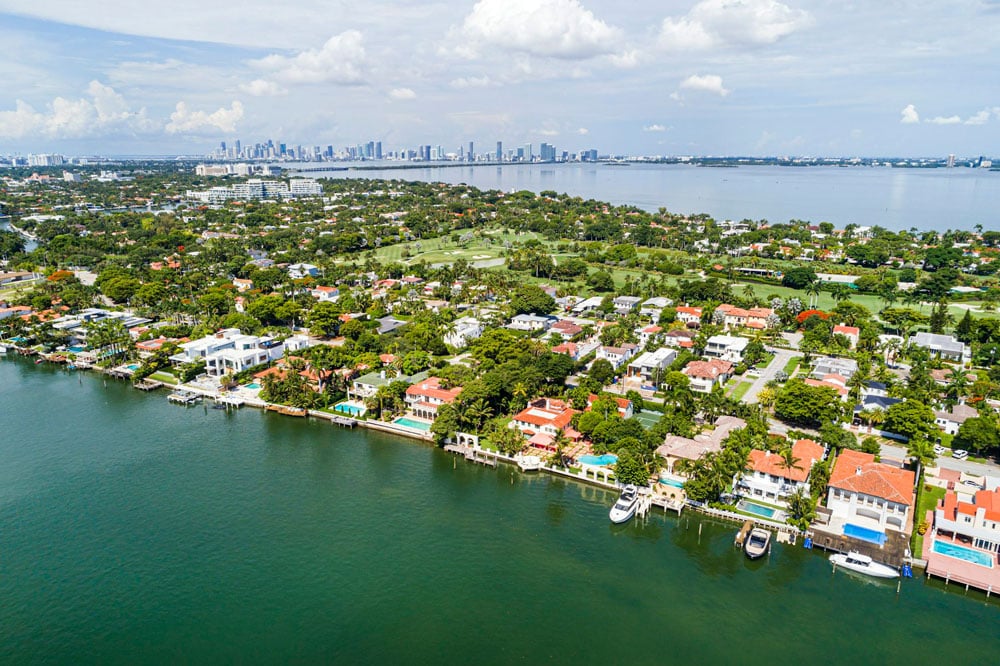
Subsidized flood insurances lowers the cost of living in coastal waterfront homes at high risk of flooding.
Subsidized flood insurances lowers the cost of living in coastal waterfront homes at high risk of flooding. (Jeffrey Greenberg/Universal Images Group via Getty Images)

By Ivis García

Anyone who has been through a flood or hurricane knows the scene: waterlogged furniture piled on curbs, gutted homes with mold creeping up the walls, families displaced for months. But the recovery isn’t the same for everyone.

While federal flood insurance subsidizes risky coastal and waterfront development for wealthier homeowners by lowering the cost of living in these areas, many low-income households in flood-prone areas remain stuck with risky properties and little help.

As a disaster recovery researcher, I’ve witnessed how perverse incentives create different cycles of vulnerability across income levels. The problem with federal disaster insurance today isn’t just about subsidizing wealthier coastal homeowners – it’s equally about leaving low-income households systematically underinsured without resources to either protect themselves or leave.

Federal flood insurance’s moral hazards

The National Flood Insurance Program was established by Congress in 1968 to provide affordable flood insurance to the public while encouraging floodplain management.

Communities that participate in the program are required to adopt regulations to reduce flood risk in their areas for their residents to qualify. The insurance policies, around 4.7 million today, are purchased either through the program or insurance companies but administered and underwritten by the Federal Emergency Management Agency, the nation’s disaster response agency. When the policy cost is lower than the risk, the property is being subsidized by the federal program.

The National Flood Insurance Program did succeed in providing accessible insurance for many people, but it also produced a “moral hazard,” where people take on risk without bearing its full consequences. What’s less well understood is that this operates differently by income level.

A person stands on porch of a small house looking at flood water covering the yard up the home's foundation.
Water rises toward homes in Hampton, New Hampshire, on Jan. 10, 2024, after a storm with high winds, heavy rain and high seas.
Joseph Prezioso/AFP via Getty Images

FEMA is currently working to adjust flood insurance prices to more closely match each property’s actual risk. The program’s Risk Rating 2.0 changes, which began in 2021, aimed to transition policies to full-risk pricing for everyone. The annual premium increases are capped by law at 18% for primary residences, so full-risk pricing won’t be fully reached until around 2037, according to federal estimates.

But there’s another, less visible problem: Federal flood insurance already wasn’t affordable for many people.

In low-income neighborhoods, more than 90% of households are estimated to be underinsured, and their uninsured losses when they experience flooding often exceeds 20% of their annual income.

Two homes at the river's edge, one missing half of it's lower floor, with top hanging over precariously. Lots of boulders and debris are in the water.
Many homes along creeks and rivers in western North Carolina were devastated by flooding from the remnants of Hurricane Helene in 2024.
Sean Rayford/Getty Images

Many families are unable to afford federal flood insurance premiums – only 37% of all policyholders pay less than $1,000 per year, according to FEMA. Instead, homeowners may skip insurance, gambling that disasters won’t strike. When floods do occur, these households can face catastrophic uninsured losses.

Homeowners and renters may also choose federal flood insurance plans with lower premiums but that provide less coverage in a disaster, and even those plan costs can be high.

Because the federal flood insurance program doesn’t specifically help those who cannot afford premiums, this creates a structural trap: Wealthier homeowners receive government-subsidized insurance support for risky properties, while many lower-income households fall outside the system entirely.

Severe repetitive loss homes

FEMA’s repetitive loss properties also tell a story. Roughly 1% of National Flood Insurance Program properties are considered “severe repetitive loss” homes – those with multiple flood events over a 10-year period. Historically, those properties have accounted for nearly 30% of all claim payments.

Low-income households that can’t afford to move can end up experiencing repeated losses, depleting their savings and leaving them facing persistent instability.

My research in Puerto Rico has shown how this repeated rebuilding deepens vulnerability, trapping families in a cycle where each disaster pushes them further into poverty and housing insecurity rather than allowing them to recover, what sociologists call “downward mobility.”

A map showing lots of repetitive loss properties along the Gulf and Atlantic coasts, but also in inland river valleys.
A National Flood Insurance Program map shows the number of repetitive loss properties within a 5 kilometer radius as of 2023. The highest rates are along the Gulf and Atlantic coasts, as well in some inland river valleys.
FEMA with Esri, TomTom, Garmin, FAO, NOAA, USGS, EPA, USFWS

Breaking both cycles

Addressing these moral hazards requires different responses.

Income-based assistance programs such as FEMA’s Flood Mitigation Assistance grants can help ensure families aren’t priced out of safety. For example, the upfront cost of home improvements that could reduce a home’s flood exposure, such as elevating the home or flood-proofing the property, can be too high for many people to afford, but assistance programs can help.

Voluntary buyout programs can also be effective in helping low-income homeowners relocate from risky properties – if those programs offer fair market value, meaningful relocation support and timely implementation. Prolonged, underfunded buyout processes can be harder for households with less cash available to manage.

The National Flood Insurance Program has another ongoing problem as more people move to flood-risk areas and as property values and storm damage rise. By early 2025, the program was about $22.5 billion in debt to the U.S. Treasury, even after Congress canceled $16 billion in debt in 2017. That debt accumulates $1.7 million in interest daily – costs borne by current and future policyholders through their premiums.

I believe fixing federal flood insurance will require an approach that prices risk accurately for those who can afford it while providing genuine assistance for low-income homeowners, for example, through affordable insurance, aid for projects that reduce homes’ vulnerability or equitable buyouts.

The water will come again. Flooding will strike both the insured mansions on the coasts and the uninsured mobile homes inland. The question is whether U.S. policies will continue leaving different forms of moral hazard for rich and poor or whether the government will finally align the country’s disaster response with reality.

Ivis García is Associate Professor of Landscape Architecture and Urban Planning at Texas A&M University.


The Conversation arose out of deep-seated concerns for the fading quality of our public discourse and recognition of the vital role that academic experts could play in the public arena. Information has always been essential to democracy. It’s a societal good, like clean water. But many now find it difficult to put their trust in the media and experts who have spent years researching a topic. Instead, they listen to those who have the loudest voices. Those uninformed views are amplified by social media networks that reward those who spark outrage instead of insight or thoughtful discussion. The Conversation seeks to be part of the solution to this problem, to raise up the voices of true experts and to make their knowledge available to everyone. The Conversation publishes nightly at 9 p.m. on FlaglerLive.
See the Full Conversation Archives
Support FlaglerLive
The political climate—nationally and right here in Flagler County—is at war with fearless reporting. Your support is FlaglerLive's best armor. After 16 years, you know FlaglerLive won’t be intimidated. We dig. We don’t sanitize to pander or please. We report reality, no matter who it upsets. Even you. Imagine Flagler County without that kind of local coverage. Stand with us, and help us hold the line. There’s no paywall—but it’s not free. become a champion of enlightening journalism. Any amount helps. FlaglerLive is a 501(c)(3) non-profit news organization, and donations are tax deductible.
You may donate openly or anonymously.
We like Zeffy (no fees), but if you prefer to use PayPal, click here.
If you prefer the Ben Franklin way, we're at: P.O. Box 354263, Palm Coast, FL 32135.
 

Reader Interactions

Leave a Reply Cancel reply

Your email address will not be published. Required fields are marked *

This site uses Akismet to reduce spam. Learn how your comment data is processed.

  • Conner Bosch law attorneys lawyers offices palm coast flagler county
  • grand living realty
  • politis matovina attorneys for justice personal injury law auto truck accidents

Primary Sidebar

  • grand living realty
  • politis matovina attorneys for justice personal injury law auto truck accidents

Recent Comments

  • Atwp on Flagler Emergency Director Jonathan Lord Warns Dual Fiscal Storms Could Wipe Out Local Hurricane Recovery
  • Atwp on Flagler Emergency Director Jonathan Lord Warns Dual Fiscal Storms Could Wipe Out Local Hurricane Recovery
  • Uh-oh on Flagler Commissioner Approve $20,000 Settlement with Former HR Manager in Lawsuit Termed ‘Bogus’ and ‘Frivolous’
  • Atwp on Palm Coast Man, 21, Accused of Statutory Rape and Recording Encounter With 15-Year-Old Girl
  • Dennis C Rathsam on Flagler Emergency Director Jonathan Lord Warns Dual Fiscal Storms Could Wipe Out Local Hurricane Recovery
  • Laurel on Flagler Emergency Director Jonathan Lord Warns Dual Fiscal Storms Could Wipe Out Local Hurricane Recovery
  • Laurel on Flagler Emergency Director Jonathan Lord Warns Dual Fiscal Storms Could Wipe Out Local Hurricane Recovery
  • NJ on About Half of Young Americans Can’t Name a Single Holocaust Site
  • Disgusted and par for the course on Flagler Emergency Director Jonathan Lord Warns Dual Fiscal Storms Could Wipe Out Local Hurricane Recovery
  • My brother-in-law on Letter from the Magic Mountain
  • Joe D on Flagler Emergency Director Jonathan Lord Warns Dual Fiscal Storms Could Wipe Out Local Hurricane Recovery
  • Deborah Coffey on Flagler Emergency Director Jonathan Lord Warns Dual Fiscal Storms Could Wipe Out Local Hurricane Recovery
  • Deborah Coffey on Flagler Commissioner Approve $20,000 Settlement with Former HR Manager in Lawsuit Termed ‘Bogus’ and ‘Frivolous’
  • Belinda on Flagler Emergency Director Jonathan Lord Warns Dual Fiscal Storms Could Wipe Out Local Hurricane Recovery
  • Jack Howell on Letter from the Magic Mountain
  • Keep Flagler Beautiful on Flagler Commissioner Approve $20,000 Settlement with Former HR Manager in Lawsuit Termed ‘Bogus’ and ‘Frivolous’

Log in