



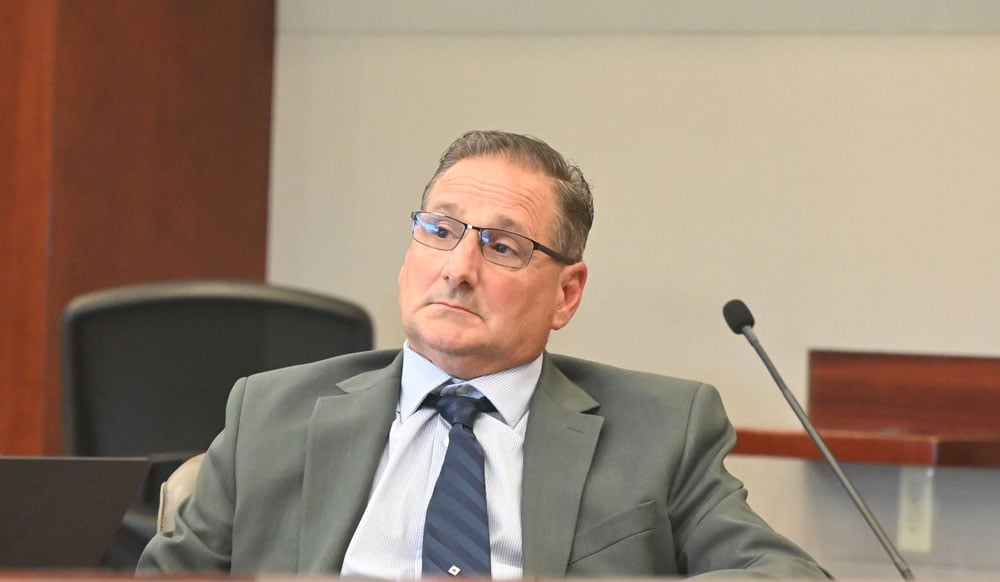
A jury of five men and one woman took 45 minutes today to find 63-year-old Palm Coast resident Gary Durso not guilty of possession of child sexual abuse material, sparing him what would have been another prison term.
It was not a surprise. James Smith, Durso’s painstakingly methodical and disciplined attorney, had cast enough doubt on the subjectivity of the charge and the scantiness of the evidence while giving wide berth to his client’s claims of inadvertence that had Durso been found guilty, it would not have been for the specific count he faced, but for other unsavory things the jury heard mostly from him and learned about him, even though it was never told the worst about him.
When Durso testified this morning, he said he was a twice-convicted felon. But the jury did not know why. It did not know that he had served 21 months in state prison in 2013-14 for traveling out of county to have sex with a minor (he was arrested in a sting operation). The jury was not told that he is a sex offender.
Durso was expansive about what he called his “hobby”–holding photo shoots of nude women, soliciting models on Craigslist, consuming enormous quantities of porn, sharing it on Flickr, the photo-sharing social media platform, and hiding it all from his wife, none of which is illegal.
In an interview with a detective last year, which the jury heard in full, and on the stand today, Durso confessed to receiving a solicitation to model from a 16-year-old, telling her that he wouldn’t do it, then receiving several nude pictures from the girl and not only saving them (“clickety-click,” as he put it), but creating a folder named “Samantha” to keep the pictures in. That was illegal, if the girl was 16. That was the reason he thought a swarm of SWAT team members and detectives descended on his house on Ellsworth Drive in Palm Coast last Sept. 16.
But it wasn’t. He wasn’t charged for “Samantha,” because the age of the girl couldn’t be clearly established.
“My greatest fear is that there may be a temptation to punish Mr. Durso for something he’s not been charged with,” Smith told the jury. “There is one charge in this case, and it relates to the evidence.”
The whole case against Durso, the whole trial, revolved around a single photograph file-named “assonly,” showing a girl’s genitals from behind. Durso downloaded the photograph in 2016, copied it onto another computer, and uploaded it to his public Flickr account, the photo-sharing social media platform, in 2025.
The girl is bent over. Nothing of her face, her arms, her torso, her legs, her hands or her feet is visible. The genitals are the focus.
To Flickr, the picture was unquestionably the image of an underage child because it is part of a known series of child sexual abuse material, or CSAM, called “Marie&Ellen.” Law enforcement had previously identified the victim (that detail was in Durso’s arrest report. It was not part of the trial evidence.) Flickr alerted the National Center for Missing and Exploited Children, which sent a cybertip to the Flagler County Sheriff’s Office. IP address data pointed to Durso’s home, leading to the early morning knock on Durso’s door.
Durso thought the cops were there about the “Samantha” file, which he showed Detective Joe O’Barr, who led the investigation. O’Barr had not been aware of that file. He showed Durso the picture in question. Durso had no idea that it was the picture that had triggered the search warrant. He told O’Barr he’d had the picture since 2016, but that he didn’t know the subject was a minor. Pressed by O’Barr to guess what age she was, Durso said 16. On the stand, he backtracked, saying he felt “under pressure,” with all those cops around.
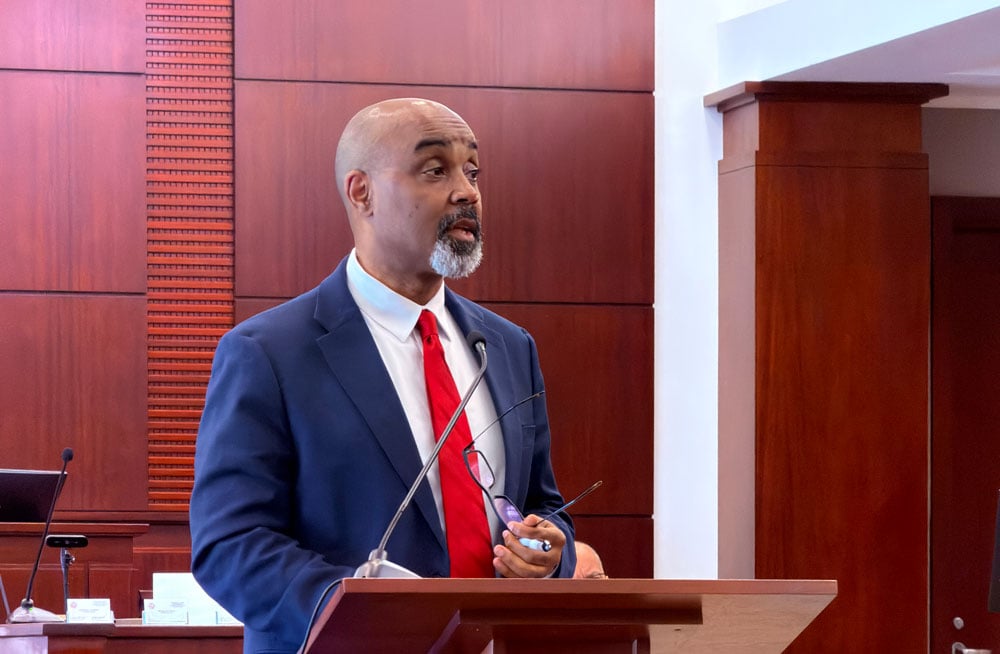
Assistant State Attorney Melissa Clark, who prosecuted the case, had Dr. Randell Alexander, a University of Florida professor of pediatrics and a board-certified specialist in child abuse pediatrics at UF Health Jacksonville, testify to the relative age of the person in the image. He characterized the person as “someplace under 18,” and later specified that she was an adolescent, “older than grade school, but under 18.” His opinion was based on a medical description of the vaginal anatomy that would have been beyond laypersons’ understanding.
In other words, it took a medical doctor board certified in child sexual abuse to establish beyond doubt, at least to the prosecution, that the person in the image was a child. That approach in itself cast reasonable doubt on how a layperson like Durso, who doesn’t have so much as a college education, might see the same picture and, the absence of pubic hair aside, not necessarily conclude that it was a child.
Smith, the defense attorney, made even the doctor’s testimony sound like a shaky opinion, at least to the jury: scientists are not comfortable with dogmatic statements, and Alexander wasn’t about to make one, thinking his descriptions were reasonable enough.
“Let’s consider the expert witness who testified. I don’t ask you to rely upon my arguments or your argument to the prosecutors,” Smith told the jury. “In a cross examination, when I asked whether or not he could eliminate the possibility that the person in that photograph was over the age of 18, he said, ‘I can’t.’”
Clark, the prosecutor, rarely loses but likely knows from experience when a case isn’t going as strongly as she is used to. She must have sensed this one slipping every time Smith, without drama, with razor-sharp logic and lethal calm, drilled hole after hole in the prosecution’s foundations.
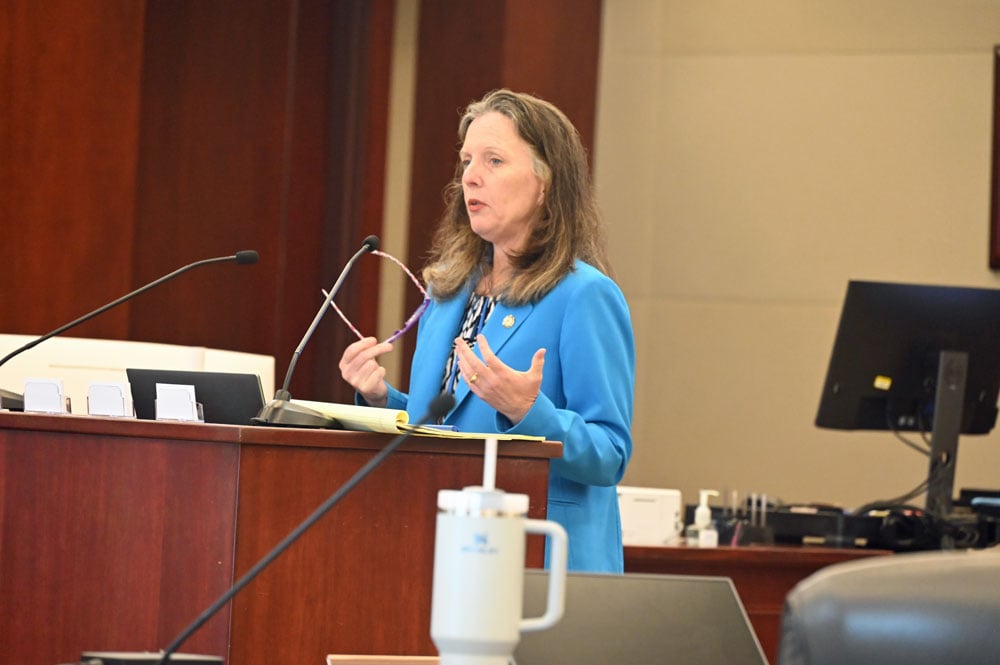
“There should be no doubt in your mind he’s possessed it,” Clark told the jury of the image. “He’s had it since 2016. He admits to that. There should be no doubt in your mind that this is child pornography. You heard from Dr. Alexander that this is somebody that is under the age of 18. You’ve heard from the detective. This is a known child pornography image. It is a named image out there, and you have the defendant admitting that he knew she was under age. He believed it to be 16. He knew. He knew at the moment that he kept that image, that this was an underage child. That is what’s illegal. That’s all I have to prove.”
There was never a question that Durso possessed the image or that it was known CSAM. Smith didn’t battle on those counts. He concentrated his attack on the third element: whether Durso knew it was CSAM. To counter that assumption, or at least to cast reasonable enough doubt about it, Smith marshaled the prosecution’s own evidence against its case.
Had the investigation not uncovered gobs of porn on Durso’s own computers and cell phone? It had. Had it uncovered a single instance of provable child sexual abuse material (CSAM) other than the one image? It had not. Would Durso have knowingly uploaded a CSAM image to a public Flickr account? “What sense would it be for him to do that if he thought it was child pornography?” Smith asked. Had the investigation uncovered search terms Durso used that revealed a predilection for CSAM? Other than the word “teen,” which includes legal porn of those 18 and older, it had not.
“There is a danger that he may be guided by some of the things that he said in his interview that yes, are unsavory,” Smith told the jury. “Do they prove that he has pornography? Yes. Do they prove that he’s had these conversations with Samantha? Yes. But if you convict him on that, you will be violating the oath that you took.” The verdict should not be about his hobby or his habits, he said, but about one certainty.
Smith had led with it: “What did you think when you first saw that image? If, in any way, when you saw that image, you wondered, had some doubt in your mind, about the age of the person in that picture, that is reasonable doubt. And that is why the state has failed to meet its burden.”
Without the doctor’s testimony, without the detective’s investigation into the history of the image, without the prosecution’s conclusive assertions about the image, anyone who would have looked at the image would have had at least “some doubt” about the age of the person. The doubt would have vanished with the evidence and history filled in. But Durso could not be convicted based on what was learned in the courtroom. Only on what he may reasonably have known until the day of his arrest.
The jury’s verdict found accordingly.
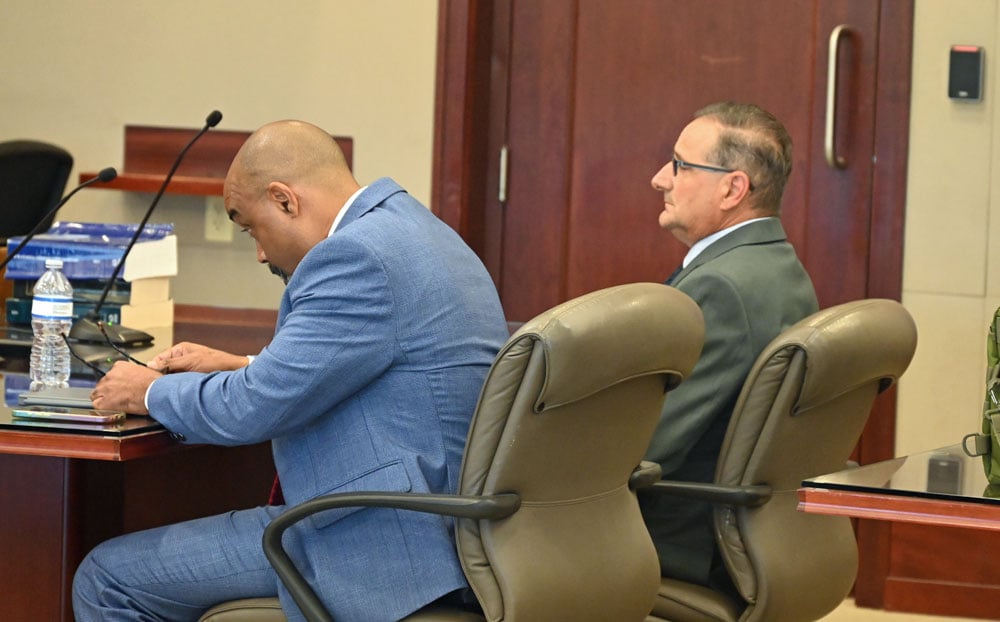
Durso did not react when the clerk said “not guilty.” Smith did. He snatched off his glasses and bowed his head for a moment as if startled. That second and a half or two was the most expressive he’d been all trial. He then turned to Durso, who’d kept staring inexpressively ahead, and the two exchanged a few words in a half embrace.
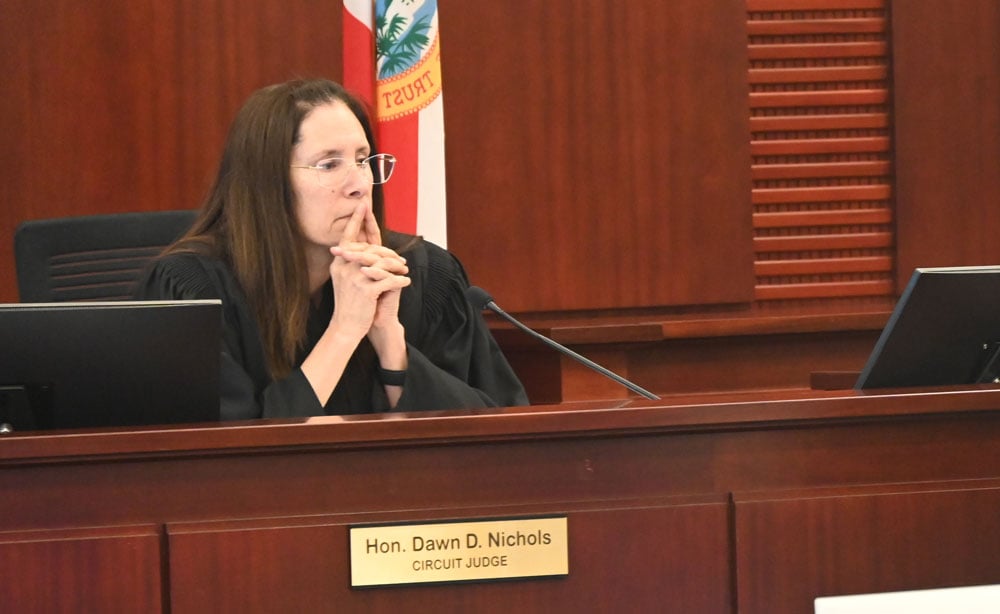
Durso had faced up to five years in prison had he been convicted, and had rejected a plea deal that would have had him serve 18 months in prison. He had been out on $15,000 bond since his arrest. He walked out a free man with the three members of his entourage who had attended his trial, one of them bearing a crucifix about half a foot long that dangled from a necklace on his chest, in full view of the jury, and that, surprisingly, Circuit Judge Dawn Nichols, who presided over the trial, allowed undissimulated.




























JimboXYZ says
This sounded like a flimsy case ? Consider that the 16 yo “Samantha” solicited Durso. Durso declined & rejected her attempts to “model”, regardless/whether they were clothed or nudes. And then he received the emails containing nudes that prosecution deemed pornographic ? At the end of the day there, what would Durso be required to do to report that to law enforcement ? Not sure from the article(s) whether the emails were forthright in Samantha indicating that she was 16 up front ? Or whether this was a case of a16 yo playing a “catfish” role, like the pastor a few year’s back being lied to by a juvenile/minor was the catfish for that Matanzas Woods hook arrest ? It just seems the order of contact, the portrayal as context all plays into getting down to whatever illegal crimes the juvenile/minor is committing. Recalling that case/story, the LGBTQ juvenile was also a 16 yo & portraying himself as an adult on Grindr or whatever the social dating app is for LGBTQ ? Several parallels may apply or not, others not at all ? It’s definitely a different world these days with digital images & the internet vs an era when someone had a relative old-school hardcopy of a porfolio of photos & had to shop those around thru the criminal actions of their parents or outright misrepresenting themselves as close & passable enough for an in-person solicitation of sorts. End of the day there, if a cgild can be arrested for threats to become a mass shooter, logic is, why not solicting for underage porn/prostitution, soft or hardcore ? Like they would also be held accountable for a fake/illegal ID for a DL or access to the 18-21 & older for a bar/night club & being served alcohol that has always been a problem.
“In an interview with a detective last year, which the jury heard in full, and on the stand today, Durso confessed to receiving a solicitation to model from a 16-year-old, telling her that he wouldn’t do it, then receiving several nude pictures from the girl and not only saving them (“clickety-click,” as he put it), but creating a folder named “Samantha” to keep the pictures in. That was illegal, if the girl was 16. That was the reason he thought a swarm of SWAT team members and detectives descended on his house on Ellsworth Drive in Palm Coast last Sept. 16.”
Sparks says
I think the courts, judges and jurors are easy on these sex offenders. They didn’t investigate for no reason.