



By Caroline Wagner
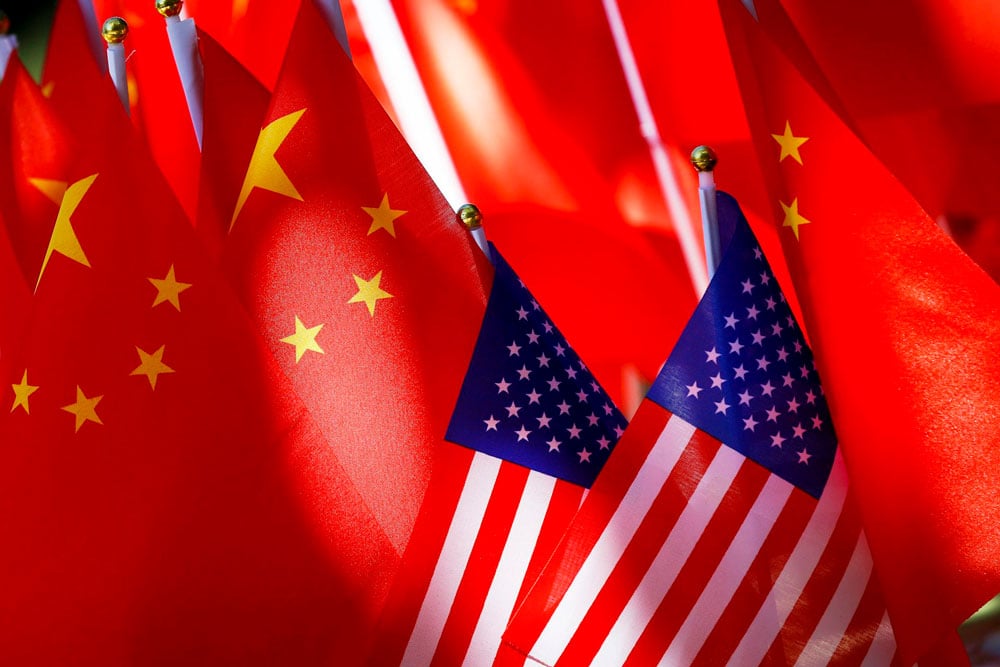
China’s rapid rise in science has hit a milestone. The country’s investment in research and development has reached parity with – and by purchasing power measures has surpassed – that of the United States, according to a March 2026 report from the Organisation for Economic Co-operation and Development. Both nations have crossed the US$1 trillion threshold on research spending.
For 80 years, the U.S. operated the most productive scientific and technological enterprise in human history. Breakthroughs and advances that came from American labs included the internet; the mRNA vaccine; the transistor and its children, semiconductors and microprocessors; the Global Positioning System; and many more.
U.S. scientific and technological leadership was nurtured by sustained public investment in research universities and federal laboratories, as well as a culture of open inquiry. These investments turned scientific discovery into economic strength – accounting for more than 20% of all U.S. productivity growth since World War II.
In contrast, China had previously spent little to nothing on research and development. Some estimates show that China was among the lowest research spenders worldwide in 1980.
As a policy analyst and public affairs researcher, I study international collaboration in science and technology and its implications for public and foreign policy. I have tracked China’s rise across every major database for more than a decade.
The most recent reports showing that China is now outspending the U.S. on scientific and technological research is a turning point worth understanding clearly because, historically, global leadership in one sector – including technology and warfare – feeds into others. U.S. dominance is in question.

Jin Liwang/Xinhua via Getty Images
China’s systematic and unrelenting rise
China’s R&D spending milestone caps a series of achievements that have arrived in rapid succession.
In 2019, China surpassed the U.S. in its share of the top 1% most-highly cited papers – what some call the Nobel class of research. By 2022, it had taken first place globally in most-cited papers overall.
In 2024, China overtook the United States in total scientific publications – the first time any nation has displaced American dominance since the U.S. itself surpassed the United Kingdom in 1948. Researchers found that China overtook the United States in scientific output even earlier. That same year, China pulled ahead in the Nature Index, which tracks publications in the world’s most selective scientific journals, posting a 17% advantage over the U.S. in outlets long considered the gold standard of scientific excellence.
In 2024, Chinese entities also filed roughly 1.8 million patent applications, compared to the U.S.’s 603,191 applications.
Given these milestones, it’s possible to argue that China is quickly taking the lead in global science and technology. These are not isolated data points. They mark a structural shift in where the world’s scientific frontier is being built.
More science is good – the problem lies elsewhere
China’s ascent is, in one sense, good news. More knowledge, generated by more researchers across more institutions, expands the global pool of discovery from which everyone can draw. The world benefits when science thrives.
The problem is not that China is investing, but that the U.S. is not.
First, the U.S. is divesting from basic, open science. Federal R&D spending in the U.S. peaked in 2010 at roughly $160 billion and fell by more than 15% over the following five years. Federal investment in research and development has been in a long, slow slide – from a peak of 1.86% of gross domestic product in 1964 to about 0.66% in 2021.
The federal government is no longer the largest spender in R&D: It funded about 40% of basic research in 2022, while the business sector performed roughly 78% of U.S. R&D. While not a problem in itself, industry has simultaneously withdrawn from open scientific publication over the past four decades, shifting from research toward development. The result is a shrinking pool of openly shared scientific knowledge precisely as public investment in it also contracts.
Under the second Trump administration, U.S. government science agencies have been slow-walking proposals for new research. Current budget cuts from the White House threaten to deepen cuts to government spending significantly.
The second is the active restriction of scientific exchange: tightening access to U.S. institutions, scrutinizing international collaborations and raising barriers to foreign-born researchers. These policies, though intended as security measures, work against the openness that has historically made American science productive and attractive to global talent.
I describe this issue as an example of the stockyard paradox, in which securing research assets may weaken the very system these measures aim to protect.
Disinvestment cuts deeper than it appears
The deeper danger for the U.S. economy is that disinvestment and selective engagement in research erodes the capacity to use cutting-edge science regardless of where it is produced.
Absorbing and applying cutting-edge knowledge, whether developed in Boston or Beijing, requires maintaining research institutions and trained workforces, as well as active participation in global networks. This is not a passive process. You cannot free-ride on Chinese science if you have dismantled the institutional and human capital needed to evaluate, translate and apply it.
A nation that hollows out its research base not only falls behind but also progressively loses its ability to benefit from science, including in technologies it is already able to access.
Talent compounds the problem. The U.S. built its scientific dominance partly by being the destination of choice for the world’s most ambitious researchers. The U.S. leads the world in Nobel Prizes, but, notably, 40% of the Nobel Prizes in chemistry, medicine and physics that were awarded to Americans since 2000 were won by immigrants. The flow of foreign talent is not guaranteed. It follows opportunity, funding and openness.
Researchers who might once have come to American universities are finding welcoming alternatives in Europe, China and elsewhere.
A decision point, not a trend line
China’s milestone in research funding arrives at a moment when the U.S. is deciding whether to maintain its scientific leadership.
Scientific infrastructure does not decline gradually and recover on demand. Doctoral scientists represent a decade or more of training; tacit laboratory knowledge lives in working research groups, not in documents. Once talented young researchers leave the pipeline – or international talent redirects to other countries – the capacity is very hard to rebuild. Early warning signs are already visible in the U.S. system: thousands of NIH grants terminated, a collapse in international applications and an exodus of early-career scientists.
What is at stake is not a ranking. It is whether the U.S. maintains the institutional capacity – the universities, the federal laboratories, the graduate pipelines, the culture of open inquiry – that made those returns on scientific investment possible in the first place.
China’s rise did not create this decision point, although it brings it into sharp relief. Does the U.S. still want to lead in science? The Information Technology and Innovation Foundation, a nonprofit think tank, estimates that a 20% cut in federal research and development starting in fiscal year 2026 would shrink the U.S. economy by nearly $1 trillion over 10 years and reduce tax revenue by around $250 billion. Others point out that the scientific enterprise has contributed at least half of U.S. economic growth.
That is a lot to lose.

Caroline Wagner is Professor of Public Affairs at The Ohio State University.




























JimboXYZ says
So after 4 years of Biden-Harris we’re now cincerned about falling behind China ?
Deborah Coffey says
Yeah. And, remember Jimbo, according to most presidential rankings over the past several years, over 500 American historians and political scientists ranked Joe Biden 14th best president and Donald Trump dead last, except for once when he was second to last. Maybe, just maybe, you are not correct in your factual assessment of Biden-Harris?
Dennis C Rathsam says
BIDEN / HARRIS…..The gift that keeps giving!
Pierre Tristam says
Dennis, the disinvestment is this administration’s doing.
joe says
Sadly, both Dennis and JimboXYZ are too far into the cult for your factual information.
Sherry says
Thank you Pierre! Ole Dennis and Jimbo will never get tired of blaming everything on President Biden and Vice President Harris. Unless they blame President Obama, or even Hillary, instead. Just posting those same “tired” Fox BS talking points ad nauseum. Facts/truth/honesty/evidence, absolutely does not matter to them.
Deborah Coffey says
Trump is the “cutter” of all worthwhile American endeavors. Do you ever wonder why he consistently does Vladimir Putin’s bidding? I know I do. It sure looks like all Trump wants to do is hand the entire West over to Putin.
Laurel says
China thinks and acts about the future in long term. Our current administration is busy enriching themselves while trying to stuff us back into the 1950s.
Pogo says
Well said; but more like 1500 BC.
The ruling class put an utterly unfit, unworthy, insane buffoon over a willing mob.
What goes up eventually comes down — welcome to the bottom of the barrel. Suckers.
Your new employee handbook:
https://www.bing.com/search?q=lao+tzu
Samuel L. Bronkowitz says
Entirely unsurprising news. The US has decided that you’re a problem if you weren’t born here. Students coming to the states for grad school would often stay through postdoc work and then transition into industry. That influx of talent is what’s keeping many of those programs alive, and when you take it away those programs vanish.
Mark says
This isn’t something new. China didn’t all of a sudden leap ahead of the United States. This has been apparent for the past 25 years and accelerated the past 15 years. While we continue to appease corporations and lobbyists, long term goals are scrapped. The only concern is profit. When you keep your eye on the scoreboard, the other team will continue to score more points. We are focused on the wrong things.
I’d like to thank Jimbo and Dennis for their insight on this. I really hope you both continue to provide us such deep and meaningful contributions to the conversations.
Atwp says
Good China. Thus administration is cutting funds like crazy. Because loud mouth lying Trump is in office the world is suppose to stop, I think not. I love to see this country falling and failing under the Trump administration. Great job China. It would be nice for other countries to surpass this country.
Amazing Christian President says
Our President was handpicked by GOD (as told in THE TRUMP PROPHECY, a documentary released in 2016) to protect and serve Israel (which he did by moving the embassy to Jerusalem!!). POTUS has said everyday he gets a phone call from GOD and sometimes twice a day before he goes to bed (Okay so he probably doesn’t mean this literally but he really does get DIVINE COMMANDS in his ear). EVEN IF you think his decisions to cut FEDERAL FUNDING
((BY HALF to the National Science Foundation and FIRE ALL THE NATION’S
TOP SCIENTIFIC ADVISORS and PULL FUNDING from DEPT of ENERGY,
NASA, CENTER for DISEASE CONTROL, DEPT of HEALTH & HUMAN SERVICES))
please go BLOW YOUR SHOFAR and THANK GOD for placing HIS SERVANT in the WHITE HOUSE !!
ALSO, Robert F. Kennedy is trustworthy and EXTREMELY INTELLIGENT and you should believe his words over the words of your greedy, bloodthirsty physicians !!
Deborah Coffey says
Best laugh of the week. Thank you.
Jim says
Laurel says is right.
What JimboXYZ, Dennis C. Rathsam and too many others fail to see is the long term damage that the MAGA/Trump/Make America Great Again mentality has done and continues to do to our country for the long term.
We were already falling behind the Chinese before Trump came to power. You’d think MAGA would surely involve recognizing where other countries – friend and foe – stand on such things as AI, medical research, computers, robots, industrial equipment, and virtually everything else we either use or may need to use in the coming years. And you’d think that MAGA would recognize that we’re behind the Chinese (maybe others) on lots of scientific progress and see that as a potential threat. So it’s just so hard to understand how, if “Making America Great Again” is the goal, why would you actively work to cut back on all kinds of research on almost everything throughout our colleges and universities as well as within our government? Why? Saving money? Getting rid of “woke”?? What we’ve done is actively encourage our best and brightest to move to foreign countries to continue their research. Our friends and foes alike have been recruiting our best since Trump got in office. And they have been very successful. The Trump administration’s attitude very much appears to be “let’em go, we don’t need them”. This is so short-sighted that it’s just hard to believe our – so-called – leaders are that dumb, but indeed they are.
How do you think we’ve developed the most advanced and efficient military force in the world? It isn’t because we now have “Mr. Masculinity” Hegseth as Defense (War) Secretary. No, he’s been busing getting rid of highly qualified generals that either don’t bow to his presence or just simply intimidate him because they are smarter and much more experienced. It’s because we pour billions into our military budget for research and development of weapons systems far advanced from our enemies.
Do you not realize that Trump (yes, Trump) authorized the R&D effort during the Corona Virus epidemic that developed the mRNA vaccines that have been so effective in bringing that under control? (I know a lot of you think the vaccines put little trackers in you. That’s okay. Don’t take the vaccine. I’m sure you’ll be fine.) We, the United States, developed that vaccine. Because we have (had) the scientific prowess to do so. Fortunately, we have RFK, Jr. as HHS Secretary and he shut down the MRNA efforts immediately saying they are “untested”. I guess we’ll see how fast we can develop the next vaccine when the next epidemic hits. Nothing like gutting the support system to stop progress.
Trump got rid of the Education Department because having a federal department overseeing our future generation’s education to assure we are anticipating needs and adjusting curriculum accordingly isn’t important. And as far as providing financial assistance to bright students who might find the solution to the next big issue (whatever that might be) is just wasting taxpayers dollars.
I could go on but I’ve made my point. MAGA, ride around town with your American flag flying! Spend your money on Trump trinkets as he makes them available. Buy his crypto coins! Celebrate his ballroom, his Arc de Trump, our Trump 250th passports (get yours soon; you’ll need it to vote – if we have an election…), and whatever else the Chief Narcissist comes up with to distract you from the toilet we’re all being flushed down. Shoot, if you’re old enough (like Trump), you won’t be around to see just how bad things will get!
King yemma says
So umm y’all going to forget who what and where started COVID yeah it’s not a conspiracy anymore it started in Wuhan in a lab from China
Samuel L. Bronkowitz says
Here you go:
https://www.nature.com/articles/d41586-026-00530-y
FlaglerLive says
Thank you for the solid fact-check.
Samuel L. Bronkowitz says
https://www.nature.com/articles/d41586-026-00530-y
Wrongo