



By Stacy D. VanDeveer
As world leaders and thousands of researchers, activists and lobbyists meet in Brazil at the 30th annual United Nations climate conference, there is plenty of frustration that the world isn’t making progress on climate change fast enough.
Globally, greenhouse gas emissions and global temperatures continue to rise. In the U.S., the Trump administration, which didn’t send an official delegation to the climate talks, is rolling back environmental and energy regulations and pressuring other countries to boost their use of fossil fuels – the leading driver of climate change.
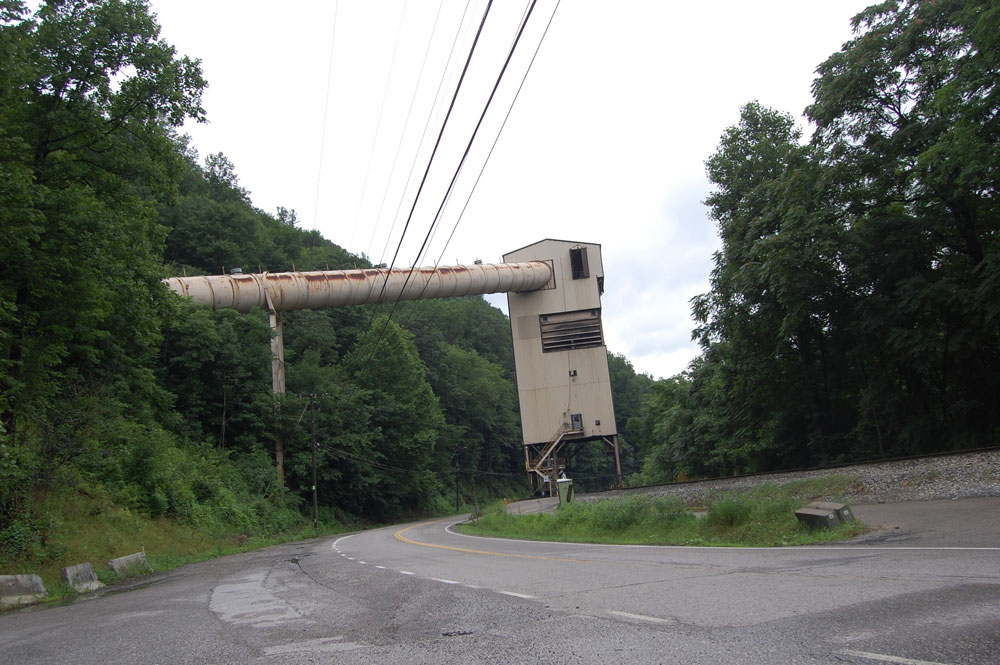
Coal use is also rising, particularly in India and China. And debates rage about justice and the future for coal-dependent communities as coal burning and coal mining end.
But underneath the bad news is a set of complex, contradictory and sometimes hopeful developments.
The problem with coal
Coal is the dirtiest source of fossil fuel energy and a major contributor of greenhouse gas emissions, making it bad not just for the climate but also for human health. That makes it a good target for cutting global emissions.
A swift drop in coal use is the main reason U.S. greenhouse gas emissions fell in recent years as natural gas and renewable energy became cheaper.
Today, nearly a third of all countries worldwide have pledged to phase out their unabated coal-burning power plants in the coming years, including several countries you might not expect. Germany, Spain, Malaysia, the Czech Republic – all have substantial coal reserves and coal use today, yet they are among the more than 60 countries that have joined the Powering Past Coal Alliance and set phase-out deadlines between 2025 and 2040.
Several governments in the European Union and Latin America are now coal phase-out leaders, and EU greenhouse gas emissions continue to fall.
Progress, and challenges ahead
So, where do things stand for phasing out coal burning globally? The picture is mixed. For example:
- The accelerating deployment of renewable energy, energy storage, electric vehicles and energy efficiency globally offer hope that global emissions are on their way to peaking. More than 90% of the new electricity capacity installed worldwide in 2024 came from clean energy sources. However, energy demand is also growing quickly, so new renewable power does not always replace older fossil fuel plants or prevent new ones, including coal.
- China now burns more coal than the rest of the world combined, and it continues to build new coal plants. But China is also a driving force in the dramatic growth in solar and wind energy investments and electricity generation inside China and around the world. As the industry leader in renewable energy technology, it has a strong economic interest in solar and wind power’s success around the world.
- While climate policies that can reduce coal use are being subject to backlash politics and policy rollbacks in the U.S. and several European democracies, many other governments around the world continue to enact and implement cleaner energy and emissions reduction policies.
Phasing out coal isn’t easy, or happening as quickly as studies show is needed to slow climate change.
To meet the 2015 Paris Agreement’s goals of limiting global warming to well under 2 degrees Celsius (3.6 Fahrenheit) compared to pre-industrial times, research shows that the world will need to rapidly reduce nearly all fossil fuel burning and associated emissions – and it is not close to being on track.
Ensuring a just transition for coal communities
Many countries with coal mining operations worry about the transition for coal-dependent communities as mines shut down and jobs disappear.
No one wants a repeat of then-Prime Minister Margaret Thatcher’s destruction of British coal communities in the 1980s in her effort to break the mineworkers union. Mines rapidly closed, and many coal communities and regions were left languishing in economic and social decline for decades.

Per-Anders Pettersson/Getty Images
But as more countries phase out coal, they offer examples of how to ensure coal-dependent workers, communities, regions and entire countries benefit from a just transition to a coal-free system.
At local and national levels, research shows that careful planning, grid updates and reliable financing schemes, worker retraining, small-business development and public funding of coal worker pensions and community and infrastructure investments can help set coal communities on a path for prosperity.
A fossil fuel nonproliferation treaty?
At the global climate talks, several groups, including the Powering Past Coal Alliance and an affiliated Coal Transition Commission, have been pushing for a fossil fuel nonproliferation treaty. It would legally bind governments to a ban on new fossil fuel expansion and eventually eliminate fossil fuel use.
The world has affordable renewable energy technologies with which to replace coal-fired electricity generation – solar and wind are cheaper than fossil fuels in most places. There are still challenges with the transition, but also clear ways forward. Removing political and regulatory obstacles to building renewable energy generation and transmission lines, boosting production of renewable energy equipment, and helping low-income countries manage the upfront cost with more affordable financing can help expand those technologies more widely around the world.
Shifting to renewable energy also has added benefits: It’s much less harmful to the health of those who live and work nearby than mining and burning coal is.
So can the world quit coal? Yes, I believe we can. Or, as Brazilians say, “Sim, nós podemos.”

Stacy D. VanDeveer is Professor of Global Governance and Human Security at UMass Boston.


























JimboXYZ says
More a question of whether or not China can ? I guess Biden-Harris had many believing in the lies of solar & windmills as going to replace fossil fuel while the human population continues to grow ? Are we going to compete or just throw in the towel & let China & Russia rule the planet ?
https://www.worldometers.info/coal/coal-consumption-by-country/
Al says
Why didn’t they have a teleconference? Nothing says stop global warming like jets flying from all around the world so delegations can have a nice dinner together.
Ray W. says
According to a news outlet named Cryptopolitan, Toyota, having announced in late 2021 its $13.9 billion plan to build and open a Liberty, North Carolina battery plant that would bring 5,100 new jobs to North Carolina’s Triad region (Chapel Hill, Durham, Raleigh triangle), confirmed that the factory is ramping up its production of EV batteries.
Toyota announced that it intends to pump another $10 billion into its U.S. operations over the next five years.
Both the Cool Down and Modern Engineering Marvels recently produced stories about a new sans-lithium battery chemistry that maintains in the lab a 99.7% energy storage efficiency after 400 hours of use. I am not the first to accept the idea that a battery chemistry that works in lab conditions is not the same as a battery chemistry that works when ramp up to scale in factory conditions.
These two stories about the new battery chemistry are really interesting.
One of the chemicals in crustacean shells, chitin, a polysacharide, can be combined with zinc to form a chitin-zinc battery that comparatively slowly degrades when in use, but after use decomposes in as little as five months when discarded into soil, leaving recyclable zinc behind. Two-thirds of this new chitin-zinc battery chemistry is recyclable by dumping it into soil and allowing it to bio-degrade.
According to University of Maryland researchers, chitin, a chemical present in lobster, shrimp and crab shells, (bisque, in part, is made from chitin boiled out of crustacean shells) can be combined with zinc to manufacture a chitin-zinc battery.
First, the chitin must be treated with acetic acid. The chemical interaction results in “chitosan”, which can be formed into a solid gel membrane that operates as the electrolyte in a battery, in effect replacing the lithium used in liquid-state lithium-ion batteries.
Liquid-state lithium-ion batteries using corrosive and flammable lithium in the electrolytes, require separators between the lithium electrolytes and the cathodes and anodes that are employed within these types of batteries. These separators can take hundreds or thousands of years to biodegrade.
In the lab, prototype chitin-zinc batteries, after 1,000 charging cycles totaling 400 hours of use, retained 99.7% of their optimal energy efficiency, meaning that overall battery storage capacity degrades 0.3% over 1000 charge cycles and 400 hours of time, an extraordinarily small rate of chemical energy storage degradation.
If successfully scaled to mass production, this means that EV and cell phone and home storage and industry storage chitin-zinc batteries, being high performing and biodegradable, just might become less expensive, lower in environmental impact, and better in supply chain stability than lithium-ion batteries. One need not source raw lithium from Chile or refined lithium from China, if abundant crustacean shell waste can be gathered from all over the Chesapeake Bay region and from the New England region and from the southern Atlantic region and from the Gulf region and from the entire West Coast region all the way up to Alaska.
And zinc, too, is an abundant throughout the earth’s crust, flame resistant, and comparatively inexpensive and recyclable metal.
Personally, I don’t suppose the crustacean food industry would complain if there were found new buyers for their waste crustacean shell product.
Interesting Engineering reports that CATL’s fifth-generation sodium-ion Naxtra battery offers a significant advantage over current liquid-state lithium-ion batteries when operating in high-altitude low temperatures.
As an aside, CATL’s prototype two-ton eVTOL aircraft, after multiple flight tests, recently earned China’s Type, Production and Airworthiness Certificates. All that remains for CATL is to earn an Operational Certificate and CATL can begin producing its new electric aircraft for sale, including for use as air taxis.
According to Tech Explore, researchers affiliated with two Korean university research labs have created a new gel-like electrolyte, made from an “anthracene component” that binds with unstable surface oxygen formed during high-voltage recharging conditions in a liquid-state lithium-ion battery. The anthracene component process improves current battery lifespan by 280% and reduces battery swelling during recharge by one-sixth, thereby reducing fire risk.
In current production liquid-state lithium-ion batteries, the recharging process, when operating at a level above 4.4V, destabilizes oxygen present in “nickel-rich” cathodes, resulting in the generation of “reactive oxygen species (ROS).” Release of ROS during high-voltage charging increases the risk of explosion and reduces the lifespan of such batteries.
ROS is also known as “single oxygen”, which “seeds” degradation in batteries. According to the reporter, the anthracene component process captures and removes “reactive oxygen.” Additionally, the “nitrile” in the new form of electrolyte, “stabilizes nickel metal in the cathode, preventing dissolution and structural deformation during charging.
In other words, a chemically-created “An-PVA-CN” gel polymer electrolyte (GPE) “fundamentally blocks the release of ROS from the electrodes during high-voltage charging”, thereby reducing fire risk and battery degradation.
Conventional liquid-state lithium-ion batteries, when charged at high voltage (4.55V), drop below 80% of original energy storage capacity after 180 charging cycles. The anthropocene component gel electrolyte maintained 81% of the battery’s original energy storage capacity after 500 high-voltage charging cycles.
Make of this what you will.
Me?
Battery innovation proceeds all over the world.
Billions and billions of dollars are being poured into battery research and development.
Whoever wins this race, and there can be many winners, not just one (it is not a zero sum race) stands to gain a share in the ever expanding EV manufacturing sector.
A mere two decades ago, EV car production was tiny compared to today’s marketplace. This past September, 2.1 million EVs were sold all over the world. 2.1 million multiplied by 12 means annualized sales of 25.2 million vehicles. That means more than 25% of all new cars and light trucks being sold around the world are battery powered.
China did not even have an EV manufacturing sector to speak of in 2008. BYD sold its first electric car in 2008. Now, China commands some 70% of the entire sector and BYD leads the sector, by far.
In seventeen short years, BYD caught and then passed Ford to become the fourth largest car manufacturer in the world.
Should American legacy automakers attempt to competitively pivot into this sector, untold wealth awaits, if done right. If done wrong, Ford’s CEO says it will be an extinction level event for the American automobile manufacturing sector.
Ford’s CEO openly states that when Ford first set out to design electric vehicles, it “looked the wrong way.” The first generation of EVs Ford produced were poorly conceived and designed.
In 2022, Ford suddenly realized and accepted its error in vision, an error that cost Ford years of development expertise and billions of dollars. Ford pivoted. The first of its new generation vehicles will come off the assembly line within the next two years.
Ford’s CEO asserts that GM and Chrysler did the same thing Ford did, which was to look the wrong way at the issue for far too long and at great cost.
Ray W. says
This story might be one of the more egregious fails by a member of the professional lying class that sits atop one of our two political parties.
According to The Cool Down, U.S. Energy Secretary Chris Wright recently said during a Fox Business appearance that wind and solar require “two grids”, because each energy source is dependent on weather.
A news outlet named Science Feedback pointed out that every grid receives power from a variety of sources via a “single interconnected system.” No one can dispute that definition of a grid that encompasses huge swathes of area. Each of our nation’s three grids are a “single interconnected system.” None of the three have “two grids.”
Make of this what you will.
From the beginning of national electricity grids, coal-fired plants have contributed electricity into these grids, as have nuclear, natural gas, diesel-powered and hydro-powered sources of electricity. In time, wind and solar power began to be a supplemental power option. (At some point in the future, it may come to pass that renewable sources of electricity will drive every other power source off the grid, except in emergencies, but that time is decades away)
National grids work best when operators select the most efficient of the many available forms of electricity generation to meet daily demand.
For decades, 24 hours a day, grid demand for electricity has been monitored and adjusted second by second. Electricity demand rises each morning as people prepare for work. It then drops during the day until people return from work and prepare for the evening, when demand rises again.
The same thing happens in our water grids. I am old enough to remember a story from, as I recall, the first Super Bowl that was held in New Orleans. All over the country, it was reported, municipal water pressures dropped during commercial breaks as people all over their cities jumped up to use their restrooms. As I recall, this type of story returned as All in the Family became more and more popular.
Make no mistake. Long before solar and wind became a more efficient and less costly method by which electricity can be produced, power plants have powered up and down to meet demand. Nowadays, the most expensive form of electricity generation, coal-fired power plants, fires up only during the hottest summer days and the coldest winter days. Such days are when all the electricity available from all of the many sources of supply need to be working at full capacity. As demand rises, coal-fired power plants are the last to be fired up. When demand slackens, the coal-fired plants are the first to be powered down. These last up-first down coal-fired plants are called “peaker plants.” Natural gas-fired plants can be fired up and shut down, too, depending on demand.
No one should take at face value anything said by a director of a government agency who proves either that he doesn’t understand what he is talking about or that he is spreading lies.
There are three main grids across America. Each is quite large, with the Texas grid, regulated by ERCOT, being the smallest. Electricity utilities have decades of data at their command. They know which of the plants are the least efficient. They know in advance how much electricity is likely to be needed during each time of day or night, so power plants can be notified in advance when they will be needed.
In the decades leading up to the 2021 Texas freeze, ERCOT had repeatedly declined to force natural gas-fired power plants to be weatherized when built. Companies that provided natural gas from wells directly into pipelines didn’t have to weatherize their wells, either.
People don’t read about big power outages in Wisconsin, because no one builds a natural gas-fired power plant in Wisconsin without weatherizing it. Weatherizing power plants is simple but costly. One need only encase a gas-fired power plant inside a structure that protects the plant from overly cold weather.
At the time of the 2021 freeze, Texas natural gas-fired power plants were not encased inside buildings; they sat out in the open. When temperatures fell to extreme lows, some of the natural gas-fired power plants simply stopped working. So did some of the natural gas wells that supplied the gas to the power plants.
After that Texas event, FP&L commissioned a study of each of its Florida power plants in order to determine whether any needed to be winterized.
According to 2022 story produced by The Texas Tribune, one of the main causes of the loss of power during the 2021 Texas winter storm was that “many power plants in Texas rely on natural gas as a fuel source.” Given that fact, “the state’s natural gas supply chain is critical to the flow of electricity.”
During the storm, ERCOT officials ordered electricity transmission companies to cut power to parts of the grid, so as to prevent additional damage to the grid that had already happened. The cut in electricity to certain parts of the grid impacted the natural gas supply chain to more and more natural gas-fired power plants. When compressed natural gas stopped flowing through pipelines to power plants, the grid collapsed. On top of this problem, many Texas wells stopped producing natural gas due to the freezing conditions.
In other words, as the freeze settled in over Texas, natural gas well output slowed as machinery that had not been weatherized stopped working properly. Electricity output slowed as delivery of natural gas to power plants slowed. Transmission throughput to customers then slowed, but demand erupted. ERCOT inadvertently ordered the shutdown of certain transmission lines in order to protect the grid from additional damage. Other natural gas power plants stopped working due to the interruption of natural gas supply. The overall grid then collapsed as demand for electricity from the few remaining operable power plants overwhelmed capacity.
According to FERC, from its report on the causes of the power outages, 87% of the unplanned power outages were directly related to natural gas-fired power plant outages. The rest, 13% of the unplanned power outages, came from coal-fired power plant outages and diesel-fired power plant outages.
Yes, some but not nearly all wind turbines froze, but the effect of the loss of electricity from a few frozen wind turbines on the overall Texas grid was insignificant at best.
It was deregulation at its worst. Texas regulators had given customers a choice. They could choose from which power plants they could buy power and the manner by which they would be billed.
When some power plants failed or shut down, others power plant owners jacked up prices for what little power they could still provide.
A study after the fact, published in a Forbes story, revealed that during the five-day freeze ERCOT allowed power companies to gouge their customers by more than $4.2 billion. Profit to utility companies at its worst.
Had winterizing of gas wells been required by Texas regulators, and had winterizing of power plants been required by Texas regulators, little or none of the damage or deaths from the freeze would have occurred.
I haven’t forgotten the several gullibly stupid FlaglerLive commenters who immediately blamed the deaths and damage from the Texas grid collapse on solar and wind farms. Who fools they were. But lie laundering is a powerful lure to those who believe lying for political gain is a virtue.
DaleL says
Coal is almost pure carbon. There is a bunch of hype concerning greenhouse gasses and the climate. Give it a break. Coal is the product of photosynthesis. The real issue is that coal (carbon) sequesters enormous amounts of radioactive atoms. Burning coal releases more radiation than nuclear plants. The waste from coal is both massive, toxic, and radioactive. Mining coal is environmentally a disaster. The Earth has been much warmer in the past and no real harm occurred. When the polar glaciers melt, in a few thousand years, the Earth will be fine. However, most of Florida will be underwater.
Pogo says
@Thank you sir
… for sharing the straight line from the information to its conclusion.
Time is priceless — all the time.
JimboXYZ says
Best explanation of the chicken or the egg for energy ?
Ray W. says
Does every FlaglerLive reader understand that in this comment JimboXYZ is trying to prove a point by drawing support from a fictional television script written to entertain an audience?
According to Texas’ Comptroller’s office, there were more than 15,300 wind turbines in 239 projects in Texas in 2023, generating 26,135 jobs at an average pay of $109,826 per year. Windmills produced 28.6% of all electricity from all sources in Texas.
And this is just wind.
The nation’s third largest utility-scale solar power company, Enel Energy, just opened a $1.8 billion Texas solar farm, the nation’s largest, just two years after an extreme heat dome event that that started in the Far West settled over Texas.
During the Texas extreme heat dome event, electricity demand reached a record 85.5 gigawatts. Warnings of rolling blackouts were issued to Texas residents. Then existing power plants were not expected to keep up. Gasoline prices all over the country went up because refinery efficiency begins to dip when outdoor temperatures rise above 95 degrees. People like JimboXYZ blamed the Biden administration for the rise in prices; they simply did not know any better.
According to an Associated Press analysis, 874 people died from heat-related stress in Arizona during the period of the heat dome. 450 died in Texas. 226 in Nevada. 84 in Florida. 83 in Louisiana.
That same heat dome slowly moved east, bringing extreme heat to Florida. I recall seeing on FlaglerLive projected Flagler County heat indexes commonly above 108 and as high as 120 degrees.
For the first time in 50 years, Central Florida was declared an extreme heat region. The extreme heat designation was repeated many times in just over two weeks, perhaps as many as more than 10 times.
Texas companies began building solar projects by the dozen. This Enel Energy new project is paired with a battery storage plant. The combined output is 911 megawatts of power.
Right now, there are 50 more utility-scale solar projects in the works in Texas alone.
Right now, there are 33 utility-scale solar projects underway in Florida, with 18 of them slated to open within 12 months. Total Florida planned generating capacity from these 33 projects is 2,461 MW.
In the second quarter of 2025, according to ERCOT, Texas’ utility regulatory agency, more battery storage capacity was added in Texas than in California, a first for the state. Corporate renewable energy developers are now outpacing traditional utilities in modernizing Texas’ grid.
Not a single coal-fired power plant has opened anywhere in the country in more than 10 years. None are in the works.
The advantage to solar power coupled with battery storage capacity is that solar panels produce power during the day when people are at work. Battery storage stores excess power which can instantly produce the stored power when people return home from work, something traditional power companies cannot as easily do, because it take time to ramp up coal and natural gas-fired plants, making them even less efficient.
Power companies do not spend these sums of money if they don’t believe they can earn a profit on their investment. Power companies don’t apply for permits if they don’t think they can make money on the projects. Lenders do not lend billions of dollars if they don’t think they will be paid back the money. Power companies all over the world are turning more and more to solar and battery storage as a profitable enterprise, because solar power is the cheapest form of generating electricity, and it is getting cheaper and cheaper.
Please, JimboXYZ, stop listening to fictional characters reading from prepared scripts in TV series that were created to entertain audiences.
I learned long ago that some people define right and wrong by what they like. If they like something, it must be right. It they don’t like it, it must be wrong. Since what they like can change every day, right and wrong can change every day, too.
Ray W. says
The Trump administration just announced that it contracted to spend some of the $171 million allocated for 2025 by the Big Beautiful Bill Act for Strategic Petroleum Reserve replenishment, with delivery of crude oil to one of the reserve’s basins beginning in December 2025.
A member of the professional lying class that sits atop one of our two political parties said that former President Biden was “reckless” in drawing down the SPR, even though President Trump drew down the SPR during his first administration.
The U.S. SPR system was established in 1975. As a member of the International Energy Agency, the United States is required to maintain a minimum 90 day supply of reserve crude oil, should disruption of crude oil supplies from foreign sources take place. The maximum capacity of the American SPR is 714 million barrels of oil.
Make of this what you will.
Me?
If it is true that the current maximum capacity of all of the crude oil basins that comprise the SPR is 714 million barrels of oil, then the way to find out how much crude oil that we need in the reserve is to divide 714 million barrels by 90 days, which comes to just under 8 million barrels per day. If America is importing more than 8 million barrels of crude oil per day from all sources, then the SPR capacity is too small to meet the 90-day standard.
I looked it up. According to the EIA, in 2023, the U.S. imported on a daily average 8.51 million barrels of oil per day. Simple math tells us that the SPR, to meet the 90-day criterion, needs a reserve capacity of 774 million barrels, more than what can be stored in the SPR.
But I take a different approach.
I argue that the purpose of the SPR is to protect us from those nations that pose a threat of disruption to our crude oil needs, not from our allies, who don’t pose such a threat of disruption.
Canada, which supplies roughly 60% of our oil import needs, is not a threat of disruption to our oil supply. Mexico, which supplies roughly 7% of our oil import needs, is not a threat of disruption to our oil supply. But OPEC has a long history of threatening to disrupt our oil supply. The cartel was a threat of disruption to our oil supply in 1975 when the SPR came into being, and OPEC remains a threat of disruption today.
So I looked up how much crude oil, on average, we import each day on from the cartel nations and their associate nations. For 2022, that figure was 357,260 barrels of crude oil per day. To protect ourselves from OPEC+ supply disruptions for 90 days requires that we need just under 30 million barrels of capacity in the SPR to cover the threat posed by OPEC to our crude oil needs, not 774 million barrels of crude oil.
Either way, a different question is whether the cartel cutting production in 2021 qualified as a threat of disruption to our national crude oil needs sufficient to turn on the spigots at the SPR.
So here is what happened. OPEC voted as a cartel in February 2021 to cut its overall production figure by six million barrels per day. Saudi Arabia announced another voluntary cut of 1 million barrels per day. The cuts were phased in over time. Indeed, the cuts were adjusted over time, too. At the time, worldwide demand for crude oil was just over 100 million barrels per day.
I argue that any seven million barrel per day cut to worldwide crude oil supply of just over 100 million barrels per day constitutes a threat of disruption to the entire world.
The reason given by OPEC at the time was that the cartel wanted to restore profits that had been lost during the pandemic.
An industry journal reporter commented that Saudi Arabia needed oil prices to be above $76 per barrel to meet its government budget for that year.
Regardless of the truthfulness of either or both of the reasons given, the cartel’s actions were directly responsible for the rise in America of gasoline prices, a rise that continued into 2022 and beyond.
Who knows exactly how many reasons were behind the cartel’s vote? But if the cartel said it wanted to restore profits lost to it during the pandemic, I have to concede that reason makes sense to me. And if an industry journal reporter wrote that Saudi Arabia needed worldwide crude oil prices at or above $76 per barrel to meet its fiscal budgetary needs, that makes sense to me, too.
By early 2022, gasoline prices had risen enough to prompt former President Biden to go hat in hand to Saudi Arabia, seeking to turn the OPEC+ spigots back on.
He was rebuffed.
Former President Biden then turned on the spigots from the SPR.
Did the cartel’s vote to cut production constitute a threat of disruption to our crude oil supply sufficient to justify opening the SPR spigots?
History records that both of the OPEC oil embargoes in the 1970’s tipped America into recession. The 1981 Irag-Iran War tipped our economy into recession. Indeed, that was the second time in history that America recorded what is defined as a “double-dip” recession. The 1991 Kuwaiti invasion by Iraq threw our economy into recession. There is a long history of oil disruptions in the Middle East tipping America into recession.
In 2022, the American economy was struggling to recover from the direct effects of the 2020 pandemic. No rational person can dispute that economic state of being.
In 2021, could OPEC’s vote have posed a threat of disruption to our significantly damaged economy? I argue that it did pose such an economic threat, but others may differ.
If the cartel’s vote posed such a threat, then can it also be argued that former President Biden did the very thing that the SPR was designed to permit? That he was justified in doing what he did?
I argue that it did and that he was. But that’s just me.
Ray W. says
Reuters recently reported on a new investment policy announced by managers of the Norwegian Wealth Fund.
The fund, valued at $2 trillion, has $1 trillion of that sum invested in U.S. companies across bonds, equities, and real estate. Fund management announced that it would maintain pressure on all of the 8,500 companies in its portfolio to meet climate change goals set at the 2022 Paris Agreement.
According to the announced plan, “[c]limate risk is financial risk. … The fund therefore has an interest in an orderly transition to global net zero emissions.”
While divestment is one option, a fund manager said:
“Engagement is our main goal. Divestment does not take down emissions.”
Make of this what you will.
Ray W. says
As foundation for this comment, vertical axis wind turbines differ from horizontal axis wind turbines.
Interesting Engineering reports that Rome-based GEVI Wind was created to “overcome traditional system’s challenges” via its “modular, distributed, low-noise micro wind turbine.”
The company has a prototype vertical axis wind turbine manipulated by AI-controlled software, which adjusts each of the vertical blades “every few microseconds” to adapt to changing wind speeds and direction, to turbulence and to “aerodynamic interactions” between the several blades.
The AI-controlled “feedback system” allows for a 60% improvement in energy capture compared to existing vertical axis turbines, and reduces mechanical stress during strong winds by 80%, again compared to existing vertical axis turbines.
Designed for rooftops, local microgrids, and the roofs of industrial facilities, it is not designed to replace the huge utility-scale horizontal turbines so often depicted in fictional shows like Landman. The turbine is 9.8 feet tall and has a diameter of 17.7 feet (the size of a small tree). It operates at wind speeds as low as 8.2 feet per second (5.6 mph) and delivers between three and five kilowatts of power. Five kilowatts of power over a year comes to 10,950 kWh’s. At the national average electricity cost of 17 cents per kilowatt-hour, this comes to a maximum annual value of $1,861.50, or $155 per month, rounded down, though I concede that with ever-changing wind speeds, the average annual value would be less.
Make of this what you will.
Ray W. says
Given that there can be many solutions to a single problem, German wind turbine researchers took their own approach to increasing wind turbine efficiencies.
According to an Interesting Engineering story, two German research groups, BBF Group and Fraunhofer Institute for Applied Polymer Research, sought to develop a “small, lightweight” wind turbine that could “decentralize” electricity generation through use of a turbine equipped with “fiber-composite” blades designed to achieve greater aerodynamic efficiency.
According to the reporter, current small wind turbines need wind in excess of 13 feet per second (8.9 mph) to rotate. The new turbine begins to spin at 8.8 feet per second (6 mph).
Wind tunnel testing proves that the new turbine spins at 450 rpm at wind speeds of 32.8 feet per second (22.3 mph). Output at that rpm is 2,500 watts ($3,723 in value per year at 17 cents per kilowatt-hour), an output 83% more powerful than that achieved from comparable marketed products.
Given a theoretical maximum efficiency of 59% set by Betz’s law, the new turbine reaches an operable maximum efficiency of 53%. Betz’s law defines the theoretical maximum amount of electrical energy that can be extracted by a turbine from wind motion.
Make of this what you will.
Me?
Like tractor combines, huge horizontal shaft wind turbines are appropriate for locations remote from urban centers. Small vertical shaft turbines are more appropriate for urban center use. Each of the two products has its advantages and disadvantages. Sailboats have long used tiny vertical shaft wind turbines to keep batteries charged. Go to any decently sized marina and you will see the turbines at work. One goal is to design the most efficient vertical shaft wind turbine for personal use.
The question, of course, is whether state law permits installation of home wind turbines. Years ago, my older son achieved solar panel installation certification, but state law did not permit him to open a business until he worked for a number of years at an established solar panel installation company.
The world is rapidly changing. Some of us look backwards, comforted by what they once knew, not realizing that what they once knew is no longer true. Discomfited by the idea that they might be wrong, they grasp at scripts for fictional TV shows to support what they still believe. This is what Wittgenstein meant when he wrote that one of the most difficult things in life is to not fool ourselves.
Right now, there are 228 utility-scale wind farms in Texas. Nine new projects were completed in 2024. In 2023, according to Texas’ state Comptroller’s office, wind energy comprised 28.6 of the overall quantity of electricity produced, second only to natural gas.
In 2011, Texas wind passed the 10,000 MW threshold. In 2022, Texas wind produced 40,556 MW of power, more that quadruple that of 12 years earlier. Anyone who claims that solar and wind cannot in time pass natural gas and coal is a lie-launderer. In Texas, wind passed coal in 2020 and its closing in on natural gas.
Let’s face facts. Natural gas-fired combined-cycle turbine plants measure increases in efficiencies in tenth’s of a percent. Coal-fired steam turbines measure increases in efficiencies in tenths of a percent. Both systems have been developed enough over decades that it is harder and more expensive to produce efficiency gains. Advances are tiny.
Wind, solar and battery advances are coming in leaps and bounds and the electricity produced and stored by these systems is already far less expensive than that produced by coal or natural gas. The price advantage for wind and solar and batteries is only going to get wider and wider as time goes on.
Ray W. says
As of November 2025, 4,380 solar projects were in development, with 773 of them expected to come online during the next 12 months.
There are 843 wind projects in development, with 99 of them expected to come online during the next 12 months.
There is little reason to believe that every last one of these 5,223 planned projects will actually be built, as history proves otherwise. Some are in the permitting phase and haven’t yet received approval of loans to build the plants, but those in the final 12 months of construction have the financing in place necessary for completion.
Zero coal-fired power plants are under construction. Zero coal-fired power plants are in development.
According to an April 2023 Institute for Energy Economics and Financial Analysis (IEEFA), even though electricity generation from coal peaked in 2011 (318 GW), half of that peak generation capacity will be gone by the end of 2026 (159 GW). Of what capacity remains, some 40% more will close by the end of 2030.
Here is language from the IEEFA report:
“Overall the closures are widespread. The 173 coal-fired units closing between now (April 2023) and 2030 are located in 33 states, and another 55 units with announced closure dates between 2031 and 2040 are spread across 17 states. The closures also reflect the aging of the U.S. coal fleet. In most years, the average in-service date of the retiring units occurred in the 1970s — meaning that the majority of units will be more than 50 years old when they are closed. Into the 2030s, the average age at retirement rises to 60 years or more. For utilities, the rising cost of maintaining and operating these units, especially when cheaper, more flexible, and far more technologically advanced generation alternative are available, makes retirement an increasingly attractive option.”
Make of this what you will.
Me?
Who knows what the future brings.
From what I understand, in 2025 Mitsubishi landed an unexpectedly large number of orders to provide gas turbines to plants expected to be built in the U.S.
I am well aware of the fact that there are thousands of remote oil derricks in Texas that in the past flared off the natural gas emitting from these wells. Without natural gas pipelines to these remote wells it was not economically feasible to capture the natural gas.
But a number of new data centers planned in locations near these remote oil fields.
Natural gas-fired power plants will be built in order to provide much-needed electricity to these data centers. Natural gas previously flared off will be captured to provide fuel to these new power plants, making capturing the previously flared off natural gas a economically feasible process.
Let’s face facts.
Efficiencies drive the power grid. At one time, coal was the most efficient source of power available to the grid. Now, it is the least efficient source of power available to the grid.
Solar and wind have become the most efficient sources of power available to the grid. This might explain why so many solar and wind projects are in the pipeline.
But there exist in our three national grids over 7,300 power plants of different types, from hydro to geothermal to nuclear to coal to natural gas to diesel to wind and to solar. Some plants are ancient. Some are brand-new. Some are inefficient. Some are extremely efficient. Some run all the time. Others, called “peaker” plants, operate only in the most extreme demand periods, like summertime heat domes and winter storms.
Pogo says
@More fuel for thought
… as evidenced by all the thought, and action, already extant:
https://www.google.com/search?q=centralized+vs+distributed+power+production
Ray W. says
According to the Macon Telegraph, Georgia Power, a statewide utility company, recently started constructing in Twiggs County of a 200 MW “battery energy storage system (BESS)” next to an existing solar farm; it is expected to go into operation in 2027.
The utility company is in the permitting process to build 10 more BESS’s,
plus two solar farms that will each have accompanying BESS’s.
In November 2024, Georgia Power opened its Mossy Branch Energy Facility, the state’s first BESS. Four more BESS’s, in Bibb, Cherokee, Floyd and Lowndes counties, are also under construction.
That means 19 battery energy storage systems across the state when existing plans are complete.
The reporter took this from Georgia Power’s website:
“With increasing concerns about climate change and environmental sustainability, communities and utilities are pushing towards renewable energy sources. … Battery storage systems are designed to … (store) excess energy generated during peak production times and release it when production is low, or demand is high. This capability promotes a steady and reliable supply of electricity, regardless of the variability in renewable energy generation.”
Make of this what you will.
Me?
Something has to have shifted in Georgia utility company thinking. One BESS to 19 BESS’s in roughly three years is not normal. I argue that battery storage costs have to have plummeted in recent years. Is it reasonable to argue that rapidly evolving economies of battery storage are the best explanation of the change in Georgia utility company thinking?
This is a thought exercise.
Georgia has 290 utility-scale power plants of many types, including hydro, nuclear, natural gas and coal, but zero utility-scale wind plants. 16 of those 290 plants are solar farms. 18 more solar plants are in the works. Five of those 18 plants are expected to open within 12 months. Total solar output comprises 12% of Georgia’s combined capacity.
Each of those many forms of electricity generation has its own peak efficiency setting.
Let’s choose one of those several forms of power generation.
Imagine a natural gas-fired combined cycle power plant.
Most natural gas power plants have two gas turbines, but the most efficient plants have three. Waste heat from either the two or three turbines is captured by a downrange steam turbine that adds to the electricity produced by the gas turbines.
The gas turbines can operate at different speeds, depending on demand, but there is an optimum speed of greatest efficiency.
Does reason tell us that it would be wisest to keep each gas turbine operating at its optimum rate of efficiency? I argue that it does.
But demand fluctuates throughout each day.
How does one reconcile fluctuating demand with most efficient supply?
If Georgia utility officials were to decide to use at optimum efficiency only enough of the state’s most efficient power plants so as to provide sufficient electricity to meet average demand periods, plus a bit more to keep battery storage systems fully charged, could the utility company then shut down more of the lesser efficient power plants and use the battery storage plants to meet second-by-second fluctuations in daily demand?
Use today for example. In no way can today’s moderate weather comprise a peak demand period. Should Georgia’s statewide utility company have every one of it’s 290 power plants operating at peak efficiency on a day like today? I argue that such a decision would be both wasteful and unnecessarily expensive.
To me, the most efficient power plants on any grid should be operating at peak efficiency and the lesser efficient plants should be shut down whenever possible. Battery storage should be available to smooth out energy supply to meet second by second fluctuations in demand, without having to power up or down the lesser efficient power plants.
In this scenario, solar farms, being the most efficient form of generating electricity right now, should be operating at full capacity whenever the sun is shining. Every bit of solar power should go straight into the grid. Since there are no wind farms in Georgia, the next most efficient form of power generation would likely by hydropower, followed by natural gas. Coal-fired plants, the least efficient form of power generation, should be fired up only during peak demand hours, like during summertime heat domes and during extreme freezes.
As an aside, has every FlaglerLive reader seen wind farms in operation. During high demand periods, every windmill spins. During low demand periods, some of the windmills are shut off; they no longer spin. Why create an electricity surplus in a grid?
As a second aside, engineers who maintain natural gas-powered turbines are not permitted to vacation during the spring or fall because these are the months when periodic maintenance shutdowns are scheduled. No power plant owner schedules routine maintenance in July or August or January or February.
Shutting down a gas turbine power plant during a peak power demand period costs the power plant owner millions of dollars a day. Shutting down a gas turbine power plant when demand is much lower during mild weather costs relatively little per day, because other power plants can pick up the slack.
But when a highly efficient gas turbine power plant is shut down for maintenance during a mild demand period, the multiple engineering teams still work around the clock, sometimes in excess of 90 or 100 hours a week for weeks on end, because shutting down the most efficient power plant in a system might mean having to fire up a less efficient power plant during an unexpected warm period in fall or a cold snap in spring. It is worth it to the power companies to pay up to triple-time to the engineers to get the work done as quickly as possible. Mitsubishi Heavy Power flies spouses and significant others to power plant locales if the engineers have worked 21 straight days of 16 hour a day shifts.