




One of the many pleasures of this annual project, now in its third edition, is how it upends hierarchies of taste and genre. A book isn’t good because it’s judged to be literary or “classic.” A book is good because we–because you–love it. The personal choice is beyond reproach. The book’s importance, its relevance, its genre, its status in the academic canon or in Goodreads’ tribunal, whether its author won the Nobel (or FIFA’s upcoming literary prize) is all irrelevant before the most essential question: did you like it?
That’s the guiding question for the many and generous readers who wrote in about their favorite book of the year. Even the word “book” is loosely defined. The attorney Marc Dwyer chose to write about his favorite legal decision of the year. There are a couple of self-help or self-actualization entries. If there weren’t any entries of audio-only titles, it’s probably because readers think I, as an incurable snob, think audio-only doesn’t count. I think it very much does. I see no difference between listening to an audiobook and spending an afternoon in an Athenian amphitheater 2,750 years ago, listening to a performance of The Odyssey, back when all “reading” was oral (Socrates never set down a single word. He was a walking audiobook).
I don’t mind hierarchies based on writing quality and substance. Michener is no Cheever and a tweet isn’t usually worth a blink’s effort, though what are the Bible’s Proverbs or Marcus Aurelius’s Meditations but the tweets of their day? I’m impatient with cultural magistrates who create qualitative hierarchies based on form, genre or time period. Even a grammar book like Strunk and White’s Elements of Style or Benjamin Spock’s adventurous book on child-rearing can be read for sheer pleasure. Before Steven Covey’s 7 Habits there was Augustine’s Confessions, two self-actualization books from different millennia.
We just don’t often push ourselves beyond our bookish comfort zone, fearing the dud, the incomprehensible, the nonsensical. It’s not irrational. With all respect due the writers whose souls may have bled years to produce them (I’m borrowing Red Smith’s great line about writing columns: “All you have to do is open a vein and bleed it out, drop by drop”), the majority of books are not worth the six to 12 hours of our lives we’d owe them. Good recommendations help us break out of that comfort zone.
That’s what this annual collection of wonderful reviews means to me, and I hope will mean to you, written by people you’ve probably heard of but only from behind the mask of their official capacities. Here they are, like that reader in the Athenian amphitheater, telling you why they loved what they read and why you might too.
As always, the writers appear in no particular order but for a few. I like the irony of starting a non-judgmental book feature with a judge (though who are we kidding: we’re all born with gavel envy). And unlike others, Don O’Brien and Bob Cuff appear every year and up high because it is with Don that this feature started in 2023 and it is with Bob that I have near-daily pre-dawn correspondence by texts about our Sisyphean adventures in good reading, scaling and adding to our Himalayan book piles. It is also because of that correspondence with Bob that, shortly after sunup, when the morning’s reading is unfortunately done for, I am able to more sanely turn to the slightly deranged task of reporting and writing for FlaglerLive, bleeding it out drop by drop.
–Pierre Tristam
Previous Editions: |

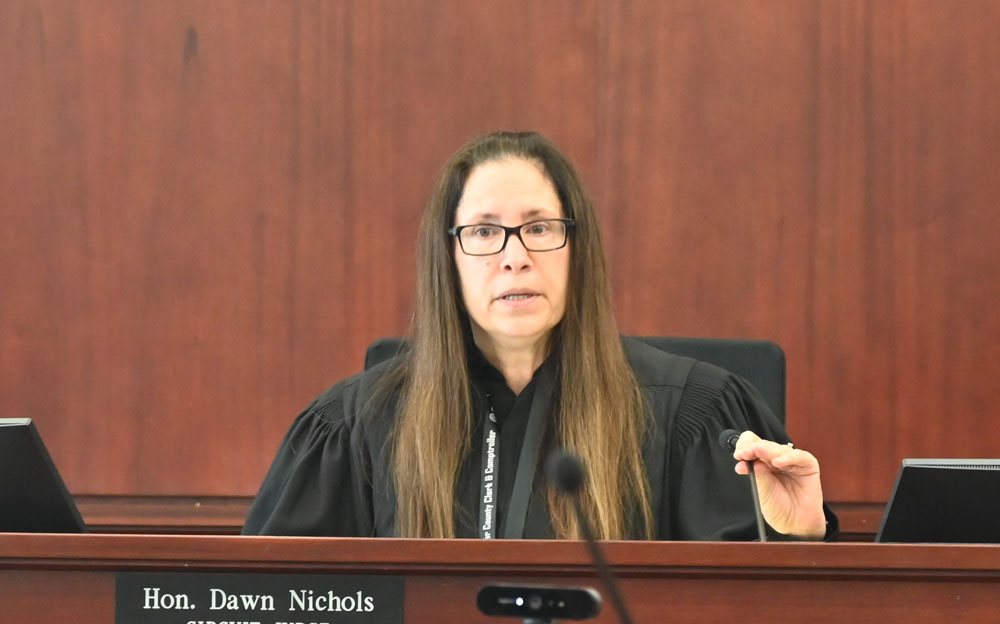
Hon. Dawn Nichols, Circuit Judge in the Seventh Judicial Circuit
The Lost Bookshop, by Evie Woods.
First and foremost, I am a reader, not a writer. I apologize in advance for any syntax or grammatical errors. When asked to read and review a new book, I enjoyed the “task” but was hesitant to write about it. My selection was The Lost Bookshop by Evie Woods. The title was intriguing, and the dedication confirmed I’d made the correct choice: “To all the book lovers.”
 I’ve been a voracious reader for as long as I can remember. I recall my third-grade teacher, Mrs. Mills, taking me to the school library and explaining to the librarian how much I enjoyed reading. She instructed her to grant me access to all the elementary school had to offer. I remember the warmth and smell of that old library to this day. The Lost Bookshop reminds me of that library—warm and inviting to those who love books, with a bit of magic.
The Lost Bookshop presents three characters who are looking for something lost: Martha, who is lost; Opaline, who lost everything; and Henry, who is on a mission to find the lost bookshop. The bookshop appears and disappears as needed. Books are also given or surreptitiously provided to certain individuals via the shop to assist them in finding their way. There is also a mysterious character tied to the bookshop who only appears to certain people. The book is as much about finding what we’re looking for as it is about appreciating the relationships we find and make along the way.
I generally read new books through Hoopla or other electronic media. If I enjoy a book enough to read it again, I buy a hard copy. I’ve already ordered a hard copy of The Lost Bookshop to add to my collection of loved books. I hope you enjoy it as much as I did.
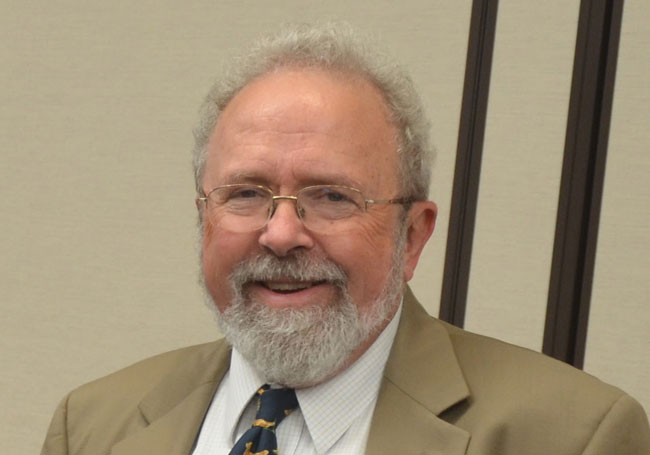
Bob Cuff, Attorney and former Palm Coast Councilman
The Magic Mountain, by Thomas Mann
Seven years in a Davos tuberculosis sanatorium just before the start of World War I didn’t initially strike me as a plausible first choice for a big chunk of my reading this year, but with hours of travel and hours of sitting in real clinics, Thomas Mann’s Magic Mountain turned out to be my favorite book of 2025 and another education in a long line of fiction enlightening a real world that frequently seems too real.
Summarizing a 700-plus-page novel translated from German is a task for ChatGPT or a fool’s errand. In the broadest possible summary, Hans Castorp, a young resident of the “flatlands” (Hamburg), takes a break at the start of his solid, safe career by ascending the Alps to Davos in 1914 to visit a cousin staying at a sanatorium for tuberculosis. The cousin is eager to descend to his longed-for career in the military, while Hans finds his own interest evolving from casual visitor to fascinated observer, to patient, to lover, and to philosophical punching bag and mirror for the lifestyles and debates of his acquaintances on the mountaintop.
 The narrative appears intended as a Bildungsroman—traditionally a young person’s quest for discovery into the larger world. For Hans, his courtesy visit and desire to postpone a career he insists he is looking forward to turn into a narrative of time, life, death, love, and a fair amount of snow, all taking far longer than the originally planned three-week “tour.”
The physical setting is magnificent, but the actual sanatorium, its patients, staff, and daily routines may remind some of an Alpine Hotel California. Descriptions of meal conversations, gossip about the international cast of patients, treatment notes, and the young hero’s longing for the enigmatic Clavdia Chauchat—a fellow patient and true international woman of mystery—may not sound riveting, but Hans’s view of life expands with the length of his stay in spite of the at times almost claustrophobic routines.
If none of this sounds like light reading, I disagree. While the verbal and eventual physical battle for Hans’s soul between his new acquaintances—Ludovico Settembrini, the rationalist and humanist, and Settembrini’s intellectual sparring partner, Professor Naphta (ostensibly a Jesuit teacher but equally a nihilistic Jew whose arguments Settembrini fears will lure Hans to the dark side)—may be heavy going for some, they are all part of the education of Settembrini’s “problem child” (Hans). The narrative is marbled with unexpected humor, characters that defy or define the description of “quirky,” and even action, even if some of the humor runs toward the morbid (deceased patients bobsledded to the foot of the mountain in winter).
After so long a journey, the ending is what impressed me most. Mann actually wrote the novel over nearly a decade, spanning the actual horrors of World War I. The final scenes, following Hans Castorp’s return to his flatland home and military service in the War to End All Wars, are too subtle for a fair description (and spoiler) but will linger with a careful reader. At the end of the mountain journey, I was surprised to find that the education of a callow young problem child would strike me so powerfully so late in my own extended education.
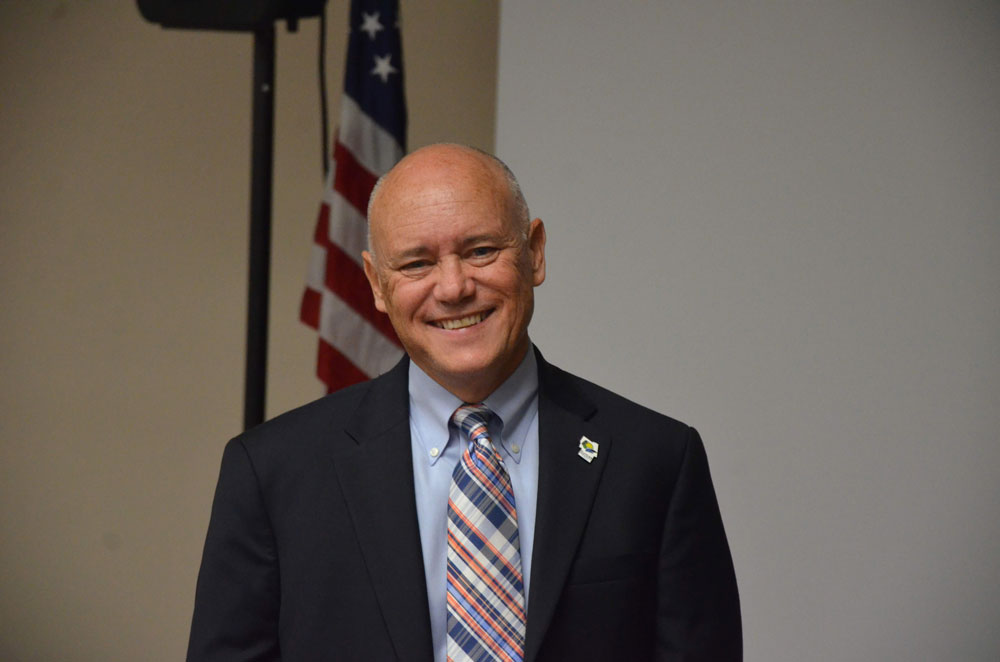
Donald O’Brien, Insurance executive and former County Commissioner
The Silk Roads: A New History of the World, by Peter Frankopan
My reading this year focused on filling in the gaps or expanding my understanding of world history. This has been a departure from my usual preferences for fun fiction, biographies, and business-related topics. One of the most compelling books I read this year was The Silk Roads: A New History of the World, by Peter Frankopan.
 Admittedly, my education and reading about history are–as I suspect is the case with most non-scholars–based upon Europe being the center of historical change and civilizational growth. The central premise of the book is that the connections of East Asia, Central Asia, the region around the Mediterranean, and the lands of the Middle East, comprise the “Silk Roads.” The linkage of these regions formed trade routes that also impacted religions, disease, political power, empire building, and slavery. Frankopan’s argument is that the world has always been formed by connections, and these are not centered solely in Europe but in the lands between China and the Mediterranean.
The book moves from ancient times through the 2000s and explains world history through the connections to the Silk Roads, showing how the initial trade routes for silk, precious metals, and all types of luxury and exotic goods, tied the regions together. This spread the religions of Islam, Christianity, and Buddhism and impacted the growth and destruction of cities, countries, and empires.
Reading this book helped me gain a new perspective on how regions from China to the Middle East have been connected and have impacted world history. I learned of the influence of the Mongol Empire in the 13th century. I expanded my understanding of Islam and its impact on world knowledge and learning. Lastly, I learned how the evils of slavery are present through all time, regions, and cultures.
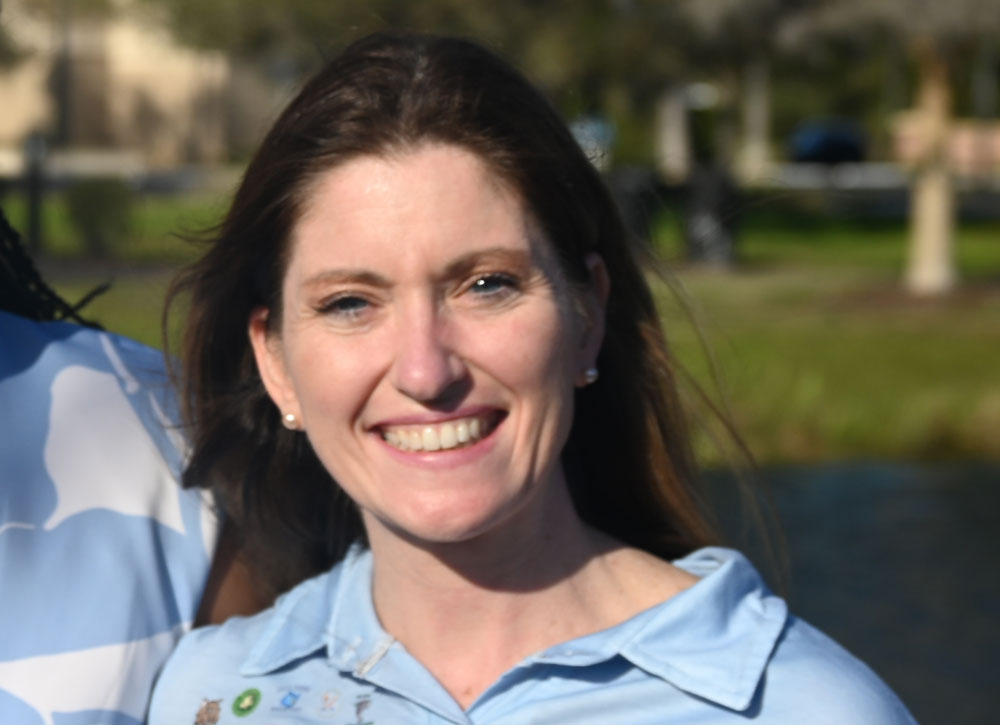
Lauren Ramirez, Business owner and Flagler County School Board member
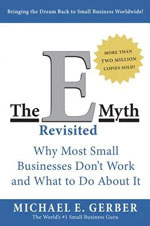
The E-Myth, by Michael E. Gerber
The E-Myth was recommended to me by several small business owners a few years ago. At every conference I attended, the title kept coming up. I finally got around to reading it, and the timing couldn’t have been better. It didn’t just offer business advice; it changed the way I approach my daily life, both at work and at home.
 One of my biggest takeaways was realizing how easy it is to get trapped doing tasks instead of building systems. Whether it’s managing emails, marketing plans, and supplies, or handling grocery shopping and school schedules, the work feels overwhelming without structure. This book articulated what I already knew intuitively but pushed me to finally put it into action: things run better when systems are in place and everyone understands their role within them.
I loved how the book illustrated the real meaning of “it takes a village.” it helped me see that building a business isn’t a solo act—and raising a family definitely isn’t, either. The same mindset applies to both worlds: sustainable success comes from sharing the load, planning, and leaning on your people. By letting systems do the heavy lifting, we can actually live our lives.
My husband read it too, and now we reference it constantly. It has evolved from a business book into a general “life” manual. This was a complete mindset shift for me. It confirmed that there is a more innovative, healthier way to do the work we care about while still showing up for the life we love. I think many readers will connect with that—especially those of us who know that while work, family, and community all matter, we need a better way to carry it all.

Marc Dwyer, Attorney
McDaniels v. State
Cases I enjoy most are typically U.S. Supreme Court opinions because of their far-reaching effect. However, this year, the case that grabbed my attention most was a Florida decision issued by the First District Court of Appeal, McDaniels v. State, the case that struck down Florida’s ban on open carry. It was the decision I enjoyed reading most this year.
 The First District Court of Appeal sits in the same city as Florida’s legislative body. I find it compelling that the court chose to move ahead of lawmakers on a subject that was already under legislative attention.
In the study of jurisprudence, there has been a steady march toward judicial restraint—the concept of the judiciary respecting the separation of powers and waiting for the legislature to correct its own statutory errors. In a break from that trend, the court in this case waded in, modifying the Florida Supreme Court’s own precedent and essentially giving legislators guidance for their upcoming legislative exercise.
I always find cases particularly interesting when they not only thoughtfully cite judicial precedent but also provide historical context and demonstrate the heavy interplay between the branches of government. That’s what moved this case to the top of my list in 2025.
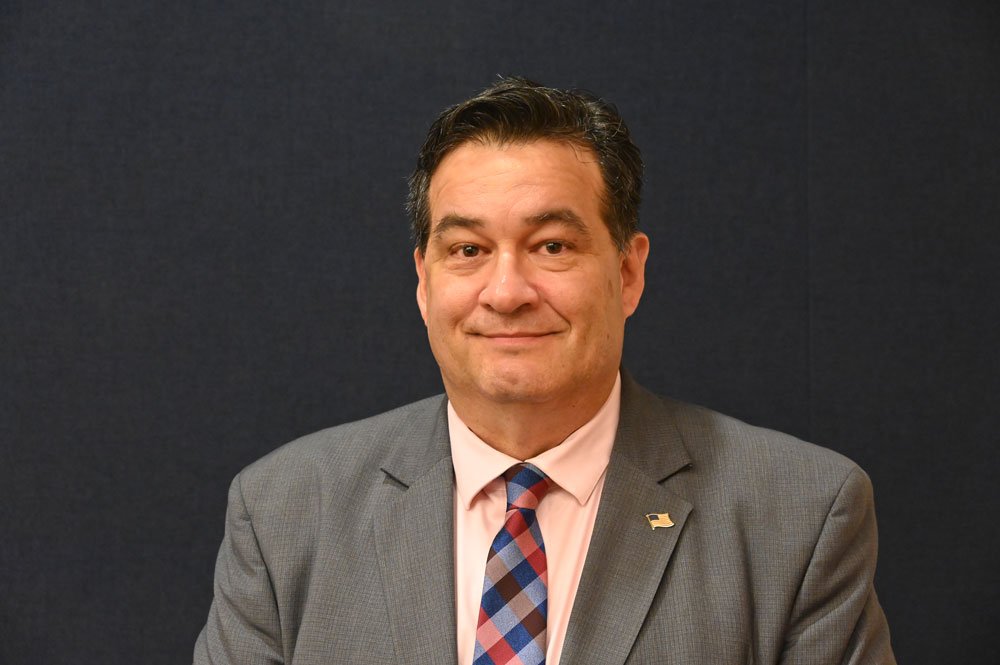
Michael Rodriguez, Flagler County Attorney
The Demon of Unrest, by Erik Larson
Reading is my favorite way to escape the stress of daily life. Most weekends, you can find me in my backyard by the lake, reading a book while my dog naps in the grass. I don’t read novels, though; my interests have always been rooted in the real world—mostly history, politics, and social issues.
Although I love history, my career path was really shaped by my family. My parents were exiles who were forced to leave their home country. To them, college wasn’t just for exploring interesting subjects; it was a necessary step toward a stable job and security. As the first person in my family born in the United States, I felt a responsibility to follow their dream of a stable career. That path led me to law school, and eventually to my current role as County Attorney.
If things had been different, I would have followed my passion for history. I often picture myself as a professor at a small liberal arts college, likely somewhere with all four seasons. I’d be wearing a tweed jacket with elbow patches, teaching classes on American isolationism in the 1930s or the Cold War’s effect on Latin America.
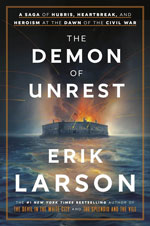 Since I can’t be in the classroom, I satisfy that passion through reading. It is no surprise then that my favorite book of 2025 was Erik Larson’s The Demon of Unrest: A Saga of Hubris, Heartbreak, and Heroism at the Dawn of the Civil War. The book masterfully covers the chaotic five months between Abraham Lincoln’s election in November 1860 and the shelling of Fort Sumter in April 1861.
What made Larson’s book so enjoyable was his reliance on diaries, secret communiqués, slave ledgers, and plantation records. This transported me back to my days as a “budding historian” at the institution formerly known as New College of Florida. There, Dr. Justus Doenecke taught me that the lifeblood of history is the primary source—be it newspaper accounts, government reports, or contemporaneous interviews. Larson’s use of these records brings those turbulent times to life in vivid detail. This felt especially resonant because I recently spent Thanksgiving in Charleston visiting my sister. I stood on the ramparts of Fort Moultrie overlooking Fort Sumter, strolled past the majestic homes on Broad Street, and perused the goods at the Charleston City Market—all exactly as depicted in the book.
By relying on primary sources, Larson transforms a national crisis into an intimate story, retelling the start of the Civil War through the eyes of key players like Major Robert Anderson, the commander of Fort Sumter; Edmund Ruffin, a firebrand agitator traveling the South to provoke secession; and William Seward, Lincoln’s conniving Secretary of State. As someone familiar with Larson’s writing style, I recognize his signature goal: to make the reader forget the ending—the inevitable shelling of Fort Sumter. By focusing on the day-to-day uncertainty of characters who had no idea war was coming, he recreates the anxiety of the era and effectively transfers it to the reader.
Larson portrays Lincoln as a mysterious, distant figure during this time. He depicts a man who had to be sneaked into Washington in disguise, aided by the legendary detective Allan Pinkerton. The plan involved switching railcars in Baltimore in the dead of night—a plot that sounds like something out of a cheap spy movie.
Larson tells this story with such ease that this complicated history reads like a modern thriller. His style highlights the haunting parallels between the 1860s and today: a nation refusing to accept election results, deep political anger, and a genuine fear regarding the peaceful transfer of power.
If I ever do get the chance to wear that tweed jacket and teach a class, The Demon of Unrest would be assigned reading. It reminds us that history isn’t just a list of inevitable events; it is a collection of choices made by people under immense pressure. Larson’s book gave me the escape I was looking for, but it also left me with a serious warning. It shows how easily a country can break apart when we stop listening to one another, and why understanding our past is the only way to protect our future.

Ken Belshe, Principal with Sunbelt Land Management
The Sirens’ Call: How Attention Became The World’s Most Endangered Resource, by Chris Hayes
Earlier this year, when a friend and former colleague sent me The Sirens’ Call: How Attention Became the World’s Most Endangered Resource by Chris Hayes, I was skeptical. As an MSNBC host, Hayes is known for a left-leaning perspective that I haven’t followed closely. For the record, I consider myself a political agnostic who steers clear of extremism on both sides; I believe both major parties helped build this nation while also fueling the divides tearing at our democracy. I offer this preface not because the book is overtly political, but to encourage readers not to avoid Hayes’ work—as I nearly did—due to his reputation. It wasn’t necessarily his views that gave me pause, but a perception of one-sidedness. However, we should embrace works from differing viewpoints, even when skeptical. Out of curiosity and respect for my friend, I dove in on a lazy Sunday afternoon and quickly realized Hayes had tackled a topic deeply relevant to my career and the well-being of my children.
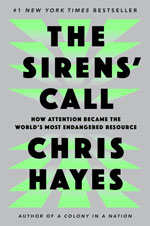 Hayes explores the modern “attention economy” through the Greek myth of the Sirens, whose songs lured sailors to their doom—much like how today’s tech companies, algorithms, and notifications hijack our attention for profit. He argues that we have shifted from an era of information scarcity to one of infinite content, where attention has become a commodified resource. This “attention capitalism” exploits human impulses, leading to distraction, alienation, degraded public discourse, and fragmented personal lives. Drawing on historical analysis, philosophical insights from thinkers like Karl Marx and Nelson Mandela, and his own media experience, Hayes shows how platforms prioritize outrage-fueled content. While the book is more diagnostic than prescriptive—perhaps even too light on solutions—Hayes does suggest paths to reclamation, from personal habits like reading print media to systemic changes like tech regulation.
One particularly intriguing section discusses past threats to our attention, from the printing press to the early internet. While society has repeatedly sounded alarms about new mediums only to adapt, Hayes persuasively argues that current digital threats carry an unprecedented intensity due to their scale and addictive design.
In the end, The Sirens’ Call became my favorite book of the year. It diagnosed the digital overload I see daily and motivated me to reclaim my focus. It is a timely wake-up call that goes beyond simple screen-time warnings, offering a big-picture view of how the fight for our attention is reshaping our inner lives. For anyone feeling scattered by constant distraction, this book provides the clarity needed to push back.
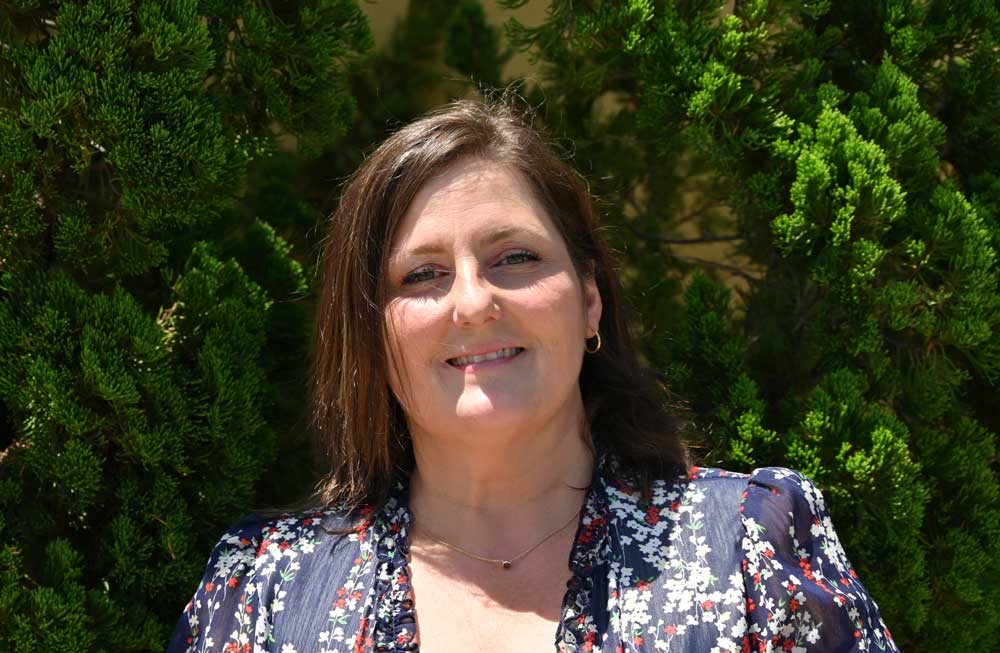
Janie Ruddy, Educator and Flagler County School Board member
The Nightingale by Kristin Hannah
Several of my friends, many still teaching, swap books around in our little circle. This year, The Nightingale by Kristin Hannah came my way. The story takes place in France during the early occupation by Germany during World War II.
I tend to favor historical fiction, not because I am a history buff by any means, but rather because I enjoy the ability of an author to capture the emotion and depiction of life during pivotal times in our global history. Sometimes I dive in to relearn some of that high school history while reading these novels, as the feeling of a first-hand account often sparks renewed interest in historical events.
The Nightingale is a loose tie to historical facts but does provide a captivating account of how two sisters deal with the growing presence of the Nazi occupation. One sister, Isabelle, is and has always been a rebel. She was bounced out of boarding schools for not being able to comply with the norms of the day. Her sister, Vianne, has children and so wishes to follow the rules and endure, believing it is the best way to keep her children safe.
Isabelle joins an underground resistance movement, delivering communications under the cover of a newspaper delivery person. Vianne puts up no resistance and eventually—because her husband is away fighting—she is forced to serve a German officer as he takes over her home as his residence. The opposing reactions to the German occupation rip apart the relationship between the sisters. You can feel that Vianne thinks every additional level of suppression and rule the Nazis place on the French people has to be the last. But of course, it is not.
 Vianne is close friends with Rachel, a Jewish neighbor who also has children. When the SS rounds up Jewish citizens and others in the country town where Vianne resides, she finally can no longer follow rules and commanded orders. She tries to help her friend Rachel and her children reach a “Free Zone.” Before it can be reached, guards begin shooting and chaos breaks out. Rachel begs Vianne to raise her children as her own and keep their Jewish heritage a secret to save them, just as she is packed into a train car off to a concentration camp. Vianne agrees without hesitation. This is the first of a cascade of rebellious acts, including the killing of the German officer occupying her home to help keep her sister from being found out since she was hiding an injured American pilot. Vianne, in collaboration with a local convent, works to find and hide as many Jewish children as possible during the remaining occupation.
The entire set of events told in the story are reflections of the past of an elderly woman in 1995 who has kept her secret—even from her son—of her role in World War II. Her son has never thought of her as having a life before him. We know she is either Vianne or Isabelle, but not until the very end is that twist revealed. I won’t ruin it here either, for those who wish to read the book.
There are two takeaways from this book that made it a standout for me this year. First, our society and even our own family members forget senior citizens led lives and lived through mind-boggling change. We often do not stop to listen or—in this book’s case—ask to hear these tales.
The second is that Vianne and Isabelle both represent two shades of rebellion. Isabelle did not need to personally experience the crimes of the German soldiers. She acted quickly based on her own moral compass. The other is Vianne, who was willing to turn away until the inhumanity came too close to her and the ones she loved. Both are honorable, but if more people acted as Isabelle does earlier on, would Germany have gotten as far and been able to do as much damage during those years?
Then of course any good book leads to introspection. Which sister would I have been? Or would I have lacked the bravery to rebel at all?
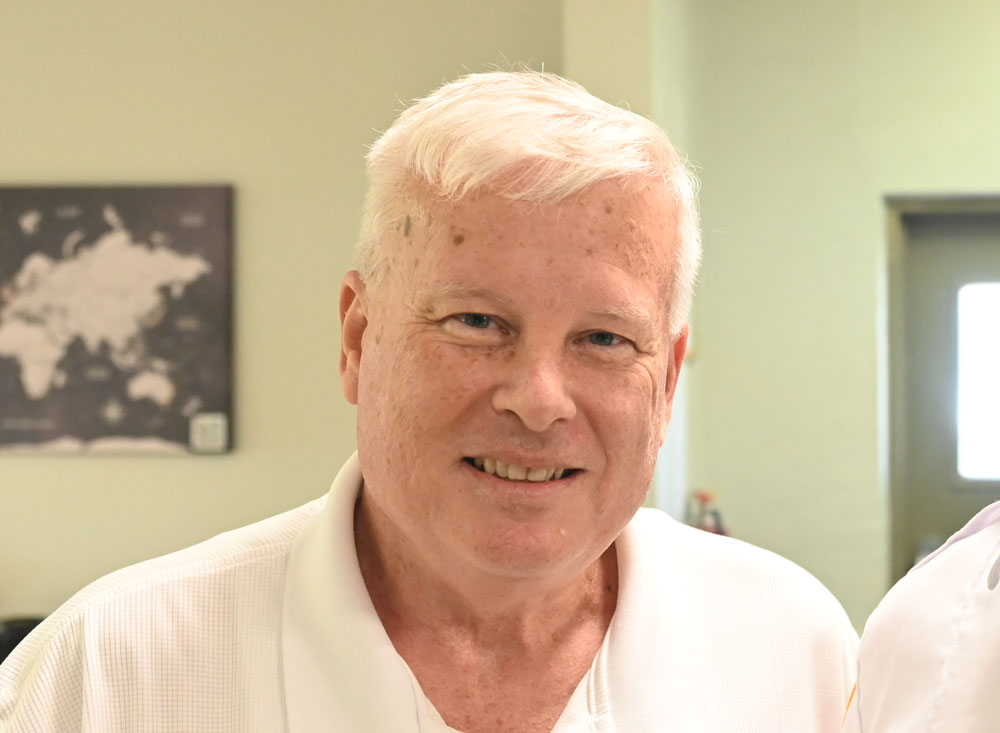
Dale Martin, Flagler Beach City Manager
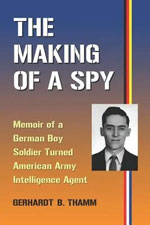
Boy Soldier and The Making of a Spy, by Gerhardt Thamm
 When I began my tenure in Fernandina Beach in 2015, I was introduced to a reporter for the Fernandina Observer, an online newspaper. The reporter, Suanne Thamm, had created the Fernandina Observer with her friend (and now editor) Susan Steger, a former mayor and longtime Fernandina Beach resident. It was through Suanne that I met her husband Gerhardt Thamm—a tall and lanky gentleman who, in his own words, experienced a “roller coaster” life, detailed in two books that he wrote: Boy Soldier and The Making of a Spy. I read his books this summer.
Gerhardt was part of what is referred to as the Greatest Generation, but with a twist: he fought as a German soldier. Gerhardt was an American citizen, born in Detroit in 1929. The Great Depression forced his family to return to a family farm in eastern Germany, where they became trapped by the onset of World War II.
In his first book, Gerhardt described life as a young boy tasked with tending the family farm and listening to old men discuss the events of the war. Early German victories were frequent, but a strong sense of distrust toward Hitler and the Nazis pervaded the conversations. The fortunes of the war eventually changed, and Gerhardt was conscripted to fight against the Russians as the Red Army rolled through Poland and Germany. Since the main thrust of the Red Army was toward Berlin, his region in southeastern Germany was a relatively quiet area with activity typically limited to opposing patrols.
 When the war ended, Gerhardt and his family were forced into slave labor on their own farm by the Russians. After a year, the family was relocated to the British sector of West Germany, and Gerhardt was later reunited with his father in the American sector. In 1948, sponsored by a family friend in Detroit, Gerhardt returned to the United States. After approximately one month in America, Gerhardt joined the U.S. Army.
His Army career saw him return to Germany as an undercover intelligence officer during the Cold War years. After his service in the Army, he continued his work with several defense agencies in Washington, D.C., where he met Suanne, and then eventually migrated to Fernandina Beach.
Gerhardt’s stories were fascinating to read. He used hand tools and horse-drawn wagons on his family farm. Letters took years to find the intended recipient in post-war Germany. Simple things like bread and firewood were cherished. He went from America to Germany as a boy, back to America as a teenager, and back again to Germany as a soldier and spy before finally returning again to America.
Gerhardt Thamm died in May of this year, followed sadly and shortly thereafter by the passing of Suanne. His roller-coaster life, though, is still alive through his books.
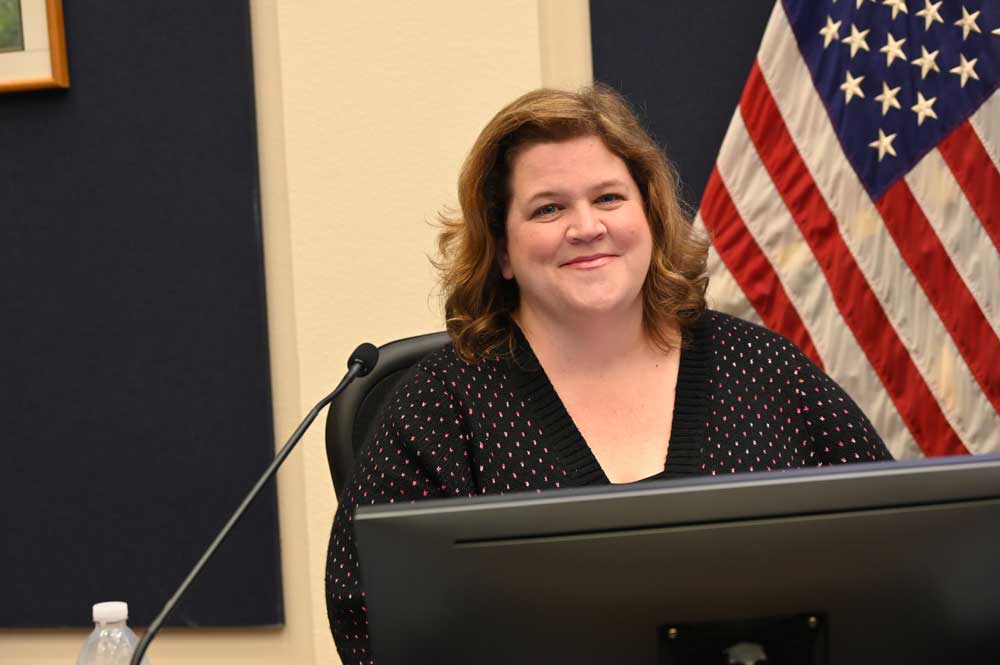
Leann Pennington, Chair of the Flagler County Commission
A Grief Observed, by C.S. Lewis
I was gifted C.S. Lewis’s book, A Grief Observed, after losing my husband to cancer this year. It felt less like reading a book and more like sitting beside someone who understood the exact weight of my sorrow.
Lewis, who wrote the book based on the loss of his spouse to cancer, does not write from a place of reflection. He writes from inside grief while it is still raw and disorienting. His words echoed my own private thoughts: the shock, the anger, the numbness, and the way grief makes ordinary life feel unreal. After my husband’s passing, I experienced the same relentless questioning Lewis describes–not just why this happened, but how my world could continue to function when the person I loved most was gone. Lewis’s honesty made me feel less alone in a season where loneliness has been constant, especially in moments when I feel surrounded by people but still profoundly alone.
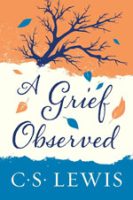 What struck me most was Lewis’s fear that grief might dismantle one’s faith in God rather than strengthen it. I recognized myself in his resentment of easy religious answers and well-meaning comfort that feels hollow when you’ve watched someone you love die. Losing my husband did not feel noble or spiritually productive. It felt cruel and deeply personal. Lewis gives validation to that uncomfortable truth. He captures how grief quietly alters faith, prayer, and even the way I remember the life I shared with my husband. Love, once a source of joy, becomes inseparable from pain. His writing allowed me to admit that loving deeply meant opening myself to a loss I could never have been prepared for.
In the end, A Grief Observed did not offer healing or resolution, and that is precisely why it became a source of comfort. C. S. Lewis does not arrive at conclusions about God or explain why He does not protect us from pain. Instead, Lewis accepts that he may never have those answers, and he keeps going anyway. That quiet perseverance mirrored my own experience this year: learning to wake up, keep going, and live within a world reshaped by loss. The book reminded me that grief isn’t a problem to solve. It is my love for my husband continuing in his absence.
The late Christian apologist Ravi Zacharias once offered an argument for why God allows suffering. After reading A Grief Observed, I find myself questioning not whether the argument is true, but whether it is sufficient. I wonder if C. S. Lewis would have accepted it, or simply acknowledged that some truths do not bring comfort when love has been lost.
From C.S. Lewis’s book: “Where there is freedom, there is the possibility of love. And where there is love, there is always the risk of pain. Love cannot exist without vulnerability. If we are free to love, we are also free to wound, to fail, and to suffer loss. Love, then, is the highest ethic, but it requires free will. And free will makes room for sin, brokenness, and sorrow. Where that brokenness exists, there is the need for a Savior. And where there is a Savior, there is hope, not that pain will be avoided, but that it can be redeemed.
“Within the Judeo-Christian story, this is the arc: from love, to freedom, to the Fall, and finally to redemption. It is not a promise that suffering will be spared, but that suffering will not be wasted. The gospel does not deny pain; it enters it. And it is there, within love freely given and freely lost, that redemption and restoration become possible.”
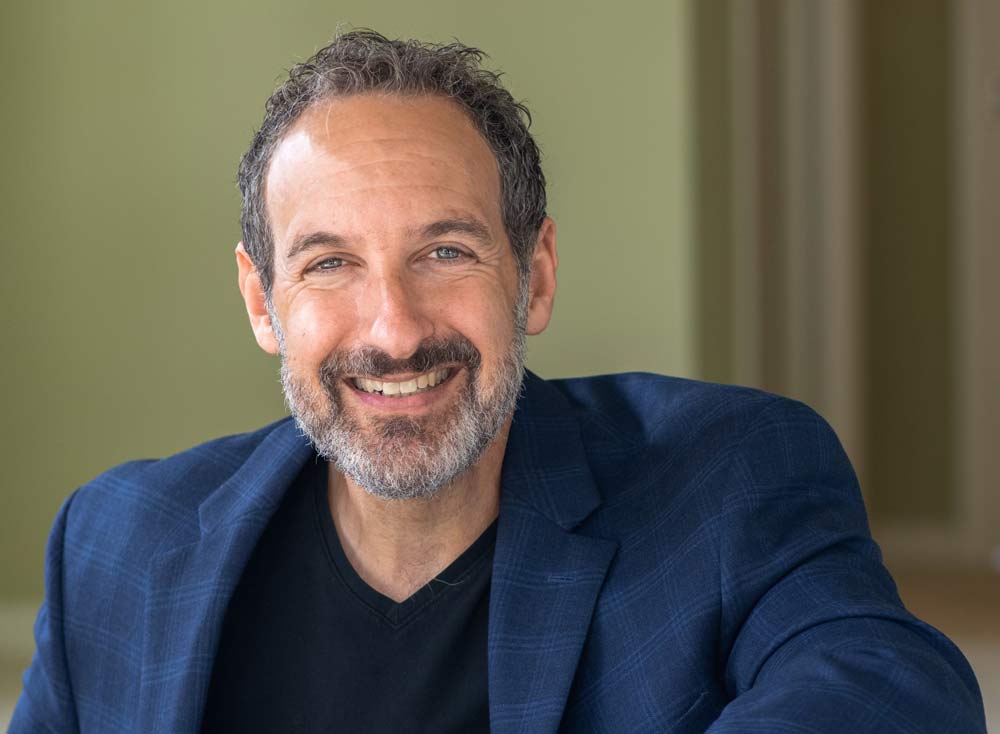
Jay Scherr, Business Coach and Consultant, Podcast and Radio Show Host, President of Flagler Tiger Bay Club
Detach, by Bob Rosen
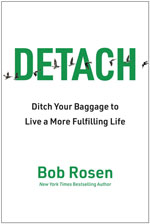 Choosing my favorite book of the year is never easy, but Detach by Dr. Bob Rosen stood out immediately. At a time when many of us feel pulled in different directions, this book offers a grounded and compassionate guide to understanding the attachments that quietly limit our potential and keep us from living more meaningful lives.
What resonated most with me is how practical and deeply human the book is. Dr. Rosen helps readers understand why we cling to things like control, success, perfection, or even our idea of the future, and more importantly, how to loosen those attachments. His approach encourages honest reflection and provides guidance you can apply right away.
For me, Detach brought clarity. It pushed me to examine the stories I have been carrying and reminded me that real freedom comes from letting go of what no longer serves us.
Whether you are a leader, a parent, a partner, or someone on a personal growth journey, this book offers a path to greater emotional well-being and fulfillment.

Pierre Tristam, Reporter
Tout Simenon
My choice this year is not a single book but a few hundred–the hundreds written by Georges Simenon, the Belgian writer whose books were on every shelf of every house I knew in the pre-war bourgeois Beirut of the 1970s. I resisted reading him until this year, thinking I couldn’t possibly like what I’d always associated with pulpish detective novels. Goes to show how stupid and damaging our childhood prejudices can be.
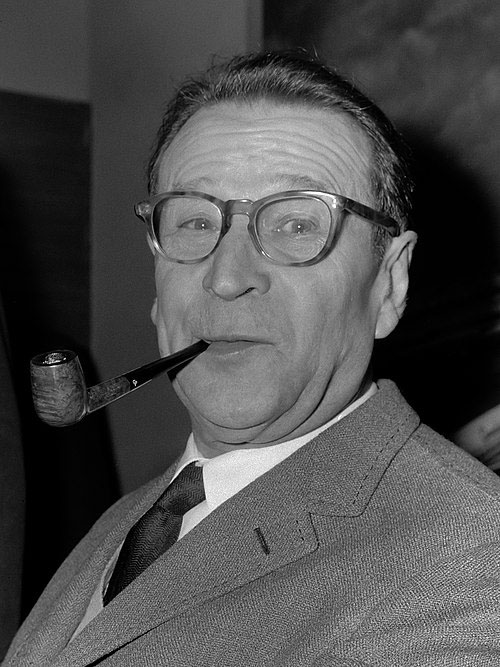
Last February I picked up Simenon’s Maigret in New York, thinking I’d give him a try by way of treating my terminal nostalgia for the city of my teens. I was hooked by the hypnotic storytelling, the empathy Maigret feels, in spite of himself, for ordinary people caught in circumstances beyond their control: “In short, this meant that the characters in the drama had, for him, ceased to be mere entities, or pawns, or puppets, and had become real human beings. And Maigret put himself in their shoes. He relentlessly strove to understand their perspective. Wasn’t he capable of thinking, experiencing, and suffering what one of his fellow men had thought, experienced, and suffered?” (I try to carry that line with me every time I report from Judge Nichols’s courtroom.)
I could feel Manhattan in my bones again even if Simenon misfired a little: “It was difficult to imagine more human lives crammed into such a small space, and yet there was no sense of warmth; instead, one felt a profound sense of irremediable isolation, more so than anywhere else.” Simenon’s innumerable settings, reflecting his own travels, are every book’s subplot, an understated treasure of unintended travel literature.
I ended up reading 13 of Simenon’s books this year, a couple of them twice over. At 27 Simenon was already more than half as prolific as Cotton Mather, the grim witch-hunting American theologian and propagandist of Puritanism reputed for his nearly 400 books and pamphlets, all of them unreadable but for incubating McCarthyites and Federalist Society judges. After reading a few Simenon novels you might detect Cottony strands in some of the surlier characters: Simenon knew his United States. He lived in New York, Florida, Arizona, California and New England for 10 years until McCarthyism so disgusted him that he abandoned his plans to take American citizenship and moved to the French Riviera. Well, that, and the fear of losing one of his fresher wives. He was a compulsively faithless man who made a harem of every subdivision he lived in.
Simenon’s witchily prolific output never ceased to be addictive even after he stopped writing fiction in 1972 and died in 1989, a 17-year span he spent dictating unread and unreadable Mather-like memoirs. He’s reputed to have sold 600 million books in his lifetime. I can now see why. We never tire (and once I discovered Simenon, it was on to Chandler, Hammett, Caspary, MacDonald). People like Lonesome Harry, the motel ghost Steinbeck mythologized in Travels with Charley, would be immensely more grateful and less prone to resorting to third-rate porn in lonely hours if Gideons left copies of Simenon in motel drawers.
























Allison Elledge says
Nice list with lots of variation. Hayes’s book was on my list to read and I’ll be adding a few others based on these recommendations.
Pierre Tristam says
Allison! A big fail on my part that you weren’t part of this year’s readers. You’re on the list for 2026.
Allison Elledge says
I look forward to it! As of now, I’m reading Here Beside the Rising Tide: Jerry Garcia, The Grateful Dead, and an American Awakening (2025), by Jim Newton. As a Grateful Dead fan and a fairly decent historian myself, I was looking for something with good historical context, and found it. Newton takes a broad approach to the time period (I’m still in the 1960s era), while not skipping the details of the be-ins, sit-ins, Beats and Beatniks, Acid Tests, and all the rest. The Dead are the thread to tie it all together.
Palm Coast Citizen says
I love all of this.
Pogo says
You said it all; happy new year.
And support your public library — and its staff.
Enter here
https://www.hoopladigital.com/
Paul Larkin says
Thank you Pierre for that illuminating look at some good books through the eyes of some of our public servants…and nice to see the human side of those same people who give nobly of themselves for the benefit of their communities…
John Yankovich says
Another good nonfiction book is “Last Train to Paradise”. By Les Sandiford. Local history about Henry Flagler building the first railroad and development of Florida in late 1900’s and early 2000’s
Pogo says
@Explains a lot
As stated, “Florida Novels”
https://tracyupchurch.com/florida-novels
Robert Cuff says
An excellent choice for anyone interested in Florida history and the Keys.
Trumpstein files says
Republicans only ban books, spread hate, steal money, and rape kids. If this is your stuff you are a Republican! Fake Christian pedo protectors.