



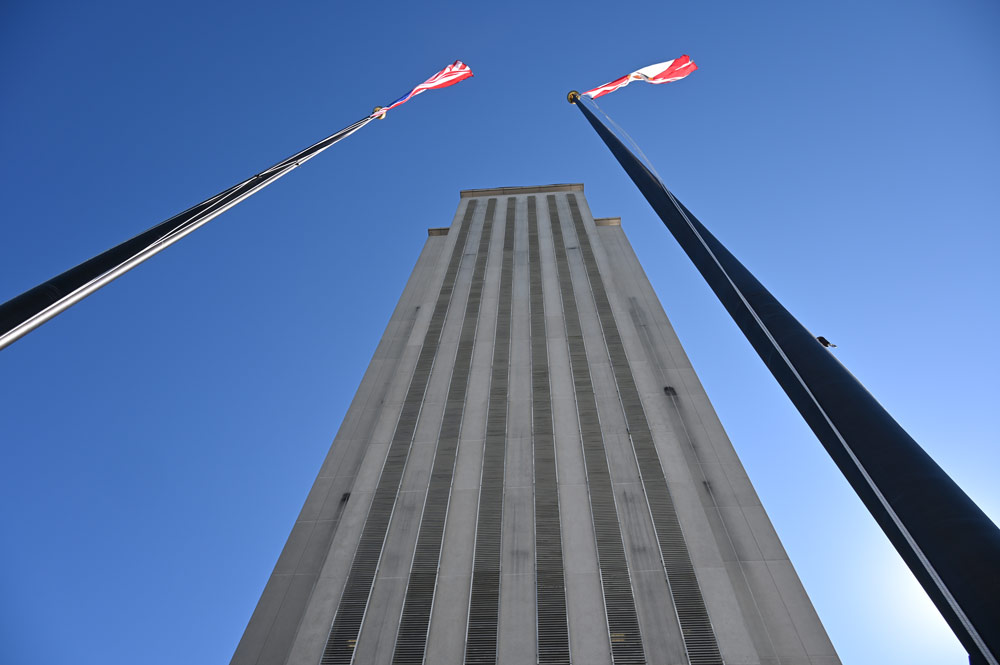
As the Florida Senate continues to ponder an approach to lowering property taxes, House committees on Thursday advanced two tax-cut proposals that could go before voters.
The Republican-dominated House Ways & Means Committee voted mostly along party lines to approve a proposed constitutional amendment (HJR 203) that, if approved by 60 percent of voters in November, would phase out non-school homestead property taxes over the next decade. The proposal drew objections from Democrats and local-government officials concerned that homestead property-tax cuts could lead to decreasing services and shifting the tax burden to renters and businesses.
Rep. Monique Miller, a Palm Bay Republican who is sponsoring the proposal, said it is intended to give local governments time to adjust to the eventual elimination of non-school property taxes. It would be phased in by gradually raising the homestead tax exemption.
“I believe that this is going to give everybody an opportunity to live within their means, and I think they’ll be able to deliver their core services without any problems given the change in budget,” Miller said.
Gov. Ron DeSantis has made a priority of putting a property-tax cut proposal on the November ballot. Miller, echoing comments by DeSantis and state Chief Financial Officer Blaise Ingoglia about spending, said local governments have used residential property taxes as an “ATM” the past few years.
But opponents pointed to the potentially billions of dollars in lost revenue for local governments and such things as special districts and water management districts.
Manatee County Commissioner George Kruze said Miller’s proposal is “conditioning our citizens to accept a lower quality of life over time.”
Rep. Dianne Hart-Lowman, D-Tampa, said property owners are more concerned about home-insurance costs than property taxes.
Also Thursday, the House State Affairs Committee approved a proposal (HJR 213) that would limit increases in taxable values for homesteaded property under the “Save Our Homes” cap to 3 percent over three years. Currently, under the cap, taxable values can increase 3 percent a year.
The measure also would limit increases in the taxable values of non-homesteaded property to 15 percent over three years, rather than the current 10 percent a year.
Sponsor Griff Griffitts, R-Panama City Beach, said the proposal could “slow some major projects,” but added, “I don’t believe it will have a disruption in services.”
“This is not a hatchet job for property taxes,” Griffitts said. “This is a very balanced and common-sense approach. It allows cities and counties to look over a three-year period and have some predictability. … It doesn’t affect public safety. So those primary services will remain in place.”
The proposals approved Thursday were among eight released by the House in October. But Miller said the fate of the House proposals are in “a holding pattern” as the Senate has not released property-tax plans.
“We really need to have a two-sided discussion before we decide how to move forward,” Miller said.
Senate President Ben Albritton, R-Wauchula, told reporters Thursday that he continues to get input, but he’s not certain what the Senate position will be or if the issue will need to be addressed in a special legislative session, as DeSantis has suggested.
“What matters more than the timing is getting it right,” Albritton said.
“The time that we’re taking to do the measuring, that you’ve all heard me talk about, is yielding good results,” Albritton added. “At some point, I think sooner than later, we’re going to have that public conversation about where the Senate is.”
DeSantis has called for voters to consider a single proposed constitutional amendment on property taxes. While the House has released multiple proposals, House Speaker Daniel Perez, R-Miami, said last week he expects the House to put forward a single amendment.
Miller’s proposal and a proposal that would increase the homestead exemption for residents who have property insurance (HJR 209) are procedurally ready to go to the full House. Griffitts’ proposal needs to go to the Ways & Means Committee.
–Jim Turner, News Service of Florida




























Using Common Sense says
We must live within our means, local government needs to as well. Too many bloated salaries, too many assistants, co-managers, deputy managers, and paper pushers, too many city and county employees receiving outrageous benefit packages and insane retirement programs not seen anywhere else. Tighten your belts, stop the wasteful spending, end the nepotism and quid pro quo. Our eyes have been opened, the curtain pulled back, and we are fed up with paying more and getting less. We demand fiscal responsibility, government that works for US, not those donating big bucks to campaigns to buy a vote for whatever makes them the most profit, no matter what the cost to quality of life, property values, and safety, health, and welfare of the residents of Palm Coast and Flagler County. I know of a certain few overly compensated city and county and employees that, when fired, will not only save us millions, but also allow for a safer environment, better path forward, and a brighter future for our children and grandchildren.
Local Observer says
With all taxes gone, not only will they be let go, but they won’t be replaced. We’ll also let go many directors, cut all the programs, and parks and library and code enforcement, and we will likely still have to have increased fees to pay for what little is left–namely, the Sherriff’s work, which can’t be cut.
Be careful what you wish for. I think these property tax cuts, (the main proposal for homestead) is a MUCH deeper cut than what you see as necessary. Where you see a wound that needs to heal, we’re talking amputation of all the limbs.
BIG Neighbor says
Please, developers and planners, when it comes to affordability …do is all a single; don’t propose anything new without a sustainment lifecycle plan! Political will and winds may come and go, but costs mount to the next generation when policy makers play fiscal games with budgets for “their “ home team.
Jim says
No one is against cutting taxes! But other than generalizations about overpaid county and local government employees needing to be fired I’ve yet to see any concrete direction as to how the lost revenue will be made up as taxes go down. I certainly agree that all levels of government are not efficient and could do better. I’m not holding my breath waiting on that to happen. We vote in new elected representatives every few years, typically because we’re not happy with what the current ones have done. Then they get a few years to make it better or worse. Changing a government bureaucracy doesn’t usually happen overnight.
We’re going to have to have a viable path to pay for infrastructure improvements and maintenance as part of this plan.
Lastly, everyone needs to be prepared to accept that the government is going to say “no” to all the pet projects that citizens want for a better quality of life because there is no money for that.
Callmeishmael says
It may take a while, but eliminating property taxes may be the first step in Florida establishing a state income tax. Increasing the sales tax and relying on tourism revenue and population growth combined won’t be an adequate solution to the state’s fiscal needs.
The entrenched Florida Legislature will make the citizens they supposedly represent squirm for a few years – through so-called austerity policies – to soften us up to the idea that a state income tax is the only way to make their lives better.
Give it 10 years.
Skibum says
Sounds a lot like biting off your nose to spite your face if you support gutting local property taxes that support all that local jurisdictions are required to provide to citizens. The state cares not one single bit about the loss of local property taxes. They can legislate and mandate cuts that don’t cut one penny out of their own budget, but if any property taxes were going to the state treasury in Tallahassee, OH BOY, they would be singing a whole different tune!!!
Are we approaching the day here in Flori-DUH when you call 911 to report a fire, or need law enforcement to respond and the call taker asks you which credit card you would like to put that on before they process your call for service?