



By Andrew Guthrie Ferguson
Police are getting a boost from artificial intelligence, with algorithms now able to draft police reports in minutes. The technology promises to make police reports more accurate and comprehensive, as well as save officers time.
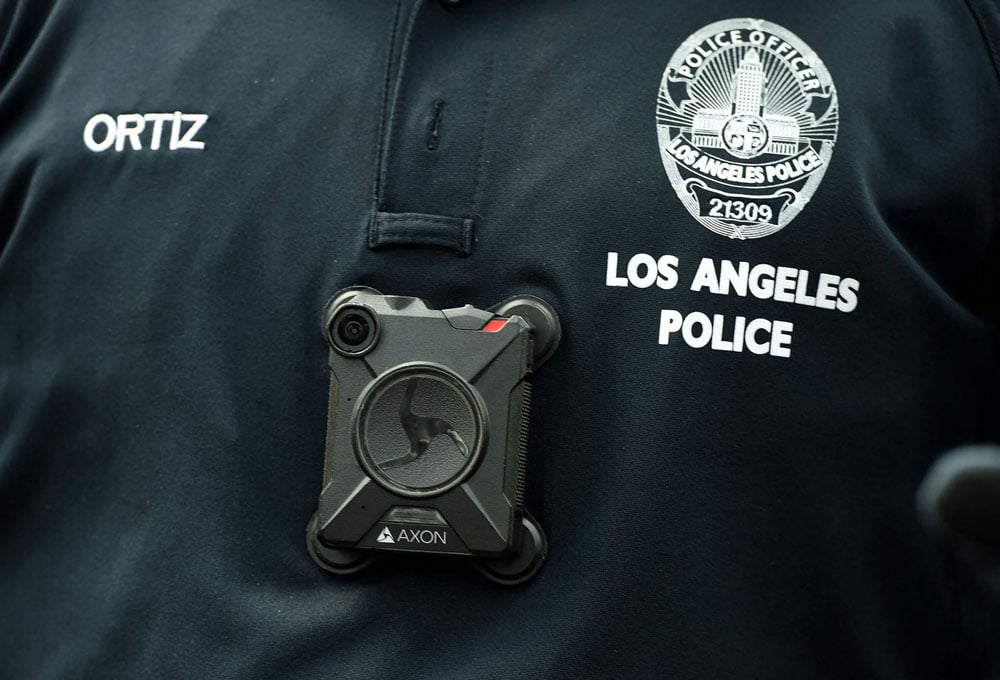
The idea is simple: Take the audio transcript from a body camera worn by a police officer and use the predictive text capabilities of large language models to write a formal police report that could become the basis of a criminal prosecution. Mirroring other fields that have allowed ChatGPT-like systems to write on behalf of people, police can now get an AI assist to automate much dreaded paperwork.
The catch is that instead of writing the first draft of your college English paper, this document can determine someone’s liberty in court. An error, omission or hallucination can risk the integrity of a prosecution or, worse, justify a false arrest. While police officers must sign off on the final version, the bulk of the text, structure and formatting is AI-generated.
Who – or what – wrote it
Up until October 2025, only Utah had required that police even admit they were using an AI assistant to draft their reports. On Oct. 10, that changed when California became the second state to require transparent notice that AI was used to draft a police report.
Governor Gavin Newsom signed SB 524 into law, requiring all AI-assisted police reports to be marked as being written with the help of AI. The law also requires law enforcement agencies to maintain an audit trail that identifies the person who used AI to create a report and any video and audio footage used in creating the report. It also requires agencies to retain the first draft created with AI for as long as the official report is retained, and prohibits a draft created with AI from constituting an officer’s official statement.
The law is a significant milestone in the regulation of AI in policing, but its passage also signifies that AI is going to become a major part of the criminal justice system.
If you are sitting behind bars based on a police report, you might have some questions. The first question that Utah and California now answer is “Did AI write this?” Basic transparency that an algorithm helped write an arrest report might seem the minimum a state could do before locking someone up. And, even though leading police technology companies like Axon recommend such disclaimers be included in their reports, they are not required.
Police departments in Lafayette, Indiana and Fort Collins, Colorado, were intentionally turning off the transparency defaults on the AI report generators, according to an investigative news report. Similarly, police chiefs using Axon’s Draft One products did not even know which reports were drafted by AI and which were not because the officers were just cutting and pasting the AI narrative into reports they indicated they wrote themselves. The practice bypassed all AI disclaimers and audit trails.
Many questions
Transparency is only the first step. Understanding the risks of relying on AI for police reports is the second.
Technological questions arise about how the AI models were trained and the possible biases baked into a reliance on past police reports. Transcription questions arise about errors, omissions and mistranslations because police stops take place in chaotic, loud and frequently emotional contexts amid a host of languages.
Finally, trial questions arise about how an attorney is supposed to cross-examine an AI-generated document, or whether the audit logs need to be retained for expert analysis or turned over to the defense.
Risks and consequences
The significance of the California law is not simply that the public needs to be aware of AI risks, but that California is embracing AI risk in policing. I believe it’s likely that people will lose their liberty based on a document that was largely generated by AI and without the hard questions satisfactorily answered.
Worse, in a criminal justice system that relies on plea bargaining for more than 95% of cases and is overwhelmingly dominated by misdemeanor offenses, there may never be a chance to check whether the AI report accurately captured the scene. In fact, in many of those lower-level cases, the police report will be the basis of charging decisions, pretrial detention, motions, plea bargains, sentencing and even probation revocations.
I believe that a criminal legal system that relies so heavily on police reports has a responsibility to ensure that police departments are embracing not just transparency but justice. At a minimum, this means more states following Utah and California to pass laws regulating the technology, and police departments following the best practices recommended by the technology companies.
But even that may not be enough without critical assessments by courts, legal experts and defense lawyers. The future of AI policing is just starting, but the risks are already here.

Andrew Guthrie Ferguson is Professor of Law at George Washington University.




























Joe D says
Wow! Enlightening article…and VERY FRIGHTENING! I know that AI can be very helpful in filling out the REPETITIVE information on a packet of forms ( name, age, address, ? Past medical diagnoses on an MD visit packet?). But my FIRST experience with an AI (content enhanced) typing a simple letter was frustrating. Somehow I accidentally switched on the AI “assistant” in my new Microsoft Office software ( the software suite you used to pay $350-400 for once and that was it until you REPLACED it 8-10 years later…and now you “license” it’s use for 1 year and then get gouged by MICROSOFT every year for $149 FOREVER…but that’s a topic for another comment). Unfortunately, I neither needed the “assistant”…nor did I know how (at the time) how to switch it OFF! It was a fairly technical letter about a prior pension I was eligible for in a prior job, but had delayed applying for, and was challenging their calculations. To my shock, the AI was IMPROVING, my letter…with wording and sentence structure I DID NOT want to use ( I used to be the Nursing administrator assigned to rewrite policy statement changes at several prior jobs, because of my written language skills…thank you SISTER MARY ELIZABETH)…so I wanted the letter to be worded in a particular way. It had nothing to do with SPELL CHECK or GRAMMAR, it was improving my STYLE! I wanted the wording to be specific…and AI kept editing it! I would change the AI sections and it would edit it AGAIN. I FINALLY figured out how to switch the AI off.
Part of my job was to review Medical notes to request additional inpatient days ( or not) for my group of patients in updating insurance authorization staff ( usually another NURSE at the first level, then a DOCTOR, at a second level if needed). In the “olden days,” these were mostly doctor recorded dictated reports that medical typists transcribed to daily notes and reports. If the typist couldn’t understand what the physician said, or how to spell a name of a diagnosis, they would put “**” before and after the word, to let the doctor know they had to correct it later. The hospital physician would then CORRECT it and sign off. With AI, They are using the software to INTERPRET what the program “thinks” the person (doctor, nurse. police officer, etc) said. In an IDEAL world, a police officer’s AI recorded report would be 100% correct, but in the REAL world (traffic sounds, sirens, language translation, low volume audio), the AI doesn’t always get it RIGHT! If you have ever used the SPEECH to TEXT feature on your cell phone when sending a text and saw what the phone “thought” you said, you know what I mean.
Now imagine a (very) hurried, and frequently overworked police officer, trying to get the (large) STACK of reports completed…reviewing the AI generated report of what AI “thinks” was said might get overlooked, and simply “signed off” without a DETAILED review. Now THAT’S part of any charging or court documents!
I’m not against using AI for repetitive tasks, but I DEFINITELY think the disclaimer that the form was completed using AI assistance, AND a copy of the ORIGINAL AUDIO RECORDING be kept for comparison, should be a legal REQUIREMENT …not able to be “switched off.” These processes affect people’s lives FOREVER! SMALL DETAILS are important in a final legal disposition.
SPEED and lessening WORKLOAD, can’t be the priority over “getting it RIGHT.”
Laurel says
This is so wrong, and should be illegal. If paperwork is such a problem, what’s wrong with the current technology of transcription? Use the direct wording of the officers. If they have a problem with diction, then send them back to school.
Sherry says
@ Laurel. . . couldn’t agree more! And, this is just the beginning of “machines CONTROLLING Humans”!!!
My heart breaks for the future generations who will never know the freedoms we had . . . which are now “in the past’!
Allison Elledge says
I work regularly with police reports, and did for years prior to AI use. Humans make many errors, frustratingly so. I have also used AI programs to transcribe body cam and police car cam audio and video files and it does a pretty phenomenal job. But I do take the time to listen and check the transcription against the audio/video when it’s done to be sure it’s accurate. It’s still saving me many hours. And the transcription technology has been around for many years. The sky isn’t falling.
Sherry says
@Allison. . . the critically essential step in the process your described is “YOU”. An experienced employee who “takes the time to listen and check the transcription against the audio/video. . . to make sure it’s accurate”. Human lives depend on that accuracy!
Now, imagine “YOU” (or someone like you) were no longer part of that process, or that a different person who was not as experienced/professional/trustworthy simply left it all up to AI. Now imagine that AI software was programmed by a person whose agenda was to secretly “punish” people of color, or “white people”, or anyone under age 35. . . whatever. With no human overseeing AI, it could be easily “weaponized” against humans.
No, the “sky may not be falling” YET, but now is the time we need to step up and create some powerful safeguards against the future abuse of AI. “An ounce of prevention with worth a pound of cure”!! But, only “IF” that cure is possible at all!
Programmers have told me that AI could be made capable of “protecting” itself to the point that humans cannot shut it off, or disable/change it! Really “think” about that, everyone !
Laurel says
Allison Elledge: No, the sky isn’t falling. However, just the simple use of spellcheck can totally change the meaning of an intended sentence. AI assumes a certain meaning and *corrects* the wording to fit. This is something that shouldn’t be admissible in the justice system, in a court of law.
Personally, I’m not terribly concerned with AI. We go through different phases, and adjust. We have adjusted from the iron age, to the industrial age, the information age, and now, the AI age. Old positions are discarded, and new ones are created. But, we must watch for misinterpretations, whether intentional or not.
One concern I do have, is that it may allow for people to depend on it for communication, allowing for shrinkage of the already threatened brain. People have be dumbed down, in this country, for some time now. Go on YouTube and look for young adults who cannot answer simple, basic questions. It’s rather shocking. So now what, let the AI think for them? Our next adjustment shouldn’t be becoming dumber.
Laurel says
…people have been dumbed down…
Skibum says
I was initially shocked when I read this article, as I had no idea that AI would intrude into the writing of police reports. I think it is a terrible idea. What’s next… taking eye witness statements and running them through an AI model too and spiffing them up to read like someone with a literature degree authored it?
Laurel says
Perfect, Skibum! New lawsuits to come. Think about this: We are allowed to confront our accusers. Do we stand in front of a computer? Did the computer eye witness anything? Did the computer confront the alleged suspect?
No, this is not the place for this system. Stick to transcribing, or writing.
Joe D says
I’m not 100% AGAINST using AI to ASSIST in saving repetitive paperwork ( as a retired Certified Nurse Case Manager and Nursing Division Chief I understand “PAPERWORK OVERLOAD.” But I do think that someone reading a report (Doctor/Nurse/Police Officer/ Lawyer/Judge), needs to KNOW that AI assisted in the creation of the paperwork, and the ORIGINAL SOURCE (audio recording/ dictation, etc) be kept for later comparison to be sure AI got it RIGHT! For law enforcement (or even MEDICAL TRANSLATION) to be able to “switch off” the disclaimer that AI was used in the preparation of the reports, is a DANGEROUS And SLIPPERY SLOPE! In both situations ( and I’m sure many people could imagine other situations), it could be LIFE ALTERING, if an AI altered version of the actual account was not identified, and an error “caught.”