



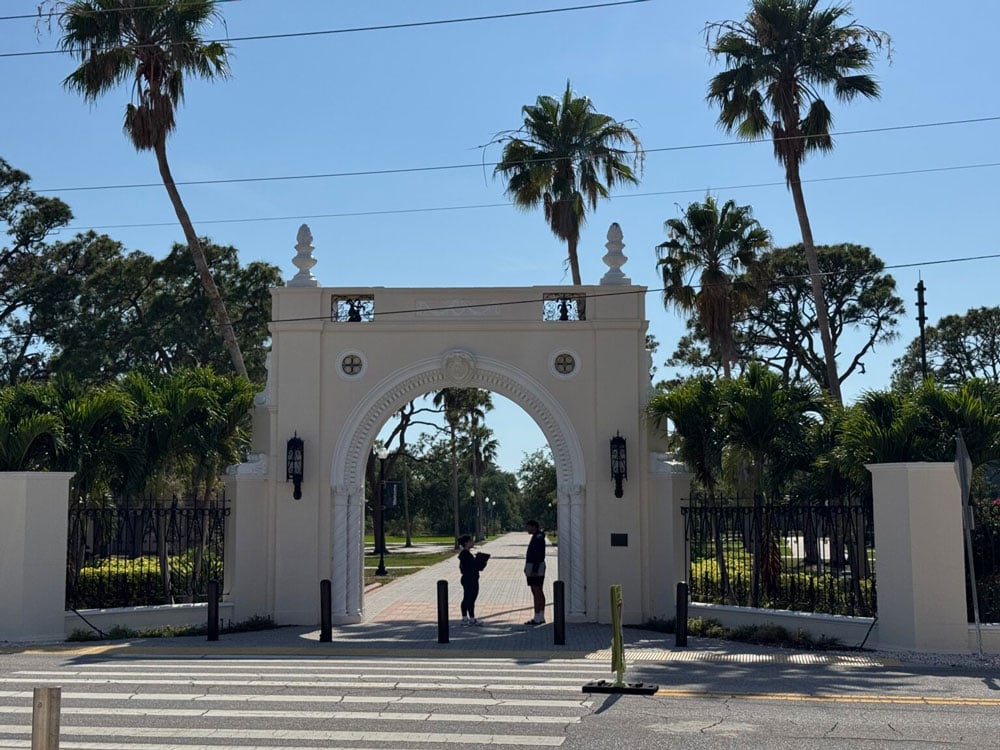
This year’s budget negotiations will entail negotiating the future of University of South Florida’s Sarasota-Manatee campus.
The Florida House Higher Education Budget Subcommittee Monday approved transferring the campus to New College of Florida on a party line vote, in line with Gov. Ron DeSantis’ budget proposal.
However, the Senate is not on the same page, leaving such a swap completely out of its initial budget documents. Since Senate President Ben Albritton and House Speaker Daniel Perez took their posts in late 2024, it has more often been the other way around, that the House and DeSantis are at odds.
“The rationale behind this policy is that USF’s primary campus is located in Tampa while New College is located in Sarasota, so transferring what is now currently the Sarasota-Manatee facilities to the institution that is already headquartered in Sarasota aligns governance with geographic proximity. It allows for more direct oversight, strategic planning, and responsiveness to regional needs as New College seeks,” House Higher Education Budget Subcommittee Chair Demi Busatta, R-Coral Gables, said.
Democrats voted against the bill, PCB HEB 26-01, in its first committee stop. Before it was presented, House Democratic Leader Fentrice Driskell said the prospect of the transfer “reeks of grift.”
“I know it probably comes from political negotiations and so forth because, from a clearly fiscal perspective, it is not a good policy proposal,” Rep. Anna Eskamani, a Democrat from Orlando, said.
Eskamani pointed out that the USF-SM student population is made up of more nontraditional students and the programs that operate out of that location are designed to fit workforce needs of that area such as nursing and elementary education.
Busatta said this move would be fiscally responsible and that none of the USF programs would be eliminated
“Current USF students would still be USF students, and current New College students would still be New College students, so the tuition, fees, all of that, would stay the same because we’re not transferring the student to USF from New College, we’re just transferring the facility,” Busatta said.
The campuses are just blocks away from each other on Sarasota Bay, near the Sarasota Bradenton International Airport.
 The House proposed budget includes, if it and this bill were to pass, nearly $22.5 million to be shifted from from USF’s budget to New College’s. The transfer would have to be completed by Oct. 30 and would include transfer of debt for facilities.
New College, too, would have to pay USF-SM $166,617 per month until the transfer goes through in October.
“In plain English, we are considering putting a massive and impossible weight on an institution that doesn’t generate recurring revenue to carry it, then calling it reform. If this were a private transaction, the board would be sued for breach of duty before the ink dried,” Rep. Daryl Campbell, a Democrat from Fort Lauderdale, said.
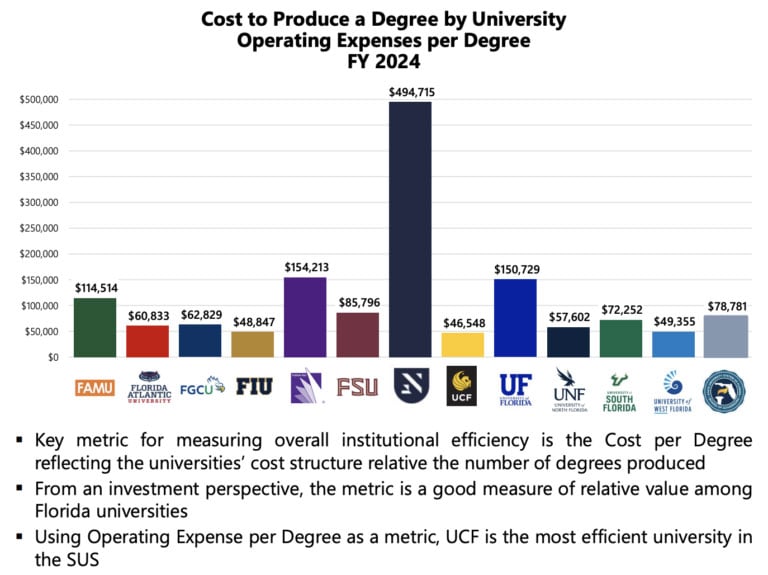
According to a state-authored report, New College of Florida costs Florida taxpayers nearly $500,000 to graduate each student, by far the highest cost among the 12 state universities.
House Democrats did not forget that report when debating the land transfer.
“If we want New College to succeed, we should be voting for measurable cost controls, enrollment stabilization, and outcomes we can audit, and not a debt transfer that compounds risk and dares the Legislature to keep writing checks for forever,” Campbell said.
WUSF reported earlier this month that student governments at all three USF campuses objected to the proposal to transfer land to New College.
“I do think that that the transfer would help with some of the challenges, especially like housing that students often face,” Busatta said.
New College announced it would house students in hotels in 2023 after mold was found in student dorms. The New College housing website lists a hotel as a housing option. The USF Sarasota-Manatee campus has a dorm.
Last year, DeSantis called for Florida State University to transfer its Ringling Museum and surrounding property located adjacent to New College of Florida, to New College. That deal did not materialize.
Since New College was put under different board of trustee leadership and Richard Corcoran was named president in 2023, the institution has been been made in a more politically conservative light, with DeSantis calling for it to become the “Hillsdale of the South.”
USF Board of Trustees Chair and former House Speaker Will Weatherford posted to social media Sunday a link to a Tampa Bay Times story about the land swap, writing, “With respect to the folks at the Tampa Bay Times, there is a zero percent chance that this will happen. Zero as in ‘0’,”
Board of Governors Chair Alan Levine replied to Weatherford.
More to the bill
The bill would give individual university boards of trustees power to set out-of-state tuition, a privilege now held by the State University System’s Board of Governors.
Additionally, the bill approved by subcommittee Monday would allow state funds to be used to support Title IX, funding things such as scholarships, administration, and more.
–Jay Waagmeester, Florida Phoenix




























Deborah Coffey says
Welcome to the “fake free” state of Florida. Here’s Ron DeSantis’ record according to AI Overview:
Below is a list of things that have been taken away, restricted, or heavily modified in Florida under the DeSantis administration:
Education and Academic Freedom
Access to Books in Schools: Known as the “book ban” legislation (HB 1467, HB 1069), policies have resulted in thousands of books being removed from school shelves, with Florida leading the nation in such actions.
Discussions of Sexual Orientation/Gender Identity: The “Parental Rights in Education” law (or “Don’t Say Gay”) originally restricted these topics in K-3, but was expanded by HB 1069 to prohibit instruction on sexual orientation and gender identity through 8th grade.
Curriculum Flexibility (Stop WOKE Act): The “Individual Freedom Act” restricts how race and gender are discussed in schools and workplaces, banning content that suggests individuals are privileged or oppressed based on race or sex.
Diversity, Equity, and Inclusion (DEI) Programs: SB 266 banned public colleges and universities from using state or federal funds for DEI initiatives.
Academic Tenure Protections: SB 266 allowed for post-tenure reviews of faculty members, effectively weakening tenure security.
LGBTQ+ Rights
Gender-Affirming Care for Minors: SB 254 made it a criminal offense for doctors to provide gender-affirming care (such as puberty blockers or hormones) to minors, allowing the state to take custody of children receiving such care.
Usage of Chosen Pronouns: Laws prohibit school staff and students from being required to use pronouns that do not correspond to the person’s sex at birth.
Transgender Bathroom Access: HB 1521 made it illegal for transgender individuals to use bathrooms or changing facilities that do not align with their sex at birth in public buildings, schools, and prisons.
Drag Shows: SB 1438 restricted “adult live performances” (targeting drag shows) in front of minors, allowing for penalties against establishments.
Healthcare and Personal Autonomy
6-Week Abortion Ban: In 2023, a law was signed banning most abortions after six weeks of pregnancy.
COVID-19 Mandates: Local governments and school districts were forbidden from enforcing vaccine passports or mask mandates.
Healthcare Autonomy (“License to Discriminate”): SB 1580 allows healthcare providers and insurers to deny services based on religious, moral, or ethical beliefs.
Voting and Civic Rights
Student IDs for Voting: Student ID cards are no longer accepted as valid voter identification.
Voter Registration Assistance: Restrictions were placed on third-party voter registration groups, making it more difficult for them to operate.
Local Control and Governance
Reedy Creek Improvement District (Disney): DeSantis dissolved the self-governing district of Walt Disney World after the company opposed the “Don’t Say Gay” law, replacing it with a state-appointed board.
Prosecutorial Discretion: DeSantis suspended elected prosecutors, such as Andrew Warren, who pledged not to prosecute cases related to abortion or gender transition treatments.
Local Ordinance Autonomy: Legislation (SB 170) makes it easier for citizens to challenge local ordinances in court, discouraging cities from passing certain regulations.
Other Restrictions
Concealed Carry Permits: While technically a expansion of gun rights, this repealed the requirement for a state-mandated training course and background check to carry a hidden gun in public.
Immigrant ID Cards: Legislation banned municipalities from issuing identification cards to individuals without legal status.
Lab-Grown Meat: A two-year ban on the sale of cultured meat was signed to protect the traditional meat industry.