



By Martin Dyckman
An epigram of uncertain origin holds that laws are like sausages – it’s better not to see them being made. That’s why Florida legislators have been known to joke about their workplace being a sausage factory.
The comparison is unfair to sausages.
That’s never more so than when the Legislature gets around – usually very late – to the only thing it really has to do, the annual state budget.
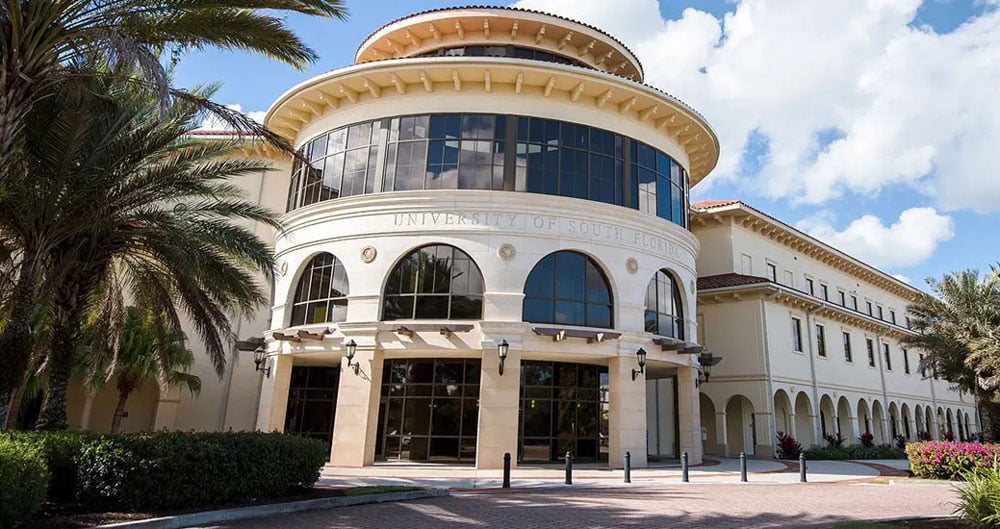
It often comes out full of surprises. The biggest this year strips the University of South Florida of its Sarasota-Manatee campus and gives it to the much smaller New College of Florida, which Gov. Ron DeSantis has converted into a right-wing showpiece complete with a baseball team it never knew it wanted.
The transfer wasn’t in either of the budget bills that were introduced and passed in a special session last month. There was profound local opposition when it was discussed during the regular session earlier and yet the House approved it. However, the Senate Appropriations Committee never took it up and it died on adjournment.
The transfer was not in either of the House or Senate appropriation bills when the chambers took turns rejecting them and setting up a conference committee.
However, anything goes when conference committees meet to negotiate the final budget.
And a well-intentioned reform that was supposed to discourage such surprises has nurtured them instead.
Here’s how that happens.
There’s always disagreement between the two houses on how much to spend and where to spend it, so the final formalities fall to a conference committee composed of equal numbers of senators and representatives.
In reality, the critical decisions are made not how they ought to be – i.e., by the committee members in an open meeting. They’re settled instead by the Senate President and House Speaker in private negotiations with each other. They may consult with the budget subcommittee chairs and other members of their leadership teams.
The governor and influential lobbyists may know more about what’s coming down than the rank-and-file legislators do.
The process permits – even invites – surprises that were never properly aired in either the House or Senate and are put before them as a choice between swallowing the budget whole, without any amendments, or staying in Tallahassee longer than they had planned or cared to.
The worst such snooker in this year’s final budget is the New College land-and-building grab.
New College is the school once known for its progressive students and faculty that Gov. Ron DeSantis is converting into a public version of the famously conservative private Hillsdale College in Michigan. It has 716 students according to its website. According to an estimate published last year, New College spends about $134,000 on each student annually, more than 13 times what the other state universities do. That’s nearly half a million dollars for each degree.
DeSantis installed a cooperative politician, former House Speaker Richard Corcoran, as its president and is paying him nearly $1.2 million in salary and bonuses this year. For comparison, the University of South Florida, whose overall student body is 40 times larger, is paying its new president $1.9 million overall.
When DeSantis first called for New College to be engorged at USF’s expense, there was intense opposition in both counties as well as from USF’s stakeholders. It was reported that more than 350 people turned out for a town hall meeting. Four chambers of commerce sent protest letters.
When the regular session ended without a budget – and thus without the transfer – the local opponents might have assumed they had won.
But there it was when the compromise budget came out of the special session’s conference committee last month.
Apart from a very few, nobody knew about it until the Sunday night before the 550-page budget would be released to the legislators at 11:41 a.m. on a Monday.
Among the original objectors was Sen. Jim Boyd, a Bradenton Republican who will be Senate president next year assuming the likelihood that his party keeps its majority in the November election.
Boyd had said just a few days earlier, as quoted by Sarasota Magazine, that the transfer “would unravel all the good work our community has done to create opportunity for high school students, veterans, nurses, teachers, technology engineers and insurance professionals.
“Our local businesses rely on this pipeline of talent to grow and thrive,” he said.
The objectors also included the chairman of USF’s board of trustees. He’s Will Weatherford, a former House Speaker and a Republican who should still have influence in Tallahassee.

But by that fateful Sunday evening, Weatherford was in the corral. He cited various concessions. New College will assume responsibility for the regional USF campus’ bonded debt. USF Students admitted before July 1 will be allowed to finish their studies on the 30-acre campus, still taught by USF professors. The USF satellite campus has approximately 2,000 students, according to the university.
Eventually, it will be all New College, morphed into a much larger institution than it was ever meant to be.
Knowing how Tallahassee works, it’s safe to assume that Weatherford was made an offer he couldn’t refuse. USF’s entire budget was on the table. The concession he posted to social media tried to make the best of it. From USF’s perspective, however, that was like saying the sinking of the Titanic taught a useful lesson in maritime safety.
“USF has been engaged in discussions on this issue with New College, the Board of Governors, Chancellor Ray Rodrigues, the Florida Legislature and the Governor’s Office since September 2024 when the BOG asked us to work together on a path forward for our two institutions,” Weatherford wrote.
“From our latest conversations, it is clear to me that this is in the best interests of USF, New College and our state. The property transfer makes practical sense with the state’s focus on efficiency, the growth of New College and the proximity of the campuses.”
Translation: I was told to agree, or else.
What should not be acceptable to anyone was how the deal went down and why a spending bill bearing such an unpleasant surprise for so many people swept through the Legislature with only six votes against it in the House and none in the Senate.
In textbook theory and past practice, conference committees are limited to reconciling the differences between each house’s legislation. If something was in neither bill to begin with, the conference report was subject to being rejected on a point of order. But the current rules of the House no longer require that. The Senate’s rules do, but with a specific exception for appropriation bills.
The larger problem, which locks in surprises like the New College campus grab, is an example of good intentions being undone by the immutable law of unintended consequences.
A key provision of a constitutional amendment ratified in 1992, with 82% of the public vote, requires the final budget to be delivered to each legislator “at least seventy-two hours before final passage by either house of the legislature of the bill in the form that will be presented to the governor.”
Any change, however minor, would restart the 72-hour countdown. Most often, final action on the budget bill is timed so that the third day is adjournment day. No matter what unpleasant surprises they may find in it, members who might want to amend the budget bill figure it’s a lost cause and don’t try.
“It would be akin to mutiny,” says Ben Wilcox, research director and co-founder of Integrity Florida.
The 1992 amendment was a major recommendation of the first meeting of Florida’s Taxation and Budget Reform Commission (TBRC), which the Constitution requires to be appointed at 20-year intervals. The third convening is next year, after DeSantis leaves office. His successor and the Legislature’s new presiding officers will appoint its membership. Any constitutional amendments they recommend will go directly to the voters without having to pass through the Legislature.
This was a good reason why the Legislature should have turned down DeSantis’ irresponsible constitutional amendment to starve local governments of property tax revenue from owner-occupied homes. They passed it instead – many members doubtlessly hoping the voters will save Florida from the collateral damage of DeSantis’ presidential ambitions.
None of the TBRC’s 24 voting members may be sitting legislators, which leaves the field of potential appointees largely to ex-legislators and lobbyists.
The first group, whose meetings I covered, put serious effort into what they thought would clean up the sausage factory.
The 72-hour rule was part of a comprehensive reform of budgeting practices that went to the voters under the alluring title “Improving Accountability and Public Review in Spending Taxpayers’ Money and Maintaining a Balanced Budget.”
I don’t recall anyone speculating that the 72-hour rule might backfire. They assumed it would put a stop to surprises instead.
The reform passed on the same ballot with Florida’s term limits initiative.
The first order of business for the TBRC next year should be to send the voters a constitutional amendment modifying the rule. One reasonable way would be to allow the final budget to be changed by 60% supermajorities in each house without restarting the clock. The Constitution would still guarantee timely notice but finally allow the legislators to do something with it.
Another worthwhile idea, modeled on a New York provision, would cut off the legislators’ salaries if the regular session ends or is extended without a budget.
Florida TaxWatch, a conservative-leaning nonprofit, puts an eagle eye on the bill each year to identify what it calls “turkeys” – expense items that got in outside of normal process. The intent is to encourage the governor to veto them.
This year’s Turkey Watch Report, released Monday, included four projects totaling $8-million (no more than a rounding error in a budget of $115-billion) that had not been in either appropriation bill. But it did not mention the New College issue, which has much larger consequences.
One that did make the Turkey list was a $2 million item directing the Department of Education to purchase an on-line system to administer school choice programs like Florida’s private school vouchers.
The budget legislation for the $2 million specifies a term that‘s being trademarked by a new Denver-based company, LearningSpring. According to Seeking Rents, journalist Jason Garcia’s newsletter, LearningSpring’s investors include a firm that’s part of conservative billionaire Charles Koch’s financial network. Two lobbyists for LearningSpring registered for the 2026 session.
At its news conference Monday, asked why the New College campus grab wasn’t on that list, TaxWatch answered that it was “something that was discussed a lot” earlier.
Yes, it was. But it wasn’t discussed in the special session – not publicly, anyway – until the conference committee’s Gotcha! Moment.
Even sausage-making does a better job of following the recipe.
Martin Dyckman retired in 2006 from the St. Petersburg Times, where he wrote primarily about government and politics for 46 years as a reporter, state capital bureau chief and editorial writer. He lives in Asheville, NC, where he continues to observe Florida politics and writes editorials.



























Pogo says
Floriduh: under same old management since 1999.
Coming next: one university name for all, with location as a prefix — (city) Florida Agriculture and Mining School For Learning Stuff. Works for the Department of Corrections; both may well continue to converge…
John Schussler says
This is an example of predictable government overreach when one political party controls state government. If you want better elected representatives, support election reforms like open primary elections, proportional representation, and ranked choice voting.
Laurel says
How DeSantis is “balancing the hormones” with New College, and other embarrassing Florida moments.
https://www.youtube.com/watch?v=jFMc07F1UUU