



Last Updated: 4:38 p.m.
Developers willing to build commercial or mixed-use projects in Palm Coast’s Town Center could be eligible for property tax rebates of up to 90 percent between now and 2034, depending on the size and timing of their investment. The bigger the project, the bigger the rebate.
Getting somewhat desperate for more investment in Town Center before a special tax status for the economic zone expires in 2034, the Palm Coast City Council on Tuesday approved the generous tax-forgiveness program to encourage more immediate construction.
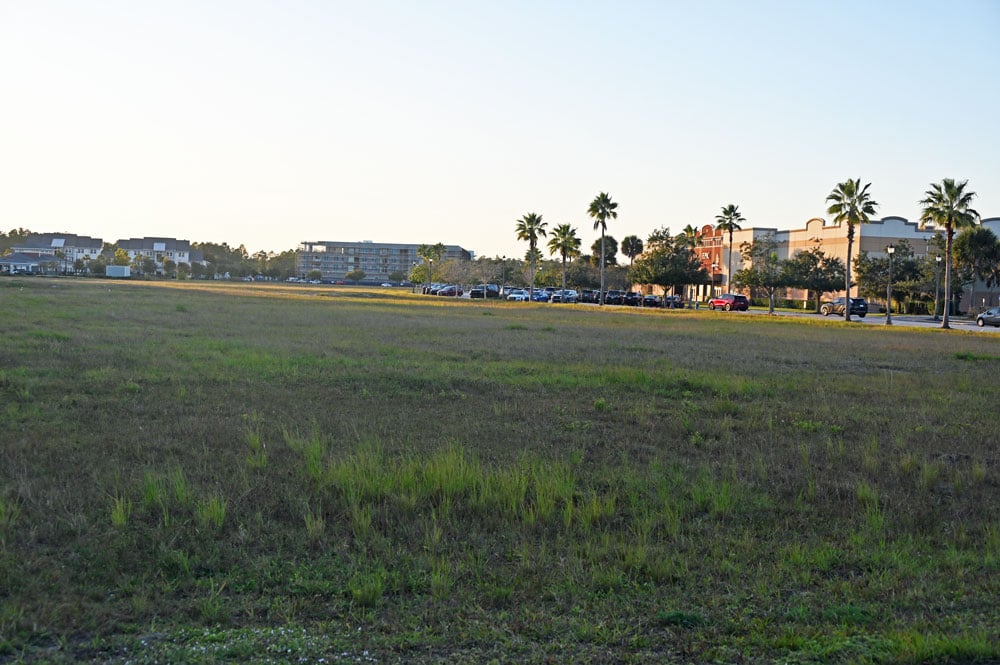
Town Center was once 2,000 acres of scrubland but for a few clusters of homes and businesses. Palm Coast established the Town Center CRA, or Community Redevelopment Area, in 2004 as an economic redevelopment zone. A CRA locks in all but a fraction of the property taxes generated within it for reinvestment inside the CRA, until the CRA expires. In Town center’s case, expiration is in 2034.
Town Center was to be Palm Coast’s downtown—vibrant, full of shops, offices, apartments and houses. Redevelopment hasn’t gone as planned. The majority of the expected commercial, office and retail space has not been built. The CRA should have generated $7.6 million in property taxes last year. It generated only $2.9 million, a 62 percent shortfall. Over the life of the CRA so far, the shortfall is closer to 80 percent of expected tax revenue: $33 million against a projected $162 million. The CRA has about $6 million in debt.
Of most concern to the city, while most of the 4,000 residential housing units planned have been built, 3 million of the projected 5 million square feet of office, retail, commercial and institutional space, or 60 percent, has yet to be built.
A few unfair swipes at previous councils aside (in Tuesday’s meeting and at workshop a week before, as if previous councils had sat on their hands and let Town Center slide, which was not the case), the city is in a bit of a panic mode. The CRA expires, by law, in 2034, at which time all the property tax revenue generated will be redistributed to the city’s and the county’s general funds. So the city is looking for different ideas to make the CRA pay. Or, more literally, not generate taxes in the short term, to encourage investors.
The incentive program is one of those ideas. John Zobler, the city’s community development director, presented the plan to the council on Tuesday. The council approved it unanimously, with notable changes.
The plan isn’t just a reimbursement of property taxes. It applies various “multipliers,” “compressions” and other extra incentives, including deferments of certain impact or utility connection fees. (The plan as presented to the council lacked clear definitions of the terms and lucid explanations of the incentives’ application, but for a single example. It has a clunky name: “Vertical Development Incentive Grant.” More precisely, it is a construction-incentive and tax-rebate plan.)
Projects with property values below $3 million would not be eligible. Projects valued between $3 and $7 million would get a 50 percent rebate. Projects valued between $7 and $15 million would get a 65 percent rebate. And projects investing more than $15 million would get an 80 percent rebate. “Multipliers,” “compressions” and “area activation bonuses” then compound the tax savings.
The example Zobler provided is a $10 million property at the time it is occupied. Assuming that happens in 2030, the property would normally generate $120,838 in property tax revenue to the CRA. Between its base rebate and other factors, it would be eligible for 89.5 percent in rebates, and would have to pay just under $13,000 a year in taxes. Its tax savings over the four years that it is eligible for the rebate would be $432,600.
A property valued at more than $15 million would theoretically get 100 percent tax reimbursements, using the same calculations. In fact, the rebate tops off at 95 percent regardless of how the calculations come out, Zobler said.
The CRA would suffer a short-term hit on its tax revenue, but would presumably make up the loss in the long run (when the CRA no longer exists). “We’re trying to intensify the development in the CRA,” Zobler said.
Zobler wanted the tax incentives to apply to all development with eventual assessed values of $3 million and more, including housing. Council member Theresa Pontieri immediately killed that. “I won’t support incentive grants for residential,” she said. “And I certainly wouldn’t support impact fee relief for residential.”
Mayor Mike Norris said likewise. “I do not want to incentivize building any more single family homes in this area. I don’t want to do it because we have a lot coming online now,” Norris said. He is not opposed to mixed-use buildings where residential is built on top of commercial space (as with the Promenade in Town Center).
“You can go higher than three, but a minimum of three stories, because the whole point of the CRA and this vertical incentive is density,” Norris said. “The whole point of this is to go vertical instead of horizontal.” The Promenade, for example, a $79 million investment, is expected to generate more tax revenue than a Target or a Walmart. The Promenade, like the data center going up along Town Center Boulevard, will not be eligible for the program since they are already here. A key part of the program is its “but-for” principles: but for a series of incentive provisions, new development would not occur.
Pontieri and the rest of the council also opposed incentives to include impact fees, which the Zobler plan would have forgiven–with the exception of the deferment of utility connection fees. Pontieri was also opposed to exempting eligible companies from paying into the public art fund the council approved last year.
“If you look at the enthusiasm and the positivity, and I think a tourist spot, that Bunnell has created with its mural, it has been fantastic,” Pontieri said, referring to the new, large mural on the side of the SMA building on South Church Street. “They got the Minutemen to do that actual piece of art, and then they got the muralist to go out and replicate it on the wall, and it has generated a lot of publicity for them. They’re actually trying to get on the actual trail for those types of murals now, and I think Town Center is a perfect place to try to replicate that type of project. So I don’t want to see the Arts Fund fee go away, and it’s a very small amount. So I wouldn’t support those incentives.”
Those exemptions were removed. Pontieri was also opposed to putting a minimum floor on the incentives, though it isn’t clear whether the $3 million floor was removed: the council appeared so eager to move forward with the plan–“let’s move out on this,” Council member Charles Gambaro said, declining to wait for a new version of the proposal before approval.
“Whatever we’ve done to incentivize has not pushed those developers to build,” Norris said. “It’s just beyond me why they haven’t taken the initiative to move forward and start going vertical with things in this area. This is like the hub of the city.” He was also eager to get the program started. “I’m going to do everything I can to give you the tools to make it happen,” he told Zobler.
Zobler in a brief interview today credited former councils and administrations for their efforts with the CRA. “A lot was accomplished in the CRA, a great deal was accomplished,” he said. “I’m just trying to maximize the remeaining period we have left, to get as much juice as we can.”






















JimboXYZ says
The difference between the Vision of 2050 brochure vs actuals. 90% tax rebate ? Anyone get that for their property taxes ? Welcome to Alfinville, FL. Drive over to the intersection of Belle Terre & FL-100, SW area is bulldozed there to dirt. What’s going to go in there ? All that traffic is now going to make that intersection an even bigger traffic mess than it already is. Doesn’t matter if it’s more residential or commercial, even mixed use. Who could’ve predicted this, yeah, I did, told you this was coming when the reality of the financial numbers hit 5he fantasy of spreadsheets & economic models.
What good is brick & mortar when that model was abandoned in 2020 for Covid lies & shutdown. Anything brick & mortar may have grand opening success, followed by a community unable to support those businesses. How much of these tax rebates are the rest of us expected to absorb, those that earned their retirement savings in an era that was a low ball salary wage for 2026 ? Show of hands ? Anyone go to the movie theater in Town Center ? That option vs streaming the same movie(s) at home ? So what will go in under those relative townhomes over the retail ? Will that be another pizza place, overpriced hamburger fast food, another Starbucks or that CBD vape shop ? Exactly what Palm Coast needs, another boutique commercial strip mall with residential apartments above them. I just envision those places cannibalizing their current market share at existing locations, while servicing the growth of residential above the retail operations. The cannibalization will be more of convenience than it will be new customers. Instead of going to Starbucks at FL-100 & Belle Terre, it’ll just be the same coffee product at Towne Center to consumers that were going to frequent Starbucks somewhere else. Maybe the YMCA may eventually still happen ? If they hold out long enough, the taxpayer may even build the whole thing for them, zero investment like the pickle ball courts. They’ll offer to manage the facility for a fee & profit ? Only because it’ll be negligibly cheaper than the local Government managing it. Corners will be cut for costs. for that rinse & repeat cycle ?
Wayne says
Why? So we can have more low-paying retail jobs? Who will want to build businesses near the data center? Better yet, who will want to move here with one? They’re a nuisance. They’re loud, sounding like a low flying plane all day. They’re bright. They’re an environmental hazard. They will raise our bills (don’t listen to corporate talking heads, including ones from the city, they always lie). They will drain our aquifers. They will lower the value of our homes. Why bother with 90%? Just go full 100%. Why not? I paid more in taxes than Amazon, Tesla, and Apple combined. Boy you’d think I was rich, huh? Yeah. That’s the problem. I’m not. I’m part of the dying lower middle class. I received a whopping $50 tax return, and yeah, I have my taxes setup the “right” way to maximize my return. Before doofus put his tax plan in place, I routinely received $200 refunds. Thanks to the man that has bankrupt literally every business he operated, now I receive less money in a refund, and pay more taxes than three behemoth companies. Cool, huh?
Epic failure says
Palm Coast town center ……
The Epic failure
Daytona 1 & St Johns town center both started years later then this overpopulated condo project
Ever wonder why a lot of things are so much more successful then in this city ??
Gary says
This is just another one of the councils way of helping builders. They leave we are stuck with it, Don’t think for one minute that VM will vote against the Western development you are in dream land . They will try to push that thru as fast as they can before a new council gets in to shut it down . The planing board rejects a project and the big 4 pushes it thru. Now whose side do you think they are on ? Certainly not we the people’s. It’s just one lie after the other . All 4 need to go now !
Joe says
Deals like this is why our taxes and Utility bills keep going up!
I believe the financial institutions require a 12% reserve fund for all general fund revenue.
$1,000,000 in revenue would require $120,000 to be kept in the reserve fund at 12%.
That leaves $880,000 left, but the County has agreed to give back to the developers $900,000, leaving a net loss to the County of $20,000 per million.
At least 10% of the taxes generated from those businesses will amount to tax revenue losses to businesses outside of the Town Center, which would be another $100,000 revenue loss per $1,000,000 in taxes collected.
That will leave a Net Loss to Palm Coast Revenue of about $120,000 a year is lost revenue!
These fools gave the store away and we are all paying the price!
There needs to be better quality candidates and political up evil at election time!
Alex says
I often wondered why the City of PC calling it the Town Center? It looks no different than anywhere else in Palm Coast a bunch of store?
When it was first announced by Mayor Netts,” we are building a town center” you pictured a real town looking area NOT its a row of stores.
Ed Danko, former Vice-Mayor, PC says
Pontieri & Norris (Dumb & Dumber) only need to look in the mirror to learn why developers won’t invest in Town Center. Their combined political rhetoric of endlessly threatening a building moratorium, along with huge disproportionate increases in impact fees, plus expecting builders to fund “government art” is no incentive for investors to risk putting their money in Town Center, especially when the city is now facing two lawsuits from developers and builders in large part thanks to Dumb & Dumber!
JimboXYZ says
The Building Moratorium was a early 2025 buzzword & concept that hasn’t been real since it got squashed a year ago when the censored Norris. Norris did what he could to undo the damages of Alfinville, FL Try to reverse the era of new Alfinisms that have died off. There is no moratoriums, the developers opted to protest & HBA sued City of Plam Coast even for Alfin’s new rates for impact fees. All of this is a money vs profits. The Developers aren’t going to build anything Palm Coast because they aren’t getting their inflationary profits. this is what happens when Federal funding for Biden-Harris “Build Back Better” that never really happened for the scale it was hyped as without inflation that flows to the State budgets that were also cut for growth & open borders. It was a flawed soft landing putting 16 million back to work for the fraud & abuse of Covid 2020. End of the day, Norris was sandbagged going into his 2025 swear-in. 4 years of approvals and clawing back from the reality of what the previous Mayor & council(s) City of & county have resulted in this unaffordable water & sewage management has become. Thank those folks, rather than blame shift back to Norris who is sincerely trying to right the listing Titanic. Really, what was Norris going to do beyond honor the Alfin era approvals of ruination as a Vision of 2050 that has stalled because of Developers being scared ? That Vision of 2050 didn’t make it to 2025, then rebadged as the Imagine of 2050 now. And since Developers are now offered tax breaks, as much as 95%, it’s like getting a contractor that took the money early, started the projects & never followed thru to completion for a lot of them (Town Center being a Work in Process/Progress. It’s stalling because Developers are following thru. In the mean time that excuse was sewage capacity issues, yet the STF’s are being upgraded & new one built. Trust me on this we’re all paying higher water utility bills for that. Add that Staly is seeking more resources for the crime increases from the growth. that everyone spins as under control & lower crime rates. When all it is was expanded budgets for inflation. Staly will get more uniforms and we’ll still read about the criminals they catch for new levels of weird FL man stories. With growth comes comes growing pains. The gridlock traffic isn’t going away any time soon, that’s Alfin approval policy not Norris era policy. Politicians are like that, sandbag & blame shift for the timing of when the time bomb goes off. Trump-Vance even faced it from Biden-Harris.In the middle is DeSantis that, even the next State Governor for inherited messes. I’m sure DeSantis will also leave his sandbagging. land mines & time bombs. The victims will be those of us that are voters & taxpayers. Some of them as neighbors have overpopulated & dwellings overutilized. Palm Coast has become a duplex rental version of Holly Hill, FL/Greater Daytona Beach area that is hardly a better quality of life. Town Center projects are nothing more than staking people on top of each other for unaffordable housing & property taxes.
Your turn, if you care to address & defense this mess that we all had to watch as a crap show for the inflationary economy model of crap that never will pay for itself with the next round(s) of inflation & unaffordable. They’ve built that into the Water & Garbage utility base & rate increases annually to pay for the STF’s with a marginal increase in tax base as the growth continues until all the Alfin approvals have been satisifed. At some point the Developers need to get back to work on their projects, we all know they will do the most profitable one’s, I doubt they are losing any money on even the least lucrative ones ? Back in 2021 when all these approvals, my concerns were infrastructure capacity wouldn’t measure up. That happened, who could’ve predicted that with half a brain ? 10 gallons of poop never fit in a 5 gallon bucket & ended well. Town Center today ? That place looks like a Gaza strip bomb that went off less the charred rubble for incompleted projects. Rather than rebuild a war zone, Developers won’t finish those projects. Stalled out.
Wise advice says
Build it and they will (not) come.