



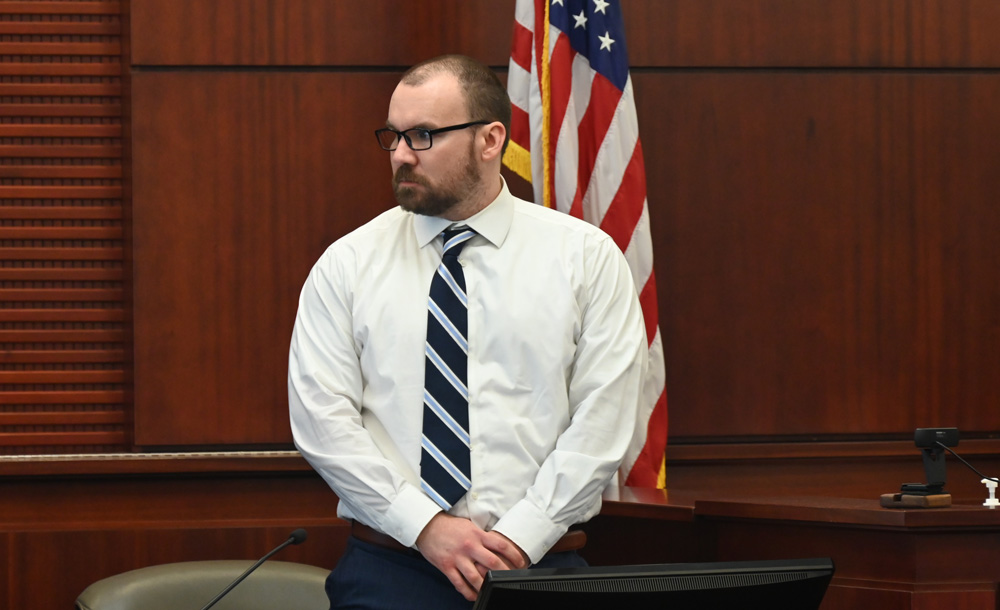
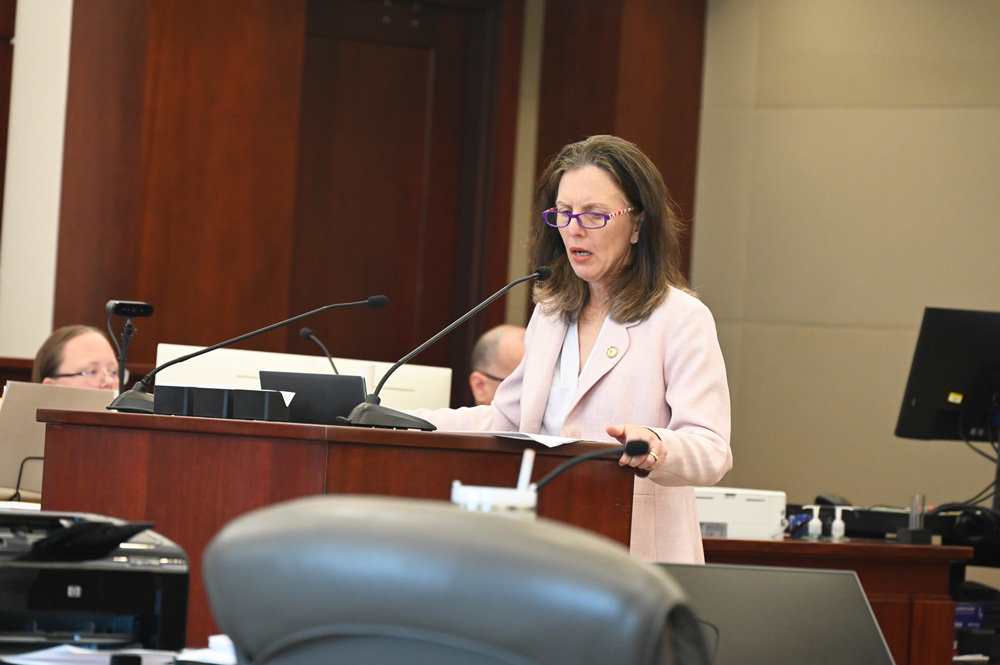
In her closing argument this morning, Assistant State Attorney Melissa Clark called James Melady “a man with a fetish,” a man “sexually aroused by unconscious, vulnerable women.”
After deliberating nearly five hours, a jury of four women and two men today found Melady, a paramedic with Flagler County Fire Rescue from 2018 to 2024, guilty of sexual battery–or rape–of an unconscious woman he was responsible for in the back of an ambulance three years ago, a lesser offense than the sexual battery charge he was charged with. The initial charge was rape of an incapacitated woman. It is a difference of 15 years in penalty.
The jury found Melady not guilty of video voyeurism. He had recorded the incident, moving the camera a few times for better views of the woman’s privates, and preserved the video on his laptop.
Clark’s prosecution of Melady over the three-day trial hinged on the video clip, unearthed three years later by Melady’s girlfriend as she searched his computer for evidence of infidelity.
The victim, who briefly testified on Tuesday, was in the courtroom when the clerk read the verdict. Aside from a paramedic who testified on Tuesday, no one from Flagler County Fire Rescue was in the courtroom at any point in the trial. The case has tarnished the agency’s image and may yet have more consequences, as the victim has indicated she intends to file a civil suit against the fire department.
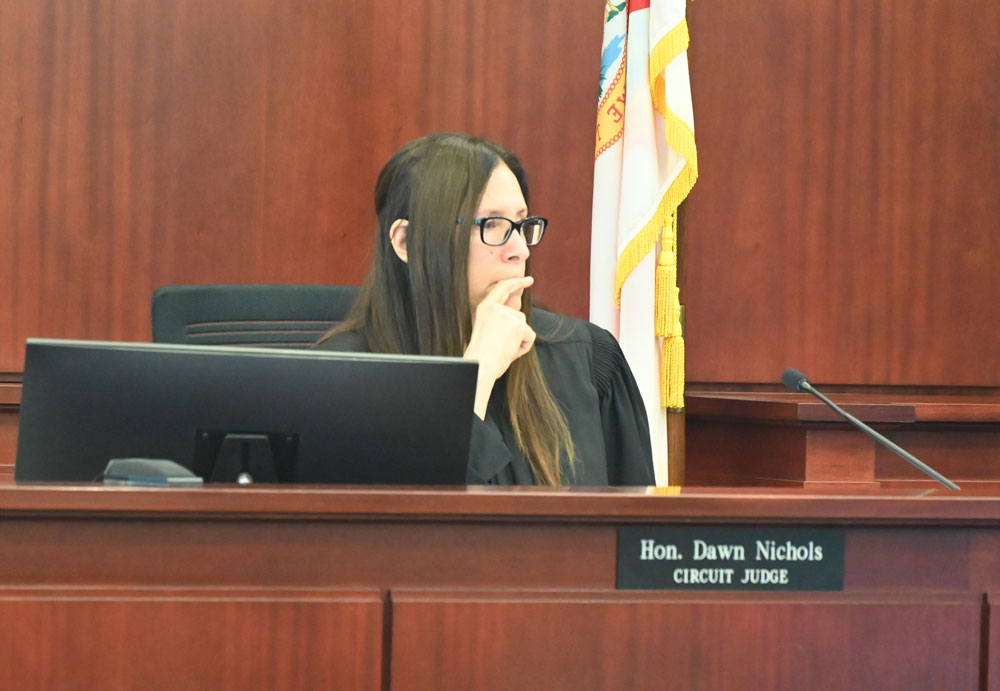
Melady faces up to 15 years in prison on the charge (as opposed to 30 on the initial charge), and will be designated a sex offender. Circuit Judge Dawn Nichols did not sentence him today, giving the defense time for a presentence investigation that will calculate points under the state’s sentencing guidelines, resulting in a recommended sentence.
Melady’s criminal cases are not over. In Flagler County, he still faces two felony charges adding up to a maximum penalty of 20 years if convicted—charges of fraud stemming from the alleged illegal use and possession of a credit card stolen from a patient. In Volusia County, he faces a charge of burglary and an unrelated charge of video voyeurism. The two charges are also punishable by a maximum of 20 years in prison. The jury in this week’s trial was never told of any of the pending charges.
Melady’s defense was that everything he did in that ambulance was medically necessary, and that he made the video recording for his own protection in case a legal issue arose (even though that original recording supposedly vanished).
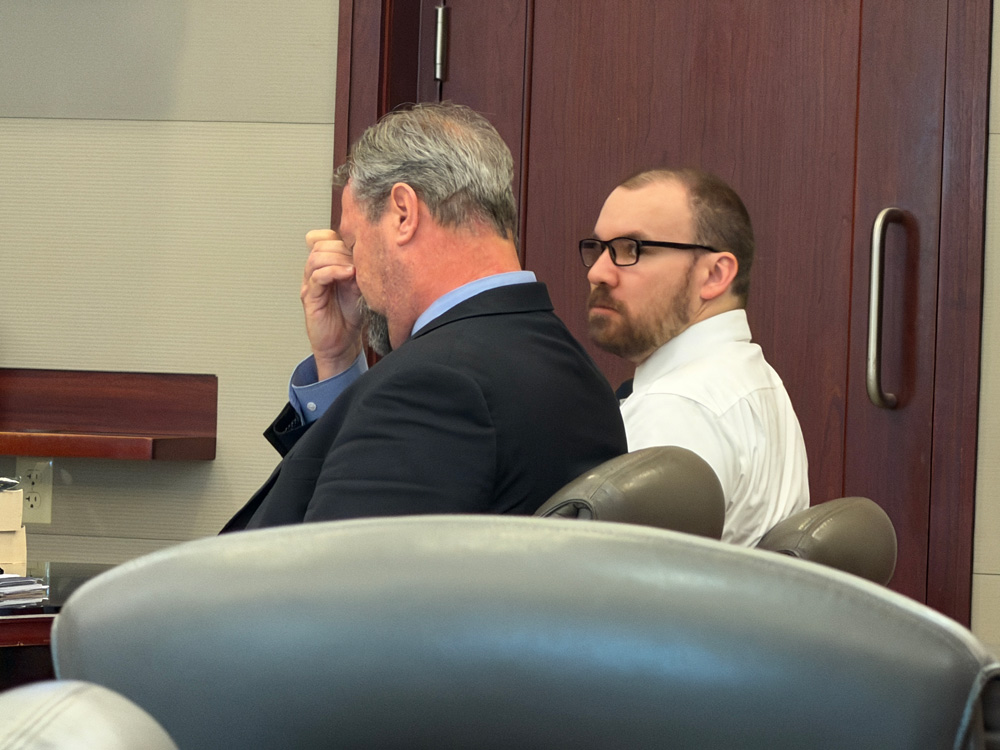
“Watch the video with your own eyes. That’s all I can ask you to do,” Charles Fletcher, Melady’s attorney, told the jury in his closing argument this morning. “When he touches her, does it look like he’s doing something sexual? It doesn’t. It just doesn’t. It looks like a quick exam, and he filmed it because he was the only guy in the back of the wagon—of the ambulance.”
Fletcher ridiculed Clark’s claim that his client has a fetish. “You want real evidence of his fetish? Ask his girlfriend. She was right there. She found the video, and still didn’t break up with him,” Fletcher said, referring to the testimony of Melady’s ex-girlfriend. “That touching was done for a bona fide medical purpose. Not for amusement or sexual gratification. None of those.”
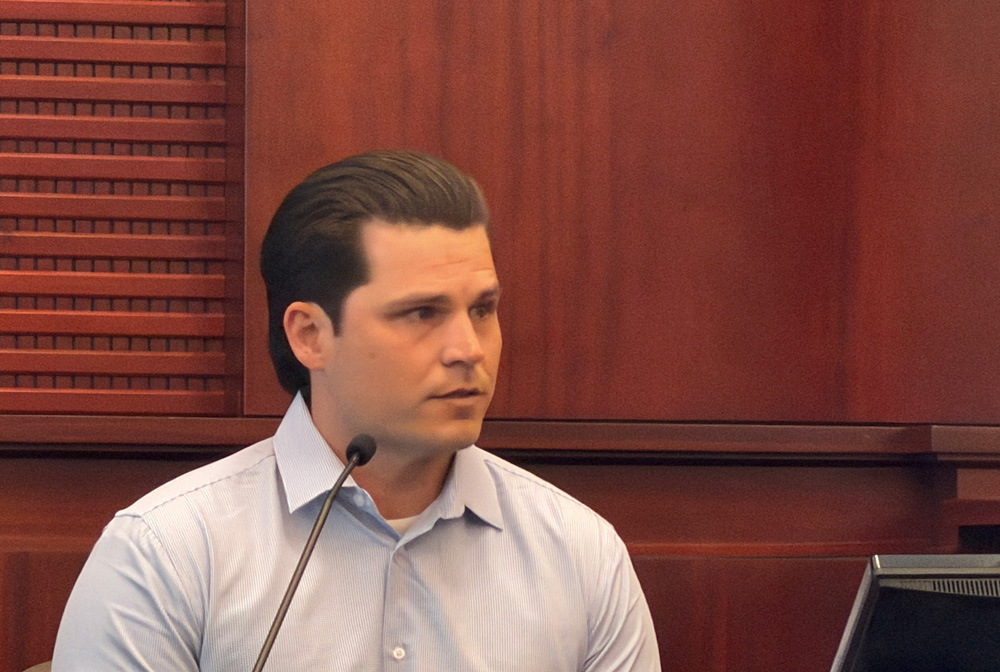
For the prosecution, two testimonies were key: that of Jesse Hunter, a 17-year veteran paramedic who was Melady’s partner that day and remains with Flagler County Fire Rescue, and that of Terrell Swanson, an emergency room physician for 17 years. Both adamantly rejected Melady’s claim that the pelvic exam was either medically necessary or appropriately done. Hunter all but schooled Fletcher in protocol and standards of care, outright rejecting Fletcher’s claim that Melady’s experience as a military medic enabled him to do things differently, while the physician said there was no need for a pelvic exam. Both witnesses said they’d never seen it done or had the need to do a pelvic exam in their combined 34 years of experience.
Fletcher made much of Swanson being a paid expert witness (the state was paying him $3,000), as if expert testimony were unusual or mercenary. It may be mercenary, but it is not unusual, and physicians tend not to risk their professional credentials or reputation by testifying to facts or opinions they do not believe in. Defense attorneys with weaker cases will cast wide nets for red herrings in hopes of distracting the jury from more damning evidence.
The fetish story had been Melady’s own. He’d told the two detectives who interviewed him shortly before his arrest that a co-worker he was involved with liked to play-act with him. She’d be the unconscious patient; he’d play “doctor.” He then recanted the story, saying he’d made it all up because he was on Ambien, the prescription sleep aid, when the detectives interviewed him, and that Ambien made him hallucinate.
Recanted or not, Clark seized on the fact that Melady, unprompted, chose to make that precise fetish the hook to his story. “What are the chances that the one fetish that he comes up with out of countless matches exactly what happened?” Clark told the jury. “He didn’t tell them his fetish was S&M. He didn’t tell them his fetish was they liked to have sex in the woods. He didn’t tell them his fetish was they liked to have sex in public. Didn’t tell them anything like that. No. Specifically, he likes to role-play with [his ex], playing an unconscious patient so he has his sexual way with her in the back of an ambulance. And shockingly, it exactly matches what happened to [the victim]. How on earth does that happen? What are the chances of that? You have a better chance of winning the Powerball than that.”
Some 40 minutes into deliberations, the jury wanted to have a look at the video clips again. After they watched the three brief clips in the courtroom, one of the jurors, a woman, asked to see the first of the three clips yet again, suggesting that she was the juror struggling with a decision.
Two and a half hours into deliberations, jurors submitted to the judge a long “letter,” as they called it, raising a series of questions about what device Melady had used to record his video, what device it was on when his girlfriend found it, and what device she used to record it herself (it was the girlfriend’s copy, not the original video, that was the evidence at trial). All the questions pertained to the voyeurism charge. All were legally peripheral, if not irrelevant, to the case as presented by the prosecution, though the questions could have proved beneficial to the defense: they indicated that the jury was not comfortable with the voyeurism charge and suggested–as did the length of the deliberations–that the jury was giving weight to the defense’s claim that Melady was doing his job.
See the companion analysis of the verdict, “In Melady Trial, an Evidence-Defying Verdict That Ignored Overwhelming Proof of Victim’s Incapacity.”
The judge, with the lawyers’ approval, instructed the jury that it had to rely on the evidence as presented previously. The court could not add to that evidence.
Near the four-hour mark, the jury wanted individual, printed copies of the jury instructions, even though a copy had been provided.
There was no question from the start of the trial that it would all come down to interpretation—whether Melady was acting within his capacities as a paramedic, or whether he was abusing his position of trust to, as Clark put it, collect a trophy.
“If it’s his trophy, where’s his trophy collection?” Fletcher had asked the jury, as if Melady, knowing that the video recording had been discovered, could not possibly have discarded other evidence.
The verdict made much of that moot.
Before the trial, Melady turned down a plea deal of 20 years in prison followed by 10 years on sex offender probation, and a lifetime designation as a sexual offender or predator. The state will seek nothing less, and likely more, when he is sentenced next year.


























DP says
As a paramedic student before this incident happened. And an EMT during my time of employment with this agency. I was never trained to perform as, THIS POS claims to perform an internal pelvic exam. Regardless of the condition the patient was found in. A visual examination of the entire body in some medical situations is required, and yes it could result in viewing the genital area. I stand with the state’s key whiteness statement of Rouge standards of care are not tolerated. Regardless of his military training, he had to go thru the county’s clearing process, and be approved by the agency’s medical director, military experience doesn’toveride department/medical protocols. This POS gives all the men and women in the Fire, EMS and LEO community a bad name. Yes there maybe some pervs within the above mentioned organizations, and sometimes they slip through the agencies screening guidelines. But not all are bad. I’m sorry this went down how it did, and feel sorry and extend sympathy to the victim. Jesse I applaud your strength and courage to testify against what was supposed to be a brother.
Taxpayer says
Hat’s off to the jury that found this disgusting pervert guilty. Your honor hope you give if a strong long sentence.