



By A.D. Carson
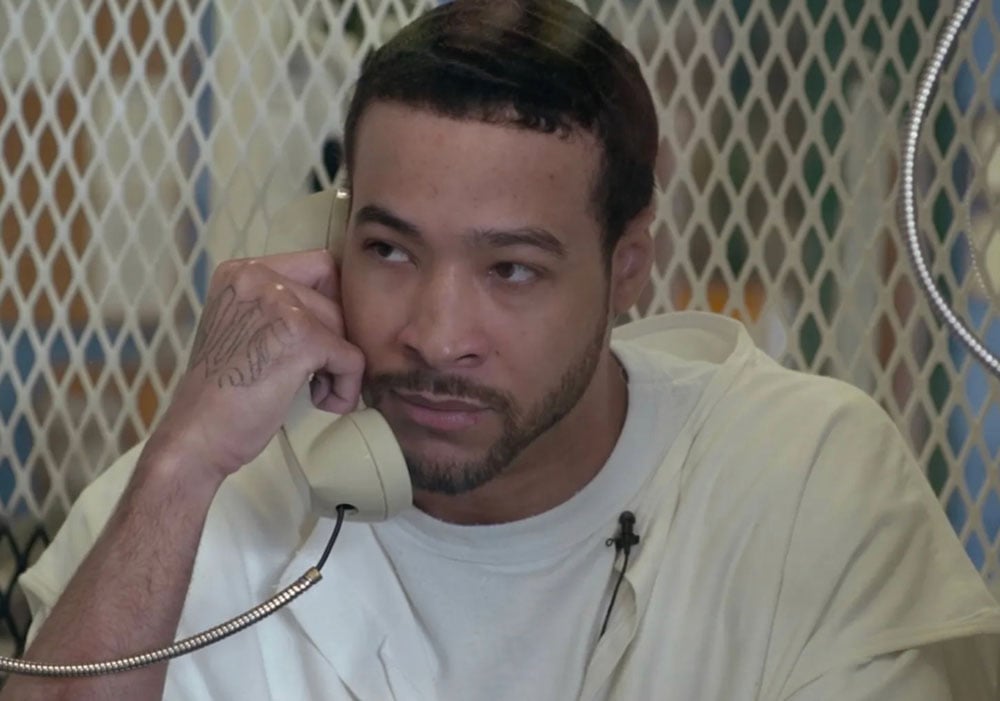
After languishing on death row in Texas for nearly two decades, James G. Broadnax was executed on April 30, 2026.
In 2009, a nearly all-white jury convicted him of robbery and double murder. Broadnax’s lawyers believed the initial rejection of all Black candidates from the jury pool was unconstitutional. They also believed it was unconstitutional that prosecutors used 40 pages of Broadnax’s handwritten lyrics, which they characterized as “gangsta rap” that doubled as a “self-admission” of Broadnax’s criminal “mentality.”
The lyrics shown to the jury were not introduced during the phase of the trial that determined Broadnax’s guilt for robbery and murder. They were presented only during the sentencing phase, when the jury considered whether he should receive the death penalty.
In 2025, I published “Being Dope: Hip Hop and Theory through Mixtape Memoir.” The book uses prose and lyrics to explore common misconceptions about rap and rappers. Along with the way lyrics continue to be used to demonize people inside and outside the courtroom – in ways that no other art form has to contend with – I highlight how “rap” is often used as shorthand for violence, drugs and criminality.
When rap lyrics become death sentences
In 2019, Erik Nielson, a scholar whose work focuses on the use of rap music as evidence in criminal trials, co-wrote “Rap on Trial” with legal scholar Andrea Dennis. In the book, Nielson and Dennis highlight a pattern of prosecutors treating rap lyrics as confessions or evidence of motive, even though they’re typically fictional or exaggerated. Meanwhile, even though other art forms routinely involve characters, lyrics or imagery that depicts violence, they’re rarely used as evidence of guilt in the courtroom.
Dennis and Nielson, who’s a signatory on one of the amicus briefs that was filed in support of Broadnax, maintain a database of over 800 cases in which lyrics have been used as evidence.
It includes some well-known cases, but most of the entries in the database involve people who are not well known as rappers.
For instance, during the closing arguments in the trial of Dominique Green, Texas prosecutors read aloud graphic lyrics from a Geto Boys song. Green hadn’t written the lyrics, and there was no clear connection between him and the song. Critics like Nielsen say the move was intended to shape how the jury perceived Green, who was sentenced to death in 1994 and executed in 2004.
Broadnax met a similar fate. While high on PCP and marijuana, he’d initially confessed to the killings of Stephen Swan and Matthew Butler in the Dallas suburbs in 2008. He later retracted his confession. In March 2026, Broadnax’s cousin and co-defendant, Demarius Cummings, signed a sworn statement admitting to pulling the trigger to kill Swan and Butler. Cummings had been tried separately and had already received life without parole.
Cummings said that he initially went along with Broadnax’s confession, but after 17 years – and learning in February 2026 that his cousin would be executed – he felt compelled to correct his previous statements.
Evidence corroborates Cummings’ admission. His DNA was found on the grip of the murder weapon and on the clothing of one of the victims. Broadnax’s DNA was not found on either.
Despite a flurry of last-minute appeals and amicus briefs, the state executed Broadnax.
From ‘Jim Crow’ to ‘authentically’ Black
In my view, the willingness of courts to accept rap lyrics as evidence emerges from popular entertainment’s long-standing deployment of negative stereotypes about Black people.
In the U.S., minstrel shows were among the first widely popular forms of mass entertainment. Performers were often white people who donned blackface to mock Black people through song, dance and slapstick comedy. Characters like Thomas Rice’s “Jim Crow” employed tropes of Black people as buffoonish, lazy and lascivious – stereotypes that underpinned the racist legal code of segregation that came to be known as Jim Crow laws.
Alongside legal segregation, separate and unequal categories emerged for Black music. In 1920, Mamie Smith released “Crazy Blues,” the first commercial blues recording by a Black artist. Recordings like Smith’s were cordoned off into their own separate category, called “race records.” In 1942, Billboard began charting another invented category that it dubbed the “Harlem Hit Parade.” Black music would go on to be called, at various points, “rhythm and blues,” “soul” and “urban contemporary” into the 1970s.
These genres helped market this music as “authentically” Black. I use quotes because I argue that these genres have always reflected the audience’s listening practices and expectations, as much as anything real or unique about Black people.
A boogeyman for America’s ills
By the 1980s and 1990s, rap music was likewise pigeonholed as a “Black” genre. And “gangsta rap” soon emerged as a subgenre that became, for some listeners, an effective stand-in for all the purported ills that plagued Black communities.
N.W.A. rapped about police brutality, violence and poverty, among other topics. Tracks like “F— Tha Police” were lyrically provocative and confrontational.

Raymond Boyd/Getty Images
When Milt Ahlerich, an assistant director at the FBI, sent a letter to N.W.A.’s record label warning that the track could lead to disrespect and violence against law enforcement, the troupe saw a marketing opportunity, going on to brag that they were “the world’s most dangerous group.” And many audiences went on to interpret their tracks as documentary evidence of everyday Black life. In fact, I argue that this broader interpretation of rap music led, at least in part, to the eagerness with which the public initially supported the so-called “war on drugs,” which ended up disproportionately targeting Black communities in places like Decatur, Illinois, where I grew up.
Even when artists go to great pains to distinguish their art, many audiences simply want to believe all rap music and rap artists were doing and saying the same things. Their unwillingness to engage beyond the surface means a refusal to examine rap’s layered explorations of life, pride and pain, described through lyrical humor, social commentary and witty wordplay.
As Rolling Stone journalist Ed Kiersh wrote in 1986, “To much of white America, rap means mayhem and bloodletting.”
‘Being Dope’ is personal
For me, this is personal. I have been a rapper all of my professional life. In “Being Dope,” I write about teaching high school in Springfield, Illinois, where a local radio host used my music to try to paint me as unprofessional or worse, and called for me to be fired over it.
I decided to pursue a Ph.D. and study the rhetorical appeal of rap music. I wrote a rap album as my dissertation, and after becoming a professor of hip-hop, I published the first-ever peer-reviewed album with an academic press.
Rap has many functions. It’s a daily practice undertaken by ordinary people, not just the ones who aim to be famous. When I discuss the public perception of rappers, I highlight how I continue to grapple with the uneasiness my identity as a rapper can elicit in other people. I also focus on the stories of friends and family members, as well as people like Willie McCoy, Eric Reason and Jordan Davis – Black Americans whose deaths were blamed on rap music, a form of scapegoating I call “rapwashing.”
So when I see “rap” or “rapper” in a headline to imply guilt or provoke negative associations, I’m reminded of the truth in Kiersh’s statement. It’s even more troubling when rap lyrics are used to help deliver a death sentence.
Gangsta rap’s effectiveness as a prosecutorial tool, like the minstrel shows before it, depends on audiences mistaking caricature for authenticity, and hinges on hearing artistic expression as documentary evidence of criminal actions. Using gangsta rap to justify state-sanctioned executions only extends the dark legacy of Jim Crow into the present.

A.D. Carson is Associate Professor of Hip-Hop at the University of Virginia.




























Al says
And now for my next performance I’m going to pull a rabbit out my but and call it a peanutbutter sandwich. What a bunch of crap, a wasted education on an obscure subject. Hey some school will pay me well so they can claim diversity. Jim Crow laws were abolished 60 years ago, people with sense have moved on while the stupid just dwell on the past. By the way the north had far more racists then the south they just hid it.
Atwp says
Al Jim Crowe laws were probably called unconstitutional 60 years ago. The negative effects still haunt and hurt my people. Believe you are a white man, it would be hard for to feel the negative effects of laws designed to keep you down and face neglect and discrimination. Please complain when you become a person of color and face daily harassment and discrimination. Just because you don’t think people of color haven’t moved on dosent mean they are stupid. You sound just like old white folks speaking bad things about my people like you all are better than my ancestors. You all are not. Please think before you call my people stupid.
FlaglerLive says
Not probably. Absolutely.
Laurel says
I take issue with Atwp, which I imagine stands for “At white people.” Correct me if I’m wrong.
Atwp keeps referring to “my people,” categorizing a group by skin color. If I were to do that, I’d have to travel to North Dakota, or Norway, as white people in general, are not “my people.” Heck, I don’t know a soul in North Dakota or Norway, so, they too, are not “my people.”
The other thing is, Atwp is constantly happy the country is going to shit, and states his glee openly. His bigotry is right in line with those he wishes ill on.
That said, lyrics to songs are not, or should not, be construed as evidence to a crime. Can you imagine:
“The killer awoke before dawn,
he put his shoes on and he walked on down the hall…”
Laurel says
…he put his boots on…
One of the world’s biggest Jim Morrison fan is getting old.
*sigh*
Deborah Coffey says
It really seems like today’s Republicans are enjoying all the killing they are getting away with…speed boats in the Caribbean, ICE concentration camps, anti-abortion laws, war in Iran, protesters on our streets, and using lyrics as proof for capital punishment. If there are any REAL Republicans still left in America, they need to find a new name for their political party. I’m thinking that the lovers of killing, cruelty, racism, bigotry and destroying democracy are all in the MAGA Party.
Skibum says
Criminal convictions, especially for the heinous crime of murder, should be decided on using factual evidence, not fiction. Yes, much of rap lyrics tend to highlight and glorify violence, but are those lyrics documentary descriptions of violent acts that actually occurred, or the work of fiction as art? Rap is certainly not a music genre that I listen to, but there are many, many rap artists who use violent lyrics in their music who are not killers or violent individuals. Would a conviction on such flimsy evidence not normally be in jeopardy of being overturned on appeal?
Courts should not allow any music artist’s song lyrics into evidence unless it can be shown that there is an actual nexus between the lyrics and the specific elements of the crime. Not having a law degree myself, my opinion is that the prosecutor may not have had a great case and was searching for anything that might bolster his or her chance of obtaining a conviction.
Laurel says
I take issue with Atwp, which I imagine stands for “At white people.” Correct me if I’m wrong.
Atwp keeps referring to “my people,” categorizing a group by skin color. If I were to do that, I’d have to travel to North Dakota, or Norway, as white people in general, are not “my people.” Heck, I don’t know a soul in North Dakota or Norway, so, they too, are not “my people.”
The other thing is, Atwp is constantly happy the country is going to shit, and states his glee openly. His bigotry is right in line with those he wishes ill on.
That said, lyrics to songs are not, or should not, be construed as evidence to a crime. Can you imagine:
“The killer awoke before dawn,
he put his shoes on and he walked on down the hall…”
Laurel says
Don’t worry Al, you’re in the whitest county imaginable. You’re safe. No worries about diversity, well, except for women.
A “black” member of my family, the first time in the Hammock, stood in the parking lot of Publix with mouth open, and noticed “There are no black people here!” Yep! Even the local magazine, Sand and Surf, doesn’t have a single pic of a black person in it.
The far right loves it, and for them, it means…what? Security? Superiority? To me it means selfish narrow-mindedness. Yet, they have convinced Clarence Thomas he is one of them, as long as he is useful.
And so it goes.
Land of no turn signals says says
Yea rap lyrics got him executed.Please give me a break.
ProDeathPenalty says
Texas got it right, again.
Laurel says
Texas, the brain trust of America. Well, next to Mississippi, Alabama and Louisiana. However, Florida is fighting for first place.