



By Anne Toomey McKenna
Law enforcement officials frequently draw virtual fences around areas of interest and require Google to identify every cellphone in the area using cell location history. Dubbed a “geofence search,” officers obtain a warrant that permits a multistep, give-and-take information sharing process between officers and tech employees that winnows down and identifies subjects.
On June 29, 2026, the Supreme Court ruled that whenever police obtain an individual’s cell location data, even from a third-party tech company, it constitutes a search under the Fourth Amendment of the U.S. Constitution. The Fourth Amendment protects people from unreasonable government searches and seizures, and it does so in part by requiring search warrants based on probable cause that describe the particular person or thing to be searched. A geofence warrant that identifies every phone in an area does not align well with those requirements.
In its 6-3 decision in Chatrie v. United States, the court sent the case back to the 4th U.S. Circuit Court of Appeals to determine whether the geofence warrant at issue, including each part of its three-step search process, met the Fourth Amendment’s warrant requirements.
As a privacy, electronic surveillance and tech law attorney, author and legal educator, I have spent years researching, writing, educating and advising about these kinds of privacy and legal issues, and my books on electronic surveillance and evidence are routinely cited and relied upon by courts grappling with these issues.
Google tracks the vast majority of cellphones, collecting your location, usage and device data through installed software and apps. The tracking occurs by various autonomous processes you cannot see or stop, even when you turn off location history, and Google and other companies keep that data for years. Outside of your control, your cellphone continuously creates a durable and revealing digital trail that law enforcement can obtain with a warrant.
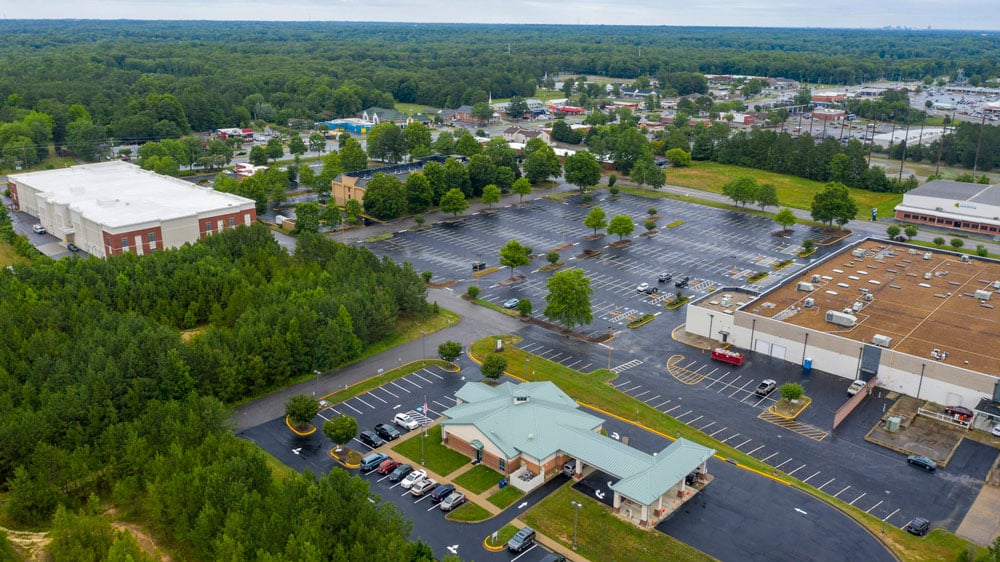
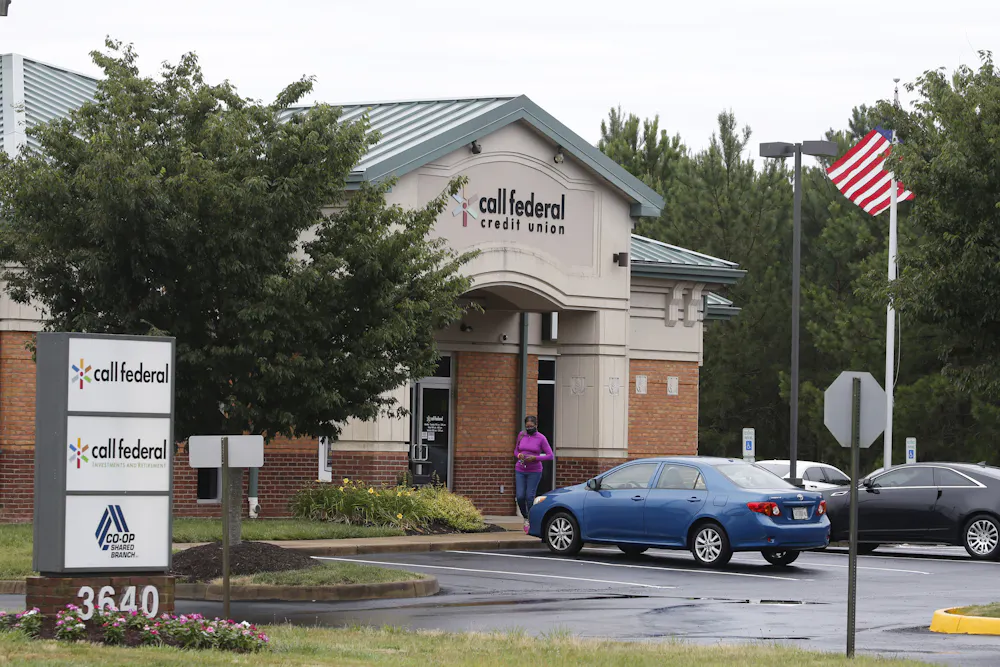
The Chatrie case involves the hunt for a suspect in an armed bank robbery in busy Midlothian, Virginia, in May 2019, and how police settled on a man named Okello Chatrie as the perpetrator.
Detective Joshua Hylton was granted a geofence warrant that compelled Google to search its database and identify every cellphone in a 17½-acre area around the bank, including private residences and a church, for a period of two hours. Working closely with Google, police ultimately narrowed in on Chatrie. When the trial court denied Chatrie’s motion to suppress the geofence-derived evidence, Chatrie appealed.
The government argued both that Chatrie had tacitly agreed to Google collecting the information and that Chatrie had no reasonable expectation of privacy in third-party Google’s records. The Supreme Court disagreed on both fronts. This decision matters because all cellphone-carrying people can end up in tomorrow’s geofence, like all those who were unknowingly grabbed in the Chatrie search. And nearly all users are unaware of these fences. No one specifically consents to be included in them, but people have no choice. What happened in the Chatrie case is a feat otherwise impossible but for advances in location-tracking technology and advanced AI systems.
AP Photo/Steve Helber
How geofences work
Geofences are part of modern life. By carrying your smartphone and other devices, you generate location and other device activity data. That data is collected, stored, analyzed, and bought and sold by multiple companies. The location history data being collected about you is what makes geofences possible, and it is comprehensive and precise.
Location history relies on a variety of sources of data that can include cell tower location, cellphone connections to Wi-Fi networks and Bluetooth sources, and cellular data sent via cell tower. This means the communications you received and sent and the apps you used can be swept up in a geofence.
Advanced AI technologies analyze that data to discern increasing amounts of personal and behavioral data – insights about people, groups and activities – that can be used for a variety of purposes, including targeted advertising. Your rich location history and device data get snatched up regularly in such fences by private companies; your present and past self travels through them constantly.
A geofence can be in real time, for instance to identify and track who is or was at a protest or, say, a reflecting pool during any period in the past decade or so. It can be dynamically generated, like a circle around a specific location, or it could be a predefined set of boundaries, such as a specific address or area defined by streets or other geographical boundaries. One geofence warrant that Google received covered 2½ square miles of San Francisco for a period of 2½ days.
There has been a significant increase in law enforcement’s use of geofence warrants over the past decade. Google revealed in court that it received a 1,500% increase in geofence requests from 2017 to 2018, a 500% increase from 2018 to 2019, and that by 2020 it had 11,500 geofence warrants in a year. Between 2021 and 2023, geofence warrants made up over 25% of all warrants that Google received from law enforcement agencies in the United States.

Dilara Irem Sancar/Anadolu via Getty Images
Search warrants and the Fourth Amendment
The Fourth Amendment is the foundation on which all U.S. electronic privacy laws rest. When government agents want to search or seize a person, place or thing – absent consent or emergency – the Fourth Amendment requires agents to get a court-approved warrant based on probable cause. Agents must provide a judge with enough evidence to establish probable cause that the person, place or thing to be searched or seized is associated with a crime.
The resulting warrant must also describe with “particularity” the specific person, place or thing to be searched or seized. If these requirements are not met, the search is unreasonable and therefore unlawful, and evidence obtained in that search cannot be used in court, barring a good-faith exception.
The Fourth Amendment’s “particularity” requirement strictly forbids general warrants, historically used by British troops against colonists to engage in overly broad or all-encompassing searches.
Reverse warrants
The only “particularity” that police can specify in applying for a geofence warrant is that a crime occurred at a particular time and place. Hence, geofence warrants are often called reverse warrants because they literally reverse the traditional process of conducting an investigation. Instead of identifying a suspect and then obtaining a warrant to gather information on that person, geofence warrants gather all devices in a time and place. Then, aided by technology and evolving search parameters, police sift through for potential suspects.
Litigation records reveal a collaborative effort between law enforcement and Google that follows a three-step process. First, agents specify in the geofence warrant a time and place to be searched. The data they’re seeking is not merely a list of cellphone devices in the area; it is usually more detailed, such as whether a device sent texts when it was in the area of the geofence.
Next, the company provides the officials with an anonymized list of users or devices matching the warrant’s criteria. At this point, things start to become more fluid, and the officials may seek additional information about specific users outside the originally authorized search parameters.
Third, officials then analyze the information and request that the company “unmask” certain users. In complying, Google may tell police the account holder’s name, their address, their email address, and even whether they were communicating or using certain apps during the relevant time.
This close work between the private entity – usually Google – and law enforcement throughout the geofence warrant process raises significant privacy and civil liberties concerns. It also does not appear that there is any court review or judicial oversight during this give-and-take between law enforcement officers and Google in the geofence warrant process.
Chatrie and the Supreme Court
For decades, the court has grappled with law enforcement’s use of technologies to track the location of people or things. In its 2018 decision in Carpenter v. United States, it ruled that the U.S. Constitution requires law enforcement agents to obtain a warrant to track a person using their cellphone location history data, as it had done previously with GPS data. And in Carpenter, it specifically ruled that cellphone users have a reasonable expectation of privacy in their cell site location history, even though that data is obviously shared with their cell providers.
It was perhaps not surprising that the court firmly rejected the government’s arguments in Chatrie. The justices had already rejected these arguments in 2018 with very similar technologies at issue.
The court’s ruling is unequivocal: “An individual has a legitimate expectation of privacy in his cellphone location data.” The ruling clarifies and strengthens privacy protections in the digital age. What remains to be seen is how the 4th Circuit will answer the question the Supreme Court posed when it sent the case back to them: Did the geofence warrant – and each part of the multistep search – comply with the Fourth Amendment’s requirements?

Anne Toomey McKenna is Affiliated Faculty Member at the Institute for Computational and Data Sciences at Penn State.



























Pogo says
Dirty Harry was right
https://www.msn.com/en-us/money/other/bank-robber-who-stole-nearly-200k-claims-his-privacy-was-violated-when-caught-the-supreme-court-will-decide-if-he-s-right/ar-AA26yoSb
Laurel says
Law enforcement, using this technology, should have been aware of the Fourth Amendment before they started using the data. They knew about warrants. This is a good call by the Supreme Court. They have their moments, though far and few in between lately..
Also, Google, and like companies, should not be able to sell our personal data. Most of it doesn’t work for the companies that are buying it anyway. I don’t need an ad for psoriasis; I don’t have psoriasis. I don’t want ads for online colleges, as I have no intention of pursuing another degree. The reach to the public is about the same as ads in your U.S.P.S. mailbox. Marketing knows those ads are about 2% successful. The volume goes off on TV ads, or are skipped whenever possible.
Now, I wish the government would do something about spam calls and spam texts! Most people I know do not answer their phone anymore unless they recognize the caller. I’m sick of the texts “Hi Laurel, we’re putting on a new roof in your neighborhood…” Blocked and reported. “President Trump here…” Seriously? Blocked and reported. A whole, long scroll of blocked and reported, but blocking and reporting doesn’t stop them, they just use new numbers. It’s an obnoxious, relentless invasion of our privacy.
We can reminisce about the old days, and how technology has improved our lives, but back then, we did not have spam! We answered the phone, not knowing who it was, and it ended up mostly being our friends. I do miss that simple lack of defensiveness!