




For more than 20 years, hormone therapy for menopause has carried a warning label from the Food and Drug Administration describing the medication’s risk of serious harms – namely, cancer, cardiovascular disease and possibly dementia. No longer. On Nov. 10, 2025, the FDA announced that drugmakers should remove these “black box” safety warnings. Here’s how the decision will affect health care for people going through menopause or postmenopause.
The Conversation
About That Bill Gates Climate Memo
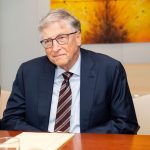
Shortly before COP30 talks begin in Brazil, tech billionaire and philanthropist Bill Gates has launched a “narrative grenade” into the discourse of climate politics by publishing a lengthy memo calling for a rethink of how the climate crisis is framed and addressed. Gates calls for a “strategic pivot” in climate strategy. That appears to have hit a nerve. Both social and traditional media were ablaze with erroneous assertions about Gates’ supposed reversal of opinion on climate change.
Frank Rizzo, Philadelphia’s Toughest Cop Maga Harbinger
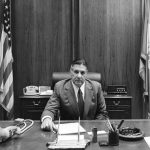
In August 2025, the city of Philadelphia agreed to return a statue of Frank Rizzo to the supporters that commissioned the memorial in 1992. The 2,000-pound bronze tribute to the former police commissioner-turned-mayor had stood in front of the city’s Municipal Services Building from 1998 until 2020, when then-mayor Jim Kenney ordered it removed days after protesters attempted to topple it during the protests that followed the murder of George Floyd.
Climate Models Got These 5 Ominous Forecasts Right

Critiques of climate science, such as the report written for the Department of Energy by a panel in 2025, often point to this complexity to argue that these models are too uncertain to help us understand present-day warming or tell us anything useful about the future. But the history of climate science tells a different story.
Can We All Quit Coal?

Coal is the dirtiest source of fossil fuel energy and a major contributor of greenhouse gas emissions, making it bad not just for the climate but also for human health. That makes it a good target for cutting global emissions. A swift drop in coal use is the main reason U.S. greenhouse gas emissions fell in recent years as natural gas and renewable energy became cheaper.
Social Media’s Value: A Lifeline for Many Abused and Neglected Young People

social media has become a crucial outlet for young people to disclose abuse, connect with peers who’ve had similar experiences, and learn about safety strategies. In the midst of growing concerns about social media harming young people, its platforms offer important benefits for some vulnerable youth.
Florida’s 1,100 Natural Springs Are Under Threat

North and central Florida comprise one of the largest concentrations of freshwater springs in the world. Many of these springs provide a home to a variety of wild animals and plants. But they are also canaries in the coal mine for Florida’s groundwater system, because they draw upon the same groundwater that many Floridians depend on for drinking water, farm irrigation and industrial use. Right now, many Florida springs suffer from reduced flow and habitat loss, as well as excessive algae and heavy pressure from human use.
Age-Verification Laws Are Threatening Free Speech

In Florida and around the world, large swathes of the open web are being replaced by walled gardens. In June, the U.S. Supreme Court upheld the constitutionality of Texas’s age restriction law. Twenty-one other states have similar laws in place, and more have been proposed. Australia restricts young people’s access not just to specific websites, but to all social media, and it will soon extend this to search engines.
How Ron DeSantis Made Florida #1 in State-Sponsored Killing

Florida has executed 15 prisoners in 2025 – the most ever in a single year since 1976, when a brief national moratorium on the death penalty was lifted. Two of the five remaining executions scheduled for 2025 are set to happen in Florida. Texas and Alabama are tied for a distant second, with five executions each.
What Is Peer Review?

Versions of peer review have been around for centuries. But the modern form – anonymous, structured and managed by journal editors – took hold after World War II. Today, it is central to how scientific publishing works, and nowhere more so than health, nursing and medicine. Research that survives review is more likely to be trusted and acted upon by health care practitioners and their patients.
Arctic Wildlife Is At Risk Again

The largest tract of public land in the United States is a wild expanse of tundra and wetlands stretching across nearly 23 million acres of northern Alaska. It’s called the National Petroleum Reserve in Alaska, but despite its industrial-sounding name, the National Petroleum Reserve-Alaska, or NPR-A, is much more than a fuel depot. Tens of thousands of caribou feed and breed in this area, which is the size of Maine. Migratory birds flock to its lakes in summer, and fish rely on the many rivers that crisscross the region. It is about to get opened up to industrial exploitation.
Ending Taxes on Home Sales Is Mostly a Giveaway to the Rich

Supporters of eliminating taxes on home sales, a bill introduced by U.S. Rep. Marjorie Taylor Greene, say it would benefit working families by eliminating all taxes on the sales of family homes. But most Americans who sell their homes already do so tax-free. And the households that would gain most under Trump’s proposals are those with the most valuable real estate.
Mindfulness Is Gaining in Schools. Is It Helping?

Writing, reading, math and mindfulness? That last subject is increasingly joining the three classic courses, as more young students in the United States are practicing mindfulness, meaning focusing on paying attention to the present moment without judgment. Mindfulness programs vary in what particular mindfulness skills are taught and what lesson objectives are. This makes it difficult to compare across studies and draw conclusions about how mindfulness helps students in schools.
Understanding who benefits from Food Stamps in 5 Charts

The Supplemental Nutrition Assistance Program has helped low-income Americans buy groceries for decades with few disruptions. A political scientist who has researched the history of government nutrition programs explains who SNAP helps, how enrollment varies from state to state and what the program costs to run.
Are High School Sports Living Up to Their Ideals?
Good coaching candidates are getting hired and doing their best to keep high school sports fixtures in their communities. But coaches often feel like they’re missing something, and they wonder whether they’re living up to those aspirations.
How Dick Cheney Enabled Donald Trump
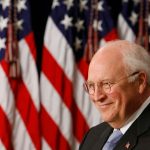
Former Vice President Dick Cheney was arguably the most powerful vice president in American history. He also thought that the assertive Congress of the 1970s had gone too far and had emasculated the presidency, making it nearly impossible for the president to get things done. Under Bush, he the unitary executive theory, a conservative thesis that calls for total presidential control over the entire executive branch. Now, nearly two decades later, President Donald Trump is using this theory to push his agenda.
Zohran Mamdani and Sewer Socialism’s Revival

Zohran Mamdani’s approach to democratic socialism is less about an abstract political ideology than it is about practical solutions. As he has put it: “We want to showcase our ideals, not by lecturing people about how correct we are, but rather by delivering and letting that delivery be the argument itself.” Because of this, he has also been described as an heir to the historical tradition of “sewer socialism”, a brand of left-wing thinking that favoured incremental, practical reform over revolutionary rhetoric.
The Vile TV Stereotypes About Muslim Men

For over a century, Hollywood has tended to portray Muslim men through a remarkably narrow lens: as terrorists, villains or dangerous outsiders. From shows such as “24” and “Homeland” to procedural dramas such as “Law and Order,” this portrayal has seldom allowed for complexity or relatability. Such depictions reinforce Orientalist stereotypes – a colonial worldview that treats cultures in the East as exotic, irrational or even dangerous.
Congress’ Path to Irrelevance
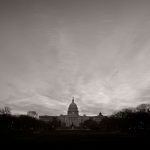
Throughout the shutdown battle, Congress – particularly the House of Representatives – has been unwilling to assert itself as an equal branch of government. Beyond policymaking, Congress has been content to hand over many of its core constitutional powers to the executive branch. This renunciation of responsibility is difficult to watch. Yet Congress’ path to irrelevance as a body of government did not begin during the shutdown, or even in January 2025.
Daylight Saving Time Is Against Human Nature

Biologically speaking, it is normal, and even critical, for nature to do more during the brighter months and to do less during the darker ones. Animals go into hibernation, plants into dormancy. As far as we humans know, we are the only species that chooses to fight against our biological presets, regularly changing our clocks, miserably dragging ourselves into and out of bed at unnatural hours.
The Other Marineland’s Demise Points to Decline of Zoo Tourism

Thirty beluga whales are at the risk of being euthanized at the now-shuttered Marineland zoo and amusement park in Niagara Falls, Canada. Marineland said in a letter to Canada’s Fisheries Minister Joanne Thompson it will have to euthanize the whales if it doesn’t receive the necessary financial support to relocate them. The park has come under intense scrutiny recently due to the ongoing struggle to relocate its remaining whales amid financial struggles, a lack of resources and crumbling infrastructure.
Protesting America
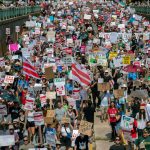
Protests are becoming a routine part of public life in the United States. Since 2017, the number of nonviolent demonstrations has almost tripled, according to researchers with the nonprofit Crowd Counting Consortium. And more people are joining than ever. Polarization – the extent to which people dislike members of the opposing party – is a key driver. Today political polarization, as reflected by the ratings Americans give to the political parties, continues to be at its highest level since political scientists began using the measure in 1964.
4.7 Million Floridians Have Obamacare. Here’s What Happens If They Lose Their Subsidies.

The number of people insured under the ACA in each state varies. But the state with the largest number of residents on marketplace insurance plans is Florida. About 4.7 million Florida residents are covered through these plans, representing 27% of the state’s under-65 population, compared to the national average of 8.8%. Of those on marketplace plans, 98% receive a subsidy at some level. There are several reasons why this rate is so much higher in Florida than elsewhere.
Trump Scrapped Detailed Annual Food Insecurity Report, Making It Harder to Know American Hunger

The Trump administration announced plans to stop releasing food insecurity data. The federal government has tracked and analyzed this data for the past three decades. Food banks relied on the data to understand who was most likely to need their help. The data also allowed policymakers to see the big jump in need during the Great Recession starting in 2008. It also showed a slight decline in food insecurity with the rise in government assistance early in the COVID-19 pandemic.
Workplace Exhaustion’s Connection to Extremism

A new study of 600 employees suggests burnout may quietly fuel worrying attitudes – specifically, the potential justification of violent extremism – towards the perceived source of their distress. In the study, employees made daily notes of their burnout symptoms, emotional states, and violent extremist attitudes. On days when employees felt more burnt out, they reported significantly more sympathy toward extremist ideas, such as justifying violence against perceived injustices.
Speaking Spoofs to Power: Those Inflatable Costumes at Trump Protests

activists taking part in protests against Immigration and Customs Enforcement (ICE) across the United States have donned inflatable animal costumes. The aim is to disrupt the Trump administration’s claim that the protests are violent “hate America” rallies. The result is a sight to behold, with many encounters between police and protestors going viral. Whether they know it or not, these costumed activists are contributing to a rich history of using humour and dress to mobilise against and challenge power.
From Albert Speer to Donald Trump

the Trump administration is mobilizing heritage and architecture as tools of ideology and control. He is seeking to roll back inclusive historical narratives at U.S. parks and monuments. And he is reviving sanitized myths about America’s history of slavery, misogyny and Manifest Destiny, for use in museums, textbooks and public schools. Dictators, tyrants and kings build monumental architecture to buttress their own egos, which is called authoritarian monumentalism. They also seek to build the national ego – another word for nationalism.
What would Mark Twain Think of Donald Trump?

Mark Twain would have found Trump the showman – the pre-2016 version – a fascinating figure. He would have been appalled, however, by much about Trump the president. Imagining how Twain would view Trump is timely because when some have tried to look to history for an equivalent political moment, they’ll sometimes point to two decades – the 1880s and the 1900s – that happened to also be important in Twain’s life and career.
The Disgraceful History of Erasing Black Cemeteries

Shockoe Hill African Burying Ground, the largest burial ground for enslaved and free people of color in the United States, has witnessed deliberate acts of violence. As the historian Ryan K. Smith writes, Shockoe “was not, as some would say, abandoned – it was actively destroyed.” In recent years, similar threats to Black cemeteries and questions about preservation have been reported at the Whitney Plantation in Louisiana, the Morningstar Tabernacle No. 88 in Maryland and a rediscovered graveyard in Florida, among many others.
The Great Louvre Heist and Security Challenges to Museums Everywhere

On Sunday October 19, criminals managed to steal eight pieces of extremely valuable jewelry from the Louvre Museum’s Gallery of Apollo, in Paris. The robbery highlights long-standing issues for criminology in the field of cultural heritage, as museum security has to address traditional and emerging threats as well as a range of symbolic visions and criminal dynamics. From a security point of view, there are five key ideas that can help us understand what the flaws were in the Louvre, as well as how, and why, criminals target museums.
The Real Reason Conservatives Are Furious About Bad Bunny’s Super Bowl Gig

The spectacle of a Spanish-speaking rapper performing during the most-watched sporting event on American TV is a direct rebuke of the Trump administration’s efforts to paper over the country’s diversity. Beyond that, there’s his gender-bending wardrobe. He has slammed the Trump administration’s anti-immigration policies. He has declined to tour on the U.S. mainland, fearing that some of his fans could be targeted and deported by ICE. And his explicit lyrics – most of which are in Spanish – would make even the most ardent free speech warrior cringe.
The Pentagon’s Unprecedented War on Press Freedom
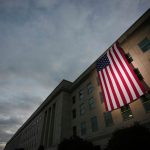
Throughout modern American history, reporters who cover the Pentagon have played an invaluable role shining a light on military actions when the government has not been forthright with the public. Free press advocates warn that recent changes in a Pentagon policy threaten journalists’ ability to cover the Department of Defense. That’s because it could curb their rights to report information not authorized by the government for release. That’s a big step toward outright censorship.
Beyond Protest: 10 Effective Ways to Make Change

What happens now? That may well be the question being asked by “No Kings” protesters, who marched, rallied and danced all over the nation on Saturday, Oct. 18. practices used globally to fight democratic backsliding or topple autocracies can be instructive. In a nutshell: Nonviolent resistance is based on noncooperation with autocratic actions. It has proven more effective in toppling autocracies than violent, armed struggle. But it requires more than street demonstrations.
Why do Teens No Longer Answer the Phone?

Teenagers can seem to have their phones glued to their hands – yet they won’t answer them when they ring. This scenario, which is all too familiar to many parents, can seem absurd and frustrating, or even alarming to some. Yet it also speaks volumes about the way 13-to-18-year-olds now connect (or fail to connect) with others. If smartphones are ever-present in the daily lives of adolescents, this does not mean they are using their devices in the same way adults do.
Studying Philosophy makes You a Better Thinker
Philosophy majors rank higher than all other majors on verbal and logical reasoning, according to a new study. They also tend to display more intellectual virtues such as curiosity and open-mindedness. Philosophers have long claimed that studying philosophy sharpens one’s mind. What sets philosophy apart from other fields is that it is not so much a body of knowledge as an activity – a form of inquiry. Doing philosophy involves trying to answer fundamental questions about humanity and the world we live in and subjecting proposed answers to critical scrutiny.
Why We Still Need Public Schools

The consequences of withdrawing from public education could be dire for the U.S. From Horace Mann’s “common school movement” in the early 19th century to the GI Bill in the 20th that helped millions of veterans go to college and become homeowners after World War II, public education has been essential for not only creating an educated workforce but for inculcating the United States’ fundamental values of liberty, equality, fairness and the common good.
George Washington’s Fears of Partisanship Are Coming True

Partisanship is the primary problem for the American republic, according to Washington. Washington’s fear that partisanship could lead to destruction of the Constitution and to the rule of “ambitious, and unprincipled men” was so important to him that he felt compelled to repeat the warning more than once in the Farewell Address.
States Push to Put 10 Commandments in Schools as Supreme Court Turns Clerical

At least a dozen states have considered proposals that would require classrooms to post the biblical laws, and three passed laws mandating their display in 2024-2025. All three laws have been at least partially blocked – most recently Texas’ law – after federal trial court rulings. But the ongoing cases seem aimed at overturning a 45-year-old U.S. Supreme Court precedent prohibiting the posting of the Ten Commandments in public schools.
The Supreme Court’s Vision of Unlimited Presidential Power
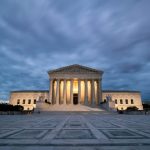
The unitary executive theory claims that whatever the federal government does that is executive in nature – from implementing and enforcing laws to managing most of what the federal government does – the president alone should personally control it. If the theory gains the official endorsement of the Supreme Court, it can become governing orthodoxy.
László Krasznahorkai’s Nobel Prize for Literature

Awarding the Nobel prize for literature to László Krasznahorkai today, the Swedish Academy commended the author’s “compelling and visionary oeuvre that, in the midst of apocalyptic terror, reaffirms the power of art”. But in itself their decision is also a commitment to the value of serious and intellectual writing in an age characterised by immediacy, the distractions of digital culture and the entertainment industry.
María Corina Machado’s Peace Prize

Machado is in many ways a controversial pick, less a peace activist than a political operator willing to use some of the trade’s dark arts for the greater democratic good. Of course, many Nobel Peace Prize awards generate controversy. It has often been bestowed on great politicians over activists. And sometimes the prize’s winners can have complex pasts and very non-peaceful resumes. Past recipients include dubious choices such as Henry Kissinger, Yasser Arafat and Israeli Prime Minister Menachem Begin, despite their past association with terrorism and, in Kissinger’s case, mass slaughters.
For Trump’s Perceived Enemies, the Process May Be the Punishment
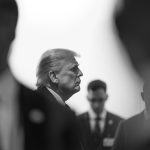
If the case against Comey is exceedingly weak – and little more than a political prosecution – then it should result in the dismissal of charges by the judge or a not guilty verdict by the jury. But even when an individual is not convicted, the process of defending against charges can itself be a form of punishment, as renowned legal scholar Malcolm Feeley pointed out almost 50 years ago.
The Gaza Peace Plan’s Familiar Rings

The latest U.S.-sponsored peace plan for the Middle East was unveiled at the White House on Sept. 29, 2025, and immediately accepted by Israeli Prime Minister Benjamin Netanyahu. The proposal, which U.S. President Donald Trump said marked a “historic” moment that was “very close” to ending the two-year-old war in Gaza, will now go to Hamas.
AI’s Energy Consumption and Data Center Efficiency

Artificial intelligence is growing fast, and so are the number of computers that power it. Behind the scenes, this rapid growth is putting a huge strain on the data centers that run AI models. These facilities are using more energy than ever.
The Supreme Court Resumes Its Rightward Reel
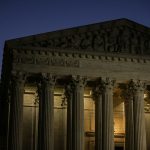
This year’s controversies at the Supreme Court focus on three dominant themes. One is the continuing constitutional revolution in how the justices read our basic law. The court has shifted from a living reading of the Constitution, which says the Constitution should adapt to the American people’s evolving values and the needs of contemporary society, to an original reading, which aims to enforce the constitutional principles understood by the Americans who ratified them.
The US Edges Closer to War Footing with Venezuela

For many in Venezuela, the question is no longer whether tensions with Washington will reach a boiling point – they already have. Rather, the big unknown now is whether the U.S. will follow up on threats and the sinking of drug boats with something more drastic: direct military engagement or even regime change.
The Shutdown and the Battle Over Obamacare Subsidies
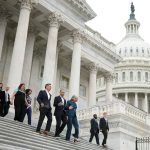
In the lead-up to the current shutdown, Republicans needed Democratic votes in the Senate to pass a bill that would keep funding the government at existing levels at least until November. In return for their support, Democrats sought several concessions. A major one was to extend subsidies for ACA insurance policy premiums, which were established during the COVID-19 pandemic. These subsidies addressed a shortcoming in the ACA by decreasing premiums for millions of Americans – and they played a crucial role in more than doubling enrollment in the ACA marketplaces.
George Washington’s Lesson to Pete Hegseth
Washington’s overall vision of a military leader could not be further from Hegseth’s vision of the tough warrior. For starters, Washington would have found the concern with “fat generals” irrelevant. Some of the most capable officers in the Continental Army were famously overweight. Washington became a soldier not because he was hotheaded or drawn to the thrill of combat, but because he saw soldiering as the highest exercise of discipline, patience and composure. His “warrior ethos” was moral before it was martial.
Jane Goodall Redefined What It Meant to Be Human

Anyone proposing to offer a master class on changing the world for the better, without becoming negative, cynical, angry or narrow-minded in the process, could model their advice on the life and work of pioneering animal behavior scholar Jane Goodall.
What the 1st Amendment Protects, and What It Doesn’t
What the First Amendment makes clear is that it does not just protect the rights of speakers who say things with which Americans agree. Or, as the Supreme Court said in a separate decision it issued one year after the case involving the funeral protesters: “The Nation well knows that one of the costs of the First Amendment is that it protects the speech we detest as well as the speech we embrace.” But free speech is not absolute.