



By Mariah Meek
The largest tract of public land in the United States is a wild expanse of tundra and wetlands stretching across nearly 23 million acres of northern Alaska. It’s called the National Petroleum Reserve in Alaska, but despite its industrial-sounding name, the National Petroleum Reserve-Alaska, or NPR-A, is much more than a fuel depot.
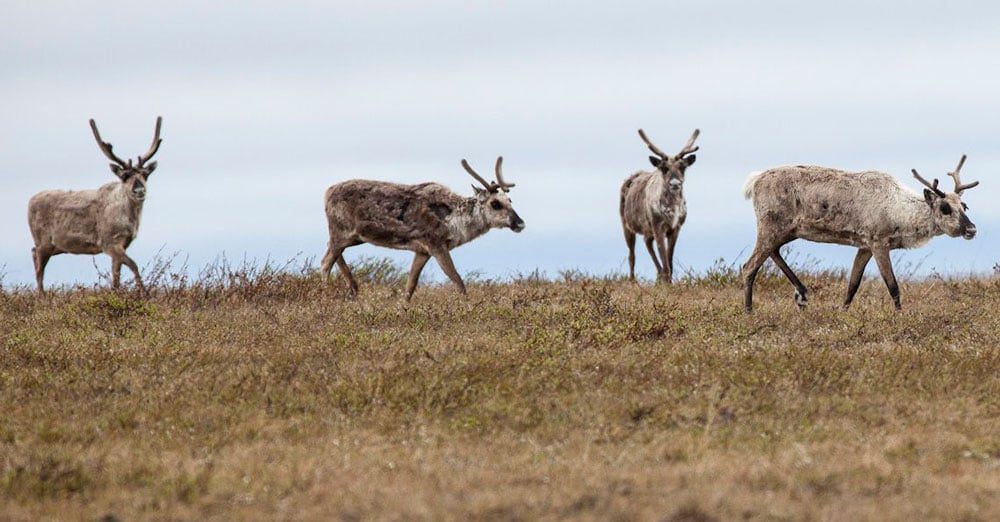
Tens of thousands of caribou feed and breed in this area, which is the size of Maine. Migratory birds flock to its lakes in summer, and fish rely on the many rivers that crisscross the region.
The area is also vital for the health of the planet. However, its future is at risk.
The Trump administration revoked protections on more than 13 million acres of the 23-million-acre reserve in November 2025, including some of its most ecologically sensitive areas. Congress also voted to rescind protections in the reserve and open the door to oil and gas drilling. The moves followed the administration’s decision in October to also open the coastal plain of the Arctic National Wildlife Refuge to oil and gas drilling.
Now, the Bureau of Land Management plans to move ahead with a major oil and gas lease sale on March 18, 2026, targeting about 5.5 million acres in the National Petroleum Reserve-Alaska – more than three times the amount of land currently leased there. It is to be the first of five sales over the next decade, each required to include at least 4 million acres.
I am an ecologist, and I have been studying sensitive ecosystems and the species that depend on them for over 20 years. Disturbing this landscape and its wildlife could lead to consequences that are difficult – if not impossible – to reverse.
What is the National Petroleum Reserve-Alaska?
The National Petroleum Reserve-Alaska was originally designated in 1923 by President Warren Harding as an emergency oil supply for the U.S. Navy.
In the 1970s, its management was transferred to the Department of Interior under the Naval Petroleum Reserves Production Act. This congressional act requires that, in addition to managing the area for energy development, the secretary of the interior must ensure the “maximum protection” of “any significant subsistence, recreational, fish and wildlife, or historical or scenic value.”
The Bureau of Land Management is responsible for overseeing the reserve and identifying and protecting areas with important ecological or cultural values – aptly named “special areas.”

U.S. Bureau of Land Management
The Biden administration formalized protections for parts of the reserve in 2024. Those protections are what the Trump administration revoked.
I recently worked with scientists and scholars at The Wilderness Society to write a detailed report outlining many of the ecological and cultural values found across the reserve.
A refuge for wildlife
The National Petroleum Reserve-Alaska is a sanctuary for many Arctic wildlife, including caribou populations that have experienced sharp global declines in recent years.
The reserve’s open tundra provides critical calving, foraging, migratory and winter habitat for three of the four caribou herds on Alaska’s North Slope. These herds undertake some of the longest overland migrations on Earth. Infrastructure such as roads and industrial activity can disrupt their movement, further harming the populations’ health.
The NPR-A is also globally significant for migratory birds. Situated at the northern end of five major flyways, birds come here from all corners of the Earth, including all 50 states. It hosts some of the highest densities of breeding shorebirds anywhere on the planet.
An estimated 72% of Arctic Coastal Plain shorebirds – over 4.5 million birds – nest in the reserve. This includes the yellow-billed loon, the largest loon species in the world, with most of its U.S. breeding population concentrated in the reserve.

Bob Wick/BLM, CC BY
Expanding oil and gas development in the National Petroleum Reserve-Alaska could threaten these birds by disrupting their habitat and adding noise to the landscape.
Many other species also depend on intact ecosystems there.
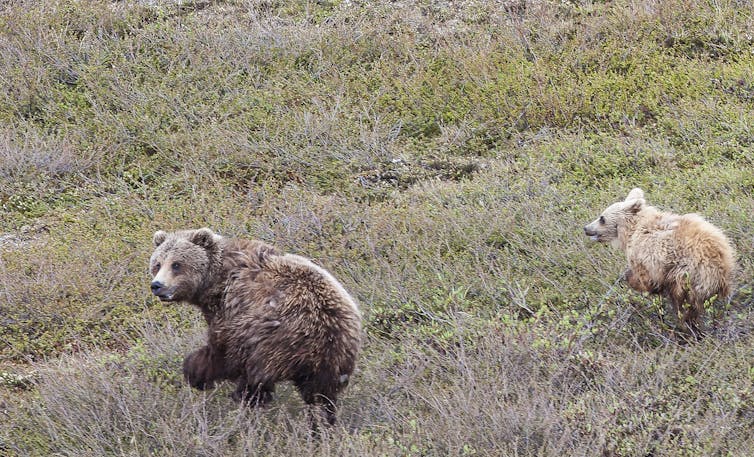
Polar bears build dens in the area, making it critical for cub survival. Wolverines, which follow caribou herds, also rely on large, connected expanses of undisturbed habitat for their dens and food. Moose browse along the Colville River, the largest river on the North Slope, while peregrine falcons, gyrfalcons and rough-legged hawks nest on the cliffs above.
A large stretch of the Colville River is currently protected as a special area, but the Trump administration’s proposed plan will remove those protections. The Teshekpuk Lake special area, critical habitat for caribou and migrating birds, would also lose protection.
Bob Wick/BLM, CC BY
Indigenous communities in the Arctic, particularly the Iñupiat people, also depend on these lands, waters and wildlife for subsistence hunting and fishing. Their livelihoods, food security, cultural identity and spiritual practices are deeply intertwined with the health of this ecosystem.
Oil and gas drilling’s impact
The National Petroleum Reserve-Alaska is vast, and drilling won’t occur across all of it. But oil and gas operations pose far-reaching risks that extend well beyond the drill sites.
Infrastructure like roads, pipelines, airstrips and gravel pads fragment and degrade the landscape. That can alter water flow and the timing of ice melt. It can also disrupt reproduction and migration routes for wildlife that rely on large, connected habitats.
Networks of winter ice roads and the way exploration equipment compacts the land can delay spring and early summer thawing patterns on the landscape. That can upset the normal pattern of meltwater, making it harder for shore birds to nest.

Kyle Joly/NPS
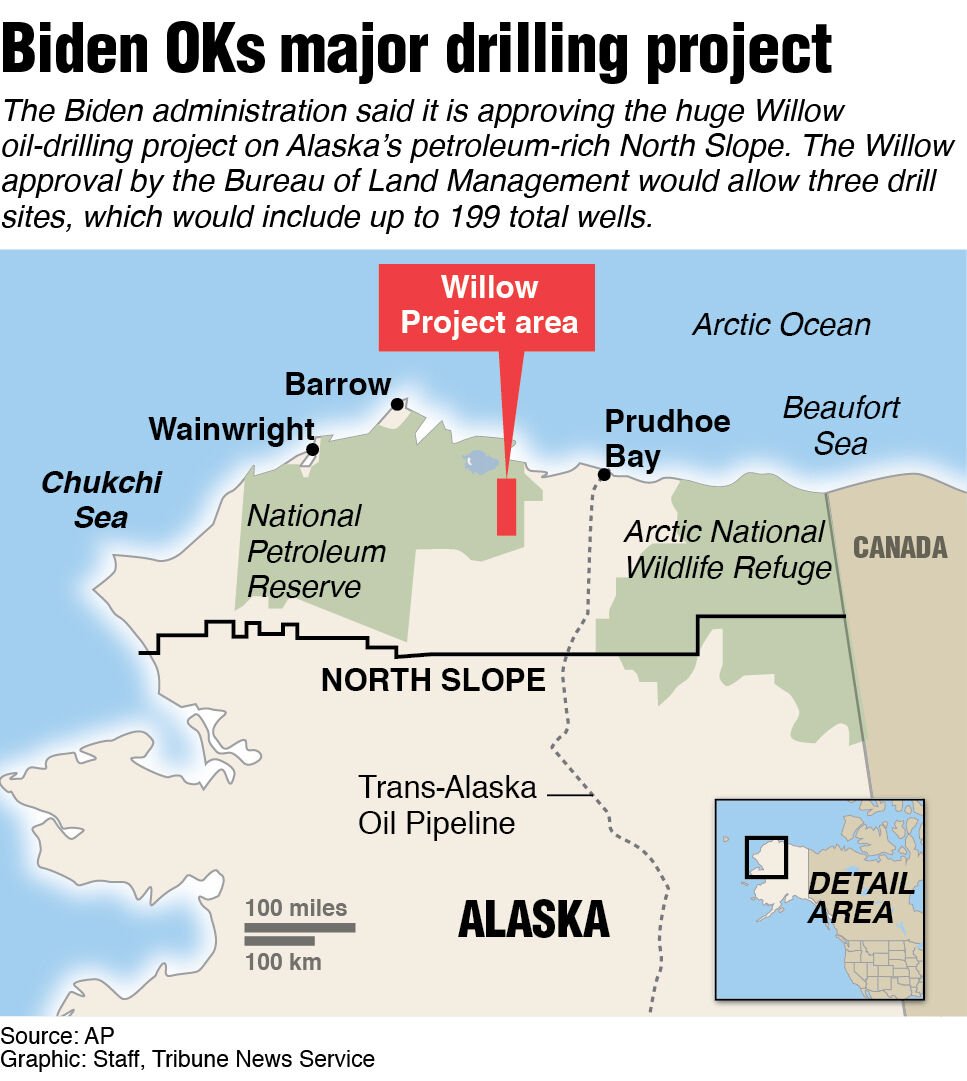
ConocoPhillips’ Willow drilling project, approved by the Biden administration in 2023 on the eastern side of the reserve, provides some insight into the potential impact: An initial project plan, later scaled back, included up to 575 miles (925 kilometers) of ice roads for construction, an air strip, more than 300 miles (nearly 485 kilometers) of new pipeline, a processing facility, a gravel mine and barge transportation, in addition to five drilling sites.
Many animals will try to steer clear of noise, light and human activity. Roads and industrial operations can force them to alter their behavior, which can affect their health and how well they can reproduce. Research has shown that caribou mothers with new calves avoid infrastructure and that this impact does not lessen over time of exposure.

Simon Bruty/Anychance/Getty Images
At Alaska’s Prudhoe Bay, the largest oilfield in the U.S., decades of oil development have led to pollution, including hundreds of oil spills and leaks, and habitat loss, such as flooding and shoreline erosion, extensive permafrost thaw and damage from roads, construction and gravel mining. In short, the footprint of drilling is not confined to isolated locations — it radiates outward, undermining the ecological integrity of the region. Permafrost thaw now even threatens the stability of the oil industry’s own infrastructure.
Consequences for the climate
The National Petroleum Reserve-Alaska and the surrounding Arctic ecosystem also play an outsized role in regulating the global climate.
Vast amounts of climate-warming carbon is currently locked away in the wetlands and permafrost of the tundra, but the Arctic is warming close to three times faster than the global average.
Roads, drilling and development can increase permafrost thaw and cause coastlines to erode, releasing carbon long locked in the soil. In addition, these operations will ultimately add more carbon dioxide to the atmosphere, further warming the planet.
The decisions made today will shape the future of the Arctic – and one of the last wild ecosystems in the United States – for generations to come.

Mariah Meek is Associate Professor of Integrative Biology at Michigan State University.




























Deborah Coffey says
It has become clear that Trump doesn’t care who or what he kills…ways to control climate change, people in speed boats, hundreds of people (including school children) in the Middle East, American citizens on our streets, wildlife everywhere, etc. Want to stop him? Continue taking to the streets in protest, often and in the millions. We the People can stop him. Let’s do it.
Laurel says
People like Trump have no sense of the world around them, as they are the center and need to know nothing else. He has no clue what an animal is, what a keystone species is, what the plant life is when specific to an area. Our Earth was a balanced planet, benefiting all. He doesn’t understand that. All he knows is that windmills didn’t look good to him from his golf course in Scotland, and he’s going to punish the makers and users of renewable energy by paying a billion dollars to them to stop. Our taxpayer billion dollars.
“The Trump administration has agreed to pay nearly $1 billion to the French energy company TotalEnergies to cancel two planned offshore wind farms off the coasts of New York and North Carolina. This deal is part of a broader effort to shift focus away from renewable energy projects towards fossil fuel investments.”
– Search Assist, Planetizen, Futurism
He is not our retribution, we are his.
PaulT says
445 million US dollars.
That’s what the fossil fuel industry spent during the 2024 election cycle to elect Donald Trump and his GOP henchmen.
Pundits said they’d never reap all they had sown but Trump was determined to prove those nay sayers wrong, didn’t want to risk losinging future ‘donations’. For 2028 maybe?
Trump’s decision to decimate ANWR suggests Big Oil/Gas’ investments (bribes?) did pay off, thanks of course to Citizens United.
Sherry says
@ Paul. . . Thank you so much for your excellent comment! The “Citizens United” decision. . . what a complete travesty!
Linda Hagman says
Everything Trump touches dies. Extinction is forever. Just like what is happening in Flagler County, greed overrules conservation and in the end humanity loses.