



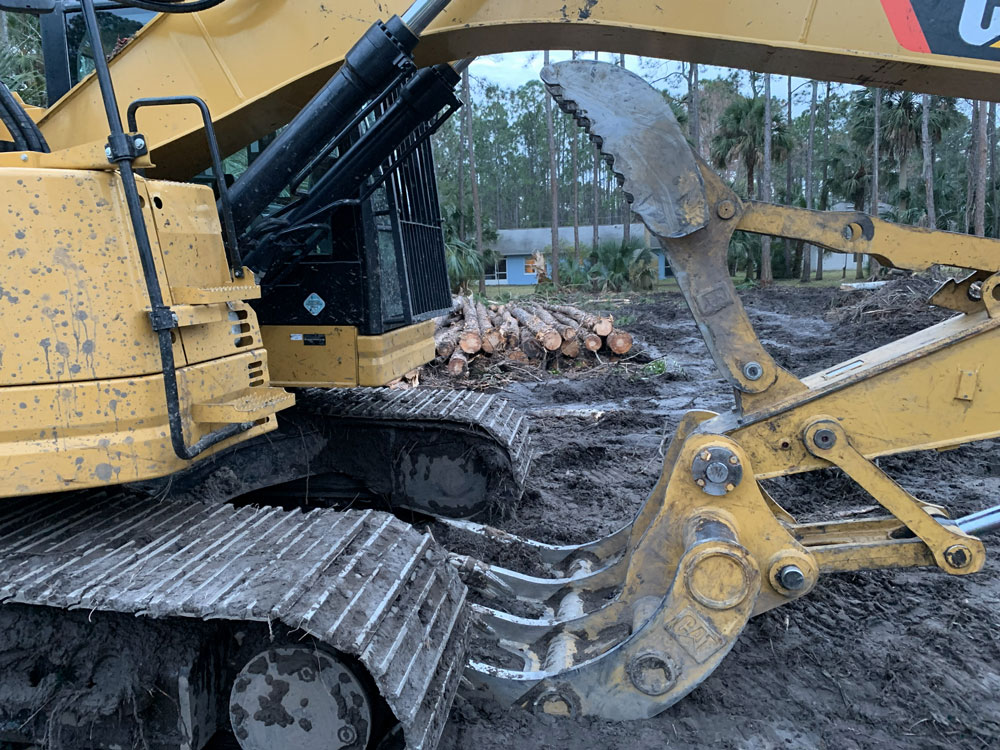
The legal case pitting the Flagler Home Builders Association against the City of Palm Coast over last year’s sharp increase in development impact fees saw a spate of filings before the holidays. Those include another motion by the city to dismiss the case, a motion by the homebuilders for a final judgment in their favor, which would entail the repeal of the fee increases, and the court’s scheduling of hearings on Feb. 2 and Feb. 17.
The association sued on Oct. 1, filing an amended complaint on Nov. 25. The association wants the transportation, parks and fire services impact fee schedule adopted last June invalidated. The increases range between 73 and 117 percent.
State law limits the increase of impact fees to 50 percent in a four-year period unless a local government shows evidence of extraordinary circumstances. The city adopted the new schedule citing rapid growth and the cost increase of labor and materials as extraordinary circumstances. The association disputes both rationales.
Development impact fees are one-time fees levied on builders or developers on new construction to help defray the cost of new infrastructure required by new residents and businesses. The fire fee increased to $942 for a single-family house, the parks fee to $3,164 and the transportation fee to $7,540 for a typical house. New houses also pay water and sewer, library, police and other fees.
The amended complaint expands legal arguments, adds case law and additional factual evidence, such as the allegation that the city’s impact fee consultant “admitted on May 27,
2025 at a Public Hearing before the City Council that the roadways are not projected to
be over capacity until 2050” and that only one or two roads would be over capacity
within the next five years.
The allegation misses some nuances. Jonathan Paul, the consultant with Nue Urban Concepts, was addressing the City Council that day. He referred to “the roadways that are projected to be over capacity by 2050” (emphasis added). “We have, you know, rough estimates of when that would occur.” He then added: “We typically look at a longer time frame in terms of transportation need, because it takes a while to get some of those funds collected.”
In other words the city does not want to wait until a road is at or beyond capacity before it begins planning to expand it. The plan predates that threshold by several years. The builders’ association considers predicating current impact fee increases on a 2050 horizon unjustifiable either way.
The city projects several major road expansions on that 2050 horizon, such as the widening to six lanes of Belle Terre Parkway from East Hampton Boulevard to Royal Palms Parkway and from Cypress Point Parkway to Pine Lakes Parkway, the four-laning of segments of Matanzas Woods Parkway and the six- or eight-laning of segments of State Road 100, among others. Curiously, the so-called loop road connecting Matanzas Woods Parkway to Palm Coast Parkway through the “western expansion,” west of U.S. 1, was not on the list Paul discussed and presented at the May workshop.
The complaint, filed by Daytona Beach attorney Daniel Webster, accurately reflects Paul’s statement about immediate needs. In his words: “There’s only one, two roads over the next five years that need to be widened. That doesn’t necessarily generate a whole lot of funds for that, and I don’t necessarily know that certainly making a recommendation of extraordinary circumstances based on one road or two roads in a five year period probably wouldn’t be enough justification. Here you have enough of a sample of roadways and enough data going behind it. So most of the transportation corridors that we look at, we look out over a 20 year period.”
On Dec. 5, City Attorney Jeremiah Blocker filed a motion to dismiss the amended complaint, this time relying on detailed 2025 reports–also made part of the court file–to refute the association’s claims. The city’s motion says the association didn’t identify what data was missing, and didn’t show how different data would change the fees.
Blocker in his original motion to dismiss had attacked the association’s vagueness. In his Dec. 5 filing, he attacked the contradictions in the association’s arguments. The association’s allegations, he writes, “are directly contradicted by the detailed legislative findings embedded within the Ordinances themselves and the comprehensive impact fee studies incorporated by reference into the Amended Complaint.”
Citing a court case about school impact fees, the association repeatedly claimed that the city applied its impact fee schedule universally across the city, instead of in more targeted methods. But the plaintiffs, who include the association, four builders and a resident, Blocker wrote, “fundamentally misapply controlling legal precedent by conflating school impact fee cases, which involve geographically-defined attendance zones, with Fire Rescue, Parks, and transportation services that operate as integrated, citywide, networked Systems.”
As for the association’s claim that Palm Coast had not proven “extraordinary” increases in labor and materials, the city’s answer cites the cost of building a mile of roadway in 2018 ($7 million) to the cost in 2025 ($16.5 million) as proof. The city’s population increase in the time periods studied are equally demonstrable and exceed the Florida average, thus qualifying as “extraordinary circumstances.”
Without fee increases, the city is projecting a $6.1 million shortfall in fire services infrastructure (which includes new fire trucks and apparatus) and a $13.1 million shortfall in parks infrastructure by 2035.
On Dec. 15, the plaintiffs filed a motion for summary final judgment: the association is asking the court to rule in its favor without going to trial, arguing that the impact fee ordinances the city approved last year are unconstitutional on their face, restating arguments made in previous complaints.
Just before Christmas the court announced a Feb. 2 hearing at 10:30 a.m. before Circuit Judge Sandra C. Upchurch in Courtroom 301 at the Flagler County courthouse to hear the city’s motion to dismiss the lawsuit. One hour has been reserved for that hearing. If the city does not prevail, the court has also scheduled a Feb. 17 hearing, starting at 9 a.m. in the same courtroom, to consider a previous motion by the association and other plaintiffs for a temporary injunction–meaning the temporary suspension of the impact fee increase–and the motion for summary judgment. The court has set aside the entire day for arguments. It is unlikely, but not impossible, that the judge will rule on either motion that day.

























Pig Farmer says
We are tired of paying so the builders can make higher profits. Either they pay their share or they can build elsewhere!
Deborah Coffey says
This is exactly why there’s a TV show called “American Greed.” You want to build? You pay your fair share.
M.N.S. says
I wonder who will actually pay these increased fee’s that are no doubt, probably needed, yep, just as I thought, the consumers in the end. Big money doesn’t spend its money.
Gina says
If they want to build MORE they need to pay MORE, we the taxpayers
should not be paying for them to build MORE while we have less.
Joe says
I did an analysis of new school impact costs in Stafford Virginia in 2022. These numbers are higher than Flagler, because of three main factors.
1. Stafford has a high student ratio per dwelling.
2. Data Centers have made the cost of land skyrocket.
3. The infrastructure costs are higher in Stafford.
Stafford currently goes into new school debt by over $50,000 from each new house that is built By-right without proffers.
2022 cost estimates
Estimated costs per School
High School #6 $183,200,000 Divided by 2,150 seats = $85,209 per seat
Elementary School #18 $51,187,000 Divided by 964 seats = $53,000 per seat
Middle School #9 $84,607,000 Divided by 1,100 seats =$77,000 per seat
Greg says
Ironic, that the very people that the city kisses their butt, has filed a law suit about the impact fees. I’m very surprised the city actually went against the very group that really runs the city, and has run it for years.
Ed says
We actually know who will be making money with this ……. the lawyers
We actually know who will be paying for this at the end of the day……..
The residents
We actually know who will benefit …
The builders.
Where is the impact fee $ the city has been collecting for decades ?????
bill says
these builders come in they cut the lot size down so they can squeeze more homes into the area plus the fact they built crap homes they built my home and I don’t think any of the carpenters no a damn square or a level is. Let them pay builders are greedy they think about themselves will they ever move into an area where our building developments from an 8000 ft.² to 5000 ft.² that they cut down so they can fit more homes, greed, greed, greed, and greed