


By Derek Boyd Hankerson
As a social scientist whose paternal family is native to Florida and who loves American history, I have put my money where my mouth is regarding our rich Black history, specifically in St. Johns County over the last 26 years. I’m now thrilled that Florida is one step closer to correcting a long-standing omission in how it tells its own story.
Senate Bill 308, which cleared three committees and the full Senate with unanimous votes, would establish a state-funded Museum of Black History—-an institution long overdue in a state where Black history is inseparable from Florida history itself going back to the first Spanish expedition in the early 16th century and the founding of St Augustine in 1565.
Ironically, the Spanish named St. Augustine after a North African man of the 5th century who became the most influential theologian in the Western church over the next half millennium.
In 2023 the governor signed House Bill 1441, creating the nine-member Black History Task Force that led the following year to recommending locating the Black History Museum in St. Johns County. SB 308, sponsored by Sen. Tom Leek, would formally designate St. Johns County as the site of the museum, and would require the establishment of a board of directors to oversee the commission, construction, operation, and administration of the museum. The board would have to be appointed by July 31.
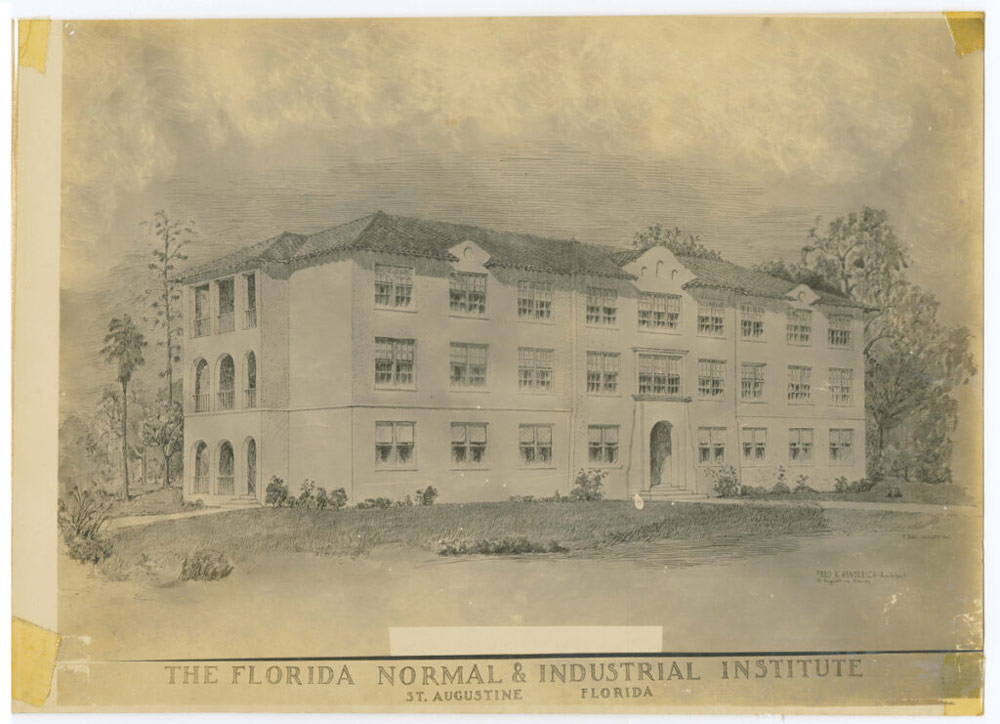
The proposed location west of St. Augustine, on land that once housed Florida Memorial University, carries deep historical resonance and symbolic weight, as well as personal significance that thrills me.
My great-great-grandfather, Rev. J. P. Hankerson, served two terms as president of the Baptist General Convention in Florida. He and other ministers helped moved Florida Memorial University to St. Augustine in 1918, well before the civil rights era. My great-grandfather served as the first Black postmaster in St. Johns County in 1915.
Equally important is how the bill structures governance. SB 308 creates a 13-member Florida Museum of Black History Board of Directors, with appointments shared among the Governor, Senate President, and House Speaker. This board would oversee planning, construction, and long-term operations, while working collaboratively with the Foundation for the Museum of Black History, Inc., a nonprofit established to support the project. St. Johns County would provide initial administrative and financial support, ensuring the effort begins on solid footing.
The museum will fill a critical cultural gap. Leek and other proponents, who include Flagler County’s Howard Holley (who served on the task force), describe it as a space for education, reflection, and heritage tourism. The museum would acknowledge painful truths while honoring the resilience, innovations, and triumphs of Florida’s Black people over the generations.
In a state often at the center of controversial national debates over history and education, the museum represents a huge chance to lead with substance rather than slogans.
Unanimity in the Senate suggests broad agreement on that point. Yet a familiar obstacle looms. The House companion bill, HB 525, has been filed but not heard in any committee. This silence is concerning, especially given recent history: a nearly identical bill cleared the Senate during the 2025 session, only to stall in the House, and ultimately die.
Florida’s lawmakers now face a clear choice. They can allow SB 308 to become another symbolic gesture that goes nowhere. Or they can act decisively to ensure that American history is preserved, funded, and shared in a way that reflects its central role in the state’s past and future.
The Senate did its job, rousingly. The question is whether the House will meet the moment.

Derek Boyd Hankerson, president of the Loxahatchee Battlefield Preservationist Board, is a social scientist and documentary filmmaker who was instrumental in connecting the Department of Interior/National Park Service (NPS) Underground Railroad Network to St. Johns County in 2014. He was the catalyst to connecting the Gullah Geechee Cultural Heritage Corridor to St. Johns County and instrumental in having the NPS change its management plan to include St. Johns County in 2015.


























Leave a Reply