



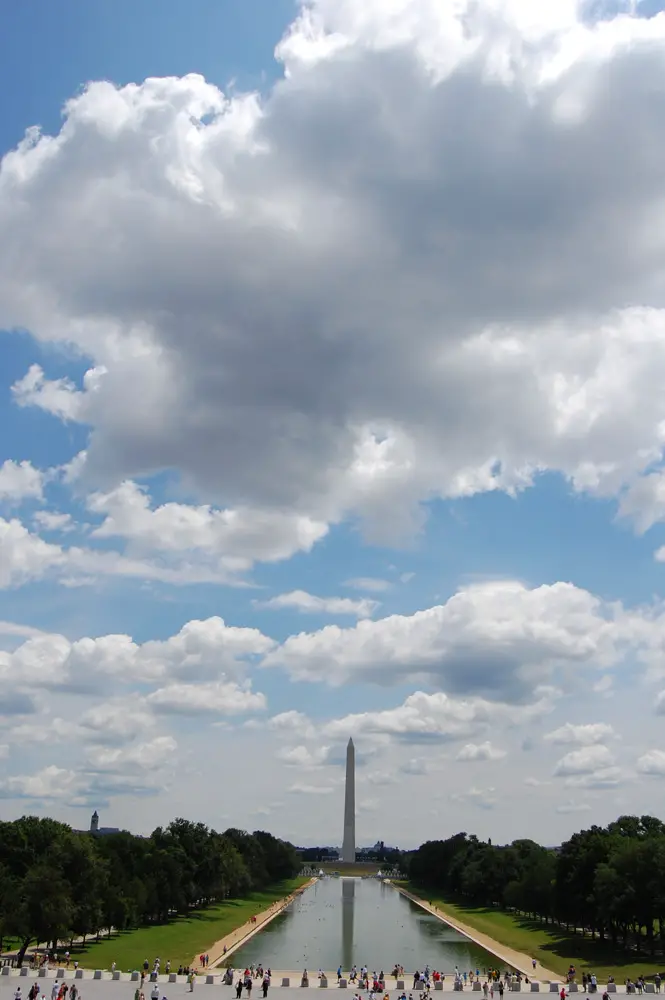
(© FlaglerLive)
It was toward the end of a sweltering August day and dozens of speeches that Rev. Martin Luther King Jr. delivered the “Dream” speech now engraved alongside the Gettysburg Address and the Declaration of Independence as markers of the nation’s conscience. The date was itself a grim anniversary: that of the kidnapping, torture and murder of 14-year-old Emmett Till in Mississippi in 1955 by Roy Bryant and his half brother J.W. Milam, who were declared not guilty by an all-white jury in 67 minutes despite overwhelming evidence of their guilt. When 250,000 people marched on Washington last Saturday to mark the 50th anniversary of the march, many had another slain black teenager on their mind: Trayvon Martin, the unarmed 17-year-old shot by George Zimmerman in Sanford, Fla., as Martin was returning from a convenience store run for Skittles and iced tea, and after Zimmerman, finding the hoody-clad Martin suspicious, pursued him.
adcode+King’s “I Have a Dream” speech is not as well known as the fact that half of it was an improvisation. After noting that a hundred years after the Emancipation Proclamation blacks were “still sadly crippled by the manacles of segregation and the chains of discrimination,” that the nation had “defaulted” on the promissory note of the unalienable rights of life, liberty, and the pursuit of happiness due “her citizens of color,” and after warning against “the tranquilizing drug of gradualism,” Mahalia Jackson yelled out from speakers’ row: “Tell ’em about the ‘Dream,’ Martin, tell ’em about the ‘Dream’!”
And so he did.
“With his improvised riff, Dr. King took a leap into history, jumping from prose to poetry, from the podium to the pulpit,” writes The Times’s Michiko Kakutani. “His voice arced into an emotional crescendo as he turned from a sobering assessment of current social injustices to a radiant vision of hope — of what America could be.”
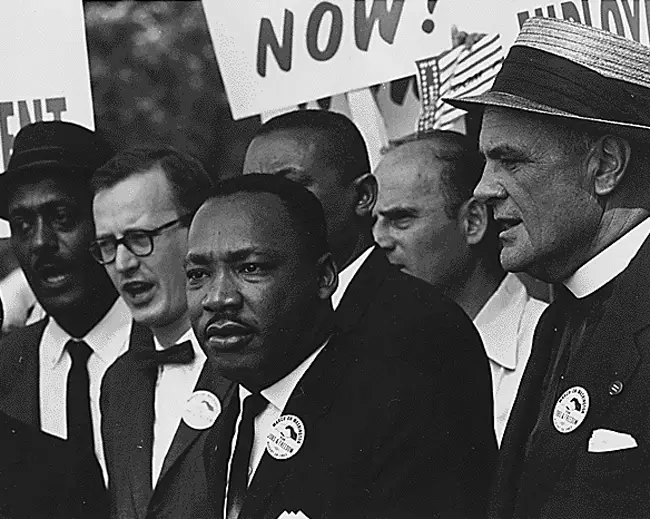
“Dr. King’s speech was not only the heart and emotional cornerstone of the March on Washington, but also a testament to the transformative powers of one man and the magic of his words,” Kakutani writes. “Fifty years later, it is a speech that can still move people to tears. Fifty years later, its most famous lines are recited by schoolchildren and sampled by musicians. Fifty years later, the four words ‘I have a dream’ have become shorthand for Dr. King’s commitment to freedom, social justice and nonviolence, inspiring activists from Tiananmen Square to Soweto, Eastern Europe to the West Bank.”
In many ways some of the most important parts King’s message remain unfulfilled: the United States is still a nation riven by inequality, with poverty and race more often than not cleaving society in ways King would easily recognize despite immense progress as well.
Martin Luther King III, the human rights activist and King’s eldest son, writes to that effect in his commemoration of the 50th anniversary: “When an unarmed 17-year-old walking home with Skittles can be brutally slain by an armed man — a man who had been told by police to leave the boy alone — and that man is acquitted of all charges, something is very wrong. The so-called “stand your ground” and “stop-and-frisk” laws that have been enacted in various states in recent years disproportionately abuse people of color. These ill-considered laws are a serious threat to the freedom and safety of all Americans. The appalling racial injustice inherent in the Trayvon Martin tragedy reminds us that there is still much to do.” He goes on to note the “horrific gun violence” in Chicago and other cities that continues to shed the blood of innocents.
“Fulfilling my father’s dream will also require our society to become one where everyone who wants a job at a decent wage can get one. Reforms are needed to stem the tide of outsourcing good jobs to other nations and to educate and train American workers to meet the challenges of the 21st-century world economy,” the younger King writes. He concludes: “As I reflect back, I can’t help but ask, what would Dad think? One thing I am certain he would do is work relentlessly to get us all to work together to address today’s most pressing issues. As I look forward, I can’t help but ask, what is each and every one of us doing to realize the dream of freedom, justice and equality for all?”
Martin Luther King Jr.’s “I Have a Dream” speech was delivered from the steps of the Lincoln Memorial in Washington, D.C., on August 28, 1963 as the culmination of the Washington Freedom Rally. Historian James MacGregor Burns described the scene in “Crosswinds of Freedom” (Knopf, 1989):
A quarter of a million people, black and white together, gathered in the summer heat at the Washington Monument and then surged forth to the Lincoln Memorial. They had come on buses and trains, many from the Deep South. Large contingents represented white religious faiths and, despite lack of backing by the AFL-CIO, many labor unions. Haunting freedom songs—”We Shall Overcome” sung by Joan Baez, “Oh, Freedom!” by Odetta—blended with speeches by the civil rights leadership. SNCC [Student Nonviolent Coordinating Committee]’s John Lewis pierced the uplifting mood by denouncing the inadequacy of conventional liberalism and Kennedy’s legislative program to complete “the unfinished revolution of 1776.”
Around midafternoon Martin Luther King stood beneath the brooding face of Abraham Lincoln. Inspired by the sea of upturned black and white faces, he left his carefully crafted text and in rippling cadences and rich colors, he painted his vibrant dream of racial justice. Repeatedly invoking his phrase, “I have a dream,” responding to the people in rhythm with him, he implored that freedom ring from the hilltops of New Hampshire, the mountains of New York and Pennsylvania, and even more, from Georgia’s Stone Mountain. “Let freedom ring from Lookout Mountain of Tennessee. Let freedom ring from every hill and mole hill of Mississippi. From
every mountain top, let freedom ring. […]A euphoric group of blacks, save for Coretta King, who to her distress was left to repair to her hotel room, met with the President following the rally. Having first opposed the march and then cooperated with it—to the point, some militants charged, of cooptation—Kennedy now shared in the moment of relief and triumph. He was “bubbling over with the success of the event,” [the NAACP’s Roy] Wilkins recalled. But out on the Mall some blacks remained skeptical and even cynical. Listening to King, young activist Anne Moody had told herself that back in Mississippi they had never had time to sleep, much less dream. An angry black man had shouted: “Fuck that dream, Martin. Now, goddamit, NOW!”
It was a luminous moment in a season of death and despair. The very evening of Kennedy’s June television address, NAACP leader Medgar Evers had been shot down as he returned to his home in Mississippi; later the President consoled the Evers family in the White House. By the end of the summer nearly 14,000 persons had been arrested in seventy-five cities in the South alone. Two weeks after the March, on a Sunday morning, a dynamite bomb exploded in Birmingham’s Sixteenth Street Baptist Church, a center of the spring crusade, killing four black girls as they were donning their choir robes.
It would be another generation before the nation would finally consider establishing a national holiday in Martin Luther King’s name, though not easily. King was born on Jan. 15, 1929, in Atlanta. His birthday is observed federally on the third Monday of January. The national holiday, was first observed on Jan. 20, 1986, after a long ratification battle in Congress.
The House of Representative approved the holiday bill on Aug. 2, 1983, by a vote of 338-90. Five of those No votes were cast by Florida congressmen, including Bill McCollum. Other Floridians voting against were Michael Bilirakis, Andy Ireland, Earl Hutto, and C. W. Bill Young. John McCain, then a member of the House, also voted against the bill. He later admitted to being wrong. Others voting against included Trent Lott, the Republican Senate Majority Leader during the George W. Bush administration, and Ron Paul, the Texas Republican.
The U.S. Senate finally approved the bill on Oct. 19, 1983, by a vote of 78-22, two weeks after North Carolina Republican Sen. Jesse Helms attempted to derail the effort with a one-man filibuster. He did not end the filibuster from a change of heart, but because he was worried that legislation favoring tobacco growers would be scuttled as a result of his rather bigoted assault on King’s memory. Helms’s pretext: King, in his view, was a communist sympathizer. “We’ll know in about 35 years, won’t we?” President Reagan, who had also initially resisted the holiday, said, in reference to court-sealed FBI records about King.
Other Senate opponents of the bill included Barry Goldwater (R-AZ), Chuck Grassley, (R-IA), Orrin Hatch (R-UT), Frank Murkowski (R-AK) and Warren Rudman (R-NH).
On Oct. 16, 2011, the Martin Luther King Memorial, the first honoring a black person at the Washington Mall, was dedicated after two decades of planning and construction (the monument grounds had opened on Aug. 22). The 30-foot granite structure, which Congress authorized in 1996, is the work of Chinese artist Lei Yixin. The $120 million project includes a bookstore, a wall of King’s quotations and some 200 cherry trees. About $800,000 went to the King family, which demanded the money in exchange for granting permission to have King’s words and likeness used.
“Our work is not done,” President Barack Obama said at the dedication. “And so on this day, in which we celebrate a man and a movement that did so much for this country, let us draw strength from those earlier struggles. First and foremost, let us remember that change has never been quick. Change has never been simple, or without controversy. Change depends on persistence. Change requires determination. […] And so with our eyes on the horizon and our faith squarely placed in one another, let us keep striving; let us keep struggling; let us keep climbing toward that promised land of a nation and a world that is more fair, and more just, and more equal for every single child of God.”
The full speech and video are below.

Martin Luther King Jr.’s I Have a Dream Speech
I am happy to join with you today in what will go down in history as the greatest demonstration for freedom in the history of our nation.
Five score years ago, a great American, in whose symbolic shadow we stand today, signed the Emancipation Proclamation. This momentous decree came as a great beacon light of hope to millions of Negro slaves who had been seared in the flames of withering injustice. It came as a joyous daybreak to end the long night of their captivity.
But one hundred years later, the Negro still is not free. One hundred years later, the life of the Negro is still sadly crippled by the manacles of segregation and the chains of discrimination. One hundred years later, the Negro lives on a lonely island of poverty in the midst of a vast ocean of material prosperity. One hundred years later, the Negro is still languishing in the corners of American society and finds himself an exile in his own land. So we have come here today to dramatize a shameful condition.
In a sense we have come to our nation’s capital to cash a check. When the architects of our republic wrote the magnificent words of the Constitution and the Declaration of Independence, they were signing a promissory note to which every American was to fall heir. This note was a promise that all men, yes, black men as well as white men, would be guaranteed the unalienable rights of life, liberty, and the pursuit of happiness.
 It is obvious today that America has defaulted on this promissory note insofar as her citizens of color are concerned. Instead of honoring this sacred obligation, America has given the Negro people a bad check, a check which has come back marked “insufficient funds.” But we refuse to believe that the bank of justice is bankrupt. We refuse to believe that there are insufficient funds in the great vaults of opportunity of this nation. So we have come to cash this check — a check that will give us upon demand the riches of freedom and the security of justice. We have also come to this hallowed spot to remind America of the fierce urgency of now. This is no time to engage in the luxury of cooling off or to take the tranquilizing drug of gradualism. Now is the time to make real the promises of democracy. Now is the time to rise from the dark and desolate valley of segregation to the sunlit path of racial justice. Now is the time to lift our nation from the quick sands of racial injustice to the solid rock of brotherhood. Now is the time to make justice a reality for all of God’s children.
It would be fatal for the nation to overlook the urgency of the moment. This sweltering summer of the Negro’s legitimate discontent will not pass until there is an invigorating autumn of freedom and equality. Nineteen sixty-three is not an end, but a beginning. Those who hope that the Negro needed to blow off steam and will now be content will have a rude awakening if the nation returns to business as usual. There will be neither rest nor tranquility in America until the Negro is granted his citizenship rights. The whirlwinds of revolt will continue to shake the foundations of our nation until the bright day of justice emerges.
But there is something that I must say to my people who stand on the warm threshold which leads into the palace of justice. In the process of gaining our rightful place we must not be guilty of wrongful deeds. Let us not seek to satisfy our thirst for freedom by drinking from the cup of bitterness and hatred.
We must forever conduct our struggle on the high plane of dignity and discipline. We must not allow our creative protest to degenerate into physical violence. Again and again we must rise to the majestic heights of meeting physical force with soul force. The marvelous new militancy which has engulfed the Negro community must not lead us to a distrust of all white people, for many of our white brothers, as evidenced by their presence here today, have come to realize that their destiny is tied up with our destiny. They have come to realize that their freedom is inextricably bound to our freedom. We cannot walk alone.
As we walk, we must make the pledge that we shall always march ahead. We cannot turn back. There are those who are asking the devotees of civil rights, “When will you be satisfied?” We can never be satisfied as long as the Negro is the victim of the unspeakable horrors of police brutality. We can never be satisfied, as long as our bodies, heavy with the fatigue of travel, cannot gain lodging in the motels of the highways and the hotels of the cities. We cannot be satisfied as long as the Negro’s basic mobility is from a smaller ghetto to a larger one. We can never be satisfied as long as our children are stripped of their selfhood and robbed of their dignity by signs stating “For Whites Only”. We cannot be satisfied as long as a Negro in Mississippi cannot vote and a Negro in New York believes he has nothing for which to vote. No, no, we are not satisfied, and we will not be satisfied until justice rolls down like waters and righteousness like a mighty stream.
I am not unmindful that some of you have come here out of great trials and tribulations. Some of you have come fresh from narrow jail cells. Some of you have come from areas where your quest for freedom left you battered by the storms of persecution and staggered by the winds of police brutality. You have been the veterans of creative suffering. Continue to work with the faith that unearned suffering is redemptive.
Go back to Mississippi, go back to Alabama, go back to South Carolina, go back to Georgia, go back to Louisiana, go back to the slums and ghettos of our northern cities, knowing that somehow this situation can and will be changed. Let us not wallow in the valley of despair.
I say to you today, my friends, so even though we face the difficulties of today and tomorrow, I still have a dream. It is a dream deeply rooted in the American dream.
I have a dream that one day this nation will rise up and live out the true meaning of its creed: “We hold these truths to be self-evident: that all men are created equal.”
I have a dream that one day on the red hills of Georgia the sons of former slaves and the sons of former slave owners will be able to sit down together at the table of brotherhood.
I have a dream that one day even the state of Mississippi, a state sweltering with the heat of injustice, sweltering with the heat of oppression, will be transformed into an oasis of freedom and justice.
I have a dream that my four little children will one day live in a nation where they will not be judged by the color of their skin but by the content of their character.
I have a dream today.
I have a dream that one day, down in Alabama, with its vicious racists, with its governor having his lips dripping with the words of interposition and nullification; one day right there in Alabama, little black boys and black girls will be able to join hands with little white boys and white girls as sisters and brothers.
I have a dream today.
I have a dream that one day every valley shall be exalted, every hill and mountain shall be made low, the rough places will be made plain, and the crooked places will be made straight, and the glory of the Lord shall be revealed, and all flesh shall see it together.
This is our hope. This is the faith that I go back to the South with. With this faith we will be able to hew out of the mountain of despair a stone of hope. With this faith we will be able to transform the jangling discords of our nation into a beautiful symphony of brotherhood. With this faith we will be able to work together, to pray together, to struggle together, to go to jail together, to stand up for freedom together, knowing that we will be free one day.
This will be the day when all of God’s children will be able to sing with a new meaning, “My country, ’tis of thee, sweet land of liberty, of thee I sing. Land where my fathers died, land of the pilgrim’s pride, from every mountainside, let freedom ring.”
And if America is to be a great nation this must become true. So let freedom ring from the prodigious hilltops of New Hampshire. Let freedom ring from the mighty mountains of New York. Let freedom ring from the heightening Alleghenies of Pennsylvania!
Let freedom ring from the snowcapped Rockies of Colorado!
Let freedom ring from the curvaceous slopes of California!
But not only that; let freedom ring from Stone Mountain of Georgia!
Let freedom ring from Lookout Mountain of Tennessee!
Let freedom ring from every hill and molehill of Mississippi. From every mountainside, let freedom ring.
And when this happens, when we allow freedom to ring, when we let it ring from every village and every hamlet, from every state and every city, we will be able to speed up that day when all of God’s children, black men and white men, Jews and Gentiles, Protestants and Catholics, will be able to join hands and sing in the words of the old Negro spiritual, “Free at last! free at last! thank God Almighty, we are free at last!”
[Originally published in 2011 and revised since.]





















PC MAN says
Any doubt that our most recent group of ignorant racists the teabaggers would be against a national holiday for King, on the grounds that you can’t create a national holiday with this economy, it would be a job killer.
Jim Guines says
Thank you!
Well... says
Today is about more than pointing fingers and taking sides, it is about remembering the vision of a man that did not see skin color as a required inference to the discourse of a nation but rather the possibility of unity without boundaries akin to the color of a man’s skin. His speech is as relevant today as it was when he delivered it. We are divided today because we cannot talk to one another with an open ear. There is almost an outright refusal to hear another point of view. People escalate their tone until they are screaming over one another the point they are desperately trying to make. This is not to say we cannot disagree or cannot have passion about what concerns us but doing so with respect, dignity, and an open ear, is what creates progress rather than stagnant repetitive dialogue.
Laurel says
Well…says: Well said.
W.Ryan says
Well said! Unfortunately as time continues and the the nation moves on, it moves away from the needs of the people. Social causes have become an evil thing in the eyes of half of America. We have Red America that doesn’t seem to support social causes except dismantling the U.S. Constitution and Blue America. One of the major causes MLK was fighting for was helping the poor and disadvantaged. He spoke of blurring the lines of color as was stated and focused on the haves and have-nots. In December 2010 Americans mortgaged a little more money so that the two percent of the the wealthiest Americans can keep more of their moneys. This was in exchange for helping the unemployed get a mere nickel. Corporatism has total control of the media and our elected Officials and apparently also have control of the minds of many who now vote against their own interest. Slogans such as “Take our country back,” are on the lips of too many Americans which only proves one thing. We have already been taken back. Maybe it’s about seeing! We have a long way to go.
Anonymous says
yeah, I liked it too…..
K-Ross says
W.Ryan…preach my brother. PREACH!!!!!!!!!!!
Laurel says
W Ryan: Yes.
Jefferson Davis says
Interestingly enough, many more Republicans voted for the Civil Rights Act of 1964 than Democrats.
FlagerLive says
Correction Jefferson: The Civil Rights Act passed by a 289-126 vote in the House, with 153 Democrats and 136 Republicans voting for, and 73-27 in the Senate, with 27 Republicans voting for. The proportion of Republicans voting for it was higher than the proportion of Democrats voting for it for two reasons: Democrats at the time controlled a sizable portion of each chamber, and Southern Democrats, who were indistinguishable from today’s more reactionary Republicans, voted almost all against the Act (as did, of course, what few Southern Republicans there were at the time until those Democrats got honest with themselves and took off the mask).
Layla says
I strongly suggest you look up Dr. King’s party affiliation. The man was a Republican.
I have a dream that one day every valley shall be exalted, every hill and mountain shall be made low, the rough places will be made plain, and the crooked places will be made straight, and the glory of the Lord shall be revealed, and all flesh shall see it together.
Martin was NOT about socialism, he was about FREEDOM.
“Indistinguishable from today’s more reactionay Republicans?” That’s a crock. Love how you are attempting to rewrite history. Those people marching with Dr. King were REPUBLICANS.
The South was in the complete control of the Democrats (Dixiecrats) until about 1964.
Palm Coast Citizen says
“I don’t think the Republican party is a party full of the almighty God nor is the Democratic party,” he said in a 1958 interview. “They both have weaknesses. And I’m not inextricably bound to either party. I’m not concerned about telling you what party to vote for.”
YourQueerPeer says
You’re just wrong here hun sorry to say it. The first thing is that the North South divide was far more important than the political and also he stated his economic affilliation was more socialist search up MLK jr 1952 letter
A.S.F. says
Jefferson Davis–If true, I can only assume that that was because Republicans in Congress were more sane back then than they are now.
Kianah says
This is an inspiring speech i could read it over and over. Thankyou Martin Luther King.
leilani conanan says
i reallly really like this, it is a verry goood speech , a must never forget speech i tell yu :D
Samantha Zaw says
What a powerful sentence “we will not be satisfied until the justice rolls down like water and righteousness like a mighty stream.”
megan says
The “i have a dream speech ” is awsome!!!!!!!!!!!!!!!!!!!!!!!!!!!!!!!!!!!!!!!!!!!!!!:)
tamia says
the ‘i have a dream speech’ is awesome
miranda says
i love martin luther king!!!!!!!!!!!!!!
tms says
nice i like the speech a lot i got to learn it
Anonymous says
Yeaaah martin luther king jr
china lebron lampley says
THIS SPEECH MADE HISTORY PERIOD AND WHO AFRICAN AMERICANS ARE TODAY LET FREEDOM RING
Robert Exume says
When I hear the speech . Off this man I was so happy . Off this world it is a powerfull . Speech I think god. Was and side this man. When He make this speech . When. I hear it Againt it make me felt full . This man talk about union. And. Freedrom for all Human rise . Black. White spinach. Yellow red. Pink blue and all Off God creating. Jusus Chris. Don’t. Have No color no one. No what is God color. Rest in peace your the MAN YOU ALWAYS AND ARE HEART .REST IN PEACE
Tina says
The speech is awesome and I am in not racist in no way, shape or form but what do you mean by who African Americans are today? Because I see more gang bangers and druggies…African American’s still pull the race card and my ancestor’s were slaves but they do not want to rise above “their’ history and be the best that they can instead…I see Detroit gang bangers giving the African Americans a bad name…in my opinion you would think that they would want to exceed all races to prove that they are proud honorable people and make their ancestors proud instead of selling crack to a 10 year old……..
5rtyt7tu says
i love you martin
7years old
karenmingo says
thank u for your dedication you have paved the way for many of the african-american children my son is attending college this is his third year i wish we had more leaders like you thank you we will never forget about you and what you stood for .
Layla says
Your son is attending college and VOTING, I hope. Good people in this country died to make sure he has that right.
Geezer Butler says
A richly deserved holiday for a great man.
My favorite speech: “Why I am Opposed to the War in Vietnam.”
MLK, Jr. will never be forgotten.
Richard says
I agree with Geezer Butler. I had not read it until it was pointed out to me today but Dr. King’s speech about the war in vietnam could be applied equally today to our war against Islam. If anyone wants to read it in full this is one link
http://www.hartford-hwp.com/archives/45a/058.html
Richard says
This is only one excerpt
Love is somehow the key that unlocks the door which leads to ultimate reality. This Hindu-Moslem-Christian-Jewish-Buddhist belief about ultimate reality is beautifully summed up in the first epistle of Saint John:
Let us love one another; for love is God and everyone that loveth is born of God and knoweth God. He that loveth not knoweth not God; for God is love. If we love one another God dwelleth in us, and his love is perfected in us.
Let us hope that this spirit will become the order of the day. We can no longer afford to worship the god of hate or bow before the altar of retaliation. The oceans of history are made turbulent by the ever-rising tides of hate. History is cluttered with the wreckage of nations and individuals that pursued this self-defeating path of hate. As Arnold Toynbee says : “Love is the ultimate force that makes for the saving choice of life and good against the damning choice of death and evil. Therefore the first hope in our inventory must be the hope that love is going to have the last word.”
Not My King says
Anybody surprised?
That “Dr.” Martin Luther King, Jr.
-wasn’t born as Martin Luther anything
-plagiarized the works of many, throughout his college days, including for his doctoral dissertation
-cheated on his wife, repeatedly, often with white women, often with prostitutes
-physically abused many of the women he committed adultery with
-either a communist himself, and/or a troll of the communists
kthx, do the research yourself if you don’t believe me. Don’t believe in personality cults.
Steve says
You mean like 45 The EX Former moron.
Demetrius says
I wouldnt be in the world if i it wasnt for Martin Luther King Jr. My mom is white and my dad is black
by: Demetrius Jones
To: Martin Luther King Jr.
And i hope u are in a good place with God …….Love u brother
confidential says
Yes Reverend Mr.Martin Luther King, “You had a dream” and it became reality today for the second time with the inauguration of our re-elected President Barack Obama. This is yours and our dream come true!
We are all created equal and God Bless America and our Wars Heroes that gave their lives to make it possible! May God watch over us all.
Deep South says
Two my of favorite speeches, Lincoln’s “Gettysburg’s Address” and King’s ” I Have a Dream.” If only the white race and the black race would have fulfill what what these two great men had expected of us. We have failed as a society.
Jim R. says
So today the great bullshitter upstaged the most charismatic speaker and force for good this country ever had.
Words for Obama are ways to manipulate the 99% into thinking they matter to the 1% that own and control everything including the political system, and to convince them they live in a democracy and can change things by voting.
He spoke today about saving the middle class ,( the middle class today being those that make somewhere between $50,000 and $250,000) what a joke, the unemployed and homeless is who he should focus on, but how can he when he knows there will never be jobs for the unemployed and it will only get worse, because the greedheads who managed to gain most of the wealth , and all of the power into their greedy hands will never give an inch, they wouldn’t care if millions of Americans starved to death.
Obama will continue the endless wars and facilitate the flow of wealth to those at the top.
If MLK were alive today he would be no fan of our first black president.
Liana G says
Thank you Jim R. I believe Obama has undermined the progress made by African Americans because people of other colors have come to believe that racial inequality no longer exists for African Americans. I admit that I often think so too only because I get tired and frustrated with the rhetoric on the left and AAs supporters of this rhetoric. Then I would read or see something that pulls me back to the stark reality. But even then, I see it more often as a class issue than a race issue. However, the powers that control the rhetoric do not want to make it about class because that will turn the spotlight on them.
When I moved to NYC, I applied to CUNY’s Medgar Evers (ME), my 1st choice, and Brooklyn College (BC), my 2nd choice. I was selected for BC but after a semester I requested a transfer to ME. Apparently, Brooklyn is very difficult to get into and my desire to attend ME was met and still is met with confusion and astonishment by people of all races. My reason for choosing ME is to have a clearer understanding of race issues in America and to develop a greater tolerance for the other person’s views, when I am able to sift through and also find the pain and suffering that is often the reason for the anger and resentment. I’m hoping that by the time I graduate from ME I will be able to do so because I do harbor some biases that stem from my ignorance of the African American community. And I do want to overcome those biases.
Best of all tomorrows to you Jim R…
Shocked, I tell you... says
@ Liana: You wrote some pretty nice words yourself, Liana. Thank you.
A.S.F. says
@Jim R. says–MLK might not agree with every decision President Obama has made or will make but he would have every right to pat himself on the back for a job well done, just due to the fact that we have elected this man, twice.
Ayn Rand's Spleen says
In both cases he was elected because the alternative to him was worse, but that doesn’t validate his performance in office. Whatever happened to Guantanamo? Why didn’t he get rid of the patriot act? The only reason he decided he was for gay marriage was because Biden forced his point, and between persecuting whistleblowers and defending the NSA’s behavior it’s pretty obvious that we aren’t dealing with a progressive democrat but a moderate republican.
karma says
You would think the only black Senator in the Senate would have been invited. Why do you think he may have been overlooked?
Sherry Epley says
Martin Luther King on political parties:
King maintained a policy of not publicly endorsing a U.S. political party or candidate: “I feel someone must remain in the position of non-alignment, so that he can look objectively at both parties and be the conscience of both—not the servant or master of either.”[31] In a 1958 interview, he expressed his view that neither party was perfect, saying, “I don’t think the Republican party is a party full of the almighty God nor is the Democratic party. They both have weaknesses … And I’m not inextricably bound to either party.”[32]
King critiqued both parties’ performance on promoting racial equality:
Actually, the Negro has been betrayed by both the Republican and the Democratic party. The Democrats have betrayed him by capitulating to the whims and caprices of the Southern Dixiecrats. The Republicans have betrayed him by capitulating to the blatant hypocrisy of reactionary right wing northern Republicans. And this coalition of southern Dixiecrats and right wing reactionary northern Republicans defeats every bill and every move towards liberal legislation in the area of civil rights.[33]
Although King never publicly supported a political party or candidate for president, in a letter to a civil rights supporter in October 1956 he said that he was undecided as to whether he would vote for Adlai Stevenson or Dwight Eisenhower, but that “In the past I always voted the Democratic ticket.”[34] In his autobiography, King says that in 1960 he privately voted for Democratic candidate John F. Kennedy: “I felt that Kennedy would make the best president. I never came out with an endorsement. My father did, but I never made one.” King adds that he likely would have made an exception to his non-endorsement policy for a second Kennedy term, saying “Had President Kennedy lived, I would probably have endorsed him in 1964
A.S.F. says
…Well, it’s been HOURS and I’m still waiting to hear a reply from “karma says” or any of his/her “FOX news addict buddies to respond to my post. “Man up” and admit it: Bill O’Reilly was wrong when he spread this false rumor about Republicans not being invited to the MLK commemorative event. Have we heard any apology from Wild Bill yet–Will we ever? Nope…Just the sound of crickets…Not that it matters. It seems that whenever the crazy Conservative element gets caught and deigns to apologize for some outrageous lie, act or comment, they waste no time doing it again…and again…and again….
A.S.F. says
I have just heard the apology posted by Bill O’Reilly for his “mistake” about the MLK commemorative march. I give him props for admitting his error and apologizing for it on a public forum (albeit on a very safe one, as a part of his own show.) Now, let’s see how many other of the Conservative rags that were so quick to spread this outrageous lie (or, as Bill O’Reilly put it, his “assumption”) will likewise apologize…Not only for spreading such a malacious story (without bothering to check the facts) but to explain why all the Republicans who were invited to speak at and attend the event decided, en masse, not to do so. I would say THEIR conduct speaks volumes!
confidential says
Shame, no significant Republicans present in this gathering. Something that speaks for itself. So please all get out and vote in 2014 and 2016 and remember their absence.
karma says
Funny how some find certain errors in reporting but ignore others. The LA Times reports Democrats led the passage of the 1964 Civil Rights Act. Yet Democrat and KKK member Robert Byrd tried to filibusterer the bill. It was actually a Republican that saved the civil rights act.
Unlike O’reilly, The LA Times did not make a correction to the false story. “Never let facts get in the way of a good story.” DNC Platform
FlaglerLive says
karma, misinformation like yours is why we can’t get past ideological blinders, even when statements such as yours are demonstrably false. The Civil Rights Act was a JFK initiative–a Democratic initiative–that LBJ then muscled through Congress over the objections of Dixiecrats, including Byrd. Republican votes helped. But to suggest that Republicans “saved” the initiative is one of those historical rewrites that attempt to overstate Republicans’ past virtues to make their current accommodations of bigotry more palatable. You won’t get away with that here.
Bill says
Amazing how the bigotry of our left sounds the same today as it did in 2011 when this was first posted. The see Rs those who believe in the Constitution, the rule of law and the rights of individual over the group and or government as all that is wrong with this Republic.
Knightwatch says
Layla, Layla, Layla… where do you get your “facts”? MLK was not, and never was Republican. That is a right-wing myth that has been debunked for years. He did not belong to any political party. His father was a Republican, as were many Blacks in those days because of the racism of southern Dixiecrats. His father eventually became a Democrat because of his like of John Kennedy’s policies. MLK was known to criticize both Republicans and Democrats and tried to remain neutral but definitely leaned Democrat for obvious reasons…
voting rights which were being pushed by Democratic President Lyndon Johnson.
Now, about those 50’s and 60’s marchers being “Republican”, if you mean not racist Dixiecrats, probably right. But you do know that Dixiecrats, led by Strom Thurmond, switched to the Republican Party as soon as Lyndon Johnson pushed through the civil rights bill of 1964. So in the south, everything switched places… Dixiecrats became racist Republicans and remain so to this day. Liberal Republicans, including millions of blacks, became Democrats and remain so to this day.
So, Layla, you need to quit trying to legitimize Republican civil rights policies and efforts. No one buys it, as shown by 92% of blacks voting for Hillary.
Traveling Rep says
I would encourage anyone above to see the following youtube link to get a better sense of the truth surrounding “dixiecrats” and the KKK that THEY are credited with. Don’t take my word for it. See the comments section as well. Look for a commenter with the name Afriend. It is not me, but I found his comments interesting.
youtube.com/watch?v=5GC_3wEaZGY
Palm Coast Citizen says
Dr. Martin Luther King understood it to be a class issue, although he also understood how racism created the class problem that many black people faced. When we look at redlining and housing, we see that as white families were leaving rentals and buying into suburban neighborhoods, black families with the ability to buy were barred from doing this. And the communities they were living in went into sharp decline at this time due to this overtly racist funding policy.
Low income communities became places with lack of investment, and the black families were barred from building the wealth with the new opportunities afforded from the New Deal–overtly–even after the Civil Rights Act was passed.
This is why people get upset. We understand that there are these challenges which involve class, but we never ever acknowledged how the past contributed to these problems. And for the low income communities that were the product of this racism, their local governments aren’t well equipped to solve the problem and other people have no idea what it’s like to even attempt to get out of that situation or what it’s like to live it. No one sees the problems but we often see the symptoms and blame the poor people for exercising their most available and immediate options.
Dr. Martin Luther King Jr. wouldn’t know that the Fair Houisng Act would be passed–that his own death might have been the impetus to set that law in motion, but he did know this would be a long road. Slavery was legal from the colonial times of the 1500’s to 1865. Discrimination was legal until 1968. It’s only been 60 years since the Fair Housing Act and Civil Rights Acts have been passed.
The past is important. It’s not over just because the laws were passed. We can’t give up. And this is all of our future. Our nation will be much, much stronger once we actually address these issues.
We never have faced it head-on, and for that reason, we’ll keep hearing about Black Lives Matter and justice. So when we have these outcries for justice, and the citizens say, “Shut up,” it’s no wonder there’s animosity, frustration, and anger. People say they’re tired of hearing about it, but people are dying, economic mobility is cramped, and children grow up believing they have less value. Fix this, and we all succeed. This doesn’t just benefit black people. It benefits our entire nation!
The Geode says
Poor guy had no idea that he put himself in harm’s way for nothing…
Laurel says
He was not a “poor man” and he put himself in harm’s way for a nation.
Endless dark money says
Today’s rcons hate diversity and vowed to end all programs. Sorry minorities our chief felon has the proud boys and oath keepers and other white power groups standing by to hate on you. Good luck in the coming years!
BillC says
I get teary-eyed every time I hear his “I have a dream speech”… the courage and commitment he had is saintly. Here’s the text of his speech to contemplate:
https://static.pbslearningmedia.org/media/media_files/Full_text_I_Have_a_Dream_.pdf
Atwp says
A great speech but but the struggles of the nation continues. Many people of all races in this country continue to be ignored by the government. That will continue.
Pogo says
@Here we are
…1934 Germany — because other things were more important.
Eat up. It’s all there is.