



By Charles J. Russo
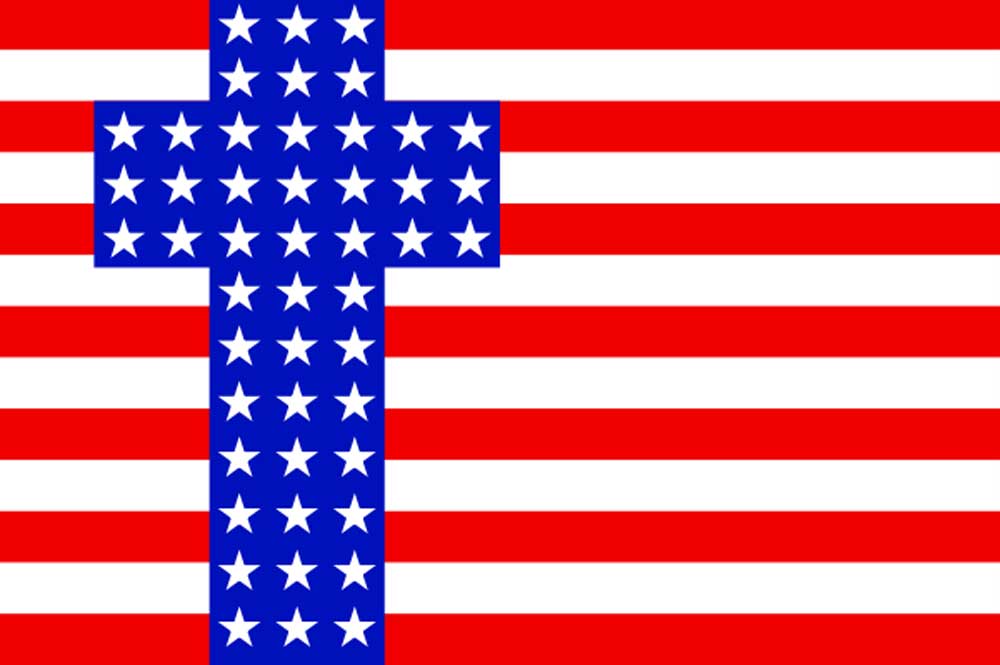
On June 26, 2026, the Texas State Board of Education approved a required reading list for public schools, including selections from the Bible. The 9-5 vote, split along Republican and Democrat party lines, stems from a 2023 state law that required Texas to create a list with at least one mandatory reading per grade level.
Ultimately, the board produced a list of more than 200 readings, which include about a dozen biblical texts. It also requires material from literary and public figures such as Charles Dickens, William Shakespeare, Martin Luther King Jr. and Margaret Thatcher.
Critics argue that mandatory Bible readings in public schools violate the First Amendment of the U.S. Constitution, which bars the government from “an establishment of religion.” These opponents maintain that the readings impermissibly promote religion, particularly Christianity, while violating the free exercise rights of students who belong to other religions, or none.
Litigation over the use of the Bible in American public schools began over 150 years ago – with the outcome often depending on a lesson’s purpose.
Courts, Bible and public schools
The first reported case on the Bible in U.S. public schools was in 1872, when the Supreme Court of Ohio affirmed a ban against religious instruction in public classrooms. Conversely, 50 years later, the Supreme Court of Georgia upheld an ordinance to start school days with readings from the King James Version of the Bible.

Bettmann via Getty Images
Bible reading first reached the U.S. Supreme Court in 1963, in School District of Abington Township v. Schempp. This case, from Pennsylvania, was consolidated with a similar dispute from Maryland, Murray v. Curlett.
Opponents in both cases challenged mandatory Bible readings and prayer at the start of school days. The plaintiffs argued that these activities violated the establishment clause of the First Amendment: that “Congress shall make no law respecting an establishment of religion.”
The justices struck down both practices, finding that they did not have a secular purpose and that their main effect was to advance religion.
Attempting to allay concerns they were anti-religious, the justices declared, “It certainly may be said that the Bible is worthy of study for its literary and historic qualities. Nothing we have said here indicates that such study of the Bible or of religion, when presented objectively as part of a secular program of education, may not be effected consistently with the First Amendment.”
Justice William Brennan’s concurrence added, “The holding of the Court today plainly does not foreclose teaching about the Holy Scriptures or about the differences between religious sects in classes in literature or history.”
In the following decades, lower courts invalidated classes as violating the establishment clause if the subject matter promoted Christianity – teaching it as religious truth rather than discussing the Bible’s literary and historical qualities. In 1981, for instance, the 5th U.S. Circuit Court of Appeals banned an elective Bible course in Alabama.
Two years later, the 8th Circuit summarily affirmed an order invalidating a program in Arkansas that allowed students to take voluntary Bible classes during school hours.
In 1996, a federal trial court in Mississippi invalidated Bible study classes taught in a rotation with music, physical education and library courses, plus another called A Biblical History of the Middle East.
In these three cases, the courts agreed that the classes were unacceptable because they advanced Christianity.
Lone Star State
Returning to Texas, the board’s new reading list is far from inclusive. Proposed passages mostly come from translations of the Bible that Protestant Christians use, as well as one from a Jewish publisher. The list does not include translations used by Catholics or sacred texts from non-Jewish and non-Christian faiths.

AP Photo/Eric Gay
Biblical texts on the list include a picture-book adaptation of the David and Goliath story for elementary students and passages about Adam and Eve for older students. The required readings also include excerpts from multiple books of the Bible – Jonah, Psalms, Lamentations and Genesis – for students in middle and high school.
As of now, parents who object to their kids reading these texts may opt their children out of specific readings if they conflict with their religious or moral beliefs.
2 types of teaching
As Brennan noted in Abington, the Supreme Court “plainly does not foreclose teaching about the Holy Scriptures or about the differences between religious sects in classes in literature or history.” Still, there is a significant difference between objectively teaching about religion and teaching of religion from a faith perspective.
This difference has been important throughout my own career. For 36 years, I have taught education law with a special interest in the relationships between religion, law and education. But in addition to my education and law degrees, I earned a master’s of divinity degree. I previously taught religion, social studies and law to high school students, while teaching college theology part time.
Teaching religion at two Catholic high schools before and after law school, my job was to inculcate Roman Catholic values in my students. Conversely, teaching theology to adult students, I emphasized 11th-century theologian Anselm of Canterbury’s dictum that theology represents “faith seeking understanding.” In other words, my goal was to enable them to make their own judgments about whether to follow religious teachings.
Many times, I have reasoned that increasing religious practices in public life is constitutional. My concern about Texas, though, is that the readings fail to distinguish between teaching about and of religion in public schools by failing to discuss matters of faith objectively.
Expanding students’ horizons and advancing tolerance by exposing them to religious perspectives is a good intention. Yet the breadth of selections is hardly inclusive, given its focus primarily on Christianity, to the exclusion of other faiths. With 67% of adults in Texas identifying as Christians, 26% as unaffiliated and 6% belonging to other faiths, I believe the board could have developed a list that represents the state’s religious variety.
Implementation of the program will be staggered, starting in elementary schools in 2030, for Texas’ more than 5 million students – about 10% of the national total. I expect the Bible readings will face legal challenges, likely sooner rather than later.

Charles J. Russo is Joseph Panzer Chair in Education and Research Professor of Law at the University of Dayton.



























Laurel says
In Florida, in the 1960’s elementary schools, we had a minute of silence. Fine. No one told us what we had to pray, or what prayer was acceptable. By the time I was in high school, Bible study was an elective. Fine.
What would be really interesting, in my opinion, would be the study of different religions, giving the students exposure to different religions and cultures, in the vein of Joseph Campbell’s series “The Power of Myth.”
But that’s not the objective in Texas. Trump said “I love the poorly educated.” The reason for that is poorly educated people are easier to be manipulated. Books are banned and removed. Colleges that teach critical thinking are taken over, such as New College, which promotes male athletes. at great tax dollar expense, over student learning (over seventy baseball athletes in a school that has no field). One religion forced on students. Public tax dollars diverted to religious schools.
Critical thinkers are hard to manipulate. Authoritarian governments try to get rid of the intelligentsia first. They ban books. They take over schools. and they fight and de-fund colleges.
“The average IQ of U.S. citizens is approximately 98. This score is designed to reflect a normal distribution, with most people scoring between 85 and 115.”
– Search Assist, iqfreetests.com, World Population Review
Geez! That’s not good.
The far right freaked out over the thought of mandated masks during a pandemic, but their politicians have no problem mandating the ideology they prefer.
We need to do better.
Dennis C Rathsam says
I lived in Texas, before I retired, its a great state, super people, friendly & kind. Me coming from NJ, I was excepted as the Yankee. The folks I met took me gator hunting, squierl hunting, & fishing. Always something going on everyday of the week. But on Sunday, the churches were full. BLACK, WHITE, HISPANIC they all came together to paraise Jesus. The old, the young, the rich & the poor. There’s no feeling the power of God here in P/C. Instead of being in church, there too busy shopping at Walmart on Sunday morning. There’s no sense of pride here either. Sure I met some great people here, of fearing people.God was good enough for our founding fathers, he,s good enough for me & my family. Where is the community spirit? God bless you Laurel, its a shame you cant understand religion, & be a part of something, a part of Gods creations. Your only goal in life is to fight the TDS that lives in your head
R.S. says
But we really need laws against the practice of Sharia Law in our country! After all, what other worry would work better as a fog to screen against the real dangers: the rise of theocracies to dumb down the public.
James says
From King James’ Bible to Margaret Thatcher??? Perhaps they might still read the Bible in England, but the words of Margaret Thatcher???
I really don’t think there’s any way to bring religion, including Christianity, into the modern public classroom in a meaningful, constructive way without doing harm to the religion itself and offending the general audience that might have differences of beliefs… this even extending to Christians.
Who was Christ?
Would you recognize Christ if you happened upon him?
These are indeed valid questions that even Christians (should?) grapple with… btw, just a few questions that one asks of oneself after living in Florida for awhile… sorry folks, perhaps it’s just me.
In light of this, any intelligent, genuine attempt at such discussion would necessitate a more historical based approach, perhaps…
https://www.amazon.com/gp/aw/d/0141197315/ref=ox_sc_saved_image_7?smid=ATVPDKIKX0DER&psc=1
https://www.amazon.com/gp/aw/d/014144178X/ref=ox_sc_saved_image_6?smid=ATVPDKIKX0DER&psc=1
https://www.amazon.com/gp/aw/d/0140445358/ref=ox_sc_saved_image_5?smid=ATVPDKIKX0DER&psc=1
https://www.amazon.com/gp/aw/d/0140444750/ref=ox_sc_saved_title_8?smid=ATVPDKIKX0DER&psc=1
… just some suggestions that I don’t see on the list.
I don’t expect them to be… Why?
Because this is the stuff of a theology major in college, or a philosophy major with a minor in religion… or simply a lay person of faith who might be interested in such an undertaking.
It’s not the material of children who should be learning to count and read… although it could be argued they could do much worse.
This should be the work of parents.
Religious faith and the path to God is a personal journey, no two paths are alike, just as no two people are.
But there is only one God.
Just my current opinion.
Pogo says
The current POTUS never achieved the developmental milestone of comprehension of object permanence. And he lies like normal persons draw a breath.
I diverge with you on what age appropriate expectations ought to be; but on the whole you come from an agreeable starting place.
Thank you.
Laurel says
Would I recognize Christ if I happened on him?
No. To give anyone the benefit of doubt is insane.
James Talarico is not Christ, but I recognize the Christ within him. So do the Kristians, who use Christ to manipulate the masses, while wearing a doorknocker cross (a graven image?), so they call him names he does not deserve.
They crucify him with lies.
James says
Who’s James Talarico?
To sorta borrow a phase from Dali… “Don’t stop seeking perfection, just realize you may never find it.”
Or obtain it.
Just another opinion on the matter.
Laurel says
James Talarico is a devout Christian who is currently a Representative of Texas, and is running for Senator. He actually does “speak truth to power” as many like to say today, and believes in separation of church and state, as combining the two would do damage to both. He actually works for the good of the people. A rarity in today’s political realm.
I’m not a Christian, and do not believe in religion, but I do believe in this man’s honesty and integrity:
https://en.wikipedia.org/wiki/James_Talarico
I wish him the very best.
Samuel L. Bronkowitz says
Ezekiel 23:19-20 “Yet she became more and more promiscuous as she recalled the days of her youth, when she was a prostitute in Egypt. There she lusted after her lovers, whose genitals were like those of donkeys and whose emission was like that of horses.”
Mondexian Mama says
Texas, where the men are men and the sheep are nervous.
James says
Could it happen here?…
https://www.telegraph.co.uk/world-news/2026/07/12/china-christians-xi-jinping-asia-churches-communist-party/
R.S. says
I’ve got that problem solved: just stop worshipping any god/gods; and rely on your own grey matter to solve problems. And it already has happened here: I bet JHC wouldn’t recognize any of the stuff that sells as Xtianity in this place as the religion of loving support of the poor and downtrodden that he may have tried to sell–if he was around ever to have done that anyway.
Pierre Tristam says
I don’t mind the worship of deities (I worship my wife, my children, my cats, Bach, Philip Roth, The Magic Mountain or the sight of a beautiful mountain, or a beautiful goal), but I mind the worship turned into doctrine that in any way affects or imposes on the rest of us, as the reigning tendency of Christian nationalists, who have so much in common with their Wahhabi mirrors in Saudi, want to do (and as the current supreme court increasingly enables them to do).
James says
Unfortunately to access the full article you must “sign in,” which was not the case when I stumbled across the piece in my news feed.
The “gist” of the article is that in China you are allowed to be a Christian as long as you are attending a state approved church.
The potential problem here as I see it is the slippery slope… today state sanctioned biblical studies, tomorrow a state approved verson… no religion is immune to such manipulation.
Just my opinion on the matter… the end.
Sherry says
I’m willing to bet that these kinds of Bible verses will not be read and certainly not studied:
Verses on Helping the Sick
Matthew 25:36, 40: “I was sick and you looked after me… Truly I tell you, whatever you did for one of the least of these brothers and sisters of mine, you did for me.
“Psalm 41:3: “The Lord sustains them on his sickbed and restores them from illness.
“James 5:14-15: “Are any among you sick? They should call for the elders of the church and have them pray over them, anointing them with oil in the name of the Lord.
“Matthew 10:8: “Heal the sick, raise the dead, cleanse those who have leprosy, drive out demons. Freely you have received; freely give.
“Verses on Helping the Poor and Needy
Proverbs 19:17: “Whoever is kind to the poor lends to the Lord, and he will reward them for what they have done.
“Proverbs 14:31: “Whoever oppresses the poor shows contempt for their Maker, but whoever is kind to the needy honors God.
“1 John 3:17-18: “If anyone has material possessions and sees a brother or sister in need but has no pity on them, how can the love of God be in that person? Dear children, let us not love with words or speech but with actions and in truth.
“Deuteronomy 15:11: “There will always be poor people in the land. Therefore I command you to be open handed toward those who are poor and needy in your land.”