



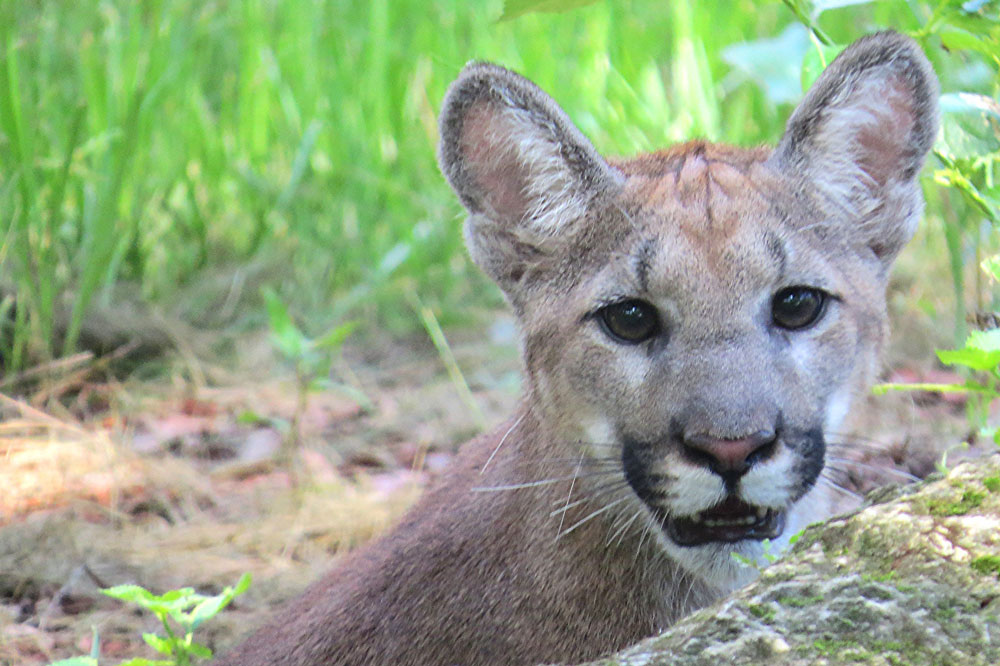
More than 100 Florida species, including panthers, manatees and sea turtles, could inch closer to extinction under a set of changes to the Endangered Species Act the Trump administration rolled out this month that would force regulators to disregard damage to critical habitats.
Millions of acres of Florida land would also become easier to develop if the federal rule changes survive court challenges.
One rule, set to take effect Sept. 14, would change the long-standing definition of “harm” under the Endangered Species Act so that degrading endangered species’ habitats no longer counts as “harming” them. Two more rules, which take effect Aug. 20, would remove automatic protections for newly-listed threatened species and require regulators to consider the economic impacts before protecting endangered species’ habitats.
Habitat loss is the leading threat to endangered species’ survival, according to the federal government and several published studies.
The reinterpretation of the Endangered Species Act would affect hundreds of species nationwide, but it would have an especially big impact in the Sunshine State, according to Sarah Gledhill, who heads the Florida Wildlife Federation.
“Florida is ground zero for this rule change,” Gledhill said. “We have some of the richest wildlife habitat left in the country, and with development consuming thousands of acres every year, we’re paving it over faster than almost any other state.”
The Endangered Species Act has protected millions of acres of “critical habitat” in Florida for listed species like bonneted bats or manatees. These areas also protect other plants and animals and give people places to hunt, fish, swim, hike and tan.
“Saving these animals isn’t just for the animals. It’s also for us. It’s part of our cultural heritage as Floridians,” said Alisa Coe, an attorney at Earthjustice, which is one of several environmental nonprofits that sued to block the rule changes.
Endangered species and their habitats are also tourism magnets that lure visitors and money into the state, according to Stacey Gallagher, development and policy coordinator at the Sea Turtle Conservancy.
“Florida is a perfect example of how our environment is our economy,” said Gallagher. “People do not come here to visit a mall or to stay inside. People visit Florida to go to the beach, to be out on the water.”
Interior Secretary Doug Burgum said the changes were common sense moves to cut red tape and restore landowners’ property rights.
“For years, federal agencies abused the [Endangered Species Act] to obstruct lawful land use and burden American families and businesses,” Burgum wrote in a statement announcing the “harm” rule. “That approach turned routine activity into a regulatory trap, drove up costs that impacted people’s lives, and expanded federal authority beyond what Congress intended.”
But environmentalists say protecting endangered species without preserving their habitat defies common sense.
“If the rescission of the harm definition is allowed to stand, it will just cut the heart out of the Endangered Species Act,” said Noah Greenwald, endangered species director at the Center for Biological Diversity.
A triple threat to manatees
Florida manatees show how all three proposed rule changes could affect endangered species.
Traditionally, the Endangered Species Act has protected manatees from “harm,” including the habitat degradation that has pushed the species toward extinction.
From 2020 to 2022, 1,255 Florida manatees — at least a tenth of the state’s population — starved to death in Indian River Lagoon after pollution-fueled algae blooms shaded and killed the seagrass beds the manatees rely on for food. Last year, a federal judge held the Florida Department of Environmental Protection accountable for violating the Endangered Species Act through lax wastewater pollution controls that allowed the manatee massacre to happen.
But now, under the federal government’s new definition of harm, “it will be questionable whether that sort of activity violates the Endangered Species Act,” said Elizabeth Neville, director of environmental law and policy for the Save the Manatee Club. “It’s really a diminishment of protections at a time when good sense would dictate we ramp up protections.”
The requirement that federal officials consider economic impacts before designating “critical habitats” for listed species could also affect manatees.
Federal officials proposed doubling the size of manatees’ protected habitat in 2024, but they haven’t made a final decision. Now, regulators have to consider whether protecting waterways for manatees would be bad for business — and industry has more sway to ask for carveouts to critical habitats for economic reasons.
“It tips the scale in favor of industry over the conservation mandate of the law,” said Neville. “The practical upshot of this could be that something like coastal development is afforded greater weight than manatee habitat needs.”
<
p class=”alignwide”>
Last year, the U.S. Fish and Wildlife Service proposed re-classifying manatees into two subspecies: endangered Antillean manatees and threatened Florida manatees. That could turn Florida manatees into a newly-listed threatened species.
Normally, when a species is added to the threatened species list, it automatically gets all the protections from killing, injury, harm and harassment that endangered species get. Under the new interpretation of the law, species added to the threatened list wouldn’t get any protections until regulators at the U.S. Fish and Wildlife Service craft a tailor-made protection plan for them.
Environmentalists worry that would leave threatened species unprotected while they wait for the bureaucrats to act. The Fish and Wildlife Service’s staff has shrunk by nearly a fifth during the Trump administration, according to federal data obtained by the Center for Biological Diversity.
“Species-specific rules take time,” said Coe. “They can take years.”
A green light for development
In the meantime, environmentalists worry that weaker habitat protections will give developers a pass to pave over Florida’s wild land.
“They’re signaling to developers that they are no longer going to be viewing this destruction as harm,” said Coe.
For decades, the Endangered Species Act has given conservationists a tool to challenge projects that would destroy listed species’ habitats. Environmentalist groups, for instance, recently sued the federal agencies that approved a planned 10,000-acre suburb in Florida panther territory in Collier County. They argue the project would harm panthers by replacing their habitat with single-family homes.
Redefining “harm” to exclude habitat degradation would undercut these lawsuits. That’s part of the point: The Trump administration’s stated goals include cutting red tape and making it easier for landowners to use their property as they see fit. These deregulatory moves coincide with a string of state laws that lower barriers to development and sprawl in Florida.
Taken together, these moves will accelerate Florida’s booming development at the expense of nature, according to Greenwald.
“They’re going to build developments in Florida panther habitat,” said Greenwald. “They’ll build more resorts on the beach and the lights will attract baby sea turtles and they won’t make it.”
“The Endangered Species Act is the dam that holds the floodwaters back,” he added. “Opening the floodgates could really accelerate things.”
The limits of state law
While Florida is home to some of the fastest development in the country, it also spends millions of dollars a year buying land and conservation easements. State laws, such as the Florida Manatee Sanctuary Act, offer extra protections for some species. And the Florida Wildlife Corridor enjoys broad public support for an ambitious program to conserve and connect habitat across the state.
But none of this can fully replace Endangered Species Act habitat protections, environmentalists say.
No state law has the same power to force environmental reviews before construction projects break ground in sensitive areas. And some landowners may not be so willing to sell their land for conservation if they can make more money selling to a developer.
“I am nervous that this creates some type of disincentive for proactive, voluntary conservation,” said Gledhill of the Florida Wildlife Federation.
Florida Wildlife Corridor Foundation CEO Mallory Dimmitt said her organization will respond to accelerated development by speeding up its own efforts to reach out to landowners, conserve more habitat and work with local governments on planning and growth management policies.
“Our task will be harder, but we will meet the challenge,” she said.

Nicolás Rivero is an environmental accountability reporter at The Florida Trib. He can be reached at nicolas.rivero@floridatrib.org.
This article first appeared on The Florida Trib and is republished here under a Creative Commons Attribution-NoDerivatives 4.0 International License.


























Gina Weiss says
Well, what do you expect from a convicted felon rapist!
JimboXYZ says
Home Builder’s Association handing out 96 backpacks for the school year in Flagler County, while the entire bunch foes about destroying the environment to build more unaffordable housing to eliminate wildlife ? The irony of it all ? Just gets better ?
Joe D says
As with just about EVERYTHING in the current administration…MONEY TALKS…and animals don’t vote, or hold protest rallies! If we keep killing off the wildlife that bring tourists here ( to spend money), soon there won’t be any wildlife left. And even if the current administration is voted out in a few years, once a species is extinct, it’s gone forever! Not easy to bring it back if funding and policies change.
But we don’t have to worry about climate change, Governor RON has removed REFERENCES TO CLIMATE CHANGE from all State of Florida government documents and publications….so all the species are SAFE ( that was sarcasm for those that didn’t catch it).
What was that old song lyrics …”tear down all the trees and put ‘em in a tree museum…and put up a parking lot!”
If you’ve ever seen the futuristic move SILENT RUNNING…you might get thinking about where our planet is HEADED!
Marci Irwin says
This is devastating to the ecological system of all animal habitats. They have no place left to go to just be what they were meant to be the balance of nature. I encourage all you to research the candidates running in these upcoming primaries as many want to build build build and this agenda seems to pave the way for that. I will not be voting for building advocates we have enough in my opinion.What is our course of action to fight this paving our land with more buildings and data centers
Me says
Trump is destroying our environment day by day by wiping out protection programs that have been in place for our protections.
If it isn’t putting money in his pocket Trump is eliminating it. He isn’t saying where the taxpayers money is going that funded these programs he is now eliminating.
Before you vote in November please research each candidate because there are plenty of them out there, they have no business getting elected.
Richard says
environmental terror by the pedo terror. Terminate Rapeublicans!
Laurel says
Do you now see it? Trump, and his like minded, unnatural administration, doesn’t give a damn about life. All they worship is money, and they can never have enough. Millions of dollars is not enough. Billions of dollars is not enough. There isn’t enough money to wash away their misery, so they want to spread their misery upon the rest of us, and the life around us.
Whether is bothers you or not, it has been common practice for developers to simply bury gopher tortoises alive than to deal with them. Now, the Republican administration is happy to bring in out of state developers to our state to kill off all natural habitat in order to build another golf course, or bring in many more out of state people to live in sterile communities. Fuck Florida flora and fauna. Few people understand or care about either. Green paper is the only green the soulless understands.
In Charleston, SC, developers are filling in the grass marshes for development. That effects the crabs, shrimp and fish nurseries, which many humans depend upon. The locals are horrified, but eventually, the locals become a minority and the new who move in are clueless. The Jimmy Buffet Memorial Highway.
The gold kitsch in the White House is more important. The concrete poured over the Rose Garden is preferred. The Trump Arc in the line of sight is desired over the Lincoln Memorial. The Reflection Pool only reflects algae. The East Wing of the White House lies in rubble. Everything that devil, and his minions touch is destroyed.
When are y’all gonna wake up? How long will you be complicit?
I hope there is a special place in hell for developers, and those who support them and that business, because they surely don’t care whether they turn the beautiful state of Florida into a hell reserved for humans only.
Misery loves company.
Me says
Money is Trumps God and the only thing he loves.
PaulT says
Teddy Roosevelt must be rolling in his grave.
Both privileged New Yorker, born of and inherited money, Rossevelt also hosted
show fights at the White House in which, unlike Trump, he completed rather than just profited from.
But he fought in a (successful) war instead of dodging the draft and initiated a massive program of public land preservation and protection of birds and endangered species. Unlike Trump he worked to protect the endangered bison.B
He’s the kind of president we need now and ‘Speak Softly But Carry a Big Stick’ is a far better way than Trump’s blowhard bullying. But what do you expect, Roosevelt’s grandfatther was a gentleman, Tump’s was a brothel owning profiteer.
0
Gina Weiss says
Brothel owner runs through Trumps veins as with his degradation of women!
BillC says
Interesting note:
Doug Burgum offered $20 Visa or Mastercard gift cards to donors who contributed at least $1 to his 2024 presidential campaign. This unprecedented fundraising tactic was designed to help the former North Dakota governor meet the Republican National Committee’s requirement of 40,000 unique donors to qualify for the primary debates. The campaign distributed up to 50,000 gift cards, representing a potential cost of $1 million.
At least he got to be Secretary of State for having the right qualifications— trying to buy votes.
BillC says
Corx: should be Secretary of Interior, not State.
Laurel says
How about Musk offering a million dollars each to voters?