• Skip to primary navigation
  • Skip to main content
  • Skip to primary sidebar
MENUMENU
MENUMENU
  • Home
  • About
    • Contact Us
    • FlaglerLive Board of Directors
    • Comment Policy
    • Mission Statement
    • Our Values
    • Privacy Policy
  • Live Calendar
  • Submit Obituary
  • Submit an Event
  • Support FlaglerLive
  • Advertise on FlaglerLive (386) 503-3808
  • Search Results

FlaglerLive

No Bull, no Fluff, No Smudges

MENUMENU
  • Flagler
    • Flagler County Commission
    • Beverly Beach
    • Flagler History
    • Mondex/Daytona North
    • The Hammock
    • Tourist Development Council
    • Marineland
  • Palm Coast
    • Palm Coast City Council
    • Palm Coast Crime
  • Bunnell
    • Bunnell City Commission
    • Bunnell Crime
  • Flagler Beach
    • Flagler Beach City Commission
    • Flagler Beach Crime
  • Cops/Courts
    • Circuit & County Court
    • Florida Supreme Court
    • Federal Courts
    • Flagler 911
    • Fire House
    • Flagler County Sheriff
    • Flagler Jail Bookings
    • Traffic Accidents
  • Rights & Liberties
    • First Amendment
    • Second Amendment
    • Third Amendment
    • Fourth Amendment
    • Fifth Amendment
    • Sixth Amendment
    • Seventh Amendment
    • Eighth Amendment
    • 14th Amendment
    • Sunshine Law
    • Religion & Beliefs
    • Privacy
    • Civil Rights
    • Human Rights
    • Immigration
    • Labor Rights
  • Schools
    • Adult Education
    • Belle Terre Elementary
    • Buddy Taylor Middle
    • Bunnell Elementary
    • Charter Schools
    • Daytona State College
    • Flagler County School Board
    • Flagler Palm Coast High School
    • Higher Education
    • Imagine School
    • Indian Trails Middle
    • Matanzas High School
    • Old Kings Elementary
    • Rymfire Elementary
    • Stetson University
    • Wadsworth Elementary
    • University of Florida/Florida State
  • Economy
    • Jobs & Unemployment
    • Business & Economy
    • Development & Sprawl
    • Leisure & Tourism
    • Local Business
    • Local Media
    • Real Estate & Development
    • Taxes
    • Sponsored Content
  • Commentary
    • The Conversation
    • Pierre Tristam
    • Diane Roberts
    • Guest Columns
    • Byblos
    • Editor's Blog
  • Culture
    • African American Cultural Society
    • Arts in Palm Coast & Flagler
    • Books
    • City Repertory Theatre
    • Flagler Auditorium
    • Flagler Playhouse
    • Special Events
  • Elections 2026
    • Amendments and Referendums
    • Presidential Election
    • Campaign Finance
    • City Elections
    • Congressional
    • Constitutionals
    • Courts
    • Governor
    • Polls
    • Voting Rights
  • Florida
    • Federal Politics
    • Florida History
    • Florida Legislature
    • Florida Legislature
    • Ron DeSantis
  • Health & Society
    • Flagler County Health Department
    • Ask the Doctor Column
    • Health Care
    • Health Care Business
    • Covid-19
    • Children and Families
    • Medicaid and Medicare
    • Mental Health
    • Poverty
    • Violence
  • All Else
    • Daily Briefing
    • Americana
    • Obituaries
    • News Briefs
    • Weather and Climate
    • Wildlife

How Ring Doorbells Reveal the Future of Surveillance

February 20, 2026 | FlaglerLive | Leave a Comment

You're the one under surveillance, not the other way around. (Ring)
You’re the one under surveillance, not the other way around. (Ring)

By Dennis B. Desmond

As a career counterintelligence officer for the US Federal Bureau of Investigation (FBI) and Defense Intelligence Agency, I worked inside a fully integrated intelligence system.

Signals intelligence from the National Security Agency guided investigations. Satellite imagery from the National Reconnaissance Office provided visibility into hostile environments. Human intelligence came through Defense Intelligence Agency channels.

These streams were strengthened by reporting from domestic and foreign partners. It was a closed, tightly controlled system.

But things have changed. Now private companies are supplying “intelligence as a service” to government entities and others – and as the Amazon-owned Ring doorbell camera company found out when it advertised a new feature last week, the change is not without controversy.

The rise of private intelligence

For most of the 20th century, intelligence remained the exclusive domain of nation states. Collection systems were expensive and specialised. They were protected by strict classification rules designed to safeguard sources and methods.

Intelligence agencies controlled the entire life cycle: human spying, signals interception, satellite surveillance, analysis, and dissemination to decision-makers. This created a closed command economy, where states maintained their own capabilities with legal oversight and institutional tradecraft.

A plane flying over a building.
Marine One flying over Defense Intelligence Agency headquarters in Washington DC.
Dennis Desmond, CC BY

Today, that monopoly is eroding. It’s being replaced by a commercial intelligence marketplace operating alongside – and increasingly inside – government security structures.

The shift began in the late 20th century as open-source intelligence became more valuable. This happened with the rise of online forums, social media platforms and commercial satellite imagery.

Companies entered this market, scraping images from the web and content from social media sites. Clearview AI, perhaps the most well known, entered this market in 2017 – offering to identify people based on photos from social media.

Businesses quickly recognised the opportunity. Intelligence could be produced commercially, packaged, and sold.

The surveillance economy

At the same time, a broader surveillance economy emerged. It was driven by private companies, not governments.

Acoustic gunshot detection systems illustrate this convergence. Originally designed for military force protection, these sensors are now deployed across cities, providing real-time alerts to police. In Australia, this has manifested itself with hardware store chain Bunnings incorporating facial recognition technology from Hitachi.

Uncrewed aerial vehicles – better known as drones – have followed a similar pattern. Once limited to military reconnaissance, sensor-equipped drones are now widely available commercially. Parts of the battlefield surveillance grid have migrated into civilian life.

Perhaps the most significant shift comes from everyday consumer technology. Internet-connected door cameras, home security systems, and other “Internet of Things” devices now form a vast, privately owned sensor network. This is likely to grow, as products such as Meta’s planned facial-recognition smart glasses hit the market.

Real intelligence value but real privacy concerns

These systems were never intended as intelligence tools. Yet their intelligence value is undeniable.

In the recent case of the kidnapping of Nancy Guthrie in Arizona, for example, Nest door camera footage helped reconstruct movements and identify a possible kidnapper. The data was captured passively, through daily digital life.

This is intelligence collection by proxy. It is constant, ambient, and privately owned.

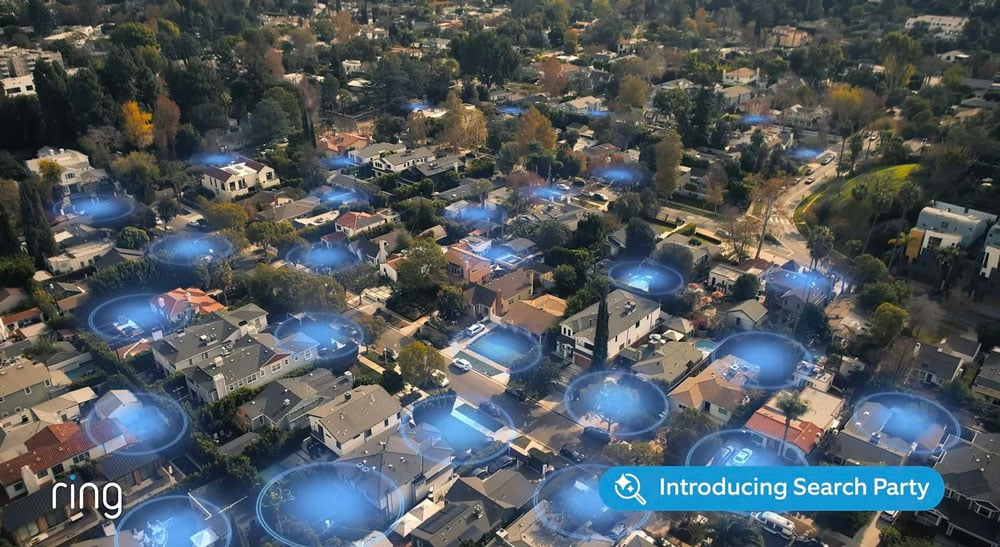
Amazon Ring’s attempt to launch its “Search Party” program demonstrates the tension.

Framed as a community safety feature, the program proposed using AI to scan neighbourhood camera footage to locate missing pets.

Concern escalated when Ring explored partnering with Flock Safety, whose automated license plate reader networks are widely used by law enforcement. Linking home surveillance cameras with other tracking systems signalled the emergence of a fully integrated commercial intelligence network.

Public backlash was swift – especially after the capability was advertised during the Super Bowl. Critics argued the pet-recovery narrative masked the normalisation of mass surveillance.

Facing mounting privacy concerns, Ring ultimately abandoned the partnership.

Intelligence as a service

Commercial surveillance partnerships continue to expand. Networked cameras and license plate readers equipped with AI-powered object recognition enable vehicle tracking across jurisdictions.

Data brokers feed into this ecosystem too. They sell credit histories, utility records, and behavioural data to government clients.

Taken together, these developments represent “intelligence as a service”. Governments now buy cyber threat reporting, commercial sensor data, facial recognition, and behavioural analytics through subscriptions and data-sharing agreements. Intelligence production has become scalable, modular and market-driven.

This transformation raises serious governance questions. Commercial intelligence providers often operate under far looser legal restrictions. They allow agencies to circumvent data privacy laws.

Consumer-generated data, door cameras, vehicle telemetry and biometric identifiers can often be used by investigators without the need for a warrant. This complicates privacy protections and civil liberties safeguards.

None of this makes state intelligence services obsolete. Governments still retain unique authorities: human espionage, covert action, offensive cyber operations, and classified technical collection.

However, these capabilities now operate within a broader intelligence supply chain. Also in the mix are satellite firms, data brokers, AI analytics companies, and cyber intelligence vendors.

Questions for the future

The integration of commercial surveillance and artificial intelligence is likely to deepen.

Technology leaders envision a near future where cameras on homes, vehicles and public infrastructure feed constant video into AI systems. Citizens and police alike would operate under continuous algorithmic observation. Automated reporting would aim to shape behaviour.

The privatisation of intelligence is neither temporary nor accidental. It is the outcome of technological diffusion, data proliferation, and commercial innovation meeting demand from national security and law enforcement.

The question is not whether intelligence as a service will expand. It will.

The real question is different. What happens to national sovereignty, democratic oversight, and personal privacy when the power to collect and analyse intelligence no longer belongs solely to the state? What happens when it belongs to private actors willing to sell it?

Dennis B. Desmond is a Lecturer in Cyberintelligence and Cybercrime Investigations at the University of the Sunshine Coast.


The Conversation arose out of deep-seated concerns for the fading quality of our public discourse and recognition of the vital role that academic experts could play in the public arena. Information has always been essential to democracy. It’s a societal good, like clean water. But many now find it difficult to put their trust in the media and experts who have spent years researching a topic. Instead, they listen to those who have the loudest voices. Those uninformed views are amplified by social media networks that reward those who spark outrage instead of insight or thoughtful discussion. The Conversation seeks to be part of the solution to this problem, to raise up the voices of true experts and to make their knowledge available to everyone. The Conversation publishes nightly at 9 p.m. on FlaglerLive.
See the Full Conversation Archives
Support FlaglerLive
The political climate—nationally and right here in Flagler County—is at war with fearless reporting. Your support is FlaglerLive's best armor. After 16 years, you know FlaglerLive won’t be intimidated. We dig. We don’t sanitize to pander or please. We report reality, no matter who it upsets. Even you. Imagine Flagler County without that kind of local coverage. Stand with us, and help us hold the line. There’s no paywall—but it’s not free. become a champion of enlightening journalism. Any amount helps. FlaglerLive is a 501(c)(3) non-profit news organization, and donations are tax deductible.
You may donate openly or anonymously.
We like Zeffy (no fees), but if you prefer to use PayPal, click here.
If you prefer the Ben Franklin way, we're at: P.O. Box 354263, Palm Coast, FL 32135.
 

Reader Interactions

Leave a Reply Cancel reply

Your email address will not be published. Required fields are marked *

This site uses Akismet to reduce spam. Learn how your comment data is processed.

  • Conner Bosch law attorneys lawyers offices palm coast flagler county
  • grand living realty
  • politis matovina attorneys for justice personal injury law auto truck accidents

Primary Sidebar

  • grand living realty
  • politis matovina attorneys for justice personal injury law auto truck accidents

Recent Comments

  • JC on Grand Jury Indicts Anne Mae Demegillo on First Degree Murder Charges in Infant’s Death
  • Dennis C Rathsam on The Daily Cartoon and Live Briefing: Tuesday, April 7, 2026
  • Laurel on Greg Hansen Calls Ending Heidi Petito’s Tenure ‘Criminal’ as Adam Mengel Is Appointed Interim at County
  • Laurel on Future Hammock Restaurant Wins Parking Reduction Despite Strong Opposition From Residents and 2 Commissioners
  • JC on Grand Jury Indicts Anne Mae Demegillo on First Degree Murder Charges in Infant’s Death
  • Deborah Coffey on Greg Hansen Calls Ending Heidi Petito’s Tenure ‘Criminal’ as Adam Mengel Is Appointed Interim at County
  • Oh brother on Future Hammock Restaurant Wins Parking Reduction Despite Strong Opposition From Residents and 2 Commissioners
  • John on Democrats Warn Of Overreach as DeSantis Signs Bill Conflating Terrorism with Muslims
  • Greg on Grand Jury Indicts Anne Mae Demegillo on First Degree Murder Charges in Infant’s Death
  • Wendy on Grand Jury Indicts Anne Mae Demegillo on First Degree Murder Charges in Infant’s Death
  • Guy on Florida Attorney General Threatens NFL Over Rule Giving Minorities a Chance
  • JimboXYZ on Wanted: Palm Coast Deputy City Manager
  • atwp on Wanted: Palm Coast Deputy City Manager
  • atwp on Wanted: Palm Coast Deputy City Manager
  • Atwp on IPads in Kindergarten, YouTube at Snack Time: Parents Are Pushing Back
  • haw creek girl on Greg Hansen Calls Ending Heidi Petito’s Tenure ‘Criminal’ as Adam Mengel Is Appointed Interim at County

Log in