• Skip to primary navigation
  • Skip to main content
  • Skip to primary sidebar
MENUMENU
MENUMENU
  • Home
  • About
    • Contact Us
    • FlaglerLive Board of Directors
    • Comment Policy
    • Mission Statement
    • Our Values
    • Privacy Policy
  • Live Calendar
  • Submit Obituary
  • Submit an Event
  • Support FlaglerLive
  • Advertise on FlaglerLive (386) 503-3808
  • Search Results

FlaglerLive

No Bull, no Fluff, No Smudges

MENUMENU
  • Flagler
    • Flagler County Commission
    • Beverly Beach
    • Flagler History
    • Mondex/Daytona North
    • The Hammock
    • Tourist Development Council
    • Marineland
  • Palm Coast
    • Palm Coast City Council
    • Palm Coast Crime
  • Bunnell
    • Bunnell City Commission
    • Bunnell Crime
  • Flagler Beach
    • Flagler Beach City Commission
    • Flagler Beach Crime
  • Cops/Courts
    • Circuit & County Court
    • Florida Supreme Court
    • Federal Courts
    • Flagler 911
    • Fire House
    • Flagler County Sheriff
    • Flagler Jail Bookings
    • Traffic Accidents
  • Rights & Liberties
    • First Amendment
    • Second Amendment
    • Third Amendment
    • Fourth Amendment
    • Fifth Amendment
    • Sixth Amendment
    • Seventh Amendment
    • Eighth Amendment
    • 14th Amendment
    • Sunshine Law
    • Religion & Beliefs
    • Privacy
    • Civil Rights
    • Human Rights
    • Immigration
    • Labor Rights
  • Schools
    • Adult Education
    • Belle Terre Elementary
    • Buddy Taylor Middle
    • Bunnell Elementary
    • Charter Schools
    • Daytona State College
    • Flagler County School Board
    • Flagler Palm Coast High School
    • Higher Education
    • Imagine School
    • Indian Trails Middle
    • Matanzas High School
    • Old Kings Elementary
    • Rymfire Elementary
    • Stetson University
    • Wadsworth Elementary
    • University of Florida/Florida State
  • Economy
    • Jobs & Unemployment
    • Business & Economy
    • Development & Sprawl
    • Leisure & Tourism
    • Local Business
    • Local Media
    • Real Estate & Development
    • Taxes
    • Sponsored Content
  • Commentary
    • The Conversation
    • Pierre Tristam
    • Diane Roberts
    • Guest Columns
    • Byblos
    • Editor's Blog
  • Culture
    • African American Cultural Society
    • Arts in Palm Coast & Flagler
    • Books
    • City Repertory Theatre
    • Flagler Auditorium
    • Flagler Playhouse
    • Special Events
  • Elections 2026
    • Amendments and Referendums
    • Presidential Election
    • Campaign Finance
    • City Elections
    • Congressional
    • Constitutionals
    • Courts
    • Governor
    • Polls
    • Voting Rights
  • Florida
    • Federal Politics
    • Florida History
    • Florida Legislature
    • Florida Legislature
    • Ron DeSantis
  • Health & Society
    • Flagler County Health Department
    • Ask the Doctor Column
    • Health Care
    • Health Care Business
    • Covid-19
    • Children and Families
    • Medicaid and Medicare
    • Mental Health
    • Poverty
    • Violence
  • All Else
    • Daily Briefing
    • Americana
    • Obituaries
    • News Briefs
    • Weather and Climate
    • Wildlife

Don’t Be So Quick to Fall for That ‘Love Languages’ Gimmickry

February 13, 2026 | FlaglerLive | 1 Comment

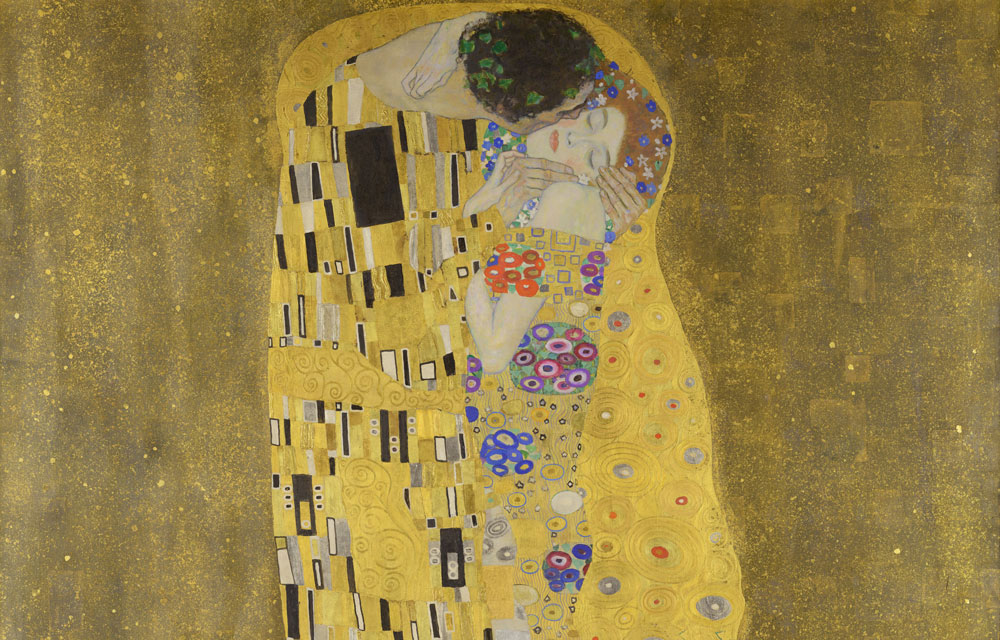
Sometimes a kiss is just a kiss. Klimt's "Kiss," 1907-08.
Sometimes a kiss is just a kiss. Klimt’s “Kiss,” 1907-08.

By Maha Khawaja

Do you know how you prefer to give and receive love? Do you need words of affirmation? Spending quality time? Acts of service? Gifts? Or physical touch?

Figuring out what your “love language” is has become one of the most successful relationship ideas of the past two decades.

Why? Because the idea is simple, flattering and easy to apply.

Introduced by Gary Chapman, an American Baptist pastor, author and marriage counsellor, in his 1992 book The 5 Love Languages: The Secret to Love that Lasts, the idea is now a dominant framework in modern relationship advice.

While incredibly popular and often used as a “go-to” tool on first dates, recent research suggests that the idea lacks strong scientific evidence for its central claims.

Instead of scientific theory, love languages function like a culturally appealing system that individualizes relational strain, obscures power and substitutes a checklist for the harder work of understanding how relationships actually function over time.

A simple idea replacing scientific evidence

That popularity of love languages is exactly what makes them an archetype of bad pop psychology as they package a complex set of relational processes into a simple idea, providing a memorable vocabulary, and then get treated as explanation, diagnosis and solution all at once.

Most notably, this framework emerges from a pastoral counselling context rather than systematic research, and its core claim — that people have a stable primary language that should be matched for relational success — doesn’t apply well to how relational needs operate.

People typically value all five domains: quality time, words of affirmation, receiving gifts, acts of service and physical touch. They shift depending on stress, life stage, illness, caregiving demands and conflict history.

What gets named as a “primary” language is often better understood as a moving indicator of current deprivation — “this is what I’m not getting” — and not a durable trait. Because the categories are broad and emotionally resonant, they also invite the Barnum effect, in which the model feels deeply accurate precisely because it is flexible enough to fit most people most of the time.

When intimacy becomes a simplified checklist

Another problem with the five love languages is what they do to how people think about relational support. They turn intimacy into a problem of translation: if you just deliver the right behaviours in the right format, your partner will feel loved.

That can push couples toward transactional care (“I did your language, so you should be satisfied”) and away from curiosity and context (“What is happening for you this week? What support do you actually need?”). It also promotes a form of individualization in which relational issues become framed as mismatched preferences instead of relational processes that require ongoing work.

Once the label enters the relationship, it can function like a conversational dead end.

It also doesn’t seriously address conflict regulation, responsiveness or how couples cope under stress, all of which are areas where relationship science has far more to say. Many “love language” conflicts are not actually about the absence of gifts or affirmation, but are about chronic misattunement, uneven emotional labour, perceived disregard or an unsafe climate.

The structural conditions love languages ignore

Love languages can also obscure power and normalize inequality.

Some categories are easily folded into gendered divisions of labour, like how acts of service and emotional affirmation often land on women as feminized care work, while other partners receive the benefits without addressing uneven burdens.

The framework also sidesteps structural constraints like poverty, disability, illness, class and religious norms that shape what is possible.

When someone is overworked, sick or carrying the relationship’s invisible labour, the problem is rarely that their “language” is being spoken incorrectly. It is that relational and structural conditions make mutuality difficult, and “speaking languages” can become a way to manage the symptoms while leaving the conditions untouched.

The model is also particularly risky where consent and vulnerability are involved. Physical touch as a love language, for example, can be used to moralize access to someone else’s body, especially in contexts of sexual pleasure, coercion, post-partum recovery, trauma or chronic pain.

What sustains relationships beyond labels

The love languages framework tends to treat touch as an unambiguous good instead of a context-sensitive practice shaped by consent, safety, timing and bodily autonomy in health contexts like having cancer, disability, medication changes and depression. Intimacy largely shifts because bodies and conditions shift.

A model that encourages partners to “deliver touch” can easily misfire when what’s needed is patience, alternative sexual scripts and co-ordinated coping, not increased physical contact as proof of love.

Above all, love languages only thrive because they are marketable. They offer the satisfaction of self-knowledge, compatibility narratives and quick fixes.

Relationships, of course, are not solved by personalization alone. Importantly, they are shaped by mutual responsiveness, practical and emotional equity, the ability to repair after harm and the capacity to adapt to changing bodies and lives.

If love languages are useful at all, it is as a thin starting vocabulary for talking about care, and not as a diagnostic framework or substitute for confronting misattunement, power and the real conditions that make intimacy sustainable.

Maha Khawaja is a doctoral student at McMaster University.


The Conversation arose out of deep-seated concerns for the fading quality of our public discourse and recognition of the vital role that academic experts could play in the public arena. Information has always been essential to democracy. It’s a societal good, like clean water. But many now find it difficult to put their trust in the media and experts who have spent years researching a topic. Instead, they listen to those who have the loudest voices. Those uninformed views are amplified by social media networks that reward those who spark outrage instead of insight or thoughtful discussion. The Conversation seeks to be part of the solution to this problem, to raise up the voices of true experts and to make their knowledge available to everyone. The Conversation publishes nightly at 9 p.m. on FlaglerLive.
See the Full Conversation Archives
Support FlaglerLive
The political climate—nationally and right here in Flagler County—is at war with fearless reporting. Your support is FlaglerLive's best armor. After 16 years, you know FlaglerLive won’t be intimidated. We dig. We don’t sanitize to pander or please. We report reality, no matter who it upsets. Even you. Imagine Flagler County without that kind of local coverage. Stand with us, and help us hold the line. There’s no paywall—but it’s not free. become a champion of enlightening journalism. Any amount helps. FlaglerLive is a 501(c)(3) non-profit news organization, and donations are tax deductible.
You may donate openly or anonymously.
We like Zeffy (no fees), but if you prefer to use PayPal, click here.
If you prefer the Ben Franklin way, we're at: P.O. Box 354263, Palm Coast, FL 32135.
 

Reader Interactions

Comments

  1. Pogo says

    February 14, 2026 at 10:58 am

    7
    Reply

Leave a Reply Cancel reply

Your email address will not be published. Required fields are marked *

This site uses Akismet to reduce spam. Learn how your comment data is processed.

  • Conner Bosch law attorneys lawyers offices palm coast flagler county
  • grand living realty
  • politis matovina attorneys for justice personal injury law auto truck accidents

Primary Sidebar

  • grand living realty
  • politis matovina attorneys for justice personal injury law auto truck accidents

Recent Comments

  • Pierre Tristam on CFO Blaise Ingoglia’s Disinformation Campaign at Local Governments’ Expense
  • Rob Jarowski on CFO Blaise Ingoglia’s Disinformation Campaign at Local Governments’ Expense
  • Skibum on Voting Rights Groups File Suit as DeSantis Signs Proof-of-Citizenship Law
  • jean on Flagler Beach Leaders Revisit 30 Years of Paid Parking Talk Amid Growing Resentment Toward Palm Coast and County
  • jean on Flagler Beach Leaders Revisit 30 Years of Paid Parking Talk Amid Growing Resentment Toward Palm Coast and County
  • Taxpayer on Voting Rights Groups File Suit as DeSantis Signs Proof-of-Citizenship Law
  • Taxpayer on Voting Rights Groups File Suit as DeSantis Signs Proof-of-Citizenship Law
  • Truth on Trump Gets an Airport in West Palm Beach, Taxpayers Get The $5 Million Bill
  • TR on In Remarkable Display of De-Escalation, Sheriff’s Deputy Bryan Carter Talks 22-Year-Old Down from Gun Suicide
  • Koyote on CFO Blaise Ingoglia’s Disinformation Campaign at Local Governments’ Expense
  • Very wasteful on CFO Blaise Ingoglia’s Disinformation Campaign at Local Governments’ Expense
  • Lorie Robinson on Flagler Beach Leaders Revisit 30 Years of Paid Parking Talk Amid Growing Resentment Toward Palm Coast and County
  • Laurel on The Daily Cartoon and Live Briefing: Friday, April 3, 2026
  • Laurel on The Daily Cartoon and Live Briefing: Friday, April 3, 2026
  • Laurel on CFO Blaise Ingoglia’s Disinformation Campaign at Local Governments’ Expense
  • FlaglerLive on Trump Gets an Airport in West Palm Beach, Taxpayers Get The $5 Million Bill

Log in