



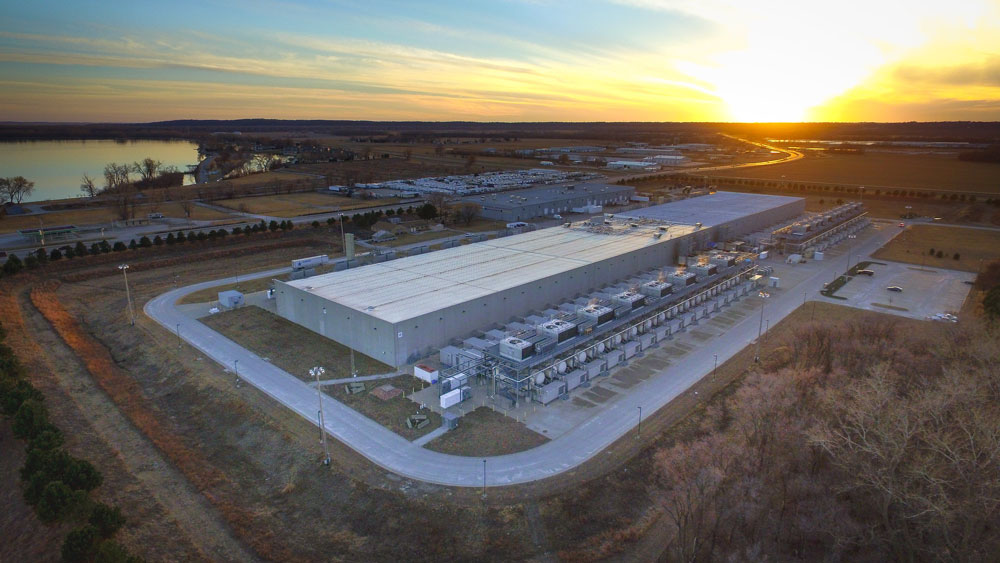
With companies looking to build massive data centers across the country amid rapid growth in artificial intelligence and other technology, the Florida Senate on Tuesday started moving forward with a regulatory framework that would address key issues such as electricity and water use.
The Senate Regulated Industries Committee unanimously approved a bill (SB 484) that sponsor Bryan Avila, R-Miami Springs, said would “lay a foundation and put some parameters in place” for large data centers.
That includes requiring that the facilities pay costs of electric service — shielding residents and other businesses from getting hit with part of the tab — and putting in place water-permitting requirements. Data centers need large amounts of water for cooling systems.
Sen. Jason Brodeur, R-Sanford, said he thinks data centers will be one of the most-important issues that lawmakers address this year. He also pointed to other states, such as Georgia, where large data centers have been built.
“If we don’t do this, others are going to get ahead of us,” Brodeur said.
The bill, in part, would require the Florida Public Service Commission, which regulates electric utilities, to develop what are known as “tariffs” and service requirements to “reasonably ensure that each large load customer bears its own full cost of service and that such cost is not shifted to the general body of ratepayers.”
That would include costs related to issues such as connecting to electric systems and increased power transmission and generation costs.
The commission has already faced the issue in a Florida Power & Light rate case last year and in a pending proposal by Duke Energy Florida. A settlement in the FPL rate case includes two sets of tariffs — which essentially detail types of rates — that are designed for such large energy users as data centers. One of those tariffs focuses on Southeast Florida’s Treasure Coast region, where FPL has significant infrastructure such as transmission lines.
Tiffany Cohen, FPL’s vice president of rate and regulatory strategy, told a House panel last month that the utility is trying to be “proactive” because it knows the large customers are coming.
“We’ve tried to flip this and say we know we have to build new generation to serve these (large) customers, and they should be the ones to pay for it,” Cohen said.
The Senate bill also would take a series of steps related to water use. For example, it would prevent water management districts from issuing permits for large data centers “if the proposed use of the water is harmful to the water resources of the area or is prohibited by the applicable local government zoning regulations and comprehensive plan.”
The bill says water management districts would issue permits if large data centers meet certain conditions, such as showing that they will “not interfere with any presently existing legal use of water.”
The bill also says local governments would maintain authority through comprehensive planning and land-development regulations in addressing large data centers.
Under the bill, state and local government officials could not enter non-disclosure agreements that would prevent disclosing information to the public about potential development of data centers.
But the Regulated Industries Committee on Tuesday also approved a separate bill (SB 1118), filed by Avila, that would create a public-records exemption that could keep information about potential large data centers confidential for up to a year. Companies could request such confidentiality before any formal application is filed with a local government.
–Jim Saunders, News Service of Florida



























Jim says
It may start with the data center paying for their electricity but over time it’ll creep back to the rest of us. There are many ways to obfuscate the numbers.
Why does the data center need to keep information from the public? Anyone want to bet that exemption will be extended every year??
Laurel says
“But the Regulated Industries Committee on Tuesday also approved a separate bill (SB 1118), filed by Avila, that would create a public-records exemption that could keep information about potential large data centers confidential for up to a year. Companies could request such confidentiality before any formal application is filed with a local government.”
So why does Senator Avila, R., want to keep this information confidential? I don’t understand. Why would he want to keep information from us about our own neighborhoods? Who is he working for?
JOE HEMPFLING says
VERY SUSPICIOUS !! WHAT HAPPENED TO TRANSPARITY
AND ACCOUNTABILITY ??
Ray W. says
There are a number of gullible FlaglerLive commenters who cling to the political lie that “Coal is King.”
According to a 2025 Fortune story, US utility-grade electricity companies try to maintain a 15% excess generating capacity ratio so as to avoid a power undersupply during extreme weather events. From other news sources, most of our nation’s remaining aging coal-fired plants, being comparatively the most expensive to run, are fired up only during extreme weather conditions; they are called “peaker” plants. No utility company would ever run a coal-fired power plant today when less expensive options are available. Yes, coal-fired power plants operate more often in certain remote regions of the country, but this is not the norm.
Certain of the gullible among us refer to reports that China is still building coal-fired plants as proof of the viability of coal. And it is happening! But Chinese leadership announced some time ago that it intends to be ready to take Taiwan by force by 2027.
According to the Fortune reporter, for years China has been adding power plants sufficient to maintain an 80-to-100% reserve capacity, not a 15% reserve capacity. And China has been spreading power plants widely across the countryside. It doesn’t take a genius to understand that diversifying a nation’s power supply is important if you wish to make war on your neighbors.
I have previously commented on reports that China possesses the world’s third-largest reserve of power plant-quality coal. And, it has a rail network sufficient to move the coal to wherever it is needed.
But China has relatively little in the way of a domestic supply of crude oil and natural gas. China has been rapidly expanding its oil and natural gas storage capacity and buying the fuel needed to keep them at full capacity.
Two different governments. Two differing electricity policies.
One administration compulsively lies about solar and wind power to its most avid and gullible followers in order to keep electric bills higher than they need to be. The other openly announces a goal of sovereign aggression against a neighbor and then works to expand and diversify its electricity grid in hopes of surviving retaliation should it attempt its goal.
As an aside, Portugal has developed its renewable power sector to the extent that during certain times of the year it is exporting excess renewable power to Spain. For example, according to a ZME Science story, during the entire month of April, 2024, renewables met or exceeded 95% of the nation’s electricity demand. This year, Portugal aims to construct offshore deep water floating wind farms in order to take advantage of higher winds further off its coastline.
Denmark is at 88% powered by renewables and growing fast. 15 years ago, the Danes changed the law to require at least 20% community ownership of any new wind farms. Now, roughly 50% of all wind capacity is community owned.