



By Asher Kaufman
An already troubled ceasefire agreement between Israel and Lebanon is looking shakier than ever.
Since the truce was announced on Nov. 27, 2024, there have been more than 10,000 Israeli air and ground violations inside Lebanese territory, according to the latest report from UNIFIL, the United Nations peacekeeping mission in Lebanon.
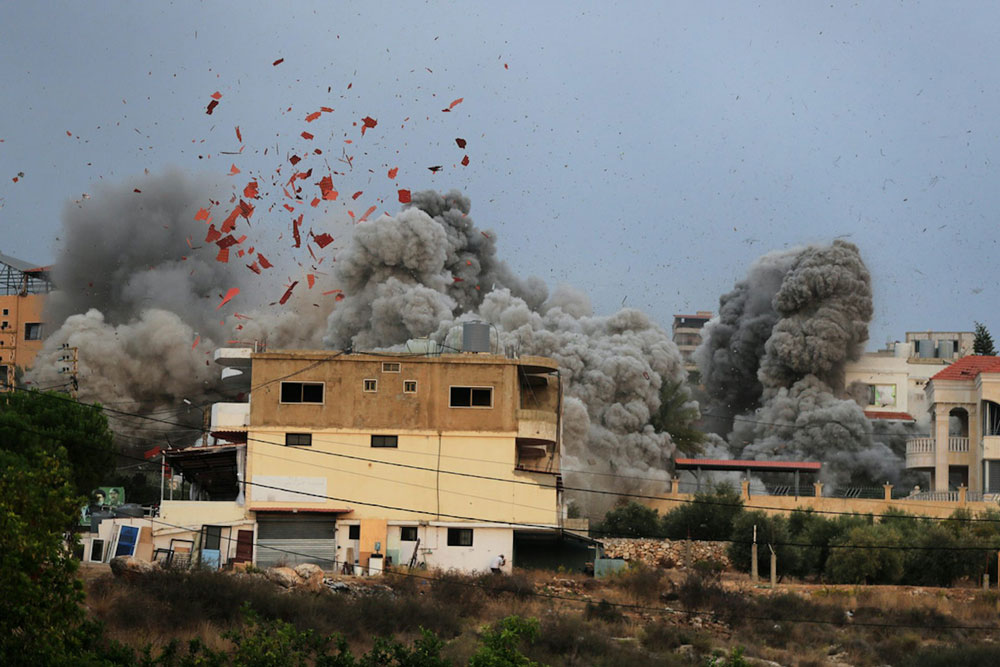
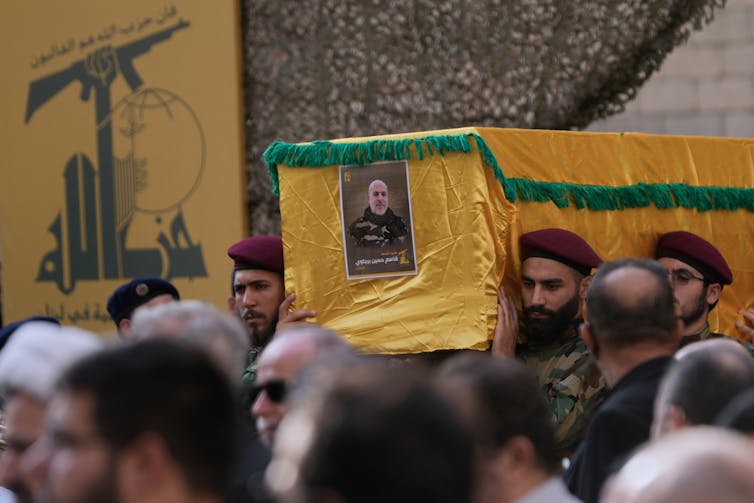
And in the run-up to the ceasefire’s first anniversary, a spate of Israeli strikes over its northern border saw the assassination of Hezbollah’s top military commander and a deadly attack on a Palestinian refugee camp.
Israel argues that all its military attacks in Lebanon target Hezbollah’s efforts to rearm and rehabilitate itself. And a flurry of reports from Israel suggest the Israeli military is getting ready to “finish the job” against Hezbollah.
From my perspective as a historian focusing on Israeli-Lebanese relations, the ceasefire and Israel’s emergence as the regional military hegemon has not translated into stability and constructive change in the Middle East, not even for Israel. In fact, the shaky agreement is a testament that without diplomacy and a long-term stabilizing accord, military power alone will not suffice.
What’s in a ceasefire
The ceasefire ostensibly brought an end to the latest war between Israel and Hezbollah. After entering the conflict that followed Hamas’ attack on Israel on Oct. 7, 2023, Hezbollah saw its leadership and military capabilities debilitated by Israel, setting off a ripple effect that has helped reshape the Middle East.
Just as an empowered Hezbollah managed for decades to influence Middle East politics, its sudden loss of strength had a similar effect in reverse – contributing to regime change in Syria and Israel’s war on Iran in June.
AP Photo/Bilal Hussein
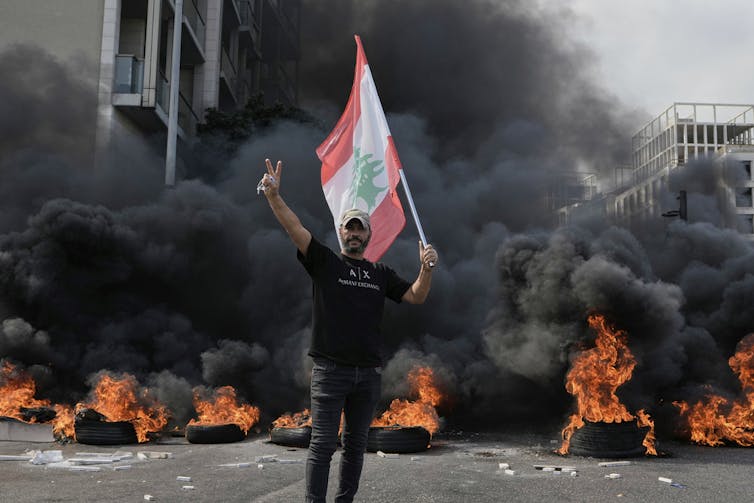
The November 2024 ceasefire agreement stipulated that, along with the cessation of fighting, Lebanon would remove all nonstate military forces and assets, starting in the south, between the Litani River and the border with Israel. The Lebanese army and other state security branches would remain the sole armed forces in the country.
In exchange, Israel was meant to gradually withdraw from the areas it occupied in southern Lebanon within 60 days. The agreement also stipulated that the United States would broker indirect negotiations between Israel and Lebanon to achieve an internationally recognized delineation of their land border.
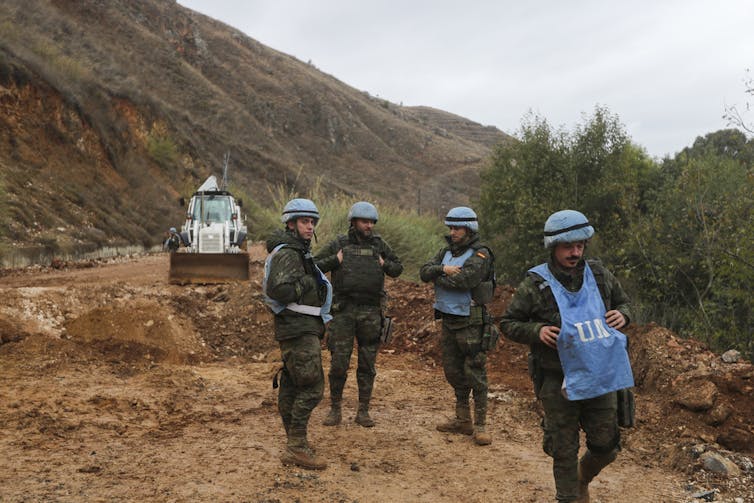
A year later, none of these objectives has been achieved. Israel continues to occupy five border posts inside Lebanon and conducts daily raids into the country. In some of these attacks, which Israel says are focused on Hezbollah and allied groups, UNIFIL forces have been hit or come under fire.
An opening for the Lebanese state?
The formation of a new Lebanese government in February 2025 opened a new political window. It was the first Lebanese government since 2008 in which Hezbollah did not possess veto power over its actions.
Many in Lebanon saw this as a once-in-a-generation opportunity for the state to regain its sovereign capacities, including through the disarmament of Hezbollah. By doing so, it was hoped the country could achieve stability and begin the process of an economic recovery badly needed following its October 2019 financial meltdown.
Yet disarming Hezbollah has proved to be extremely challenging. Hezbollah was – and arguably still is – the most powerful military force in Lebanon. Its military might had enabled it not only to establish a perceived balance of deterrence with Israel, but to position itself as a critical player in Lebanese politics. Willingly giving up its arms to the Lebanese state would be tantamount to fundamentally transforming its “resistance” identity and relinquishing political power to other Lebanese parties and sectarian forces.
AP Photo/Mohammed Zaatari, File
Carrying out the disarmament of Hezbollah in line with the ceasefire is theoretically a job for the Lebanese army. But since its foundation in 1945, the army has mainly operated as a symbol of the country’s sovereignty rather than as practical defender – even in times of acute crises such as the civil war from 1975 to 1990.
The army does not have the military capacity, political clout or will to force Hezbollah to give up its arms. If it tried coercively, it would likely lead to armed resistance that might spiral into a new civil war. Some reporting has even suggested that elements in the army have been helping Hezbollah in its rehabilitation efforts.
The US puts its thumb on the scale
Consistent with the long – and dubious – history of U.S. support for the Lebanese state via security cooperation and the Trump administration’s general view of ceasefire as a tool for restricting Hezbollah, American officials have insisted that the Lebanese army should disarm Hezbollah.
When the Lebanese army’s chief of staff recently criticized Israel for violating Lebanon’s sovereignty, he was criticized by Trump administration officials for not addressing Hezbollah’s violations of the country’s sovereignty and later had his scheduled Nov. 25 trip to the U.S. canceled.
Meanwhile, despite Iran’s own weakened position, Trump officials say it still managed to funnel US$1 billion to Hezbollah in the past year. This could give Hezbollah a lifeline at a time when the rest of the country is begging, unsuccessfully, for foreign aid.
The risk of renewed war
These dynamics put Israel and Hezbollah on a risky path of continued friction.
After its 2006 war against Israel, Hezbollah built a perceived balance of deterrence that, until Oct. 7, 2023, Israel had accepted as a fait accompli. But the massacre on that day transformed Israeli security doctrine to zero tolerance toward security risks.
AP Photo/Hussein Malla
The possibility of renewed conflict in Lebanon is also tied to Israel’s domestic politics. Prime Minister Benjamin Netanyahu remains unpopular. He was roundly accused of prolonging the war in Gaza to deflect from his own legal problems and his government’s deficiencies. And that remains a distinct possibility when it comes to Lebanon, too.
Resolving existing border disputes between the two countries, as stipulated in the ceasefire agreement, would be significant. Since 2000, such disputes have been used by Hezbollah as an excuse to continue its armed struggle against Israel. And in general, the lack of defined Lebanese borders with both Syria and Israel has been a constant source of conflict.
But so far, any diplomatic efforts have failed to materialize over ongoing deep mistrust and, despite the ceasefire, active conflict.
As of now, there are only dim prospects for that to change, absent unlikely U.S. pressure. On the Israeli side, any border agreement that would entail ceding territory to Lebanon is politically untenable, and the current right-wing government is showing little interest in diplomacy. For Lebanon, the weakness of the central government in the face of Hezbollah’s still-significant power, along with Israel’s ongoing military actions, makes practical negotiations exceedingly difficult.
The same old sordid tune?
Instead, what appears to be unfolding is a return to the vicious cycle that has characterized Israel-Lebanon relations since the late 1960s: Hezbollah and other nonstate actors in Lebanon respond to Israeli military incursions, only to be met with further Israeli retaliation. That, in turn, further weakens the Lebanese state – yet Lebanese state capacity remains the only way to break the vicious cycle.
The key for calm in Lebanon may be again in the hands of the U.S. administration, with the support of an extended regional coalition, perhaps even by including Iran in the deal.
So far, most American diplomacy in the Lebanon-Israel context has been to pressure Beirut. Avoiding renewed war on the Israel-Lebanon front may require U.S. coercive diplomacy, where the pressure is more equally distributed on each party.
At the end of the day, only a strong and stable Lebanon, where the state is the sole holder of arms and in charge of foreign policy, can move us past the current cycle. Israeli military pressure will not get us far in this direction. It must come mainly through an internal Lebanese political process.

Asher Kaufman is Professor of History and Peace Studies at the University of Notre Dame.



























Sherry says
This story simply cannot be factual. Maga knows for sure that Lord and Master trump ended ALL the wars everywhere. . . hundreds of them! Errr. . . except for those “righteous” ones he starts. Also, except for the “Criminally Guilty” Drug Lords he pardons and releases from prison. Right Maga?
Bo Peep says
Way to go IDF!
Kennan says
Bo Peep, your wanted ignorance is only surpassed by your blatant racism.
October 7 2023 was a terrorist act by any rubric, and was treated as such by the vast majority of the world.
Israel has attempted to convince the world that nothing happened after October 7 2023.
CONFLATION:
A term people need to learn. A tactic used by Israel and its apologists to try to lie and frame Hamas and Palestinian civilians as the same.
Israel has used tactics like this as well as hyper victimization. They have used the Holocaust as a “wedge point”to subjugate Palestinians for the last 78 years. Israel has used their relationship with the west as well as the United States in particular to hold the Middle East hostage.
What we see now is Israel kill about 400 civilians since an October 10 ceasefire was supposedly put in place.
What adds insult to injury is Israel has taken advantage of the BILLIONS of tax’s dollars we pay to kill Arabs with impunity.
As long as you continue to subjugate Palestinians in Gaza, as well as attempt a “Greater Israel” mindset in the Middle East? You will then continue to come up against resistance in all forms.
Actions illicit reactions.
When you call people that you are trying to control your neighbors?
You are trying to control a narrative that in reality is “Polar Opposite” from what Israel and its Western allies frame it as.
At the end of the day
“Peace in the Middle East”, at least in its formulative reality, requires nothing less than complete sanctions against Israel. No more weapons. No money. Nothing.
Israel’s behavior in the last several decades, but especially in the last two years, makes it very difficult for the international community to support Israel as a state at all.
feddy says
Name that quote: “Some people did something”.
Allyn Susan Feinsetin says
Has Hezbollah agreed to relinquish their grip on Lebanon and stop attacking Israel? Is the author serious in suggesting that we pander to the Iranians in the same failed fashion that we tried to before? I’m afraid the Israelis can’t trust the best intentions of anyone except themselves–there is clear evidence of why that remains the case.
People who would not be agreeable to being attacked the way that Israel has been since its inception, day in and day, 24/7, are hardly in any moral position to dictate what they risks they should be willing to take for the sake of global convenience.
Ray W. says
According to an article published by Interesting Engineering, the IDF is nearly ready to deploy the world’s first operational “high-power laser air-defense system”, called Iron Beam.
In the reporter’s words:
“The 100-kilowatt system is designed to destroy targets within seconds and at a fraction of the cost of traditional missile-based defenses.”
Iron Beam is to provide a “fifth tier” to the IDF’s four previous tiers of defense, tiers that include Iron Dome, David’s Sling, and the Arrow 2 and Arrow 3 systems.
The IDF’s interception of rocket and ballistic missile launches from the first four tiers has proved high rates of success, but the military’s interception success rate has been much lower against small, slow, low-flying drones and unmanned aircraft, sometimes no higher than 50%. Iron Beam is designed to bolster existing defenses against these types of flying threats.
According to the author, Iron Beam, designed by Rafael Advanced Defense Systems, costs only a few pennies per laser engagement. Iron Beam carries its own radar system, electro-optical sensors, tracking cameras, and a fire-control computer.
Make of this what you will.